

TL;DR:
- pH controls cleaning reactions, surface safety, and product stability, requiring careful matching to soil types. Small pH shifts produce large effects, making proper neutralization and testing essential to prevent surface damage and hazards.
pH controls whether a cleaning solution dissolves mineral scale, cuts through grease, or does nothing at all. The pH scale runs from 0 to 14, with 7 as neutral, values below 7 as acidic, and values above 7 as alkaline. Matching the right pH to the right soil type is what separates a cleaner that works from one that wastes your time or damages your surfaces.
Here is what pH does in a cleaning context:
- Drives chemical reactions: Acidic solutions dissolve mineral deposits through chelation; alkaline solutions break down fats and oils through saponification.
- Protects surfaces: Using the wrong pH on natural stone, wood, or metal can cause permanent etching or corrosion.
- Affects user safety: Cleaners far from your skin’s natural pH of about 5 can cause irritation, burns, or respiratory issues.
- Determines product stability: pH influences how long a cleaning product stays effective on the shelf and during dilution.
- Controls microbial activity: The pH of a disinfectant like sodium hypochlorite shifts its killing power versus its cleaning power.
Table of Contents
- How the pH scale shapes cleaning chemistry
- How pH drives the actual cleaning action
- Safety risks tied to pH levels in cleaning products
- How to choose the right pH level for each cleaning job
- Get professional pH-matched cleaning for your property
- Key Takeaways
How the pH scale shapes cleaning chemistry
Every pH unit represents a tenfold change in acidity or alkalinity, so pH 9 is 100 times more alkaline than pH 7. That logarithmic jump is why a small tweak to a formula can produce a dramatically different result on a surface.
A few common reference points help anchor the scale:
- pH 0–2: Battery acid, strong toilet bowl cleaners
- pH 2–3: Vinegar, which removes hard water mineral buildup from surfaces
- pH 5: Human skin’s natural pH
- pH 7: Pure water, considered neutral
- pH 9: Baking soda, effective on food and grease stains
- pH 11–13: Heavy-duty degreasers and oven cleaners
Solubility and reactivity shift across this range in ways that matter practically. Calcium deposits and rust are ionic compounds that break apart in acidic conditions but stay locked together in neutral or alkaline ones. Oils and fats, by contrast, undergo saponification only in alkaline environments. Trying to remove grease with an acidic cleaner is like trying to unlock a door with the wrong key.
Buffer solutions in commercial cleaning products resist pH drift during dilution, which keeps the cleaner performing consistently whether you use it at full strength or mixed with water. Without buffering, a product’s pH can shift enough on dilution to lose most of its cleaning power before it even touches the surface.
How pH drives the actual cleaning action
Acidic and alkaline cleaners work through completely different chemical pathways, and understanding those pathways tells you exactly when to reach for each one.
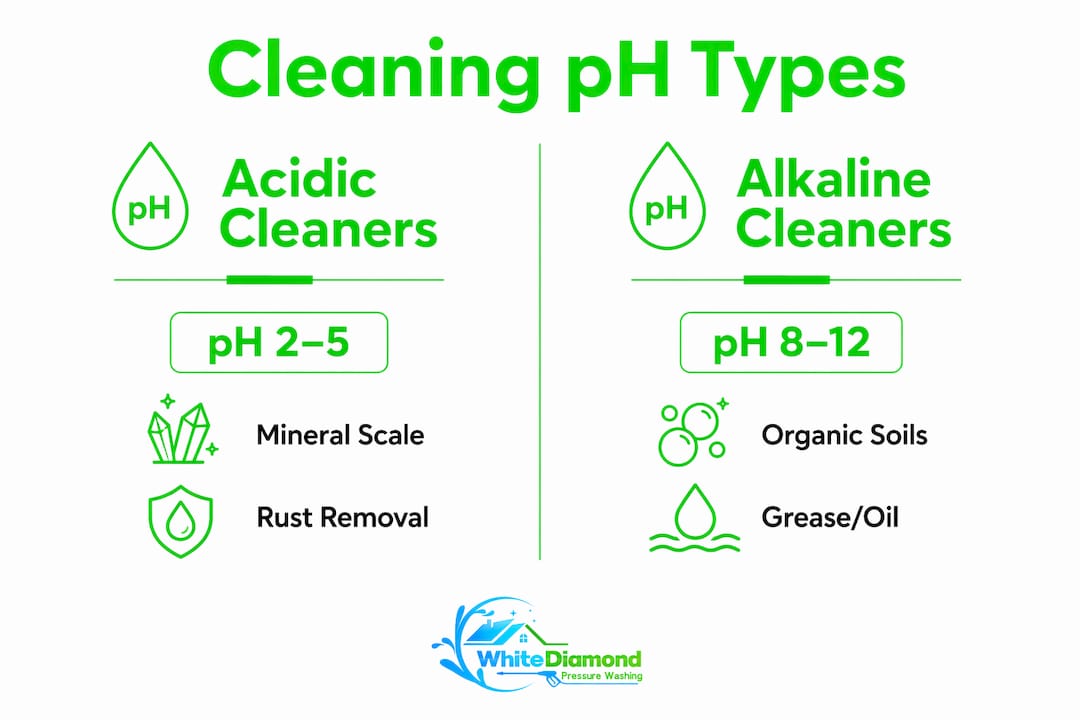
Acidic cleaners (pH below 7) dissolve mineral deposits, rust, and limescale by breaking ionic bonds. Chelating agents in these formulas grab calcium and magnesium ions and pull them into solution. Vinegar at pH 2–3 removes hard water buildup from coffee makers and showerheads for exactly this reason. Toilet bowl cleaners use stronger acids to tackle heavy limescale.
Alkaline cleaners (pH above 7) are built for organic soils. Saponification converts fats and oils into water-soluble soap compounds, while emulsification suspends grease particles so water can rinse them away. Laundry detergent lifts body oils from fabric; baking soda at pH 9 breaks down food-based stains. Heavy-duty degreasers with strongly alkaline pH handle the kind of built-up grease you find on commercial kitchen equipment or driveways.
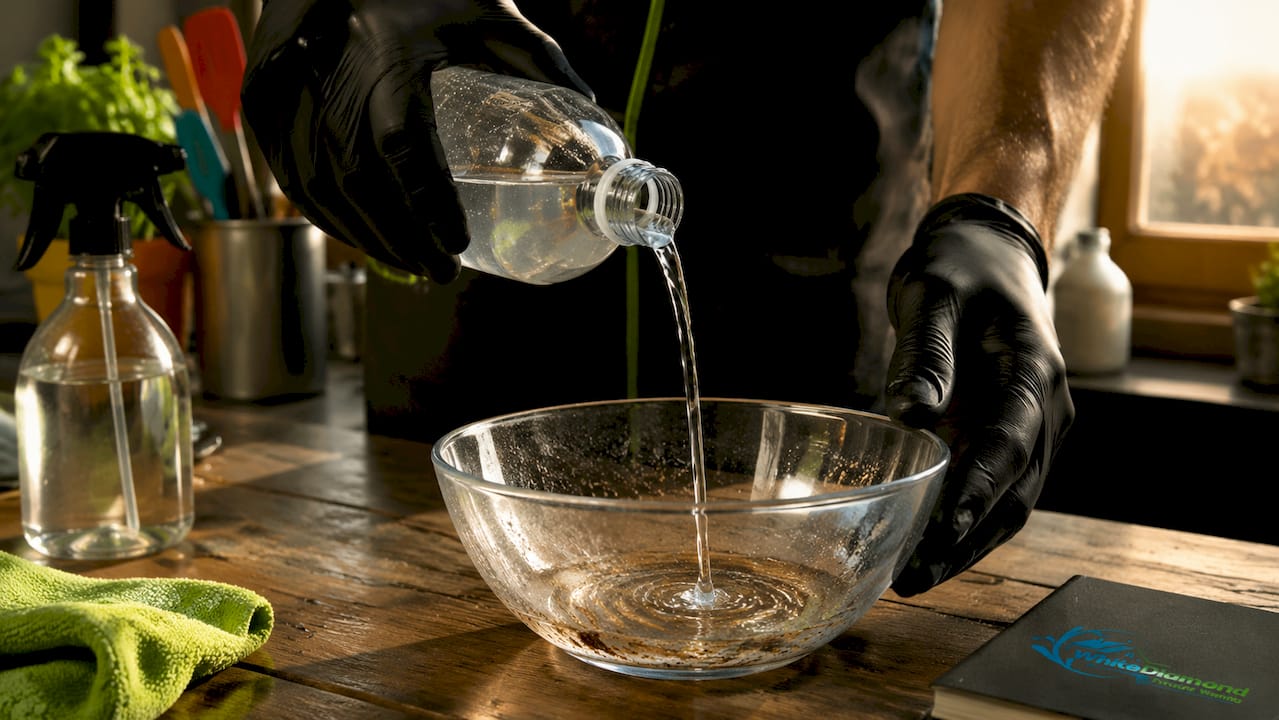
Sodium hypochlorite (bleach) behaves differently depending on pH. At higher pH, the hypochlorite ion (OCl⁻) dominates and cleans effectively, while at lower pH, hypochlorous acid (HOCl) takes over and kills bacteria more efficiently. That split explains why disinfection protocols specify pH ranges rather than just concentration.
Surfactants and enzymes are also pH-sensitive. Each surfactant has a peak pH range where it performs best, which is why cleaning product chemists use pH adjusters to tune a formula to the surfactant’s sweet spot. Enzymes that break down protein stains denature quickly outside their optimal pH window, usually around neutral to mildly alkaline.
| Soil type | Recommended pH range | Example cleaner |
|---|---|---|
| Mineral scale, rust, limescale | 2–5 (acidic) | Toilet bowl cleaner, vinegar |
| Grease, oils, fats | 9–12 (alkaline) | Degreaser, laundry detergent |
| General dirt, everyday surfaces | 7 (neutral) | All-purpose cleaner |
| Biological soils, bacteria | pH-dependent on product | Sodium hypochlorite solution |
Pro Tip: When cleaning driveways or concrete with an acidic product to remove rust or efflorescence, follow up immediately with an alkaline rinse. Acidic cleaners keep reacting after application unless neutralized, and that ongoing reaction is what causes long-term surface corrosion.
Safety risks tied to pH levels in cleaning products
Extreme pH on either end of the scale poses real hazards, both to the person applying the cleaner and to the surface receiving it.
Incorrect pH levels in cleaning products pose safety hazards including chemical burns, skin irritation, and respiratory issues. pH must be carefully controlled in formulations to protect both users and surfaces. Chemists must balance product pH for performance and user safety, since pH affects cleaning power, product stability, and skin compatibility.
Our skin’s natural pH sits at about 5. A cleaner that is significantly more acidic or more alkaline than that disrupts the skin barrier, causing itching, irritation, and in severe cases, chemical burns. Strong alkaline cleaners with very high pH can cause burns just as quickly as strong acids.
Surfaces face their own risks. Cleaning products with extreme pH can chemically etch stainless steel and natural stone, degrading surface integrity in ways that are often permanent. Natural stone is especially vulnerable: even a mildly acidic cleaner can cause etching that looks like a stain but cannot be buffed out. Wood absorbs more pH change and residue than glass or steel, which accelerates material breakdown over time.
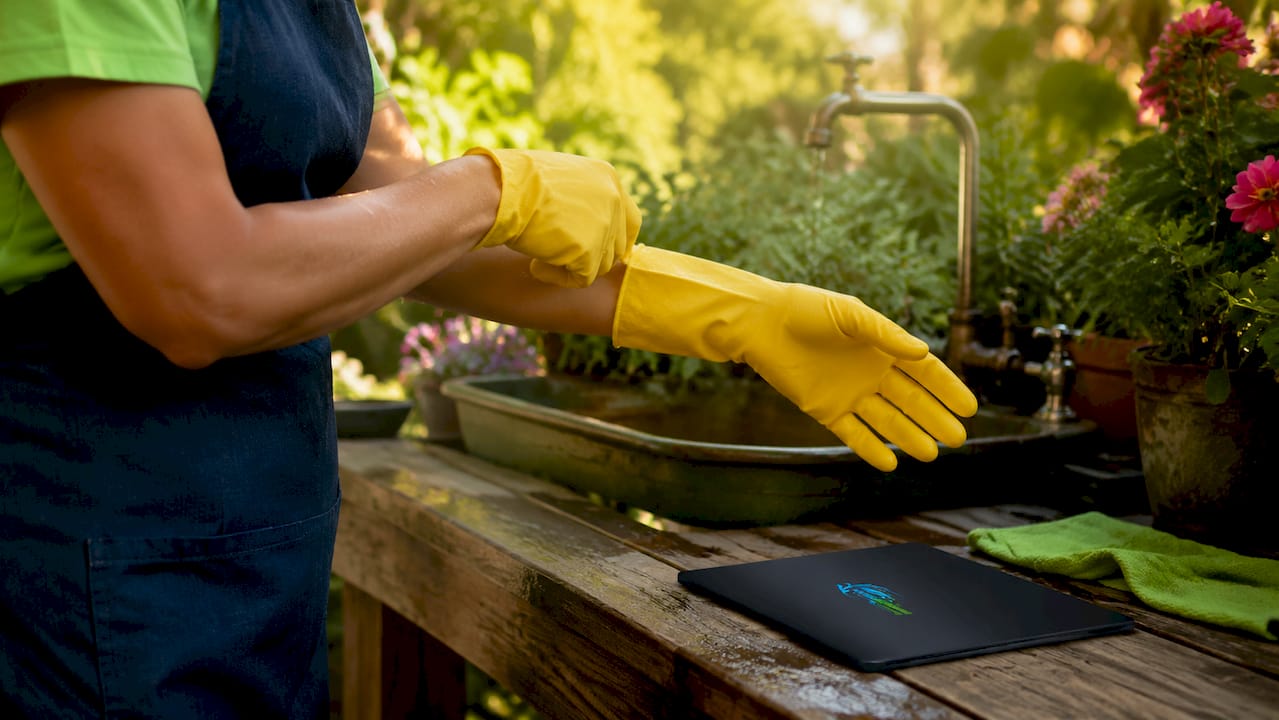
OSHA guidelines on chemical safety address pH handling directly, requiring appropriate personal protective equipment when working with high or low pH products. Gloves, eye protection, and adequate ventilation are not optional when using products with very low or very high pH values. For exterior cleaning work, those precautions apply whether you are treating a roof, a driveway, or a concrete walkway. Proper pressure washing safety protocols account for chemical pH alongside water pressure when protecting both the applicator and the property.
How to choose the right pH level for each cleaning job
Picking the correct pH is a three-step process: identify the soil, match the pH to that soil type, and verify the surface can tolerate it.
-
Identify the soil type. Mineral deposits, rust, and hard water scale call for an acidic cleaner. Grease, oil, mold, and organic buildup call for an alkaline one. General dust and light dirt usually respond to a near-neutral all-purpose product.
-
Check surface compatibility. Natural stone, marble, and grout are acid-sensitive. Aluminum and some metals corrode under strong alkaline cleaners. Wood absorbs pH changes more than glass or sealed concrete, so surface porosity affects how aggressively a pH-active cleaner penetrates and reacts.
-
Test before full application. Professional cleaning guidance consistently recommends starting with a mild pH cleaner and escalating only when necessary, always testing on an inconspicuous spot first. A 30-second spot test on a hidden area can prevent irreversible damage to an entire surface.
-
Neutralize after acidic cleaning. Rinse with an alkaline solution or clean water after using any acidic product, especially on porous materials like concrete or brick. Skipping this step leaves the reaction running, which slowly eats into the surface.
-
Use pH-balanced products near skin. For any cleaning task where skin contact is likely, choose a formulation near pH 5–7. Products designed for non-abrasive home washing typically aim to be near neutral pH to protect both the user and delicate exterior finishes.
Pro Tip: For exterior surfaces like roofs and siding, alkaline soft-wash solutions in the pH 10–12 range cut through mold, algae, and organic staining without the mechanical damage that high-pressure water causes. The chemistry does the work so the pressure does not have to.
Exterior cleaning specialists at Whitediamondpressurewashing apply this principle on every job in Citrus County. Matching the right cleaning chemistry to each surface type protects materials long-term while delivering results that a one-size-fits-all approach simply cannot.
Get professional pH-matched cleaning for your property

Knowing the chemistry is one thing. Applying it correctly to a roof, driveway, or house exterior without damaging the surface is another. Whitediamondpressurewashing uses pH-appropriate cleaning solutions calibrated to each surface and soil type, from soft-wash treatments for roofs and siding to alkaline degreasers for concrete and driveways.
Every job follows professional exterior cleaning standards that account for surface sensitivity, chemical safety, and proper neutralization. If you want results without the guesswork or the risk of surface damage, get a free estimate from Whitediamondpressurewashing today.
Key Takeaways
pH determines which chemical reactions a cleaner can trigger, making it the single most important variable in matching a product to a soil type and surface.
| Point | Details |
|---|---|
| pH scale and logarithmic change | Each pH unit represents a tenfold change in acidity or alkalinity, so small formula shifts produce large cleaning differences. |
| Acidic vs. alkaline action | Acidic cleaners dissolve mineral scale and rust; alkaline cleaners break down grease and organic soils through saponification. |
| Skin and surface safety | Skin sits at about pH 5; cleaners far from this value cause irritation or burns, and extreme pH permanently etches natural stone. |
| Neutralize after acid cleaning | Acidic cleaners keep reacting after application unless neutralized with an alkaline rinse, risking long-term surface corrosion. |
| Test before full application | Start with a mild pH cleaner and test on a hidden spot before treating the full surface, especially on porous or sensitive materials. |
Recommended
- The Role of Surface Porosity in Cleaning Efficiency – white-diamond-pressure
- The Role of Low-Pressure Rinsing in Exterior Cleaning – white-diamond-pressure
- The Role of Weather in Surface Cleaning Results – white-diamond-pressure
- Why safe cleaning methods matter for your Citrus County home – white-diamond-pressure