

TL;DR:
- Surface porosity determines how deeply contaminants and cleaning agents penetrate a material, influencing chemical choice and cleaning effectiveness. High porosity materials require stronger chemicals, longer dwell times, and sealing to prevent future contamination, while low-porosity surfaces need gentler treatments to avoid damage. Properly addressing porosity prolongs surface lifespan, reduces maintenance costs, and ensures actual cleanliness beyond appearance.
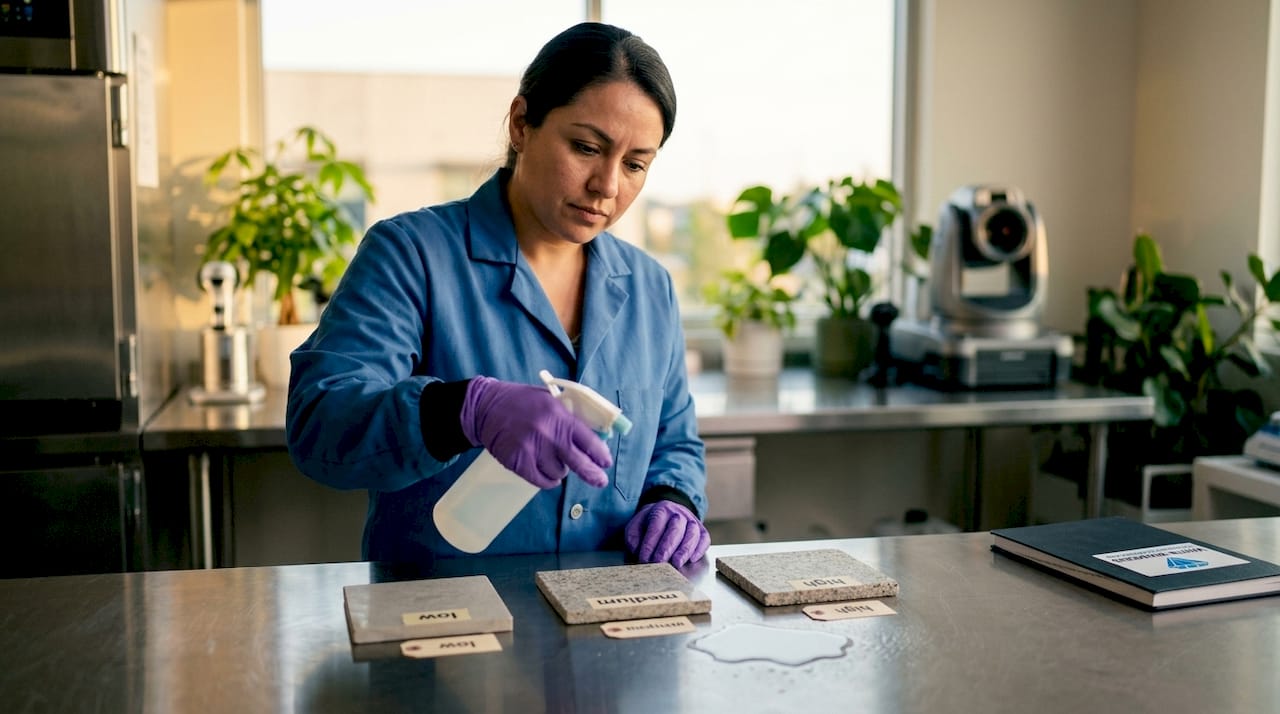
Surface porosity is defined as the percentage of a material’s volume occupied by microscopic pores, and it is the single most important factor controlling how cleaning agents interact with any surface. The role of surface porosity in cleaning determines how deeply contaminants penetrate a material, how much chemical a surface absorbs, and whether a standard cleaning protocol will actually work. Concrete, brick, natural stone, and wood all behave differently from glass, metal, or glazed tile precisely because of porosity differences. Understanding this distinction is not academic. It is the difference between a surface that looks clean and one that actually is.
How does surface porosity affect contaminant penetration and cleaning?
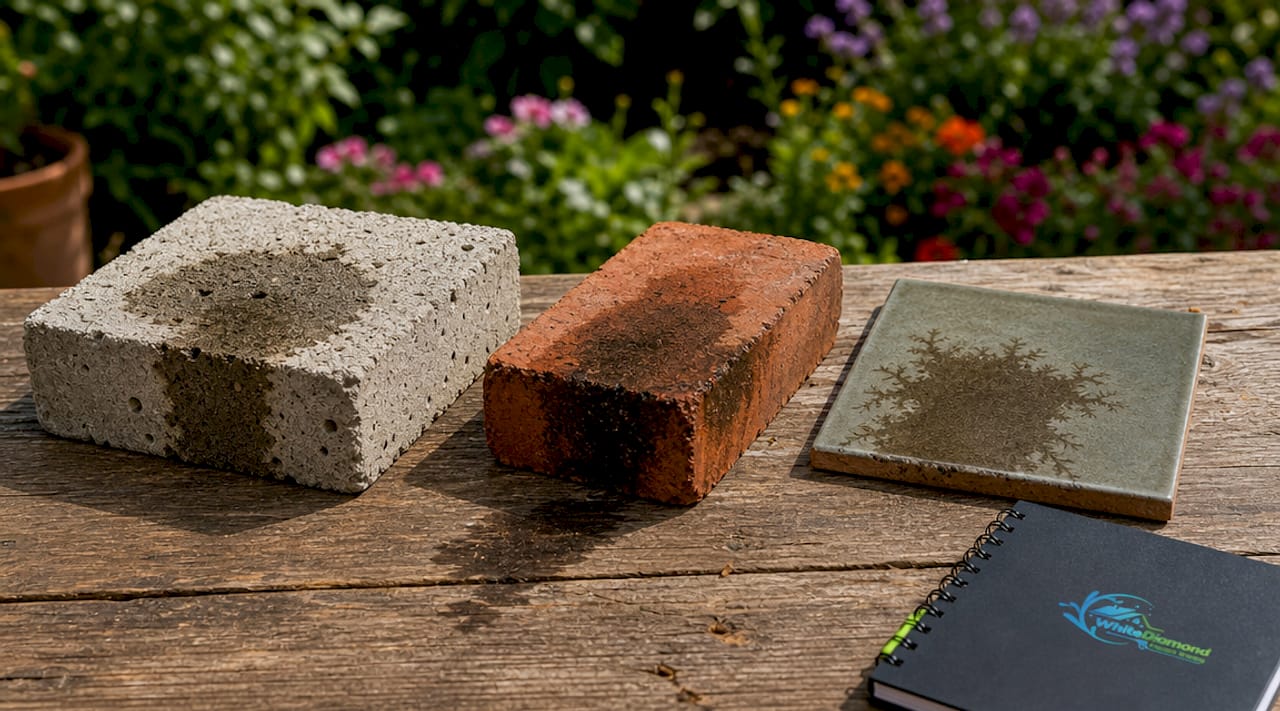
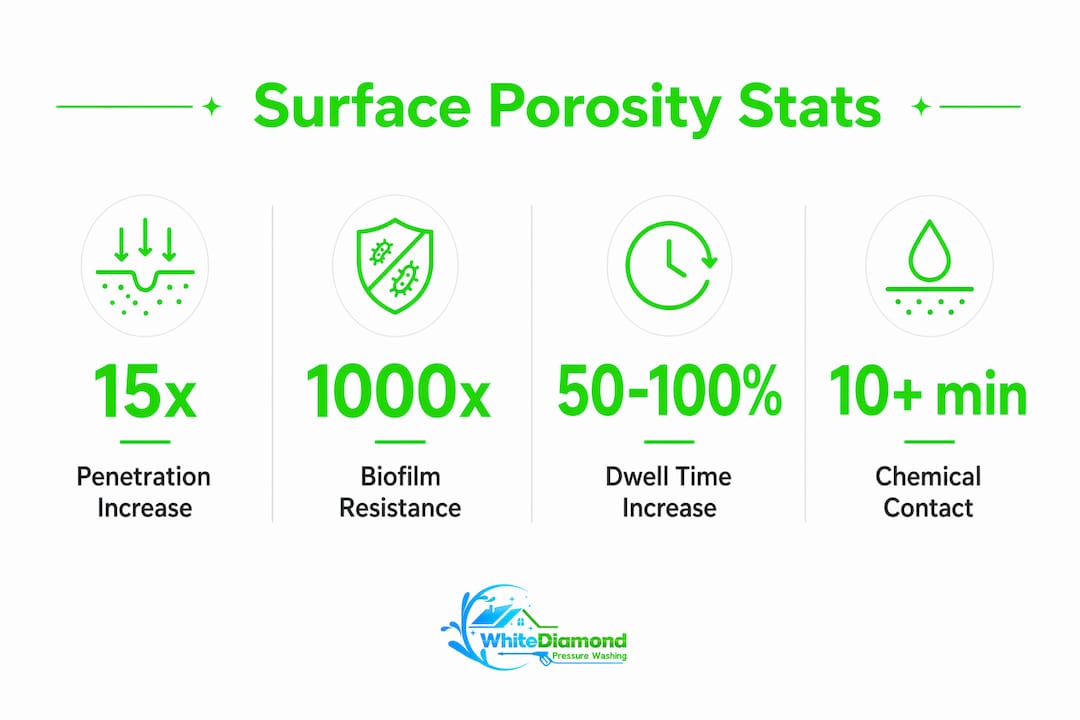
Porosity controls how far contaminants travel into a material, and the numbers are striking. Infiltration depth increases from 8.5 µm to 130 µm as porosity rises from 0.1% to 27.0%. That is a 15-fold increase in penetration depth, which means surface-only cleaning becomes nearly useless on high-porosity materials. Wiping or rinsing the top layer simply pushes contaminants further into the matrix rather than removing them.
The problem compounds when biological growth is involved. Biofilms trapped inside pores are up to 1,000 times more resistant to disinfectants than free-floating bacteria on non-porous surfaces. This resistance is not a product failure. It is a structural reality: the pore walls physically shield microbial colonies from chemical contact, reducing effective concentration to near zero at depth.
Chemical absorption is the third layer of the problem. Porous surfaces drink cleaning agents rather than letting them dwell on the surface. This premature chemical evaporation shortens wet contact time, which is the window during which a cleaning agent is actively breaking down contaminants. On a glazed tile, a surfactant sits on the surface and works. On unsealed concrete, the same product disappears into the slab within seconds.
| Surface type | Typical porosity | Penetration depth | Chemical absorption |
|---|---|---|---|
| Glazed ceramic tile | Less than 0.5% | Minimal (under 10 µm) | Very low |
| Dense concrete | 5% to 10% | Moderate (30 to 60 µm) | Moderate |
| Brick or render | 15% to 25% | High (80 to 120 µm) | High |
| Natural sandstone | 20% to 30% | Very high (100 to 130 µm) | Very high |
Pro Tip: Increase dwell time by 50% to 100% on high-porosity surfaces compared to your standard protocol. If a product label says five minutes, plan for ten on brick or sandstone to compensate for absorption losses.
What chemical formulations work best for different porosity levels?
Porosity is the primary filter for chemical selection, and using the wrong product wastes money while risking surface damage. High-porosity surfaces like natural stone and uncoated concrete require medium-to-strong chemical formulations because contaminants are embedded deep in the matrix. Non-porous surfaces like glass or polished metal need only light-strength solutions because there is no depth to penetrate.
pH control is equally critical. Wrong pH levels inside pores trigger chemical reactions that increase porosity over time, accelerating structural degradation rather than cleaning it. Acidic cleaners on limestone or marble, for example, dissolve the calcium carbonate matrix, permanently enlarging pores and making future contamination worse. Alkaline cleaners on aluminum cause oxidation. Matching pH to substrate is not optional.
| Chemical type | Best for | Porosity suitability | Key risk |
|---|---|---|---|
| Sodium hypochlorite (bleach) | Organic growth, mold | Medium to high porosity | Discoloration on low-porosity stone |
| Biocides (quaternary ammonium) | Biofilm, bacteria | All porosity levels | Residue buildup in deep pores |
| Surfactants | General soil, grease | Low to medium porosity | Rapid absorption on high porosity |
| Gel-based formulas | Vertical or high-porosity surfaces | High porosity | Requires thorough rinsing |
Dwell time requirements shift dramatically with porosity. A biocide applied to dense concrete needs at least 10 minutes of wet contact to reach embedded biofilms. The same product on a non-porous epoxy floor may need only three minutes. Overly dilute solutions on high-porosity surfaces fail to penetrate pore depth, which is why moss and algae return within weeks of treatment. The concentration must be strong enough to survive absorption losses and still arrive at contaminant depth with killing power intact.
Using strong chemicals on low-porosity surfaces creates the opposite problem: staining, etching, and structural degradation. Polished granite, glazed brick, and sealed pavers need light formulations applied briefly. Matching chemical strength to porosity is not just about effectiveness. It protects the material from the cleaning process itself.
Pro Tip: On rough vertical surfaces like render or stucco, use a gel-based or slow-evaporating formula. These cling to the surface and maintain wet contact time without running off before the chemistry can work.
How does porosity affect cleaning costs and long-term maintenance?
The economic impact of surface porosity effects is direct and measurable. Higher porosity correlates with greater chemical consumption because a significant portion of every application is absorbed into the substrate rather than doing cleaning work. A contractor treating unsealed concrete may use two to three times the chemical volume needed for the same square footage of sealed pavers. That cost difference compounds across every maintenance cycle.
The long-term picture has two sides worth understanding:
- Residual chemical retention in porous surfaces can extend treatment effectiveness. A biocide absorbed into brick pores continues suppressing biological regrowth for weeks after application, which reduces cleaning frequency.
- Chemical outgassing is the hidden downside. Absorbed chemicals can release VOCs over time, affecting indoor air quality in enclosed spaces like garages, basements, or covered patios. Homeowners rarely connect a persistent chemical smell to a floor cleaned three weeks earlier.
- Environmental runoff differs sharply between surface types. Non-porous surfaces shed cleaning chemicals directly into storm drains. Porous surfaces absorb them, which reduces immediate runoff but creates a slow-release contamination risk for soil and groundwater.
- Sealing porous surfaces is the most cost-effective long-term strategy. Surface sealing reduces porosity by filling pores, which cuts chemical absorption, slows biological regrowth, and lowers maintenance frequency. The upfront cost of sealing pays back in reduced chemical use and less frequent professional cleaning.
For homeowners managing driveways, walkways, or exterior walls in humid climates like Citrus County, sealing after each deep clean is not a luxury. It is the most practical way to protect the investment and reduce ongoing maintenance costs.
Which surfaces have the highest porosity and what cleaning challenges do they create?
Surface texture and cleaning efficiency are inseparable when you examine real materials. The exterior surfaces most commonly cleaned in residential settings span a wide porosity range, and each category presents distinct challenges.
- Concrete driveways and walkways have porosity ranging from 5% to 20% depending on mix and age. Oil, tire rubber, and biological growth penetrate deeply, making surface pressure washing alone insufficient for true decontamination.
- Brick and render absorb water and organic material readily. Salt crystallization inside pores, called efflorescence, is a direct consequence of high porosity. Cleaning removes surface deposits but does not address the salt migration pathway inside the material.
- Natural stone (sandstone, limestone, travertine) is among the most porous common building materials. Microcracks and grain boundaries add functional porosity beyond what lab measurements capture. Moss and algae colonize these surfaces aggressively because pores retain moisture.
- Wood decking and fencing behave like a sponge. Tannins, mold spores, and UV-degraded lignin all accumulate in wood grain. Cleaning wood requires materials-compatible chemical selection to avoid raising grain, bleaching color, or weakening fibers.
- Metal and glass are functionally non-porous. Cleaning challenges here come from surface films and oxidation rather than penetration depth. Light surfactants and low-pressure rinsing are sufficient.
- Roof tiles (clay, concrete, and asphalt shingles) vary widely. Concrete roof tiles are porous and support algae and lichen growth. Asphalt shingles have granule surfaces with micro-porosity that traps black algae (Gloeocapsa magma). Roof cleaning methods must account for this porosity to avoid granule loss from high-pressure washing.
Visual cleanliness is a misleading standard for porous materials. A concrete driveway can look spotless after a rinse while harboring mold colonies 100 µm below the surface. True cleaning requires penetrating and modifying the surface state, not just removing what is visible.
Key takeaways
Surface porosity is the controlling variable in every cleaning decision, from chemical selection to dwell time, cost, and long-term maintenance strategy.
| Point | Details |
|---|---|
| Porosity drives penetration depth | A 15-fold increase in infiltration depth occurs as porosity rises from 0.1% to 27%, making surface-only cleaning ineffective on porous materials. |
| Chemical strength must match porosity | High-porosity surfaces need stronger formulations and longer dwell times; wrong pH or concentration causes structural damage or treatment failure. |
| Biofilms resist disinfectants in pores | Biofilms inside pores are up to 1,000 times more resistant to disinfectants, requiring specialized chemical strategies beyond standard protocols. |
| Sealing reduces long-term costs | Sealing porous surfaces after cleaning fills pores, cuts chemical absorption, and reduces biological regrowth and maintenance frequency. |
| Visual cleanliness is not true cleanliness | Porous surfaces can appear clean while harboring deep contaminants; effective cleaning requires penetrating the surface, not just rinsing it. |
What I’ve learned from cleaning porous surfaces that most guides skip
After working with dozens of exterior surfaces across Citrus County, the pattern I see most often is homeowners judging results by appearance. A driveway looks clean after a rinse. A brick wall looks fine after a scrub. But six weeks later, the algae is back, the stain has returned, or the surface looks worse than before. That is not bad luck. That is porosity working against a cleaning method that was never designed for it.
The surfaces that frustrate people most, concrete, brick, natural stone, and wood, are all high-porosity materials. They require a three-step approach: open the pores with the right chemistry, flush embedded contaminants with adequate dwell time and pressure calibrated to the material, then seal the surface to prevent reinfiltration. Skipping the third step is the most common mistake I see. People clean well but leave the surface wide open for the next contamination cycle.
The other issue is product selection. Homeowners reach for the strongest product available, assuming more power equals better results. On a porous surface, an overly aggressive chemical can enlarge pores, bleach color, or leave residues that outgas for weeks. The water pressure applied matters too. High pressure on soft porous stone physically erodes the matrix, increasing porosity and making the problem worse with every cleaning. Matching pressure, chemistry, and dwell time to the specific material is the only approach that produces lasting results without damaging what you are trying to protect.
— Bobby
Professional porous surface cleaning in Citrus County
Understanding porosity changes how you approach every exterior surface on your property. Applying that knowledge correctly requires the right equipment, the right chemistry, and experience reading how different materials respond.

Whitediamondpressurewashing specializes in exterior cleaning services calibrated to the specific porosity of each surface, from concrete driveways and brick facades to natural stone and roof tiles. The team selects chemical formulations, dilution ratios, and application methods based on what the material actually needs, not a one-size-fits-all protocol. Proper treatment protects your surfaces, extends their lifespan, and reduces how often they need professional attention. Get a free estimate and find out what your specific surfaces require.
FAQ
What is the role of surface porosity in cleaning?
Surface porosity determines how deeply contaminants and cleaning agents penetrate a material, which directly controls chemical selection, dwell time requirements, and whether a cleaning treatment will be effective or cause damage.
Why do porous surfaces need stronger cleaning chemicals?
Porous surfaces absorb cleaning agents, reducing wet contact time and effective concentration at contaminant depth. Stronger formulations or longer dwell times compensate for this absorption loss and reach embedded contaminants.
How does porosity affect how often a surface needs cleaning?
High-porosity surfaces trap moisture and organic material, accelerating biological regrowth like mold, algae, and moss. Sealing the surface after cleaning reduces biological regrowth and extends the interval between treatments.
Can high-pressure washing damage porous surfaces?
Yes. High pressure on soft porous materials like sandstone, aged brick, or wood physically erodes the surface matrix, enlarging pores and increasing vulnerability to future contamination. Low-pressure or soft wash methods are safer for high-porosity substrates.
Is a surface that looks clean actually clean if it is porous?
Not necessarily. Dangerous contaminants including mold, bacteria, and biofilms can persist inside pores well below the visible surface. True cleaning of porous materials requires chemistry that penetrates the pore depth, not just surface rinsing.