

TL;DR:
- Regular pool deck cleaning prevents slip hazards, extends sealer life, and maintains property value. Using soft washing methods once or twice a year protects surfaces while removing organic growth and debris. Routine maintenance reduces long-term repair costs and keeps the pool area safe and attractive.
A clean pool deck is defined as a surface free of algae, mold, mildew, chemical residues, and organic debris that would otherwise create slip hazards and accelerate material breakdown. Knowing why clean pool decks matter goes beyond appearances. Neglected surfaces become genuinely dangerous, and the cost of restoration far exceeds the cost of routine maintenance. Whether you manage a single residential pool or oversee multiple properties, keeping the deck clean protects people, preserves your investment, and keeps your pool area looking its best year round.
Why clean pool decks: the real risks of neglect
A dirty pool deck is a safety liability before it becomes a visual problem. Algae, mold, and mildew build up on wet surfaces and create slick conditions that dramatically raise the risk of slip-and-fall injuries. In humid climates like Florida, visible organic growth can appear within weeks of the last cleaning. That timeline is faster than most homeowners expect.
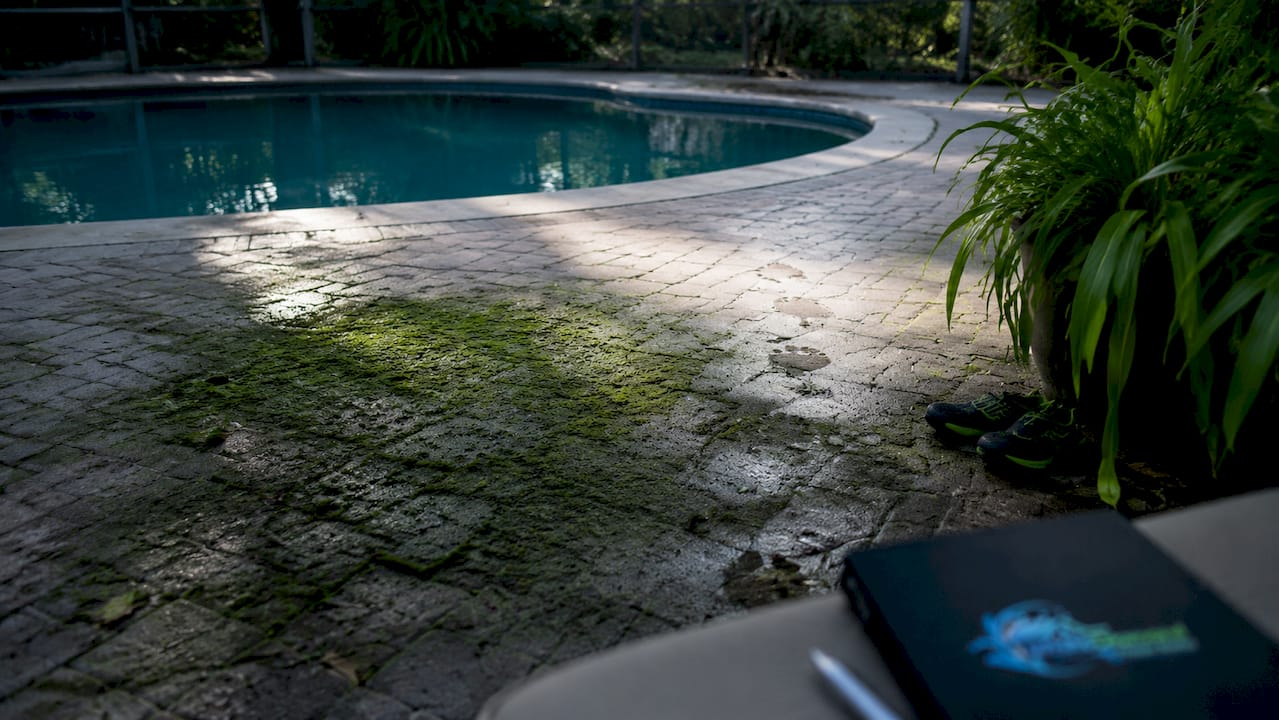
The structural damage is just as serious. Sunscreen residue, pool chemicals, and trapped moisture work together to break down the protective sealer on concrete, pavers, and stone. Once the sealer fails, moisture penetrates the surface and causes cracking, spalling, and fading. Repairs at that stage cost far more than a routine cleaning would have.
Here is what a neglected pool deck actually risks:
- Slip-and-fall injuries from algae and mold growth on wet surfaces
- Sealer breakdown caused by chemical residues and trapped moisture
- Surface cracking and fading from UV exposure on unprotected material
- Increased restoration costs when minor issues compound into structural damage
- Liability exposure for homeowners and property managers if a guest is injured
“Organic growth on decks can transform surfaces into hazardous conditions within 3–4 months if left unmaintained. Homeowners who wait for visible deterioration before cleaning face significantly higher restoration costs.”
The liability angle matters especially for property managers. A slip on a visibly green or stained deck is difficult to defend. Routine cleaning creates a documented maintenance record that shows reasonable care.
How often and by what methods should you clean your pool deck?
The right cleaning schedule depends on your climate, pool usage, and deck material. Professional cleaning once or twice a year is the recommended baseline for most residential pool decks. Weekly sweeping and rinsing between professional visits keeps debris from embedding into the surface.
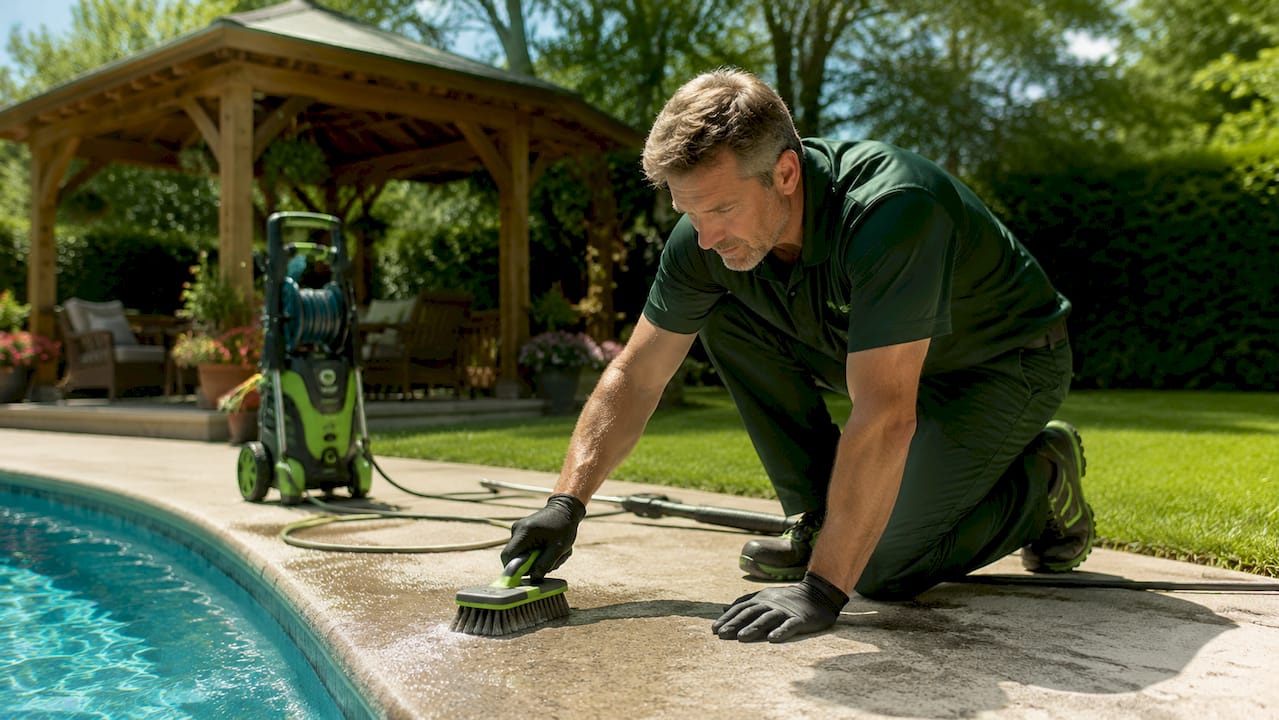
The method you use matters as much as the frequency. High-pressure washing damages concrete and strips protective sealers, especially on older or already-worn surfaces. Soft washing uses low pressure combined with oxygen-based or surface-specific cleaners to remove organic growth without harming the material underneath. That approach is the professional standard for pool decks.
Follow these steps for a thorough cleaning:
- Clear the deck completely. Remove all furniture, planters, and accessories. Dead zones under furniture harbor mold and algae that spread if not addressed directly.
- Inspect the surface. Check for cracks, sealer wear, or areas of heavy staining before you apply any cleaner.
- Choose the right cleaner. Chlorine bleach harms deck materials and nearby landscaping. Use oxygen-based or deck-specific cleaners instead. Test any new product in a small, hidden area first.
- Apply with low pressure. Soft washing or a low-pressure rinse removes growth without etching the surface or forcing water under the sealer.
- Rinse thoroughly. Residual cleaner left on the surface can attract dirt and degrade the sealer over time.
- Inspect again after cleaning. A clean surface reveals cracks, chips, or sealer gaps that were hidden under grime.
Pro Tip: Schedule your professional cleaning in early spring before heavy pool use begins. That timing removes winter organic buildup and gives you a full season of clean, safe surface.
What benefits does regular cleaning bring to pool deck maintenance?
Regular cleaning extends the life of your deck’s protective sealer. Sealants last 3–5 years under normal conditions, but UV exposure, moisture, and biological contamination shorten that window when the surface is not maintained. Annual cleaning removes the contaminants that accelerate sealer breakdown, pushing resealing intervals toward the longer end of that range. That alone saves hundreds of dollars per maintenance cycle.
The benefits extend to your pool equipment as well. A clean deck reduces contaminants entering the pool water, which lowers the load on your pump and filter system. Less debris in the water means fewer chemical adjustments and longer equipment life. Pool deck care is part of overall pool hygiene, not a separate task.
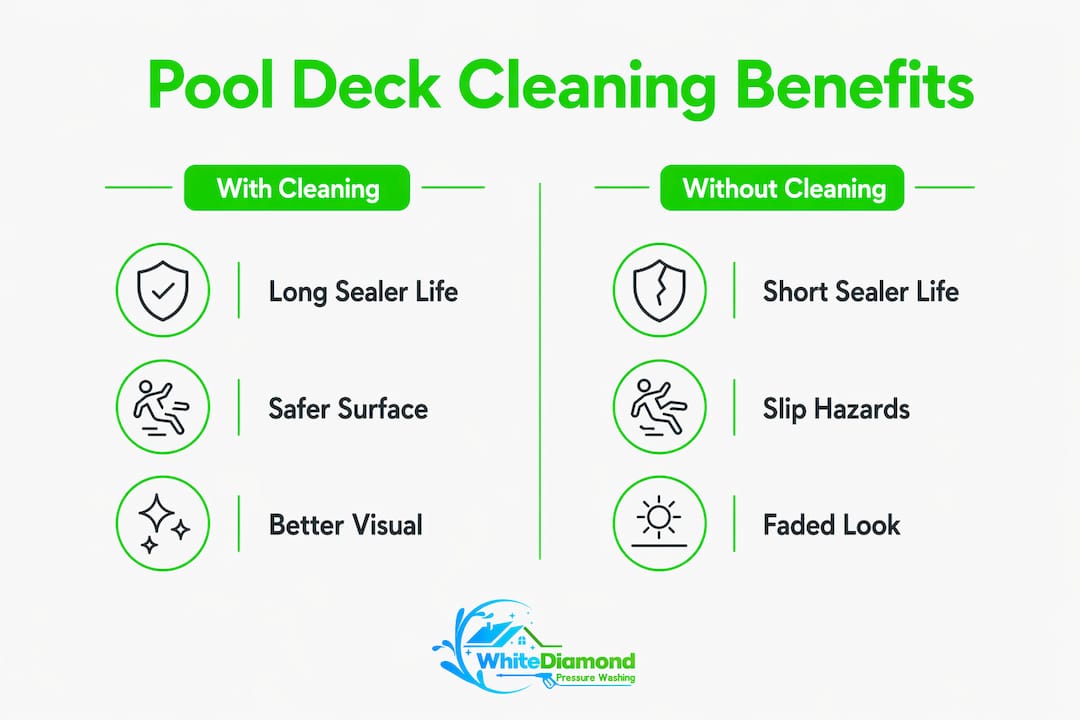
Here is a side-by-side look at what regular cleaning delivers versus what neglect costs:
| Area | With regular cleaning | Without regular cleaning |
|---|---|---|
| Sealer lifespan | 3–5 years per cycle | Shortened, requires early resealing |
| Surface condition | Intact, sealed, fade-resistant | Cracking, spalling, stained |
| Pool equipment | Lower debris load, longer life | Higher chemical and filter costs |
| Safety | Low slip risk | High slip-and-fall hazard |
| Property value | Maintained curb appeal | Visible deterioration reduces appeal |
Visual appeal also carries real financial weight. A pool deck in good condition contributes to curb appeal and supports higher property valuations. For property managers, a well-maintained pool area signals overall property quality to prospective tenants or buyers.
Should you DIY or hire a professional for pool deck cleaning?
DIY cleaning works well for routine maintenance between professional visits. Weekly sweeping, rinsing after heavy use, and spot-treating small stains are all tasks a homeowner can handle with basic tools. The right soft cleansers for decks and a garden hose are enough for light upkeep.
Professional services become the better choice in specific situations:
- Widespread algae or mold growth that covers large sections of the deck
- Sealed concrete or pavers that require surface-specific cleaners and calibrated pressure
- Delicate materials like travertine, natural stone, or decorative overlays that are easily damaged
- Pre-sealing preparation where thorough cleaning is mandatory to avoid trapping contaminants under new sealer
- Annual deep cleaning where professional equipment reaches areas a garden hose cannot
The cost of professional cleaning is predictable and modest compared to the cost of resurfacing or resealing a deck prematurely. Professionals also conduct inspections during cleaning, catching early mechanical or structural issues before they become expensive. Whitediamondpressurewashing, serving Citrus County and surrounding regions, uses low-pressure soft washing techniques specifically designed to protect deck materials while removing organic growth completely.
Pro Tip: If you are unsure whether your deck needs professional attention, look at the grout lines and shaded areas near the pool edge. Those spots accumulate the most growth and are the first to show sealer failure.
Key Takeaways
Regular pool deck cleaning is the single most cost-effective maintenance step for preventing slip hazards, extending sealer life, and protecting property value.
| Point | Details |
|---|---|
| Safety comes first | Algae and mold create slip hazards within weeks in humid climates. |
| Clean before you reseal | Cleaning prior to sealing is mandatory to avoid locking contaminants under new sealant. |
| Use the right method | Soft washing with oxygen-based cleaners protects surfaces; high pressure strips sealers. |
| Schedule professional cleaning annually | Once or twice a year keeps sealer intervals at the 3–5 year maximum. |
| Clean decks protect pool equipment | Fewer contaminants entering the pool means lower filter and pump maintenance costs. |
What I have learned from years of watching homeowners skip this step
Most homeowners treat pool deck cleaning as optional until something goes wrong. That is the wrong frame entirely. The deck is the most trafficked wet surface on your property. It gets foot traffic from wet, bare feet all season long. Algae does not announce itself before it becomes a fall hazard.
The insight that changed how I think about this: organic growth accelerates non-linearly. A small patch of mold in a shaded corner does not stay small. It spreads, and once it covers a meaningful portion of the deck, you are no longer dealing with a cleaning job. You are dealing with a restoration project.
The homeowners I respect most treat pool deck cleaning the same way they treat changing smoke detector batteries. It goes on the calendar. It happens before there is a visible reason to do it. That proactive mindset is what separates a deck that lasts 20 years from one that needs resurfacing in 8.
Property managers have even more reason to stay ahead of this. A documented cleaning schedule is a liability shield. One slip-and-fall claim costs more than a decade of professional cleaning visits. The math is not complicated.
My honest recommendation: do not wait for green. Schedule your cleaning now, use a professional for the annual deep clean, and handle the weekly sweeping yourself. That combination keeps your deck safe, your sealer intact, and your property looking like it is cared for.
— Bobby
Whitediamondpressurewashing keeps your pool deck safe and protected
Your pool deck takes a beating every season from sun, water, foot traffic, and organic growth. Whitediamondpressurewashing specializes in professional exterior cleaning for residential and commercial properties across Citrus County, using soft washing and low-pressure techniques that remove algae, mold, and chemical residue without damaging your surface or sealer.

Whether your deck is sealed concrete, pavers, travertine, or a decorative overlay, the team at Whitediamondpressurewashing matches the cleaning method to your specific material. Get a free estimate and see what a professionally cleaned pool deck looks like at Whitediamondpressurewashing.com. You can also review the full list of available cleaning services to find the right fit for your property.
FAQ
Why is pool deck cleanliness important for safety?
Algae, mold, and mildew on wet pool decks create slick surfaces that significantly raise the risk of slip-and-fall injuries. In humid climates, visible organic growth can appear within weeks of the last cleaning.
How often should a pool deck be professionally cleaned?
Professional cleaning once or twice a year is the recommended standard for most residential pool decks, with weekly sweeping in between to prevent debris buildup.
Does cleaning a pool deck actually extend its lifespan?
Yes. Regular cleaning removes the contaminants that break down protective sealers, keeping resealing intervals at the 3–5 year maximum and preventing premature cracking and fading.
Is pressure washing safe for pool decks?
High-pressure washing damages concrete and strips sealers. Soft washing with low pressure and oxygen-based cleaners is the safer and more effective method for pool deck surfaces.
What happens if you seal a pool deck without cleaning it first?
Sealing over dirt, algae, or chemical residue traps those contaminants under the sealant, accelerating breakdown and shortening the sealer’s effective lifespan significantly.