

TL;DR:
- Rust migration on driveways occurs when iron particles oxidize in contact with moisture and oxygen, leaving stains. Identifying the pattern helps locate the source, such as irrigation, metal contact, or internal rebar, which must be addressed to prevent recurrence. Proper cleaning uses oxalic or phosphoric acid, and sealing the surface inhibits future rusting.
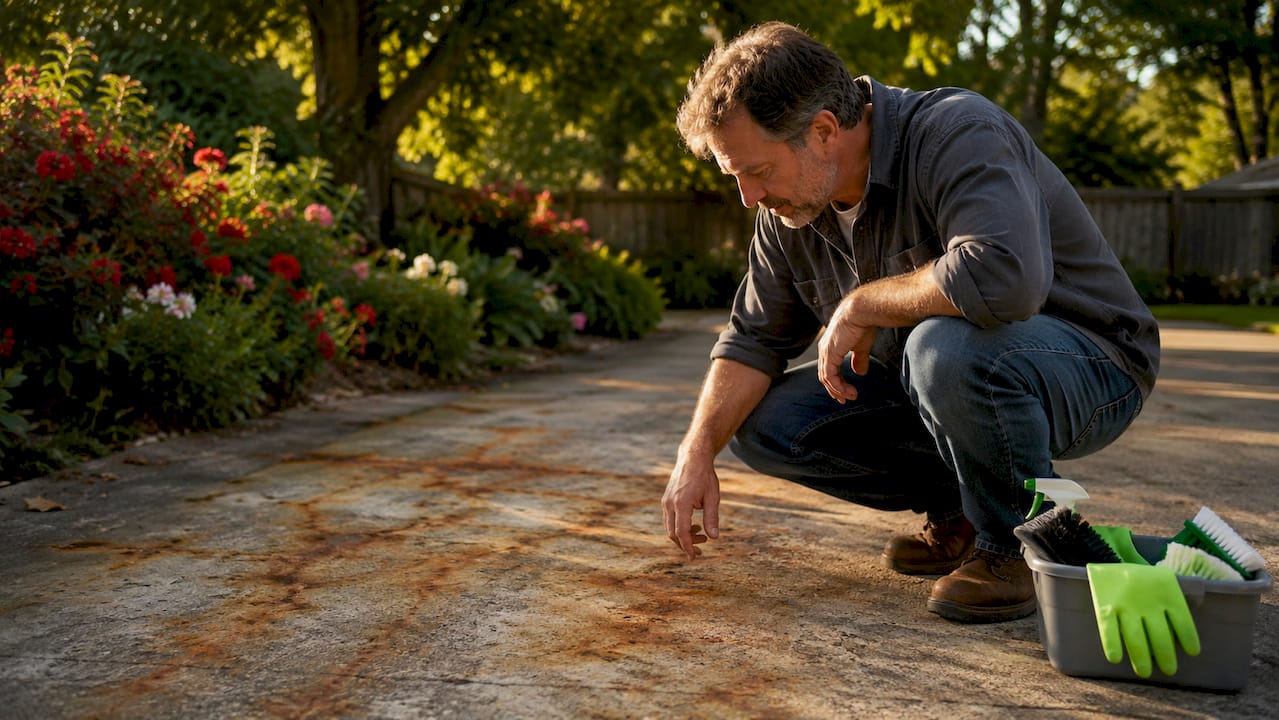
Rust migration on driveways is defined as the process where iron particles oxidize on contact with moisture and oxygen, leaving orange-brown stains on concrete or paved surfaces. The iron can come from metal patio furniture, rebar near the surface, iron-bearing aggregate in the concrete mix, or iron-rich irrigation and well water. These stains are not random. They follow predictable patterns that reveal exactly where the iron is coming from. Explaining rust migration on driveways matters because cleaning the stain without removing the source guarantees the stain comes back. Understanding what drives rust formation is the first step toward fixing it permanently.
What causes rust migration on driveways?
Rust migration results from iron oxide formation when iron sources react with moisture and oxygen on or beneath the driveway surface. The chemistry is simple: iron plus water plus oxygen produces iron oxide, which is rust. The stain you see on the concrete is that iron oxide depositing on the surface as water evaporates or moves through the slab.
The iron sources vary more than most homeowners expect. Common culprits include:
- Metal patio furniture or tools left sitting on the driveway
- Steel rebar or wire mesh embedded too close to the concrete surface
- Iron-bearing aggregate mixed into the concrete during construction
- Irrigation or well water with elevated iron content
- Metal fasteners, nails, or hardware dropped and forgotten on the surface
Timing matters too. Stains often worsen after rain cycles or repeated freeze-thaw events because moisture persistence accelerates oxidation. You may not see a stain after one wet season, but after two or three years of moisture cycling, the iron deposits become visible. This delayed appearance catches many homeowners off guard.
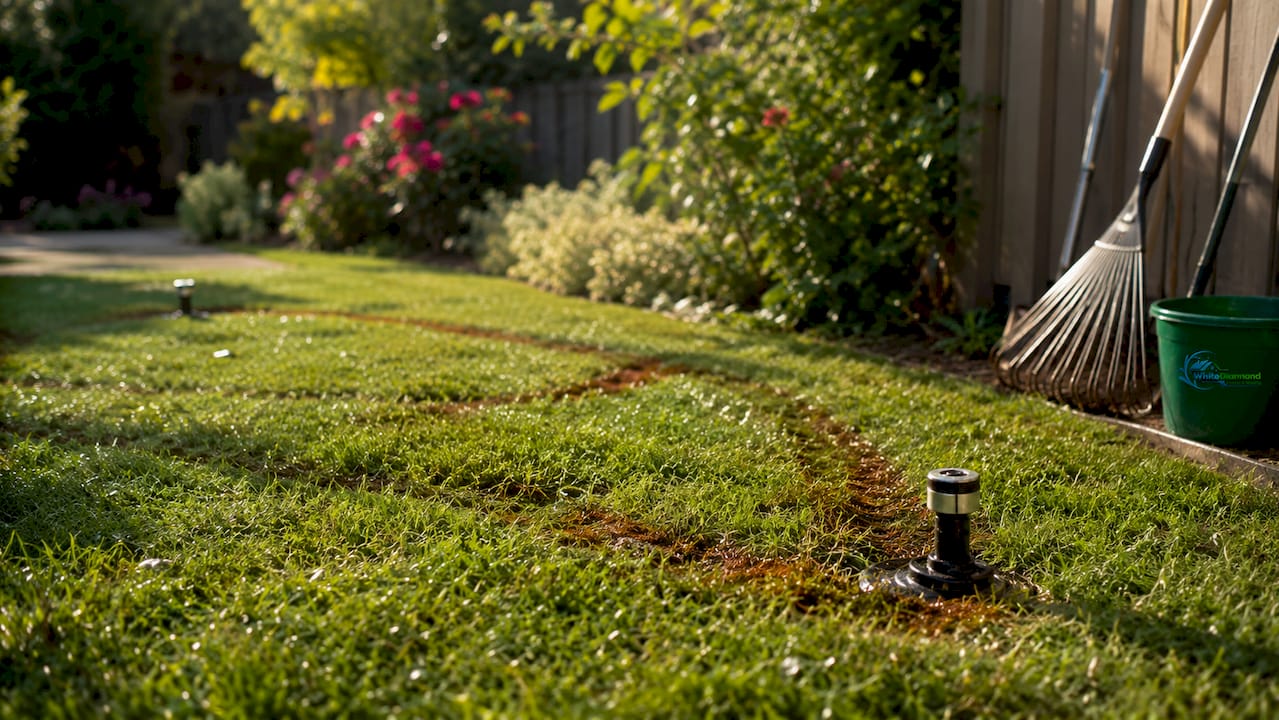
Iron in irrigation or well water above 0.3 ppm is enough to cause rust spots along sprinkler arcs or drip lines. That threshold is lower than most people assume. A water supply that looks perfectly clear can still carry enough iron to stain a driveway over time.
How do you identify the source of rust stains?
Identifying the source of rust stains requires reading the pattern, not just the color. Matching stain patterns to their source is the fastest path to a correct diagnosis and an effective treatment. Treating the wrong source wastes time and money.
Here is what different patterns tell you:
- Sprinkler arcs or curved lines: Iron-rich irrigation water is the likely source. The stain follows the spray path as water evaporates and leaves iron deposits behind.
- Stains at furniture legs or tool contact points: Surface metal contact is the cause. Moving the object usually confirms it by revealing a clean patch underneath.
- Random freckles across the surface: Iron-bearing aggregate in the concrete mix is releasing iron particles as the surface weathers.
- Stains aligned with cracks or control joints: Rebar or wire mesh beneath the surface is corroding. Water enters through the crack, contacts the metal, and carries rust to the surface.
- Drip-line patterns near planters or downspouts: Iron-rich water pooling or dripping in a fixed location is the source.
Pro Tip: Test your irrigation or well water for iron content if you see stain patterns that follow sprinkler arcs. A basic water test kit from a hardware store gives you a result in minutes and confirms whether your water supply is the driver.
Timing also helps with diagnosis. Stains that appear or intensify after rain or irrigation cycles point to water-borne iron. Stains that stay fixed and do not grow after wet weather are more likely from surface contact or internal aggregate. When rust stains appear alongside concrete spalling or visible cracking, suspect rebar corrosion rather than a surface source. That distinction changes the entire repair approach.
How to eliminate rust stains from your driveway
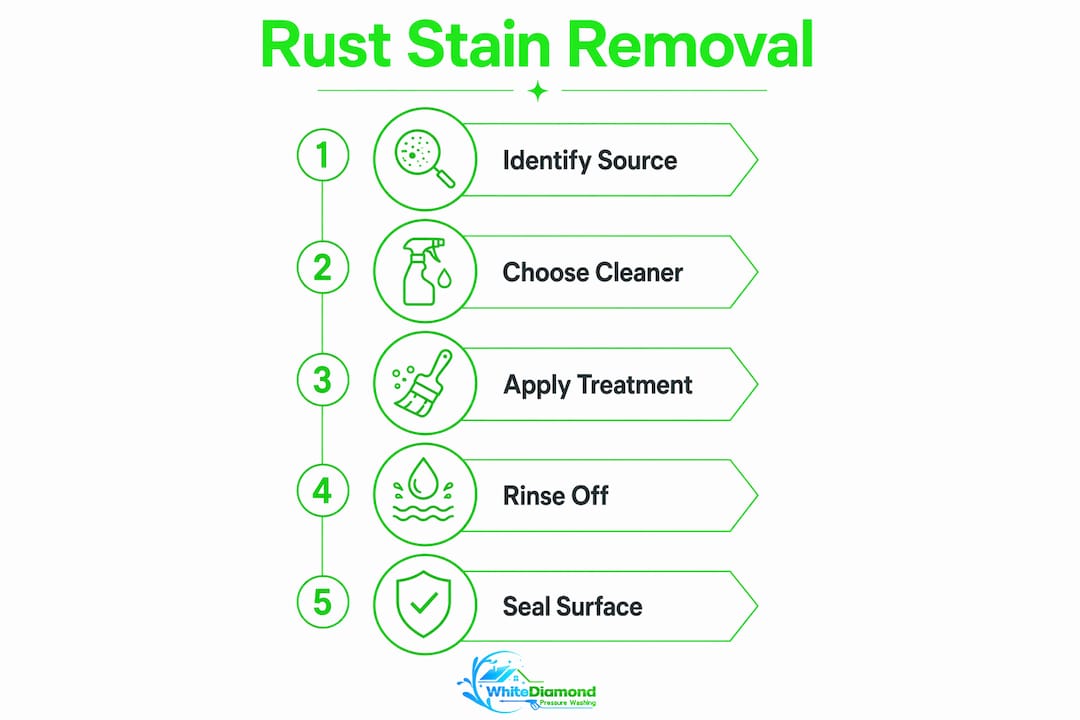
Removing rust stains from concrete requires the right chemistry matched to the stain’s severity. The wrong product either fails to work or damages the surface.
Choosing the right cleaning agent
Oxalic acid-based rust removers are the preferred choice for set-in rust on concrete. Oxalic acid breaks down iron oxide so it can be rinsed away without etching the surface. Phosphoric acid is another rust-targeted option that works on similar principles. Both are widely available at hardware stores and home improvement centers.
Muriatic acid is a common mistake. Muriatic acid etches concrete and risks permanent discoloration, making the surface look worse than the original rust stain. Avoid it for routine rust removal.
For light surface rust from recent furniture contact, household acids like white vinegar or lemon juice can lift the stain. They work by the same acid-dissolves-iron-oxide mechanism, just at a lower concentration. Their limits show up quickly on older or deeper stains.
Step-by-step removal process
- Wet the stained area with clean water to prevent the cleaner from absorbing too quickly into dry concrete.
- Apply an oxalic acid-based cleaner according to the product label. Allow the recommended dwell time, typically 5–15 minutes.
- Scrub with a stiff-bristle brush to work the cleaner into the stain.
- Rinse thoroughly with clean water. Pressure washing after chemical treatment extracts loosened residue more effectively than a garden hose alone.
- Repeat if the stain is partially lifted but still visible.
Pro Tip: Wear chemical-resistant gloves and eye protection when working with oxalic or phosphoric acid. Both are mild compared to muriatic acid, but skin and eye contact still causes irritation.
Cleaning removes the visible stain. It does not remove the iron source beneath the surface. Rust discoloration returns after moisture events if the underlying iron source stays active. For recurring stains, professional cleaning combined with source removal is the only lasting fix. Whitediamondpressurewashing handles deep-set and recurring rust stains using industry-approved methods that protect the concrete surface while delivering thorough results.
How do you prevent rust migration and protect your driveway?
Prevention focuses on cutting off the iron supply before it reaches the concrete surface. Long-term driveway maintenance techniques that address rust sources consistently outperform repeated cleaning cycles.
Key prevention practices include:
- Remove or isolate metal objects. Place rubber or plastic feet under metal furniture legs. Store metal tools in a shed or garage rather than on the driveway. Even brief contact during wet weather is enough to start a stain.
- Adjust irrigation coverage. Redirect sprinkler heads so iron-rich water does not spray directly onto concrete. If well water is the source, a whole-house iron filter reduces iron content before it reaches the irrigation system.
- Seal the concrete surface. Penetrating sealers reduce moisture absorption, which slows the oxidation process that drives rust migration. Sealing does not remove internal iron sources, but it limits the moisture contact that activates them.
- Repair cracks promptly. Cracks and control joint damage let water reach rebar directly. Filling cracks with a concrete patching compound cuts off that water pathway before corrosion advances.
- Schedule regular inspections. Walk the driveway after the first heavy rain of the season. Early rust spots are far easier to treat than stains that have set through multiple wet cycles.
| Prevention method | What it addresses |
|---|---|
| Rubber furniture feet | Stops surface metal contact stains |
| Irrigation adjustment | Reduces iron-rich water contact |
| Penetrating sealer | Limits moisture ingress and oxidation |
| Crack repair | Blocks water access to rebar |
| Seasonal inspection | Catches new stains before they set |
Pro Tip: Apply a penetrating concrete sealer within two weeks of a professional rust stain removal treatment. The clean surface absorbs the sealer more evenly, giving you better long-term protection.
Regular driveway cleaning removes iron deposits before they oxidize fully into set stains. Catching iron contamination early, before it bonds to the concrete, is significantly easier than removing a stain that has gone through multiple wet seasons.
Key Takeaways
Rust migration on driveways is a recurring problem only when the iron source is left active. Removing the source, not just the stain, is what stops it.
| Point | Details |
|---|---|
| Iron source drives recurrence | Cleaning stains without removing the iron source guarantees the stain returns after the next wet cycle. |
| Pattern diagnosis saves time | Sprinkler arcs, crack-aligned stains, and furniture contact points each point to a different iron source and treatment. |
| Oxalic acid is the right chemistry | Oxalic and phosphoric acid-based cleaners remove rust without etching concrete, unlike muriatic acid. |
| Sealing slows future staining | Penetrating sealers limit moisture absorption, reducing the oxidation that causes rust migration. |
| Structural rust needs more than cleaning | Rust near cracks or spalling likely signals rebar corrosion, which requires repair beyond surface treatment. |
What I’ve learned after years of reading rust stains
Most homeowners treat rust stains as a cleaning problem. The stain appears, they scrub it off, and they consider the job done. Then it comes back in three months, and they scrub it off again. That cycle is expensive and frustrating, and it happens because the cleaning never addressed the actual cause.
The most useful skill in rust stain management is reading the pattern before reaching for a cleaner. A curved arc of rust near the lawn edge is a completely different problem from a single dark spot under a metal chair. They look similar in photos, but they require entirely different fixes. The arc means your irrigation water is the source. The spot means your furniture is the source. Treating both the same way wastes product and time.
The other thing worth saying plainly: most rust stains are cosmetic, not structural. A few orange spots on your driveway do not mean the slab is failing. But rust stains that appear alongside cracking, surface flaking, or visible metal poking through the concrete are a different story. That combination points to rebar corrosion, and cleaning the surface does nothing to stop it. A concrete contractor needs to assess the depth of the corrosion and whether the slab integrity is at risk.
Realistic expectations matter here. If the iron source is internal, whether from aggregate or corroding rebar, you are managing the staining rather than eliminating it permanently. Sealing, regular cleaning, and prompt crack repair slow the process considerably. They do not reverse what is already happening inside the concrete. Homeowners who understand that distinction make smarter decisions about when to clean, when to seal, and when to call a contractor.
— Bobby
Professional rust stain removal with Whitediamondpressurewashing
Persistent rust stains on driveways respond best to professional treatment, especially when the staining is deep-set, covers a large area, or keeps returning after DIY attempts.

Whitediamondpressurewashing provides professional driveway cleaning services for homeowners and property managers across Citrus County, using industry-approved methods that remove rust stains without damaging concrete. The team combines chemical treatment with controlled pressure washing to extract loosened residue thoroughly. After cleaning, sealing services protect the surface and slow future staining. For an assessment of your driveway’s condition and a customized cleaning plan, visit Whitediamondpressurewashing or request a free estimate today.
FAQ
What is rust migration on a driveway?
Rust migration is the process where iron particles from metal objects, rebar, aggregate, or iron-rich water oxidize on contact with moisture and oxygen, leaving orange-brown stains on concrete surfaces.
Why do rust stains keep coming back after cleaning?
Recurring rust stains indicate an active iron source beneath or above the surface. Cleaning removes the visible stain but leaves the source intact, so the stain reappears after the next moisture event.
What is the safest way to remove rust from concrete?
Oxalic acid or phosphoric acid-based cleaners are the safest and most effective options. They break down iron oxide without etching the concrete surface, unlike muriatic acid, which causes permanent damage.
How do I know if rust stains mean structural damage?
Rust near cracks or spalling suggests rebar corrosion beneath the surface, which is a structural concern. Isolated surface stains without cracking are typically cosmetic and do not indicate slab failure.
Does sealing a driveway prevent rust stains?
Penetrating sealers reduce moisture absorption, which slows the oxidation process that causes rust migration. Sealing limits future staining but does not remove iron sources already present inside the concrete.