

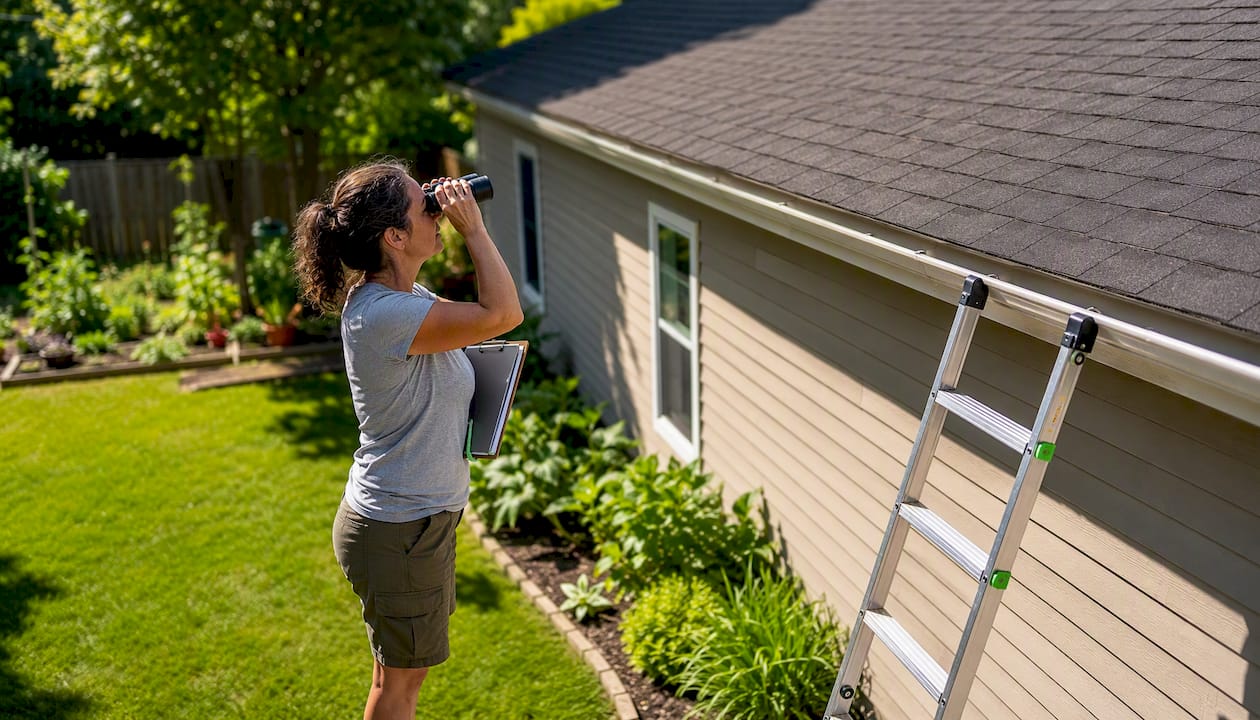
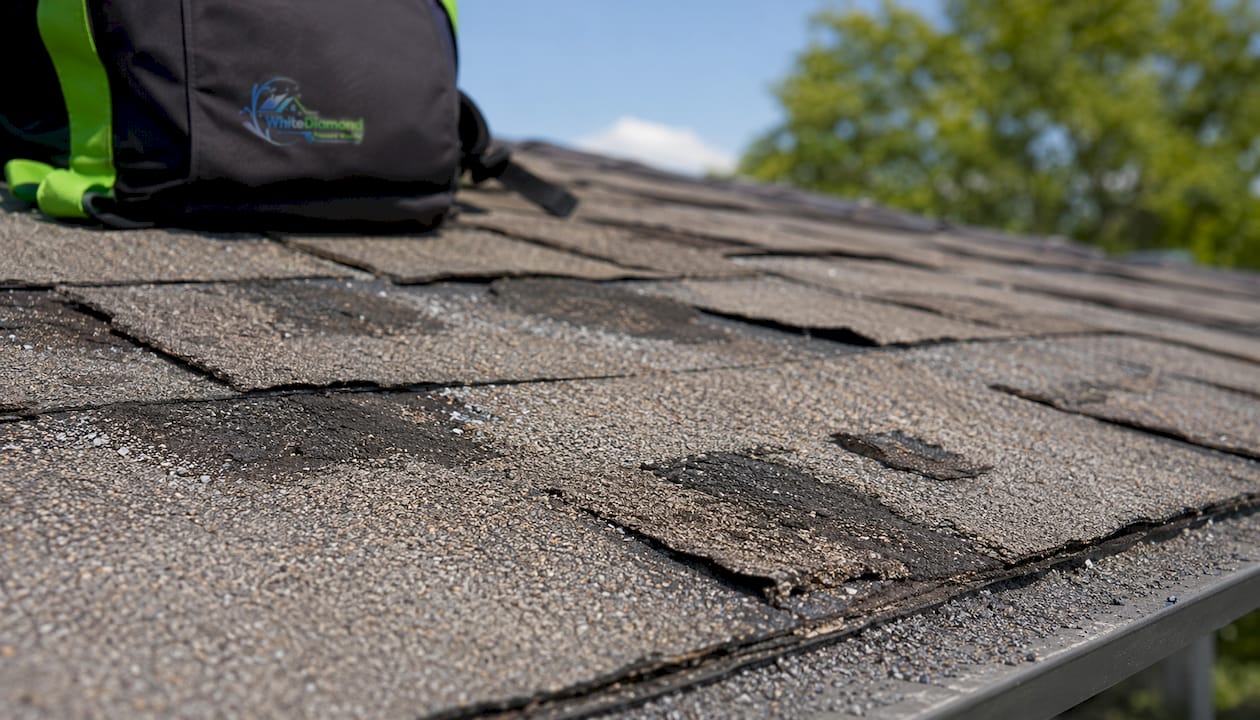
Missing roofing granules expose the asphalt mat underneath, and once that happens, the shingle’s decline accelerates faster than most homeowners expect. This guide to understanding shingle granule loss gives you a practical framework: spot the signs early, document what you find, and avoid the one cleaning mistake that turns a maintenance issue into a premature replacement. Three things to do right now: (1) scan your roof from the ground and photograph any bald patches or uneven color; (2) check your gutters and downspouts for coarse, sand-like sediment; (3) hold off on any pressure washing until a professional assesses the roof. The Asphalt Roofing Manufacturers Association (ARMA) explicitly warns against high-pressure cleaning of asphalt shingles. A garden hose runs under 60 PSI; pressure washers routinely exceed 1,500 PSI. That gap is where roofs get damaged. Whitediamondpressurewashing’s low-pressure soft-wash approach stays well below that threshold, which is why the method matters before anything else.
Table of Contents
- What shingle granules do and why losing them matters
- How to tell if your roof is losing granules
- Common causes of granule loss: what each one looks like
- Why high-pressure washing is risky and what a real soft wash means
- When granule loss calls for repair versus full replacement
- When to call a roof cleaner versus a roofer
- What a professional soft-wash service looks like step by step
- How to reduce future granule loss
- Key Takeaways
- The part most homeowners get wrong
- Whitediamondpressurewashing protects your roof, not just cleans it
- Authoritative sources to consult
What shingle granules do and why losing them matters
Granules are the ceramic-coated mineral particles pressed into the surface of every asphalt shingle. They are not decorative. Their job is to absorb and deflect UV radiation, slow oxidation of the asphalt binder, resist fire spread, and give the shingle its color and texture. Once they start going, the asphalt underneath takes direct sun exposure, dries out, and becomes brittle. That brittleness causes cracking, which lets water in, which accelerates shedding of the remaining granules. The failure is self-reinforcing.
The protective functions granules provide:
- UV shield: Granules block direct sunlight from reaching the asphalt binder, slowing oxidation and extending shingle flexibility.
- Fire and weather resistance: The mineral layer adds a measurable barrier against heat, wind-driven rain, and freeze-thaw stress.
- Color and cosmetic retention: Fading or patchiness from the ground is often the first visible sign that granule coverage is thinning.
- Structural integrity: Granule coverage keeps the asphalt pliable. Exposed asphalt stiffens, cracks, and loses its ability to seal around nails and overlaps.
Understanding asphalt shingle lifespan factors helps put granule loss in context: premium architectural shingles can hold their granule bond for 25–30 years, while budget 3-tab shingles often begin significant shedding at 15–20 years.
How to tell if your roof is losing granules
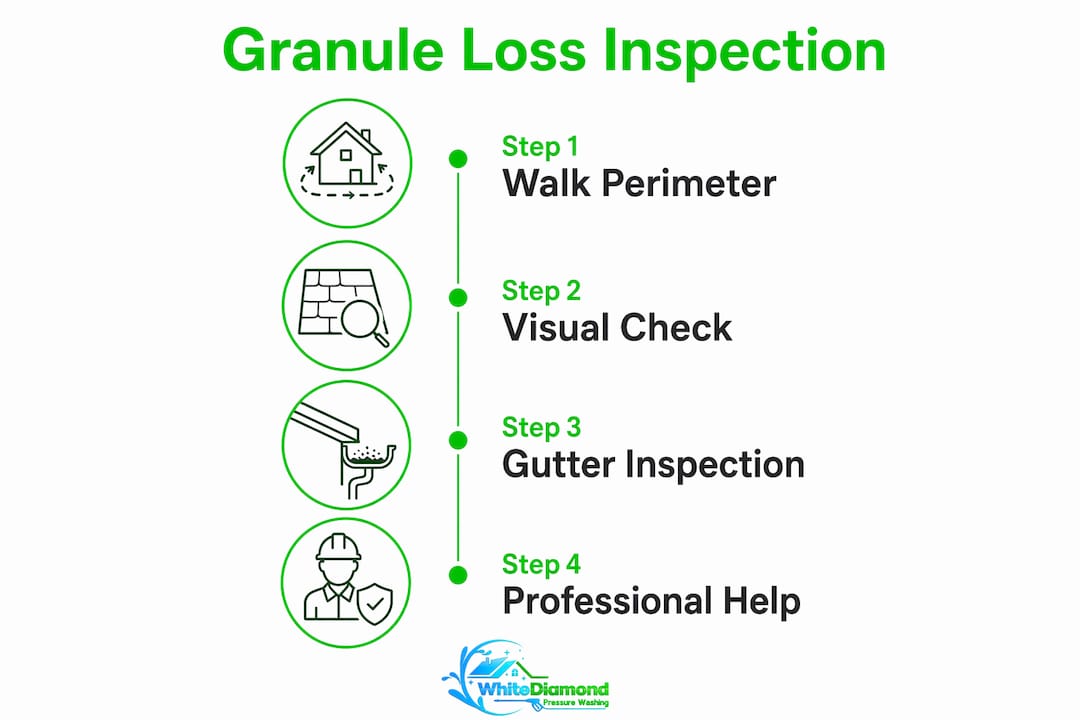
Start at the ground. Walk the perimeter of your home and look for dark or bald patches on the roof surface, uneven color across slopes, and any areas that look shiny compared to the rest. South- and west-facing slopes take the most UV punishment and typically show loss first.
Pro Tip: Never climb onto a brittle or aging roof to check for granule loss. Use binoculars from the ground or a ladder at the eave level only. A professional inspection is the right call when you suspect structural damage or can’t see clearly from below.
Next, check the gutters. Scoop a handful of sediment from the trough near a downspout. Coarse, gritty material that looks like coarse sand or coffee grounds is granule sediment. A light dusting on a newer roof is normal. A thick, repeated layer on a roof that’s 15 years or older is a warning sign that the shingles are in accelerated decline.
What to photograph for insurance or roofer review:
- Wide shots of each roof slope from ground level
- Close-ups of any visible bald or dark patches
- Gutter sediment before and after cleaning
- Downspout discharge areas after rain
- Any curling, cracking, or lifted shingle edges visible from the eave
A ground-level visual is sufficient for an initial assessment. If you see bald patches, curling, or heavy gutter sediment, that’s when a licensed roofer needs to get on the roof with a ladder.
Common causes of granule loss: what each one looks like
Inspectapedia identifies multiple distinct types of granule loss, each with different diagnostic clues and different insurance implications.
- Normal aging/UV degradation: Gradual, uniform loss across the whole roof. The asphalt binder weakens over years, granules loosen, and rain carries them into gutters. Insurance treats this as wear and tear, not a covered event.
- Hail and storm damage: Localized, pitted, or circular bare spots. Even small hail (¾ inch) can dislodge granules on an aging roof. This type of loss may qualify for an insurance claim if documented promptly after the storm. For a detailed look at identifying this pattern, see how to spot hail damage on a roof.
- Foot traffic: Visible wear lines or scuffed shingle butts along a path. Satellite installers, HVAC technicians, and holiday light crews are frequent culprits. Preventable, and not covered by insurance.
- Manufacturing or installation defects: Uniform early shedding concentrated on shingles from a specific area or pallet. GAF’s technical guidance notes that new roofs normally shed “rider” granules in the first 6–12 months; if heavy shedding continues past that window or covers a substantial portion of the surface, it may indicate a defect eligible for a warranty claim.
- Improper cleaning: Aggressive pressure washing strips granules mechanically. The damage often isn’t visible immediately but shows up as fresh sediment in gutters right after the cleaning job.
The insurance distinction matters: sudden storm damage is potentially claimable; slow wear and cleaning damage are not.
Why high-pressure washing is risky and what a real soft wash means
ARMA guidance is unambiguous: never use a pressure washer on an asphalt shingle roof. High pressure strips granules, forces water under shingle laps, breaks adhesive seals, and can void manufacturer warranties. The numbers explain why.
| Method | Typical at-surface PSI | Chemical mix | Granule risk |
|---|---|---|---|
| Garden hose | Under 60 PSI | None | Minimal |
| Soft wash (professional) | Under 60 PSI | 1.5%–8% sodium hypochlorite + surfactant | Low when applied correctly |
| Pressure washing | 1,500+ PSI | Varies | High — documented granule loss |
A true soft wash relies on chemistry and dwell time, not mechanical force. The Asphalt Roofing Manufacturers Association (ARMA) recommends a 50:50 bleach-and-water solution applied with low pressure, allowed to dwell 15–20 minutes, then rinsed with low-pressure water. The cleaning happens chemically. The rinse is just cleanup.
The label “soft wash” alone means nothing. What causes granule loss during a so-called soft wash is rinse technique: tight nozzles, upward spray angles, or close-range rinsing all apply mechanical force that dislodges granules even at lower pressures. Safe variables are a wide fan spray, a downward angle, and enough dwell time that the chemistry does the work before any water touches the surface.
Pro Tip: Before hiring any roof cleaner, ask these four questions in writing: (1) What PSI reaches the shingle surface? (2) What nozzle type and spray angle do you use? (3) What is your sodium hypochlorite concentration and dwell time? (4) Will you document those settings and provide before/after photos? A contractor who won’t answer these specifically is a red flag. Check low-pressure roof washing guidance for what documented answers should look like.
When granule loss calls for repair versus full replacement
Isolated damage affecting only a small portion of the roof with flexible surrounding shingles may be repairable. Widespread granule loss with additional signs of damage usually indicates the need for roof replacement. Granules cannot be permanently reapplied to restore the original manufactured condition. Patching a badly affected shingle only works if the surrounding material is still pliable enough to lift without cracking.
Timeline expectations:
- Short-term (months): Moderate loss with no exposed substrate. Monitor, document, and schedule a professional inspection.
- Medium-term (1–3 years): Multiple slopes affected, some bald patches. Plan for replacement; get written estimates from licensed roofers now.
- Long-term (end of life): Widespread loss, brittleness, curling, or active leaks. Replacement is overdue.
Get written condition reports from at least two licensed roofers before committing to replacement. Those reports also serve as documentation for warranty or insurance evaluation.
When to call a roof cleaner versus a roofer
Call a soft-wash cleaning professional when biological growth (algae streaks, early moss) is the primary problem and the shingles still show intact granule coverage across most of the roof. The goal is removing organisms before they cause mechanical damage, not addressing structural failure.
Call a licensed roofer when you see bald patches, exposed asphalt, cracked or cupped shingles, brittleness, or any evidence of water intrusion inside the attic. A roofer needs to assess whether the substrate is compromised before any cleaning happens.
Before any contractor arrives, document:
- Wide-angle and close-up photos of all slopes
- Gutter sediment samples (photograph before cleaning)
- Roof age and manufacturer name if available
- Any storm records from the past 12 months
Questions to ask any contractor: What method do you use, and will you put it in writing? Are you licensed and insured in this state? Will you avoid high-pressure rinses on the shingles? Do you carry liability coverage for granule damage? Use the exterior cleaning vendor evaluation checklist to vet anyone you’re considering.
What a professional soft-wash service looks like step by step
- Site preparation (15–30 min): Contractor covers landscaping, closes windows, and wets down plants near the foundation to protect against runoff.
- Chemical application (15–30 min): Low-pressure sprayer applies sodium hypochlorite solution (typically 1.5%–8% depending on organism density) in a wide fan pattern, working downslope.
- Dwell time (15–20 min minimum): Chemistry kills algae, moss, and lichen at the root. No mechanical scrubbing.
- Low-pressure rinse or controlled weathering (15–30 min): Gentle rinse with a wide fan nozzle aimed downslope, or in some cases the biocide is left to weather off naturally over subsequent rains. Both approaches are safe when pressures and angles are controlled.
- Cleanup and gutter flush (15–30 min): Gutters and downspouts are flushed, runoff containment is removed, and the contractor documents PSI settings, chemical concentrations, and before/after photos.
Total service window for a typical residential roof: roughly 2–4 hours. Any contractor promising same-day dramatic results from a “quick blast” is describing pressure washing, not soft washing. See the soft-wash process explained for a detailed breakdown of what each phase should look like.
How to reduce future granule loss
Maintenance checklist for homeowners and property managers:
- Keep gutters clear: Blocked gutters cause water to back up under eaves, accelerating edge deterioration.
- Trim overhanging branches: Branches deposit debris, retain moisture, and create shaded zones where moss thrives.
- Address biological growth early: Early moss and algae respond to a single soft-wash treatment. Late-stage moss physically lifts shingle edges, increasing blow-off risk.
- Minimize foot traffic: Every unnecessary step on an aging roof dislodges granules. Schedule all rooftop work (HVAC, satellite, gutters) together to reduce trips.
- Maintain attic ventilation: Excessive heat beneath the deck “cooks” shingles from below, accelerating the loss of volatile oils that hold granules in place.
Pro Tip: Inspect gutters and visible slopes after every major storm. Annual roof reviews, ideally in spring and fall, catch biological growth and minor damage before they compound. Early soft-wash treatment costs a fraction of what late corrective work runs.
Schedule professional soft washing when algae or moss is visible but granule coverage is still intact. Defer to a roofer when you see bald patches, exposed substrate, or repeated leaks. The benefits of soft-wash roof cleaning are real, but only when the roof is structurally sound enough to benefit from cleaning rather than replacement.
Key Takeaways
Granule loss is irreversible once the asphalt mat is exposed, making early detection and documentation the most important moves a homeowner can make.
| Point | Details |
|---|---|
| Granule loss is irreversible | Exposed asphalt oxidizes rapidly; replace affected shingles before damage spreads. |
| Document before anything else | Photograph slopes, gutter sediment, and storm records before any contractor touches the roof. |
| Avoid high-pressure cleaning | ARMA warns pressure washing uses pressures much higher than garden hoses and causes direct granule loss and warranty voids. |
| Repair vs. replace threshold | Isolated loss may be repairable; widespread loss typically requires replacement. |
| Whitediamondpressurewashing | Provides ARMA-aligned soft-wash roof cleaning in Citrus County using documented low-pressure methods. |
The part most homeowners get wrong
Most of the roof damage I see described online comes not from storms or age, but from well-intentioned cleaning. A homeowner sees black streaks, rents a pressure washer or hires the cheapest contractor, and the roof looks great for about three weeks. Then the gutters fill with granules and the shingles start showing bare spots. The cleaning felt like a win. The damage shows up later.
The conventional wisdom that “a clean roof is a healthy roof” is only half right. A roof cleaned with the wrong method is worse off than one left alone. ARMA’s guidance on this is not a technicality. It reflects what actually happens to asphalt shingles under high-pressure water: granules come off, seals lift, and the clock on replacement moves forward by years.
The smarter framing is this: treat your roof like you’d treat a painted wood surface. You wouldn’t blast paint off a deck with a pressure washer and call it maintenance. The same logic applies here. Chemistry first, minimal mechanical contact, and documentation of what was done and at what pressure. That’s the standard worth holding any contractor to.
Whitediamondpressurewashing protects your roof, not just cleans it
Soft washing done right means your shingles come out cleaner and no worse for wear. Whitediamondpressurewashing serves homeowners and property managers across Citrus County and surrounding areas using low-pressure, chemistry-first roof cleaning that stays well within ARMA-aligned thresholds. Every job includes documented PSI settings, chemical concentrations, plant and runoff protection, and before/after photos you can use for warranty or insurance records.

Written guarantees on workmanship come standard, and the team won’t proceed if a roof inspection reveals conditions that call for a roofer rather than a cleaner. That’s the honest version of a professional soft-wash service. Request a free estimate at whitediamondpressurewashing.com or browse the full services catalog to see what’s covered.
Authoritative sources to consult
- Asphalt Roofing Manufacturers Association (ARMA): The primary industry authority on cleaning methods, chemical concentrations, and what voids manufacturer warranties. Bring their algae and moss guidance to any conversation with a cleaning contractor.
- Inspectapedia — Granule Loss on Asphalt Shingles: Detailed inspection criteria covering eight types of granule loss, diagnostic patterns, and remaining-life assessment. Useful reference when preparing documentation for an insurer or roofer.
- GAF Technical Bulletin on Granule Loss: Manufacturer guidance on normal shedding in new roofs versus warranty-eligible defects. Pull this document when evaluating a roof under 12 months old or filing a warranty claim.
- Your shingle manufacturer’s warranty document: The single most important document for any insurance or warranty claim. It defines coverage thresholds, approved cleaning methods, and what voids coverage. If you don’t have it, contact the manufacturer with your installation date and address.
Recommended
- Roof Maintenance Tips 2025: What Homeowners Must Know – white-diamond-pressure
- Why inspection matters before pressure washing your home – white-diamond-pressure
- Why Assess Exterior Surface Age: A 2026 Property Guide – white-diamond-pressure
- Why Schedule Exterior Surface Inspections for Your Home – white-diamond-pressure