

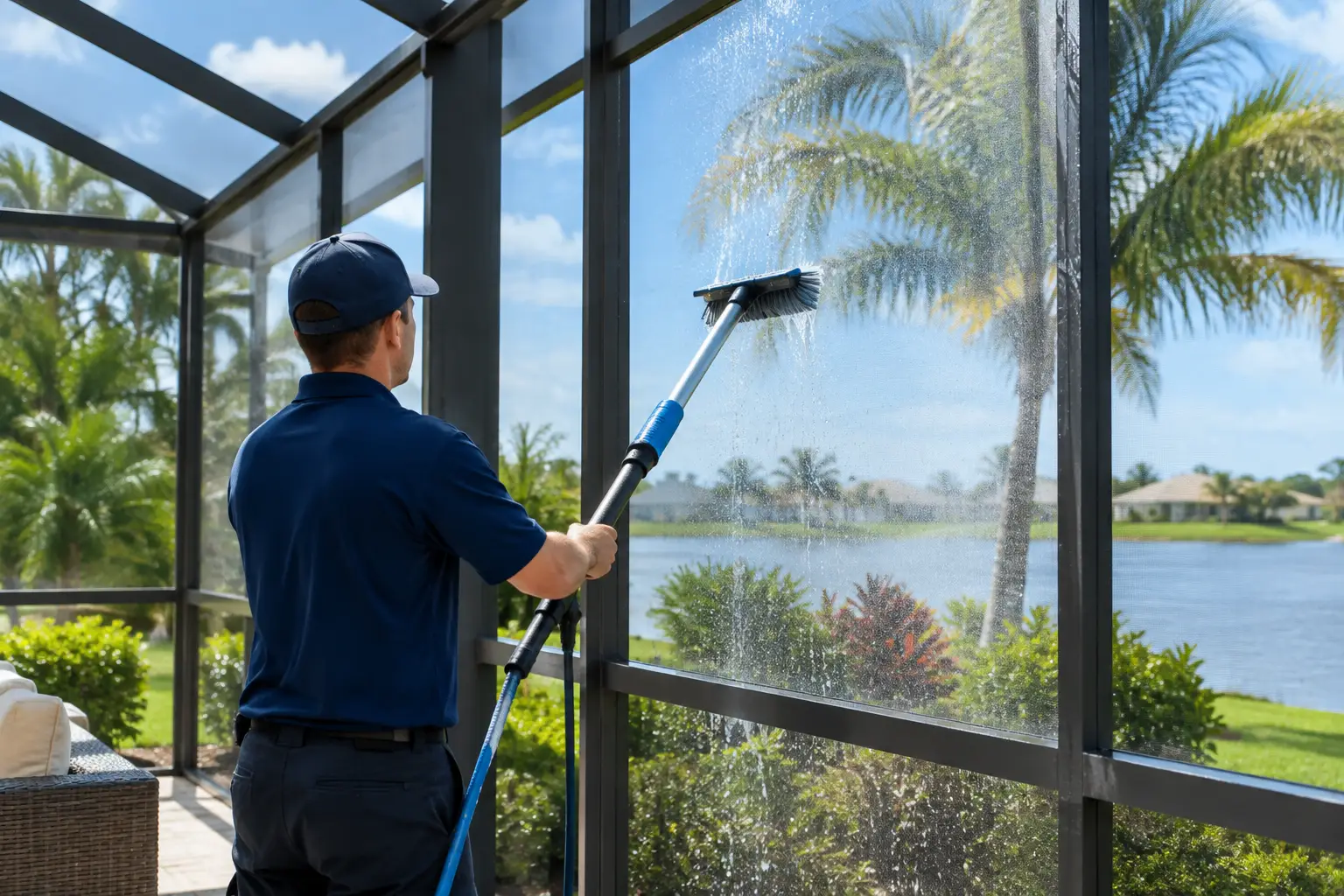
A lanai can go from a favorite place to have morning coffee to a space you avoid without much warning. In Citrus County, humidity, tree pollen, windblown debris, algae, and mildew collect quickly on screens and cage frames. A professional lanai screen cleaning service brings back the open, bright feeling of the space while treating delicate mesh, painted aluminum, deck surfaces, and nearby landscaping with care.
For many homeowners, the trouble is not simply that the screens look dirty. A buildup of green or black staining can make a pool enclosure feel neglected, block light, reduce the view of the yard, and leave the whole outdoor area looking older than it is. The right cleaning approach removes that buildup without turning a screen-cleaning appointment into a screen-repair project.
Why Florida Lanai Screens Get Dirty So Fast
Screened lanais are exposed to nearly everything Central Florida weather delivers. Moist air creates conditions where algae and mildew can grow. Afternoon storms splash soil and organic debris onto lower panels. Oak leaves, pine pollen, spider webs, and insects settle into the mesh. Near pools, airborne minerals and normal pool-area traffic can add another dull layer to the enclosure.
The aluminum structure collects staining, too. Horizontal rails, corners, gutters, and roof panels often hold moisture longer than open areas. That is why a lanai may look acceptable from inside but show heavy discoloration on the exterior frame, roof cage, or lower sections once you take a closer look.
Routine care helps, but rinsing with a garden hose usually does not remove established algae or mildew. Scrubbing aggressively can stretch, tear, or pull screen mesh loose from its spline. High pressure can do the same thing in seconds, especially on older screens that have already been weakened by sun exposure.
A Lanai Screen Cleaning Service Requires a Gentle Method
Not every exterior surface should be cleaned the same way. Concrete can handle a different process than vinyl siding, and a sturdy driveway is nothing like fine screen mesh. Lanais need a surface-appropriate plan that balances cleaning power with material protection.
A professional cleaning begins with an inspection of the enclosure. This helps identify loose screen panels, existing tears, fragile areas, aging paint, problem staining, and nearby plants that need extra attention. A careful technician can also determine whether the dirty appearance is primarily organic growth, accumulated grime, or staining that may need a different treatment.
For the screens and frame, low-pressure application is generally the safer choice. Appropriate cleaning agents are used to break down algae, mildew, and grime without blasting the mesh. The enclosure is then rinsed thoroughly, with attention to the framing, screen tracks, doors, roof panels, and hard-to-reach corners where residue tends to linger.
The difference is visible. Screens look clearer, painted aluminum looks brighter, and the lanai feels more inviting. Just as important, the work is done with respect for the materials that make the enclosure useful.
What About the Pool Deck and Cage Frame?
Lanai cleaning often works best as part of a larger pool-area refresh. The screen enclosure, deck, coping, patio furniture area, and exterior walls are all visible at once. Cleaning only one surface can make the remaining grime stand out.
That does not mean every surface should receive the same treatment. A textured pool deck, pavers, painted concrete, and cage frame each require the right pressure, cleaning solution, and rinse technique. If a homeowner also needs the deck cleaned, a professional can assess its condition and choose a method that improves appearance without harming coatings, grout lines, or surrounding surfaces.
Pool water also deserves consideration. The cleaning process should be planned carefully so runoff and cleaning products are managed responsibly. Covering or moving furniture, protecting plants, and keeping doors and windows secure are small details that make a meaningful difference in how smoothly the job goes.
Signs It Is Time to Schedule Cleaning
A lanai does not need to look completely green before it needs attention. Early cleaning is often easier on the enclosure and helps preserve the fresh appearance of the pool area. Consider scheduling service when the screens look hazy, the frame has streaking, or you notice mildew spots around corners and lower panels.
Other common signs include cobweb buildup, pollen that will not rinse away, dirty roof screens that reduce sunlight, and a musty appearance after a rainy season. Homeowners preparing for visitors, putting a property on the market, or returning to a seasonal home often choose lanai cleaning because it makes an immediate visual impact.
Frequency depends on the home. A heavily shaded property under mature trees may need attention more often than an open, sunny yard. Homes near wooded lots, water, or unpaved areas may collect more debris. For many Florida homes, professional cleaning once a year is a practical baseline, with additional service as needed after storms or periods of heavy growth.
Why DIY Screen Cleaning Can Become Expensive
There is nothing wrong with light homeowner upkeep. Removing leaves, wiping down furniture, and gently rinsing loose debris can help keep a lanai presentable between professional visits. The risks increase when heavy staining calls for stronger chemicals, ladders, pressure equipment, or extensive scrubbing.
A pressure washer set too high can slice a screen panel, bend aluminum components, or force water where it does not belong. Harsh, unapproved cleaners may discolor painted frames, affect plants, or leave residue behind. Reaching the upper cage and roof panels can also be difficult and unsafe without the right equipment.
Professional service is especially worthwhile when screens are older, the enclosure is large, or staining has built up over several seasons. The goal is not merely to make the lanai look clean for a day. It is to remove contaminants thoroughly while avoiding unnecessary damage and helping the enclosure stay attractive longer.
What a Careful Service Visit Should Feel Like
Homeowners should not have to worry about their landscaping, pool area, or exterior finishes while cleaning is underway. A dependable provider arrives prepared, explains the scope of work, and treats the property as carefully as their own.
Before cleaning begins, the work area should be cleared and protected as needed. Plants and surrounding surfaces deserve particular attention, especially when cleaning solutions are being used. A thorough rinse and cleanup after the service matter just as much as the application itself.
White Diamond Pressure Washing takes this detail-focused approach throughout the exterior cleaning process. For lanai and pool cage work, that means selecting a gentle method, addressing visible buildup from the screens and frame, and leaving the area looking refreshed rather than rushed through.
Keep the Fresh-Cleaned Look Longer
Once the lanai is professionally cleaned, a few simple habits can slow the return of debris and staining. Keep gutters and roof edges clear so dirty runoff does not spill onto the enclosure. Trim vegetation that presses against screens or holds moisture around the cage. After a storm, remove leaves and branches before they sit in corners or against lower panels.
It also helps to keep an eye on small screen damage. A loose spline, tiny tear, or bowed panel can worsen over time and invite insects into an otherwise comfortable outdoor space. Cleaning will not repair damaged screens, but it can make those issues easier to spot before they become more involved repairs.
Your lanai is part of your home, not an afterthought beyond the back door. When the screens are clear, the frame is free of mildew, and the deck feels clean underfoot, the entire space is ready for quiet mornings, family visits, and Florida evenings by the pool.