

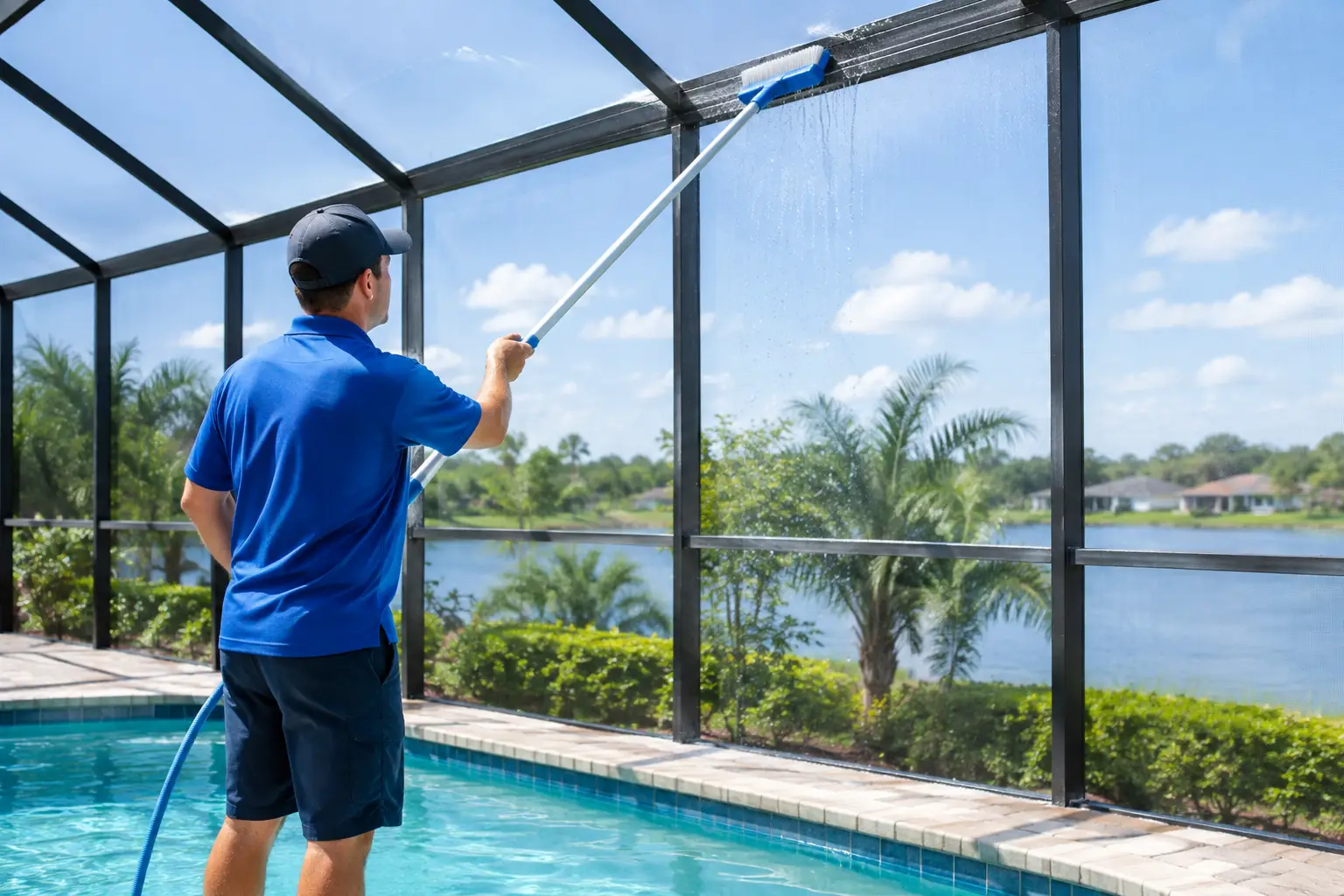
That green haze along your pool enclosure is more than a cosmetic problem. In Citrus County, warm temperatures, humidity, afternoon rain, and tree debris give algae and mildew plenty of chances to settle onto screens, aluminum frames, and the pool deck below. A professional pool cage cleaning service restores the bright, open feel of your lanai without treating delicate screens and painted surfaces like a driveway.
For many homeowners, the difference is immediate. What felt dark, dingy, and closed in can look clean and inviting again – ready for morning coffee, family visits, or a quiet afternoon by the water. The best results come from using the right cleaning method for each part of the enclosure, not simply using more pressure.
Why Florida Pool Cages Get Dirty So Quickly
A pool cage does a lot of work. It keeps out insects, blocks falling leaves, and creates a comfortable transition between the house and pool. At the same time, it is exposed to moisture from rain, sprinkler overspray, pool humidity, and the damp air that is part of life near Homosassa and the Gulf Coast.
That moisture encourages algae, mildew, and organic staining. You may first notice dark streaks on the frame, green buildup around lower screen panels, or dusty-looking screens that limit the view. Pollen, cobwebs, leaves, and airborne dirt can collect in corners and roof panels, especially where the enclosure meets the house.
Waiting too long can make routine cleaning more difficult. Buildup may hold moisture against the enclosure, leave stubborn discoloration, and make the entire outdoor area look neglected even when the pool itself is clean. Regular care helps preserve the appearance of the cage, the deck, and the surrounding exterior.
What a Pool Cage Cleaning Service Should Include
A quality pool cage cleaning service is careful from the beginning. Before cleaning starts, a professional should look at the enclosure’s condition, identify visible staining, and consider nearby plants, furniture, pool equipment, and exterior surfaces. Screens, aluminum framing, painted trim, pavers, and concrete do not all respond the same way to pressure and cleaning solutions.
The cleaning process typically focuses on removing organic growth, dirt, cobwebs, and surface grime from the screen enclosure and frame. Low-pressure techniques and surface-appropriate cleaning agents are especially important. High pressure can damage screens, force water where it does not belong, disturb aging seals, or create unnecessary risk around painted aluminum and pool-area fixtures.
A thorough visit also pays attention to the places people notice most: lower rails, entry doors, corners, screen roof sections, and the transition from the cage to the patio or lanai. These details are often what separate an enclosure that is merely rinsed from one that looks refreshed.
Cleaning the screens without abusing them
Screens are designed to be lightweight barriers, not hard surfaces built for aggressive washing. They can become brittle with age and sun exposure, and their tension can be affected by rough handling. A careful cleaning approach removes the film of algae and dirt while respecting the screen material and its attachment points.
It is also worth setting realistic expectations. Cleaning can dramatically improve the appearance of stained screens, but it cannot repair torn mesh, bent frame members, failed fasteners, or sun-faded materials. If a screen panel is already damaged, it may need repair or replacement after cleaning reveals its true condition.
Protecting the aluminum frame and nearby surfaces
Powder-coated aluminum frames are durable, but they still benefit from the correct method. Harsh pressure and improper chemicals can leave finishes looking dull or uneven. The goal is to lift away contaminants, not strip or scar the surface.
Landscaping deserves the same attention. Plants near the enclosure should be protected and rinsed as needed, while outdoor furnishings and sensitive equipment should be moved or covered when appropriate. This preparation takes a little extra time, but it reflects the difference between simply getting a job done and treating a homeowner’s property with care.
When Should You Schedule Pool Cage Cleaning?
Most Florida homes benefit from professional pool cage cleaning about once a year. However, the right schedule depends on your property. Homes shaded by oak trees, surrounded by dense landscaping, close to the coast, or exposed to frequent sprinkler spray may need service more often. A cage that stays damp or receives limited sunlight will usually develop algae more quickly.
There are also practical times to book. Many homeowners schedule cleaning before hosting guests, opening a seasonal home, putting a property on the market, or preparing for the holidays. Others prefer a post-storm cleanup after heavy rain, windblown debris, and extended humid weather have left the enclosure looking tired.
Do not wait until the buildup is thick enough to distract from the pool. Early cleaning is often easier on the enclosure and helps keep your outdoor living space enjoyable throughout the year.
Why the Lowest Price Is Not Always the Best Value
It makes sense to compare estimates, but a pool enclosure is not the place to choose a contractor based on the fastest or cheapest promise alone. The method matters. A rushed high-pressure wash may look effective for a moment while putting screens, painted framing, plants, and nearby finishes at unnecessary risk.
Ask how the company handles delicate surfaces, whether it uses low-pressure application where appropriate, and what steps it takes to protect landscaping and the pool area. A clear written estimate should explain what will be cleaned and give you confidence that there will not be surprises on service day.
Owner-led local service can be especially valuable because accountability is straightforward. At White Diamond Pressure Washing, the focus is on prepared, hands-on work, respectful communication, and results that make the space feel shining like a diamond again. That means showing up ready, treating your property carefully, and giving the details the attention they deserve.
Simple Steps That Help Your Clean Pool Cage Stay That Way
Professional cleaning does the heavy lifting, but a few habits can help slow new buildup between visits. Trim back branches that rest against the enclosure or drop excessive debris onto the screen roof. Keep gutters and roof edges from spilling dirt onto the lanai, and direct sprinklers away from the cage whenever possible.
After storms, remove leaves and loose debris from the deck before they break down into stains. If you notice a small patch of green growth on a lower frame or screen, scheduling service sooner is usually better than letting it spread across the enclosure. Avoid experimenting with strong cleaners or pressure washers on your own unless you are certain they are suitable for the surface.
A clean pool cage changes how the whole backyard feels. The water looks brighter, the deck looks cared for, and the view beyond the screen becomes part of the space again. With a careful cleaning plan and the right local professional, your lanai can be ready for the Florida days you built it to enjoy.