

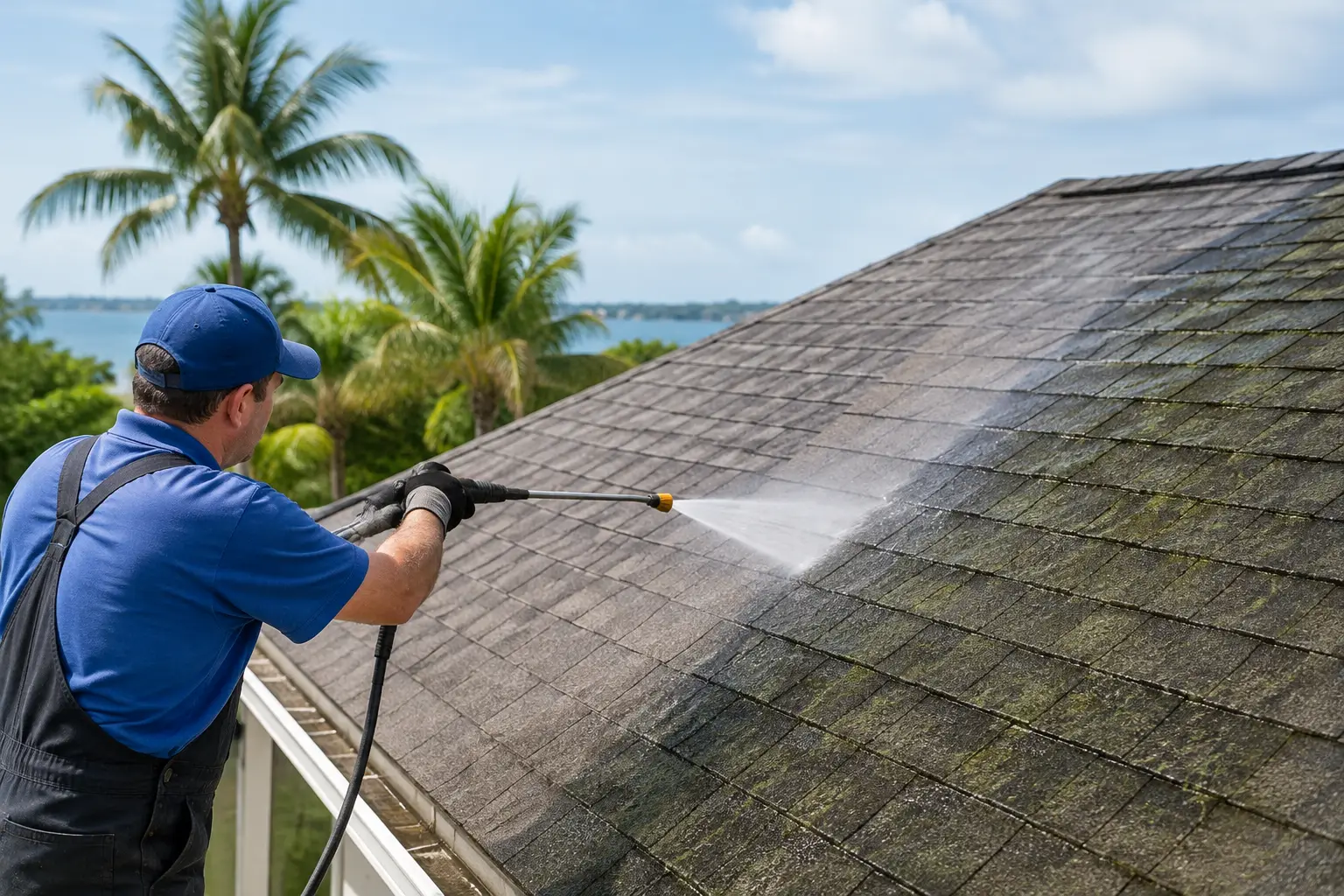
Those dark streaks spreading across a Florida roof are more than an eyesore from the street. In Citrus County, warm temperatures, frequent rain, and humidity create nearly ideal conditions for algae to settle in and spread. Professional roof algae treatments address that growth at the source while protecting the roofing material underneath.
A clean roof can make the whole property look cared for again, especially when faded-looking stains have made a home appear older than it is. The right treatment also avoids a common and costly mistake: using aggressive pressure that can damage shingles, dislodge granules, or force water where it does not belong.
What Causes Black Roof Streaks in Florida?
The dark staining seen on many roofs is commonly caused by algae, often a type that feeds on moisture and airborne nutrients. It tends to establish itself on areas that stay damp longer, including shaded slopes, sections beneath overhanging trees, and roof planes where morning dew lingers.
Mildew, lichen, dirt, pollen, and leaf debris can add to the discoloration. From ground level, those stains can look similar, but they do not always respond the same way. That is why a careful inspection matters before any cleaning solution is applied.
On asphalt shingles, algae often creates long black streaks that follow the flow of rainwater. Tile roofs may develop a darker, blotchy film that settles into textured surfaces. Metal roofs can collect grime and organic buildup along seams and lower edges. Each material needs a surface-appropriate approach, not a one-size-fits-all blast of water.
Roof Algae Treatments Should Never Rely on High Pressure
A roof is not a driveway. Concrete can often handle pressure cleaning when performed correctly, but roofing materials require far more restraint. High-pressure washing can strip protective granules from asphalt shingles, crack or shift tile, damage flashing, and shorten the usable life of a roof.
A professional soft-wash approach uses specialized equipment to apply an approved cleaning solution at low pressure. The treatment is designed to break down algae and other organic growth without scouring the surface. After the solution has done its job, the roof is gently rinsed when appropriate, or the remaining staining is allowed to weather away according to the roof type and condition.
The goal is not simply to make the roof look lighter for a few weeks. It is to remove the living growth that causes staining in the first place. When algae is only rinsed off the surface without being treated, it can return quickly in Florida’s climate.
Why the cleaning agent matters
The cleaning agent is as important as the pressure setting. Roof manufacturers commonly recommend specific chemical cleaning methods because they are effective against algae without the mechanical damage caused by pressure washing. A trained exterior-cleaning professional selects the appropriate dilution and application process based on the roof material, level of buildup, and surrounding conditions.
Too weak a treatment may leave active growth behind. Too strong or poorly applied a treatment can create unnecessary risk for nearby plants, painted surfaces, gutters, and outdoor furnishings. Careful preparation, controlled application, and thorough rinsing of surrounding areas make the difference.
What a Careful Roof Treatment Process Looks Like
A quality roof cleaning starts well before the first solution is applied. The work area should be assessed for the roof type, visible damage, landscaping, downspout locations, pool enclosures, solar equipment, and areas where runoff may collect. Loose debris may need to be cleared so the treatment reaches the stained surface evenly.
Landscaping protection is a major part of the job. Plants, flowers, and shrubs near the home should be pre-watered, covered when needed, and rinsed throughout the process. Gutters and downspouts deserve attention as well, since cleaning solution and roof runoff can travel through them quickly.
The technician then applies the appropriate solution at low pressure, working in controlled sections rather than rushing across the entire roof. This helps create even results and prevents excessive runoff. Stubborn areas may require additional dwell time or a second light application.
After treatment, the property should be rinsed and checked carefully. Walkways, pool decks, siding, windows, and nearby outdoor areas may need a final rinse so the home is left clean, not merely the roof. This meticulous finish is especially valuable for homeowners with landscaped beds, lanais, pool cages, or delicate exterior features close to the roofline.
When Is the Best Time to Treat Roof Algae?
In Central Florida, roof algae can be treated during much of the year when weather conditions allow. The best timing depends less on the calendar and more on the roof’s condition, the forecast, and access around the property. A dry enough work window helps the treatment be applied evenly, while a professional can plan around rain and wind.
Waiting until stains cover most of the roof is usually not the best strategy. Early treatment is often easier on the surface and restores curb appeal before discoloration becomes a dominant feature of the home. Homeowners preparing for a sale, welcoming seasonal guests, or catching up after a wet summer often see an immediate visual difference.
How often treatment is needed varies. Homes surrounded by mature trees or located in consistently shady areas may need service more often than open, sunny properties. Roof age, material, drainage, and the amount of nearby organic debris all affect how quickly algae returns. Many homeowners benefit from checking the roof annually and scheduling cleaning when new streaking becomes noticeable rather than following a rigid schedule.
Signs It Is Time to Call a Professional
Dark streaks are the most obvious sign, but they are not the only one. Green patches, dull areas that do not improve after rain, moss-like growth, and a generally uneven roof color can all point to organic buildup. Water runoff leaving dirty trails on walls, gutters, or patios may also indicate that the roofline needs attention.
A professional should also be called if you are unsure whether the staining is algae, dirt, or an issue with the roofing itself. Cleaning cannot repair damaged shingles, broken tile, failed flashing, or an active leak. If an inspection reveals a concern outside the scope of cleaning, it is better to address it before treatment begins.
Homeowners should avoid trying to walk a roof without the right training and safety equipment. Florida roofs can become slick from algae, moisture, or cleaning solution, and even a shallow-pitch roof presents real fall risks. Store-bought products can also be difficult to apply evenly, especially when runoff management and plant protection are involved.
Keeping Algae From Taking Over Again
No treatment can change Florida’s humidity, but a few maintenance habits can slow regrowth. Keep gutters clear so water moves away from the roofline instead of backing up near the edges. Trim branches that continually shade the roof or drop leaves and seed pods into valleys. Clear loose debris from the roof only when it can be done safely and without scraping the material.
It also helps to pay attention after storm season. Wind-driven leaves, pollen, and moisture can collect in places that are hard to see from the ground. A quick exterior check can catch early staining before it becomes a larger cleaning project.
For homeowners in Homosassa, Citrus County, and nearby communities, White Diamond Pressure Washing uses low-pressure roof cleaning methods and surface-appropriate agents to revive stained roofs with the care they deserve. The focus stays on visible results, material protection, and respect for the landscaping and outdoor spaces around your home.
A roof that is shining like a diamond does more than improve the view from the curb. It gives you one less exterior concern to manage and helps your home look ready for the season ahead.