

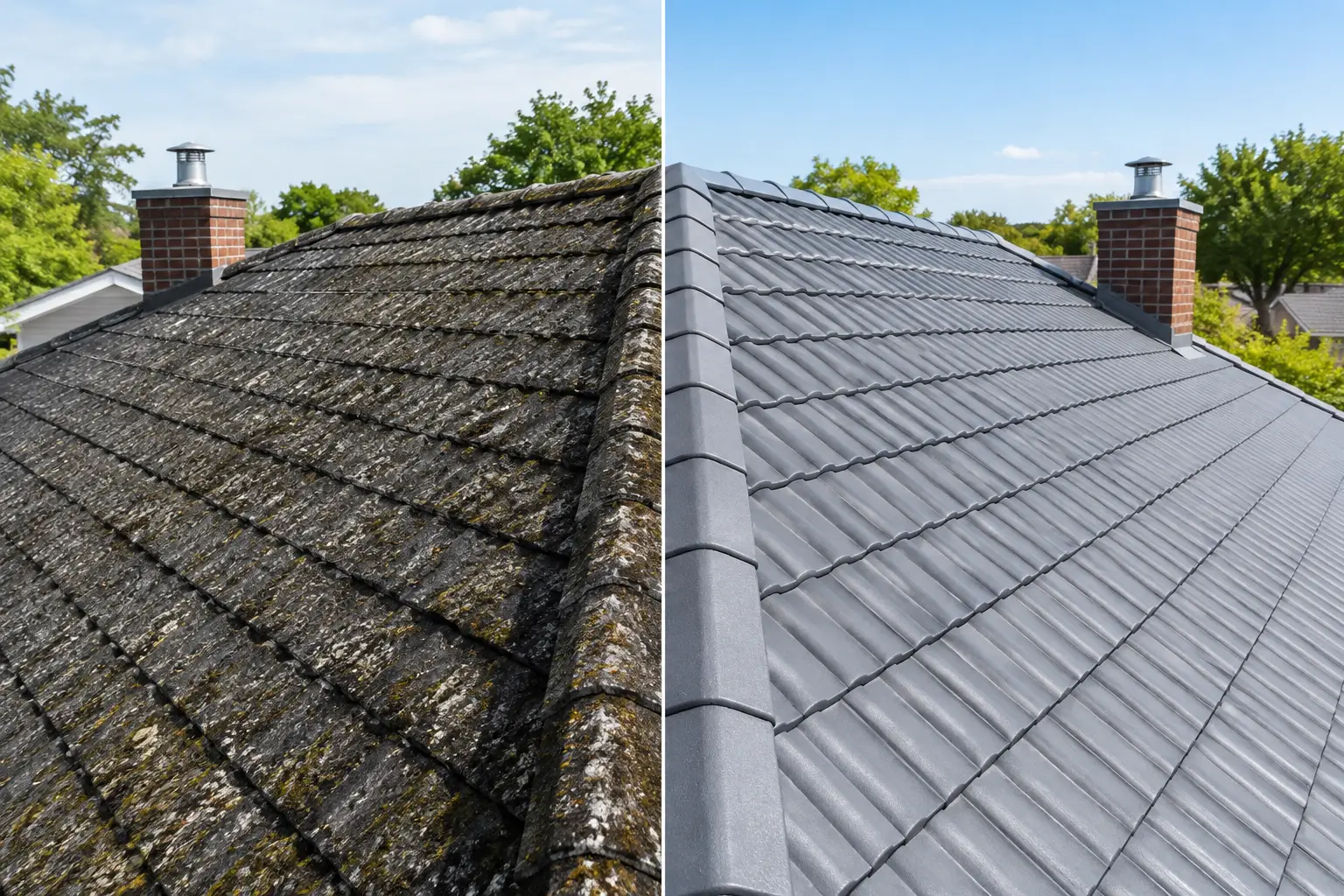
A roof restoration before after photo can be striking: one side looks dark, streaked, and worn down, while the other looks clean enough to make the whole home feel newer. For Florida homeowners, though, the real value is not just the color change. It is knowing what caused the staining, whether the roof material is still in good shape, and how to clean it without causing damage.
In Homosassa, Citrus County, and nearby communities, roofs spend every season dealing with humidity, shade, tree debris, pollen, rain, and intense sun. That combination creates ideal conditions for algae, mildew, and grime to take hold. A professional roof cleaning can revive the look of a property, but it should also be approached with care and realistic expectations.
What Changes in a Roof Restoration Before After Result
The most visible change is usually the removal of dark black streaks or broad gray-green discoloration. On many shingle roofs, those dark stains are algae. On tile roofs, mildew, algae, and built-up dirt can settle into textured surfaces and make the entire roof look older than it is. Metal roofs can collect grime, pollen, and organic buildup along seams and lower edges.
Once that buildup is removed, the original roof color becomes easier to see. Tan shingles may look lighter, red or brown tile may regain its warmth, and white or light-colored roofing can stop making the house appear dull from the street. The cleaned roof often changes how the siding, soffits, gutters, driveway, and landscaping look beside it. A home that seemed faded can feel cared for again without a major renovation.
There is also a practical change. Removing organic growth helps reduce the moisture-holding layer sitting on the roof surface. That does not turn cleaning into a replacement for repairs, but it can support a more sensible maintenance routine and help homeowners monitor the roof’s actual condition.
Why Florida Roofs Darken So Quickly
Florida’s warm, damp climate does not give exterior surfaces much downtime. After rain, shaded roof areas can stay wet longer. Branches hanging over the home may drop leaves and seed pods, while oak pollen and airborne debris settle into roof textures. North-facing slopes and areas under tree cover often show staining first because they receive less direct sun.
Algae is especially common on asphalt shingles, where it creates the familiar dark streaks that run down the roof. It can make a relatively young roof look neglected. Tile roofs are also susceptible, particularly in valleys, around ridges, and in spots where debris slows drainage.
Not every dark mark is the same, which is why a careful assessment matters. Surface algae may clean away well. Rust staining, old paint overspray, mineral deposits, damaged coatings, or deeply embedded discoloration may require a different approach or may not disappear completely. Honest before-and-after expectations begin with identifying what is actually on the roof.
Cleaning Is Not the Same as Repairing
“Restoration” can mean different things to different homeowners. In exterior cleaning, it often means restoring a cleaner, more even appearance by removing the contaminants hiding the material beneath. It does not mean that cleaning can repair cracked tiles, missing shingles, failing flashing, soft decking, or an active leak.
A reputable professional should point out visible concerns rather than wash over them and call the job complete. Cleaning may reveal a broken tile that was hidden by grime or make worn areas easier to inspect. That is useful information, especially for homeowners preparing for an insurance inspection, selling a home, or deciding whether a roof has years of life left.
If a roof is structurally sound but stained, cleaning may be the right next step. If it has widespread damage or age-related failure, repair or replacement should come first. The best choice depends on the roof material, its condition, and what is causing the discoloration.
The Method Matters More Than the Equipment Name
The wrong cleaning method can turn a cosmetic problem into a costly one. High-pressure washing may strip protective granules from asphalt shingles, force water beneath roofing materials, damage aging tile, or disturb delicate flashing. A roof should never be treated like a concrete driveway.
For most roof-cleaning situations, low-pressure application paired with manufacturer-endorsed cleaning agents is the safer approach. The solution is applied carefully to address algae, mildew, and organic staining without blasting the roof surface. Results can continue to improve as the treatment works and natural weathering rinses away remaining residue.
This process requires more than simply applying a product. A careful crew considers roof type, surrounding plants, drainage paths, nearby windows, pool areas, gutters, and exterior finishes. Landscaping should be thoroughly watered and protected as needed, and runoff should be managed with respect for the property. White Diamond Pressure Washing uses surface-appropriate methods because a dramatic transformation is only worthwhile when the roof and the home around it are treated carefully.
What a Good Before-and-After Inspection Looks For
A useful roof inspection is not just a quick look from the driveway. Before cleaning begins, the provider should consider the material, the level of staining, access points, roof pitch, and any visible damage. Tile, shingle, and metal each respond differently, and older roofs deserve additional caution.
After the cleaning, look beyond the brighter color. Check whether valleys and lower roof edges are clear of visible debris, whether gutters and soffits were protected from overspray, and whether landscaping was left in good condition. The work area should look cared for, not simply washed and abandoned.
Homeowners should also understand that the cleanest result is not always immediate or identical across every section. Heavy staining, textured tile, shaded areas, and older materials can respond differently. A professional who explains that upfront is setting a realistic standard rather than making a promise that no one can responsibly guarantee.
Curb Appeal Is Often the First Win
A clean roof can make a bigger visual difference than many homeowners expect because it occupies so much of the home’s exterior. When the roof is dark with algae, freshly painted trim or a clean driveway may still look less effective. Once the roof is cleaned, those surrounding improvements stand out.
That matters when guests are coming, a seasonal home is reopening, or a property is being prepared for sale. It also matters on an ordinary Tuesday when you pull into the driveway and want your home to look like it is being looked after. Pairing roof cleaning with low-pressure house washing, gutter and soffit cleaning, or driveway cleaning can create a more complete reset, but the services should be selected based on what the property truly needs.
How to Keep the After Looking Good Longer
No roof stays spotless forever in Central Florida. The goal is not to wait until staining becomes severe, then repeat aggressive cleaning. It is to keep an eye on early signs of growth and schedule maintenance before buildup takes over.
Trimming back branches that rest near the roof can reduce shade and debris. Keeping gutters clear helps water move away as intended. Watching for dark streaks in shaded sections makes it easier to address algae while the staining is still manageable. The right interval varies by roof location, tree cover, material, and exposure, so there is no single schedule that fits every home.
A clean roof should give you a clearer view of your home, not a false sense that every issue has disappeared. When the work is done with the right low-pressure method and a careful eye for the property, the after photo is more than a bright surface. It is a fresh starting point for protecting the home you enjoy every day.