

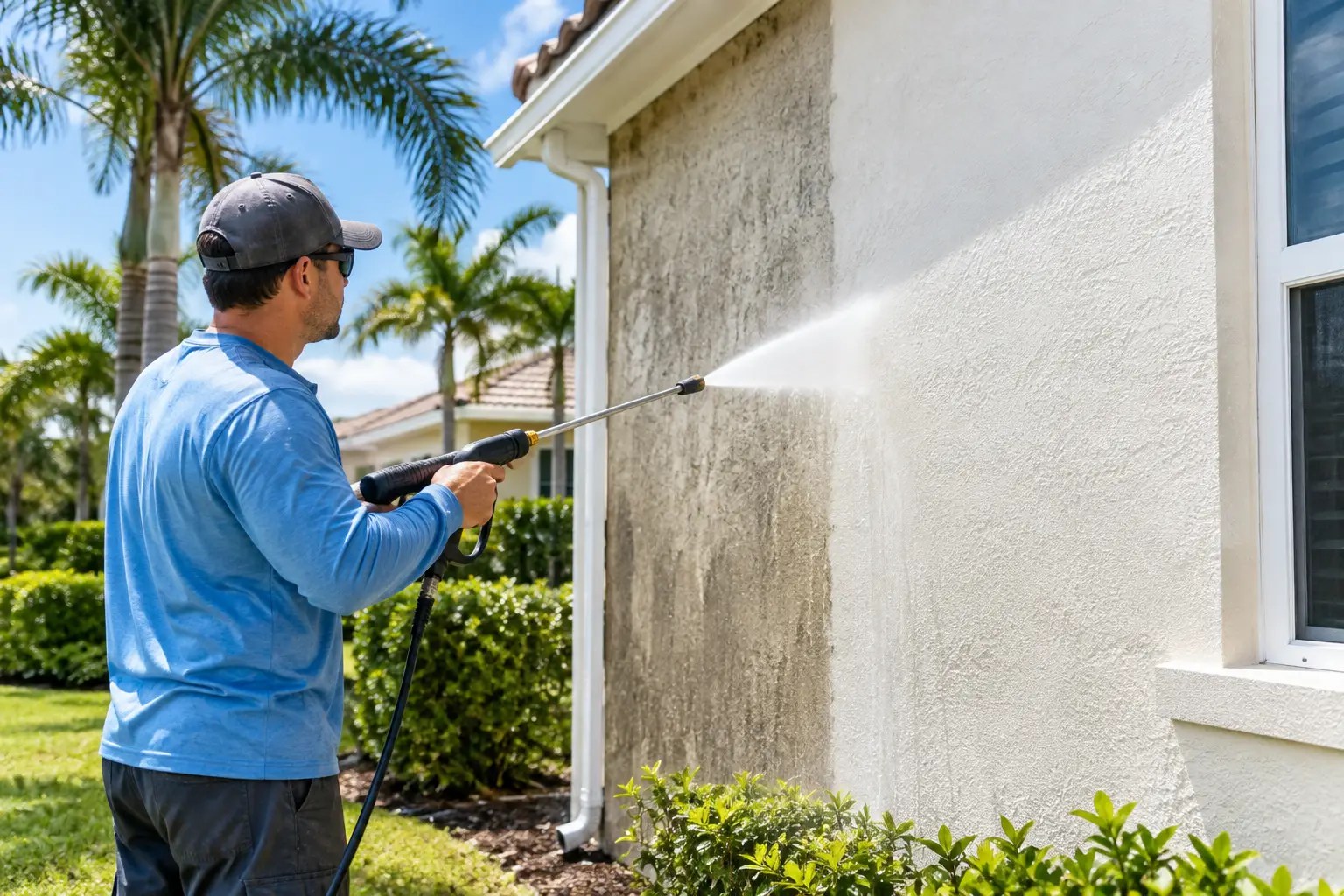
Green streaks on a painted stucco wall can make an otherwise well-kept Florida home look neglected fast. To clean painted stucco safely, you need more than water pressure. The right method removes algae, mildew, pollen, and grime without etching the textured finish, stripping paint, or stressing the landscaping below.
Florida humidity gives organic growth exactly what it needs to return again and again, especially on shaded walls, north-facing sides of the home, soffits, and areas near irrigation. A careful cleaning restores that bright, fresh appearance while helping preserve the paint and stucco that protect your home.
Why painted stucco needs a gentler approach
Stucco is durable, but its textured surface has plenty of small pockets that hold moisture and dirt. Once it is painted, there is another layer to protect. High-pressure washing can force water behind loose paint, leave visible wand marks, chip fragile areas, or roughen the surface enough to make it collect dirt more quickly.
The goal is not to blast contaminants off the wall. It is to treat the algae and mildew, give the cleaning solution time to work, and rinse away the loosened buildup with controlled, low pressure. That distinction matters. A wall may look clean immediately after aggressive pressure washing, but paint damage can show up later as peeling, fading, or moisture-related issues.
Not every dark mark is the same, either. Green growth is often algae, while black spotting may be mildew, mildew staining, or grime caught in the stucco texture. Rust stains near irrigation, orange marks from well water, and white mineral deposits need their own approach. Using one harsh cleaner for every stain can create a bigger problem than the original discoloration.
Check the wall before you clean
A quick inspection helps you avoid turning a maintenance job into a repair project. Look for peeling or bubbling paint, cracks, crumbling stucco, exposed mesh, loose caulk, or areas where water may already be getting behind the finish. Those spots should be repaired or evaluated before washing.
Also walk the perimeter of the house. Cover or thoroughly pre-wet delicate plants, move outdoor furniture and décor, close windows, and make sure exterior electrical outlets and fixtures are protected. If you have a pool, lanai, painted trim, decorative stone, or an adjacent awning, consider how rinse water will travel before you begin.
Testing a small, inconspicuous section is a smart extra step. It can reveal whether paint is chalking, whether a cleaning agent affects the color, and how much pressure the surface can tolerate. If color transfers heavily to a cloth or the coating flakes during a gentle test, cleaning should wait until the paint condition is addressed.
How to clean painted stucco safely
Start with a low-pressure rinse to cool the wall, remove loose dust, and wet nearby landscaping. Avoid aiming water upward beneath siding transitions, soffits, vents, or window edges. Work from the bottom upward when applying cleaner to reduce streaking, then rinse from the top down so contaminants wash away cleanly.
Choose a cleaning agent made for exterior painted surfaces and use it according to the product directions. Professional soft-wash solutions are selected and diluted for the surface and the type of organic growth present. The solution should be applied evenly, allowed to dwell briefly, and never permitted to dry on the wall.
Keep an eye on the weather. Direct afternoon sun can dry cleaning agents too quickly, while a rainy day may dilute them before they work. A mild, overcast morning is often ideal. On a hot Citrus County day, work in manageable sections and keep the wall and surrounding plants damp as needed.
Use a broad fan pattern and low pressure for rinsing. Keep the spray moving and maintain a safe distance from the surface. Do not concentrate a narrow stream into cracks, around window seals, at paint edges, or into the deeper texture of the stucco. The rinse should carry away residue, not act like a cutting tool.
Protect plants throughout the job
Landscaping protection is not a one-time step at the beginning. Plants should be pre-wetted before cleaning, monitored during application, and rinsed again afterward. Water dilutes any overspray and helps protect leaves and root zones.
Be especially careful around flowering plants, palms, citrus trees, fresh mulch, and vegetable gardens. If cleaning runoff collects in one area, redirect it with additional water rather than allowing concentrated solution to sit. This level of preparation is one reason a professional house wash often delivers better results than a quick rental-machine job.
Give problem areas the right treatment
Heavily shaded walls or areas beneath rooflines may need a second light application rather than more pressure. Patience is safer than force. If mildew staining remains after the organic growth has been treated, it may be embedded in an aging or faded paint coating and may not rinse away completely.
Rust, irrigation stains, and efflorescence should not be scrubbed aggressively or treated with a random household acid. These stains can react differently depending on the stucco, paint type, and nearby materials. A surface-appropriate stain treatment can make a dramatic difference, but it should be tested first.
Common mistakes that damage painted stucco
The most common mistake is assuming a pressure washer’s highest setting will save time. On painted stucco, high pressure may remove more than dirt. It can scar the finish, expose bare spots, and drive water into small openings where it does not belong.
Another mistake is applying a strong cleaner and walking away. Cleaning agents should not dry on painted surfaces, glass, metal fixtures, or plants. They require attention, proper dilution, and a controlled rinse. Mixing cleaning chemicals is also unsafe and unnecessary.
Scrubbing hard with a stiff brush can create uneven, shiny patches or loosen weak paint. Soft brushing may help in limited areas, but the brush should be gentle and used only after a compatible cleaner has had time to work. If a spot will not release without force, stop and identify the stain before continuing.
Finally, do not ignore recurring growth. If algae returns quickly, look at the conditions encouraging it. Shade, sprinkler overspray, clogged gutters, roof runoff, and poor drainage can all keep a wall damp longer than it should be.
When professional house washing is the safer choice
Some painted stucco cleaning is manageable for a homeowner, particularly on a small, accessible wall with sound paint and light buildup. The trade-off is that rental equipment and store-bought products can be difficult to control, and it is easy to use too much pressure or the wrong chemical strength.
Professional service is often the better choice when the home has multiple stories, widespread algae, delicate landscaping, aging paint, hard-to-reach soffits, or stains that have not responded to gentle cleaning. A trained exterior cleaner can adjust the process for stucco, trim, windows, gutters, and nearby surfaces instead of treating the whole home like concrete.
At White Diamond Pressure Washing, low-pressure house washing is designed around that care. The process focuses on approved cleaning agents, controlled application, thorough rinsing, and attention to the plants and exterior materials that make your property feel like home. The result is a cleaner exterior that can look shining like a diamond without taking unnecessary risks with the finish.
Keep stucco cleaner between washings
Routine maintenance can slow down the return of algae and grime. Trim back vegetation that holds moisture against the wall, keep gutters flowing, and adjust sprinklers so they do not repeatedly spray the stucco. Rinsing pollen and light dust from lower walls with a garden hose can also help between professional cleanings.
Most Florida homes benefit from periodic exterior cleaning, but the right schedule depends on shade, irrigation, tree cover, proximity to water, and how quickly organic growth returns. Cleaning before stains become heavy is generally easier on the paint and produces a more even result.
A freshly cleaned stucco wall does more than improve curb appeal. It lets you see the true condition of your paint and exterior finish, so small maintenance needs can be handled before they become costly repairs.