

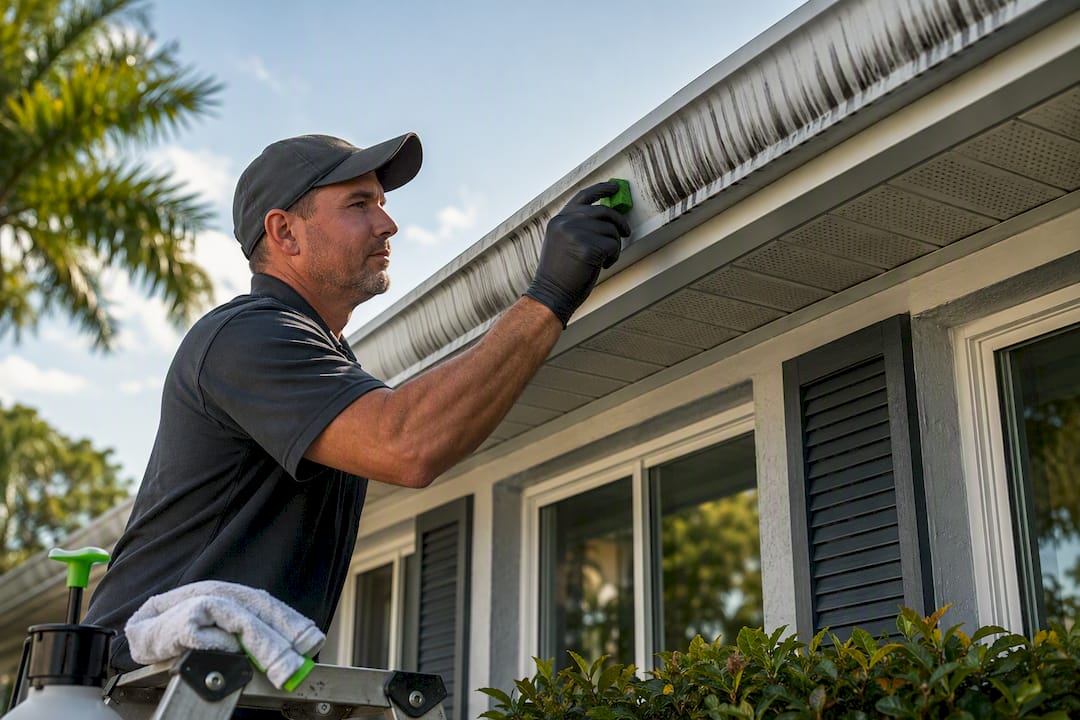
Tiger stripes come off with a dedicated oxidation and tar-targeting gutter cleaner, applied section by section with a specific dwell and rinse protocol, not a garden hose or dish soap. Clear the gutters, pre-wet the surrounding surfaces, apply the cleaner to a 3 to 4 foot stretch, wait 30 to 60 seconds, agitate gently only where needed, then rinse top-to-bottom before it dries. Skip the specialty chemistry and you’re just scrubbing a bonded stain that scrubbing alone cannot beat.
TL;DR:
- Using proper oxidation removers and applying in small sections with correct dwell time is essential for effective stain removal without damaging paint.
- Avoid high-pressure washing, abrasive pads, or bleach near painted aluminum gutters, as they cause permanent damage and uneven staining.
- Testing dilution on a small, inconspicuous area before full application prevents etching and ensures the right chemistry family is used.
- DIY removal suits single-story homes or recent stains, but height, stain age, or finish sensitivity often require professional soft-wash services.
- Regular cleaning, timely shingle replacement, and proper gutter slope maintenance help prevent tiger stripes from forming or returning quickly.
Table of Contents
- How Do You Remove Tiger Stripes From Gutters Step by Step?
- Which Gutter Cleaners Actually Break Down Tiger Stripes?
- Should You DIY Tiger Stripe Removal or Call a Pro?
- How Often Should You Clean Gutters to Prevent Tiger Stripes?
- What Safety Steps Protect Plants and Gutter Finishes?
- What I’ve Learned Brightening Gutters on Real Homes
- What the Research Actually Supports About Tiger Stripes
- Get Safe, Professional Gutter Brightening Without the Guesswork
- Where This Guide’s Information Comes From
- Sources
How Do You Remove Tiger Stripes From Gutters Step by Step?
Getting a clean result comes down to sequencing, not elbow grease. Rush the process or work in runs longer than a few feet, and you’ll end up chasing streaks you already thought you cleaned.
Before you touch a sprayer, gather what you need:
- A soft bi-level brush on an extension pole
- A low-pressure pump sprayer (not a pressure washer wand)
- A garden hose with a fan or shower rinse nozzle
- Nitrile gloves and splash-rated goggles
- A test rag for spot-checking dilution
- Plastic sheeting or tarps for nearby plant beds
Work conditions matter almost as much as the product. Pick an overcast day or a section of the house that sits in shade during your work window. Direct sun heats the aluminum, and once the surface gets hot, the cleaner’s carrier evaporates before the active ingredients finish breaking down the stain. Keep the metal below roughly 120°F if you can judge it by touch, since chemistry that dries mid-application tends to leave uneven blotching rather than a clean strip.
Here’s the actual sequence:
- Clear the gutter interior first. Leaves and grit inside the trough wash down the face during rinsing and re-contaminate the section you just cleaned.
- Pre-wet everything around the work zone. Soak siding, plants, and window trim below the gutter run so any overspray doesn’t sit and etch or bleach.
- Mix or dilute per the label. Don’t eyeball this. Oxidation removers are formulated for a specific ratio, and going stronger doesn’t speed things up, it just raises your risk of damaging the finish.
- Apply to one 3 to 4 foot section. Resist the urge to spray the whole run at once. If you spray 15 feet and circle back to rinse, the first sections have already started drying and can streak worse than before you started.
- Let it dwell 30 to 60 seconds. This is where the product actually breaks the electrostatic bond between the oxidized residue and the aluminum. Walking away and coming back in five minutes defeats the purpose.
- Agitate only where residue resists. A few passes with the soft brush on stubborn spots is usually enough. Heavy scrubbing at this stage is a sign you need a stronger dilution next time, not more arm strength this time.
- Rinse top-to-bottom before it dries. Start at the gutter lip and work down the face so you’re always pushing dissolved residue away from clean sections, not back over them.
- Move to the next section and repeat.
- Spot-treat rather than redo entire runs. If a section still shows shadow after it dries, hit that one strip again instead of re-spraying 20 feet of gutter you already cleaned.
Do a visual check once the section dries. If ghosting remains, that’s your signal to bump dilution strength slightly or give it a second, shorter dwell cycle, not to grab a pressure washer.
Pro Tip: Test any new product on a 12-inch inconspicuous stretch first, ideally on the back of the house. Painted aluminum reacts differently batch to batch, and a test spot costs you two minutes but saves you a repaint.
Which Gutter Cleaners Actually Break Down Tiger Stripes?
Tiger stripes form when asphalt shingle runoff, airborne pollutants, and UV oxidation bond electrostatically to the gutter’s aluminum surface, and that bond is chemical, not just dirt sitting on top. That’s why water and household soap usually fail outright: dish soap is built to lift grease off dishes, not to break a petroleum based film that’s been baking onto metal for a season or more. Bleach can lighten some staining temporarily but does nothing to dissolve the bond, and it carries real risk to nearby plants and painted finishes.
Three categories of product actually move the needle:
- Oxidation removers (the Gutter Butter category) are built specifically to dissolve the tar-and-oxidation film. These are your go-to for classic black streaking on aluminum.
- Surfactant-based gutter cleaners (the Gutter Zap and Gutter Guard category) rely on wetting agents that penetrate the residue and lift it during rinsing, which works well on moderate staining and is generally gentler on painted finishes.
- Oxygen-based cleaners handle light, recent staining well but usually can’t touch multi-year bonded stains on their own.
Dilution ranges vary by brand and stain severity, but oxidation removers typically recommend dilutions from a lighter mixture for fresh or light staining to a stronger mixture for heavy, older stains. Dwell time typically runs 30 to 60 seconds across most of these products. Specialty gutter cleaners and oxidation removers outperform household cleaners and pressure alone precisely because they’re formulated for this exact bond, while generic degreasers and glass cleaners are formulated for something else entirely.
Wrong dilution or the wrong chemistry family entirely can permanently etch the paint on aluminum gutters, turning a cosmetic stain into a finish problem that no cleaning fixes.
What to avoid, full stop: high-pressure washing on painted aluminum, any abrasive pad or steel wool, and concentrated bleach anywhere near metal fasteners or plant beds. A pressure washer wand held too close can strip paint in seconds, and once that happens, you’ve traded a stain for bare, exposed metal that will oxidize faster than before.
Should You DIY Tiger Stripe Removal or Call a Pro?
Height is the first filter. If you’re working off a ladder against a single-story ranch, DIY is reasonable. Two stories, a steep roof pitch, or an aging ladder you’re not fully confident in changes the math fast, since a fall risk isn’t worth the cost of a bottle of cleaner.
Stain age matters just as much as height. Fresh staining from this season usually responds to a standard dilution and one or two passes. Stains that have been baking on for several years often need pro-grade concentrates and a technique that comes from doing this dozens of times, not once.
Finish sensitivity is the piece most homeowners skip. Older painted gutters, powder-coated finishes, or anything with visible chalking should get a small test patch before a full treatment, and if you’re not confident reading how that patch reacts, that uncertainty itself is a reason to call someone who does this for a living.
Run the numbers honestly too. A bottle of dedicated oxidation remover plus a pump sprayer costs a fraction of a professional visit, but that comparison only holds up if the DIY attempt actually works the first time. A botched attempt that strips paint or leaves uneven streaking usually costs more to fix than hiring a pro would have cost up front.
Hire a professional if any of these apply:
- Your home is two stories or taller
- You already see paint damage, chalking, or bare spots on the gutter
- The interior of the gutter is packed with years of debris
- Plant beds sit directly beneath the gutter run and can’t be easily protected
Pro Tip: If you’re on the fence, do a single 3 foot test section yourself first. How that patch responds tells you more about your specific stain than any general rule of thumb.
How Often Should You Clean Gutters to Prevent Tiger Stripes?
Brightening removes what’s already bonded to the metal, but it doesn’t stop the next layer from forming. The real fix starts at the roof: aging asphalt shingles shed more granules and tar compounds as they wear, so timely shingle replacement measurably slows how fast stripes come back.
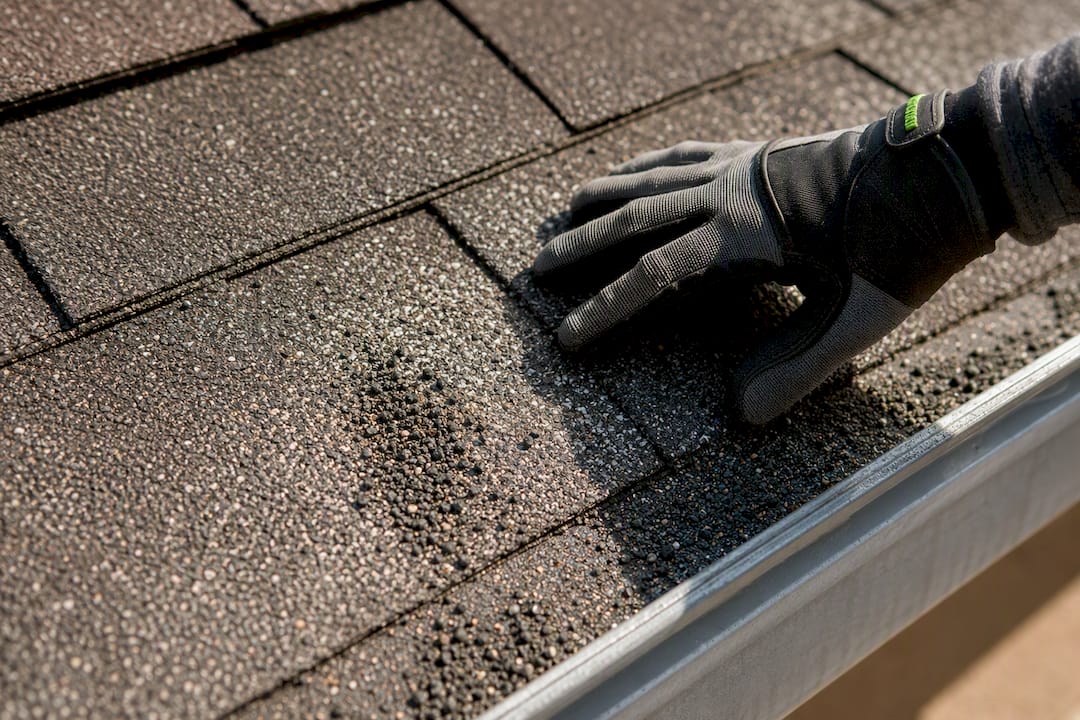
Gutter slope and downspout function matter more than most homeowners realize. Standing water in a poorly pitched gutter gives oxidation more time to bond before it ever drains, so check that water is actually moving toward the downspouts after a rain instead of pooling.
Maintenance frequency should track your climate risk, not a calendar you picked at random:
- Humid or high-rainfall regions: brighten annually
- Moderate climates: every 12 to 18 months
- Dry climates with less shingle runoff: every 24 months
Homes in shaded, humid, or coastal settings tend to need brightening on the shorter end of that range, since moisture and shade both slow drying time and give the bonding process more of a window to take hold. Pairing a light annual brightening pass with your regular exterior cleaning visit, rather than treating it as a separate project, keeps the job small each time instead of letting it become a multi-year buildup. A quick look at your roof’s condition and runoff pattern tells you a lot about whether you’re on the annual end of that range or the 24 month end.
What Safety Steps Protect Plants and Gutter Finishes?
Cover plant beds and mulch with plastic sheeting before you spray, and pre-wet anything you can’t cover so overspray doesn’t sit on dry leaves. If runoff has nowhere to go, redirect it with a temporary channel rather than letting concentrated cleaner pool at the base of a shrub.
Stick to shaded conditions and avoid surfaces that feel hot to the touch. Wear nitrile gloves and goggles throughout, and rinse thoroughly once you’re done so no residue sits on siding or trim overnight.
- Cover or pre-wet all plants and beds below the work area
- Avoid direct sun and hot metal surfaces during application
- Wear gloves and eye protection for the full job
- Rinse completely; don’t let product dry on any surface
- Skip the pressure washer entirely on painted aluminum
High pressure on painted gutters strips the coating fast, often before you notice it’s happening, which turns a stain problem into a bare-metal problem.
What I’ve Learned Brightening Gutters on Real Homes
My checklist on every job starts the same way: test a spot, log the dilution that worked in a notebook, and shoot a before and after photo. That habit alone has saved more than one gutter run from an over-strength mix.
A typical job runs the same protocol covered above, just executed at a scale a homeowner rarely tackles solo: section by section, dwell timed, rinsed before anything dries. White Diamond Pressure Washing leans on soft-wash technique specifically because it protects the painted finish while still breaking down the bonded film, and the most common fix I make on-site is correcting a homeowner’s prior attempt where the product sat too long in direct sun and started etching. If your project looks bigger than a weekend and a bottle of cleaner, reach out for a free estimate before you take a wire brush to it.
What the Research Actually Supports About Tiger Stripes
Most advice on this topic either oversells DIY as universally fine or oversells professional service as always necessary. Neither is accurate. The evidence supports a narrower claim: the chemistry and the sequencing matter far more than who’s holding the sprayer. A careful homeowner who tests a spot, dilutes correctly, and works in small sections will get results a rushed professional working too fast won’t.
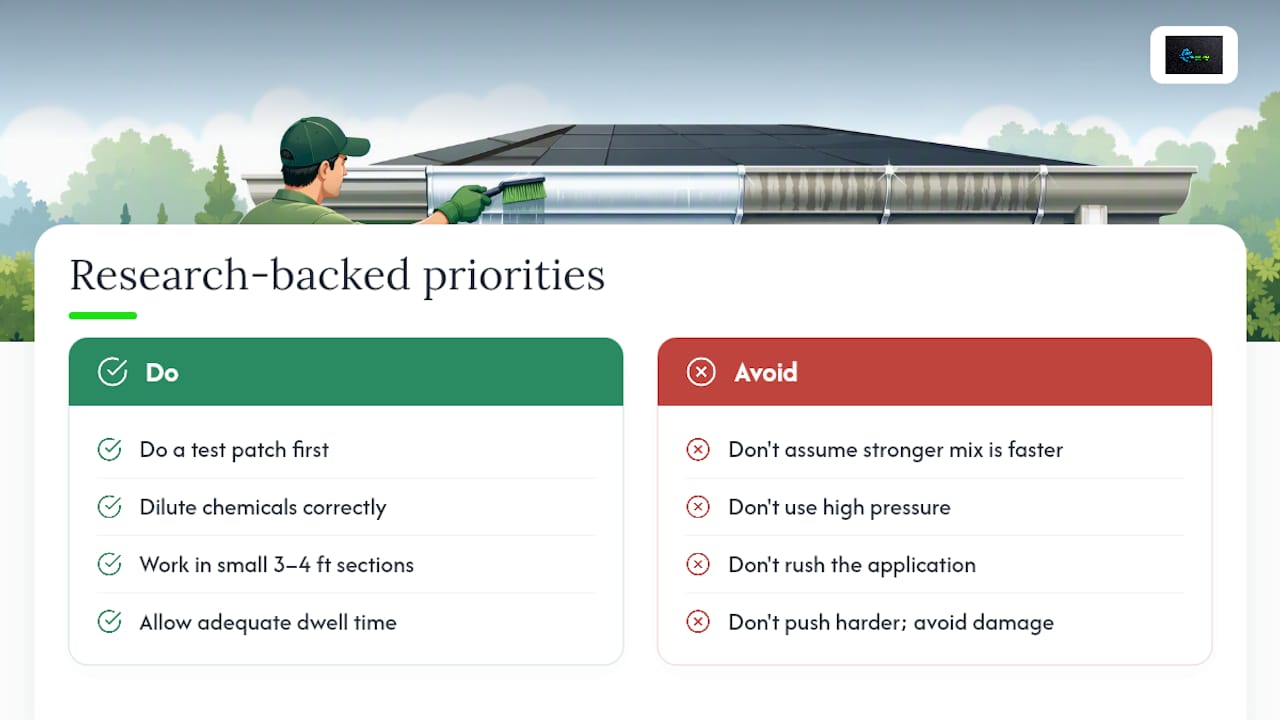
Where conventional advice falls short is the assumption that more pressure or a stronger mix equals a faster fix. It’s usually the opposite. Oxidation bonds respond to dwell time and the right chemistry family, not force, and pushing harder tends to damage the thing you’re trying to save.
Prioritize the test patch above everything else. It’s the one step people skip to save two minutes, and it’s the step that tells you whether you’re dealing with a straightforward job or one that belongs to a professional.
— Bobby
Get Safe, Professional Gutter Brightening Without the Guesswork
Professional services can offer a soft-wash technique calibrated to your gutter’s specific finish, applied by experienced technicians who have optimized dilution ratios. That matters most on two-story homes, stains that have been bonded for years, or any gutter with visible chalking where the wrong mix means paint damage instead of a clean result.

A typical professional visit may include a full inspection, low-pressure brightening with plant and landscaping protection, and a final walk-through to verify the job’s quality. It’s the right call for anyone with height or access concerns, a stain that’s been building for a few seasons, or simply no interest in testing dilution ratios on a Saturday. If your gutters are past the point where a garden hose and dish soap could ever fix them, get a free estimate from White Diamond Pressure Washing and get it handled properly the first time.
Where This Guide’s Information Comes From
The removal protocol and dilution guidance in this article draw on J.Racenstein’s tiger stripe removal guide, Rocklin Gutter Guard’s brightening and oxidation removal guide, Cajun Soft Wash’s prevention guide, and Southeast Softwash’s cleaning and safety walkthrough. Readers researching specific formulations can also review product listings like the F-13 Gutter Grenade for ingredient and use details.
Sources
- How to Remove Black Stripes on Gutters: Tiger Stripe Removal Guide
- Gutter brightening: oxidation removal guide
- How to Clean Gutters and Remove Tiger Stripes – Southeast Softwash