

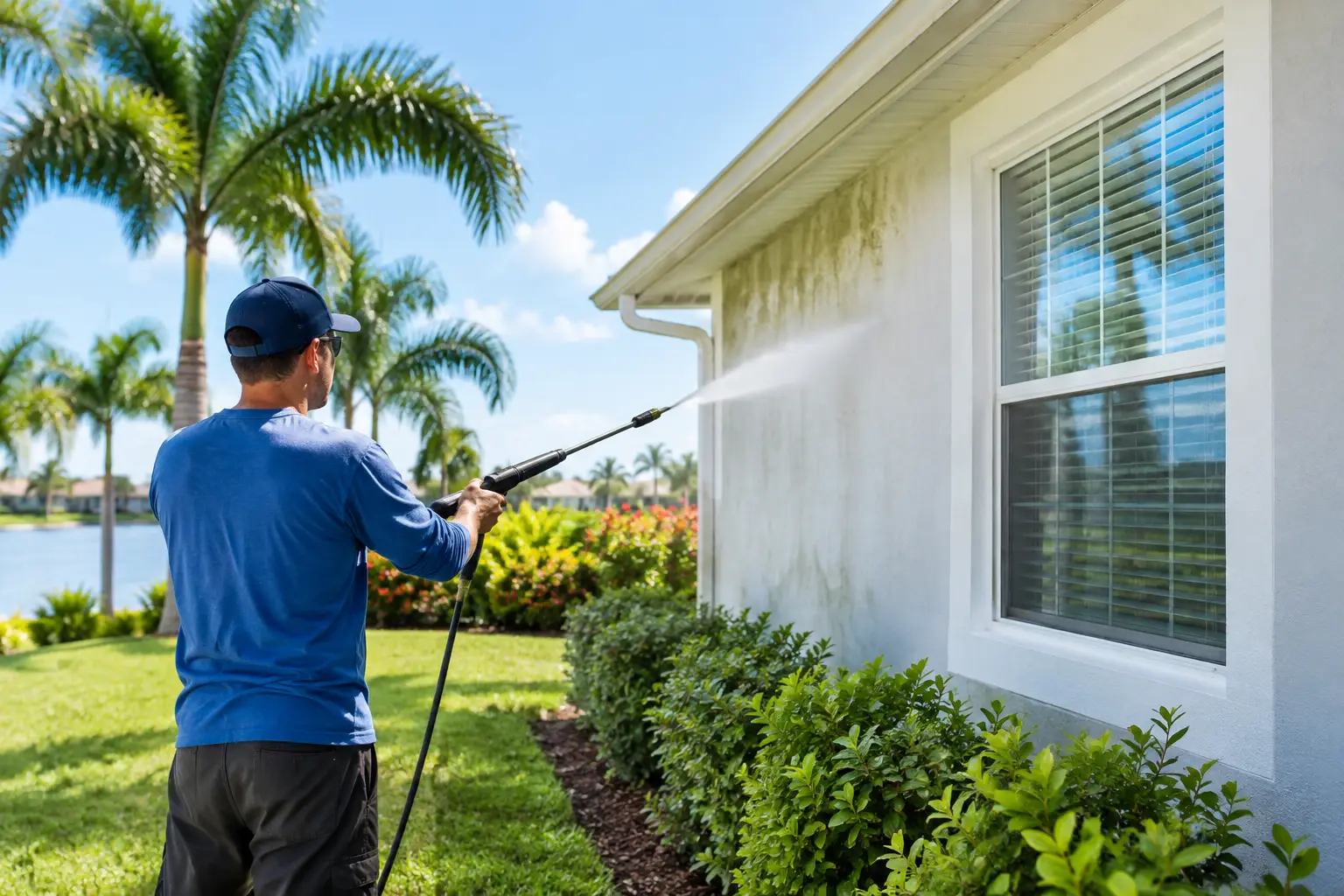
A clean Florida home can begin to look weathered faster than many homeowners expect. One rainy stretch, a shaded wall, or humid weeks near the coast can leave green algae, dark mildew, and dull grime across siding, soffits, trim, and entryways. The right house wash frequency is not just about curb appeal. It helps remove moisture-holding contaminants before they become a bigger cleaning or maintenance problem.
For most homes in Homosassa, Citrus County, and nearby Central Florida communities, professional house washing every 12 to 18 months is a sound starting point. But a calendar alone cannot tell the whole story. Shade, trees, irrigation, exterior material, and how quickly algae returns all affect when your home needs attention.
How Often Should You Wash a House in Florida?
Most local homes benefit from a low-pressure house wash once a year. This interval keeps the exterior looking cared for while preventing algae, mildew, pollen, dirt, and cobwebs from building up for too long.
Some properties need cleaning sooner, often every 6 to 12 months. Homes surrounded by mature trees, located near marshy or heavily wooded areas, or shaded for much of the day tend to stay damp longer. That dampness gives algae and mildew the conditions they need to spread. North-facing walls, shaded vinyl, soffits, and areas behind landscaping are often the first places where discoloration appears.
A home in an open, sunny area may stay cleaner longer, especially if it has limited tree cover and good drainage. Even then, waiting until the entire exterior looks heavily stained is rarely the best approach. Routine cleaning is generally easier on the home than allowing buildup to sit season after season.
Why Florida Homes Get Dirty So Quickly
Florida’s warmth and humidity make outdoor living enjoyable, but they also create ideal conditions for organic growth. Algae thrives where surfaces stay damp, particularly after rain or morning dew. Mildew can collect in shaded corners, around gutters, beneath eaves, and on textured surfaces that hold moisture.
Rain does not truly wash a house clean. It can rinse away loose dust, but it also moves pollen, dirt, and organic material into seams and lower areas of the exterior. Irrigation overspray can create similar problems, especially when sprinklers regularly hit siding, stucco, painted trim, or pool cage framing.
Salt air can add another layer for homes closer to the Gulf. It leaves a light residue that attracts grime and may contribute to a dull-looking finish over time. Add oak leaves, pine pollen, insects, and Florida’s frequent storms, and it is easy to see why exterior cleaning is part of regular home care here.
Signs Your House Needs Washing Before Its Scheduled Service
The exterior does not need to be completely green or black to be ready for a wash. Early attention can restore the appearance of the home and reduce the chance of stubborn staining.
Look closely at the sides of the house that receive the least sunlight. Green or gray film on vinyl, painted siding, stucco, brick, fascia, or soffits is a clear sign that algae or mildew is developing. Dark streaks below gutters, around windows, and near outdoor faucets can indicate trapped moisture and runoff.
You may also notice that white trim no longer looks white, exterior paint appears faded or dusty, or the home has an overall dull cast even after you sweep the porch. Spider webs, insect residue, and pollen can make a well-kept property look neglected surprisingly fast.
If guests are coming, you are preparing to sell, or you have recently completed landscaping work, a house wash can make an immediate difference. It is one of the most visible ways to revive your space without taking on a major renovation.
House Wash Frequency Depends on Your Property
There is no one-size-fits-all schedule, because each home collects buildup differently. A local professional should look at the whole property rather than recommend the same interval for everyone.
Homes With Heavy Shade and Tree Cover
A shaded home may need washing every 6 to 9 months. Trees provide welcome relief from the Florida sun, but leaves, sap, pollen, and reduced airflow create a more favorable environment for algae. Branches close to the roofline and exterior walls can also drop debris into gutters and leave staining on siding.
Homes With Irrigation Near Exterior Walls
If sprinklers regularly wet the home, pay close attention to the areas they hit. Mineral deposits, algae, and water spots often build up there first. Adjusting sprinkler heads can help, but cleaning may still be needed more often than it is for drier parts of the property.
Waterfront and Coastal-Area Homes
For homes exposed to salt air, regular washing helps remove residue before it leaves surfaces looking chalky or grimy. The needed timing varies with exposure, wind patterns, and surrounding vegetation, but an annual wash is usually a wise baseline.
Homes Used Seasonally or as Rentals
A property that sits empty for part of the year can collect significant buildup without anyone noticing. Scheduling exterior cleaning before you return for the season, welcome renters, or list the home for sale helps it look cared for from the moment someone arrives.
Why Low Pressure Matters for House Washing
House washing should not mean blasting the exterior with high pressure. A house can include several materials – painted surfaces, vinyl, stucco, soffits, window seals, trim, screens, and delicate landscaping – and each deserves the right approach.
Professional low-pressure washing uses specialized equipment and appropriate cleaning solutions to loosen and remove algae, mildew, dirt, and grime without relying on force alone. The goal is a thorough clean that respects the material underneath it. High pressure in the wrong hands can force water behind siding, damage paint, scar softer surfaces, or disturb seals around windows and fixtures.
Careful preparation matters just as much as the washing itself. Plants should be protected and rinsed as needed, outdoor furniture and sensitive areas should be considered, and the technician should identify stains that require a different treatment. This attention to detail is what helps create a dramatic before-and-after result without treating your home like a one-surface job.
Coordinate House Washing With Other Exterior Services
A house wash often works best as part of a larger exterior maintenance plan. If the roof has visible streaking or organic growth, roof cleaning may be worth addressing at the same time or before the house is washed. Runoff from a dirty roof can contribute to staining on walls, gutters, and walkways.
Driveways, sidewalks, lanais, pool cages, awnings, and gutters also affect how clean the property feels as a whole. A bright house exterior can lose some of its impact when the walkway is dark with algae or the pool enclosure is covered in grime. On the other hand, not every surface needs service at every visit. A professional assessment can help prioritize what is showing buildup now and what can wait.
For concrete, cleaning and sealing can be a useful pairing when the surface is in good condition. Cleaning removes accumulated grime, while sealing may help reduce future staining and make routine maintenance easier. The right recommendation depends on the concrete’s condition, previous coatings, and how the area is used.
A Practical Exterior Cleaning Schedule
Rather than relying only on a date in the calendar, inspect your home at least twice a year: once after the wetter summer season and once during the drier months. Walk around the property and check shaded walls, soffits, gutters, the pool area, and exterior surfaces near sprinklers.
For many homeowners, an annual professional house wash paired with periodic spot checks is enough. If green growth returns quickly, schedule service earlier next time instead of waiting for the usual annual date. If the home remains clean and bright, you may be able to stretch closer to 18 months.
White Diamond Pressure Washing helps local homeowners choose a cleaning schedule based on what their property actually needs, with low-pressure methods designed to restore the exterior while treating landscaping and materials with care. A written estimate and a close look at the buildup make it easier to plan confidently.
A clean home should feel welcoming before you even open the front door. When algae and grime begin to take over, timely care can bring back that shining-like-a-diamond first impression and help your exterior stay ready for whatever Florida weather brings next.