

TL;DR:
- True mold removal involves identifying moisture sources, containment, removal of contaminated materials, and verification.
- DIY cleaning is only safe and effective for small, non-porous areas; professional help is needed for complex cases.
- Costs range from $3.40 to $4.10 per square foot, depending on size, materials, and severity of infestation.
Wiping away visible mold with a bleach-soaked rag might feel like a win, but it rarely is. Mold colonies grow deep into porous materials like drywall, wood framing, and insulation, so surface cleaning only removes what you can see while leaving the root problem completely untouched. For Citrus County homeowners, where Florida’s heat and humidity create near-perfect conditions for mold year-round, understanding what real mold removal involves could be the difference between a healthy home and a recurring nightmare. This guide walks you through what mold removal truly means, how the professional process works, and what it actually costs.
Table of Contents
- What is mold removal and why does it matter?
- The professional mold removal process explained
- When should you handle mold yourself, and when should you call a pro?
- Mold removal costs: What Citrus County homeowners should expect
- Why quick fixes miss the mark: Our take on mold removal success
- Protect your Citrus home with expert help
- Frequently asked questions
Key Takeaways
| Point | Details |
|---|---|
| Mold removal is more than cleaning | True mold remediation addresses hidden moisture problems and removes contaminated materials. |
| Know when to call professionals | DIY is safe for small surface mold, but pros are needed for larger or hazardous cases. |
| Proper remediation prevents regrowth | Fixing the moisture source is essential for long-term mold control. |
| Expect clear, transparent pricing | Professional mold removal usually costs $3.40-$4.10 per square foot. |
What is mold removal and why does it matter?
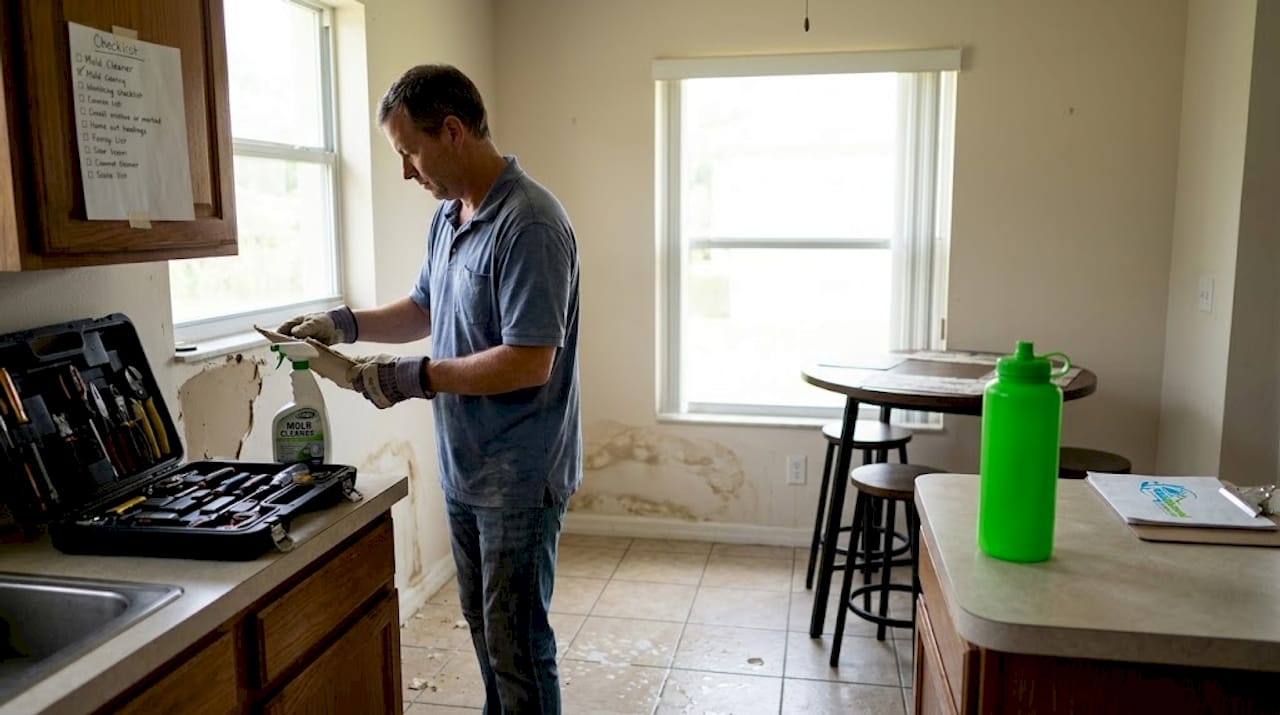
Mold removal, more accurately called mold remediation, is a structured process that goes far beyond wiping surfaces clean. True remediation means identifying the moisture source driving mold growth, containing the affected area to prevent spore spread, physically removing contaminated materials, cleaning and treating what remains, and then verifying the job is done correctly. It is not a spray-and-wipe operation.
Here is why the distinction matters so much. Mold spores are microscopic and become airborne the moment you disturb a colony. If you scrub a moldy bathroom wall without containment, you can scatter millions of spores throughout your home’s air supply in seconds. Those spores settle on new surfaces, find moisture, and start new colonies within 24 to 48 hours. You have not solved the problem. You have moved it.
Health risks are real and serious. Mold exposure can trigger:
- Chronic nasal congestion and sneezing
- Worsening asthma symptoms and respiratory distress
- Skin rashes and eye irritation
- Headaches and fatigue in prolonged exposure cases
- Severe reactions in people with compromised immune systems, the elderly, and young children
Beyond health, mold can quietly destroy your home’s structural integrity. Wood framing weakens, insulation loses its effectiveness, and drywall crumbles. In Citrus County’s real estate market, visible or documented mold can reduce a home’s resale value significantly and complicate any future sale.
So when does professional help become necessary? The EPA recommends DIY for under 10 square feet of visible mold on non-porous surfaces. Beyond that threshold, or any time HVAC systems are involved, contaminated water is a source, or health-vulnerable residents live in the home, certified professionals following IICRC S520 guidelines are required for safe remediation.
“Mold cleanup should focus on eliminating moisture first. Without addressing the source, mold will return regardless of how thoroughly the surface is cleaned.”
Pro Tip: DIY cleanup is only reasonable for a small patch on a tile or glass surface. The moment you find mold on drywall, wood, carpeting, or ceiling tiles, stop and call a certified remediation specialist.
Protecting your home also means preventing mold growth before it starts, which is why exterior cleaning and moisture management are closely connected to indoor mold control. Now that you know why mold needs more than just a quick wipe, let’s explore what the mold removal process actually looks like.
The professional mold removal process explained
Professional remediation follows a strict sequence of steps, and every single one serves a purpose. Skipping or rushing any phase is exactly why incomplete jobs fail. Here is what certified professionals do from start to finish, based on established remediation protocols:
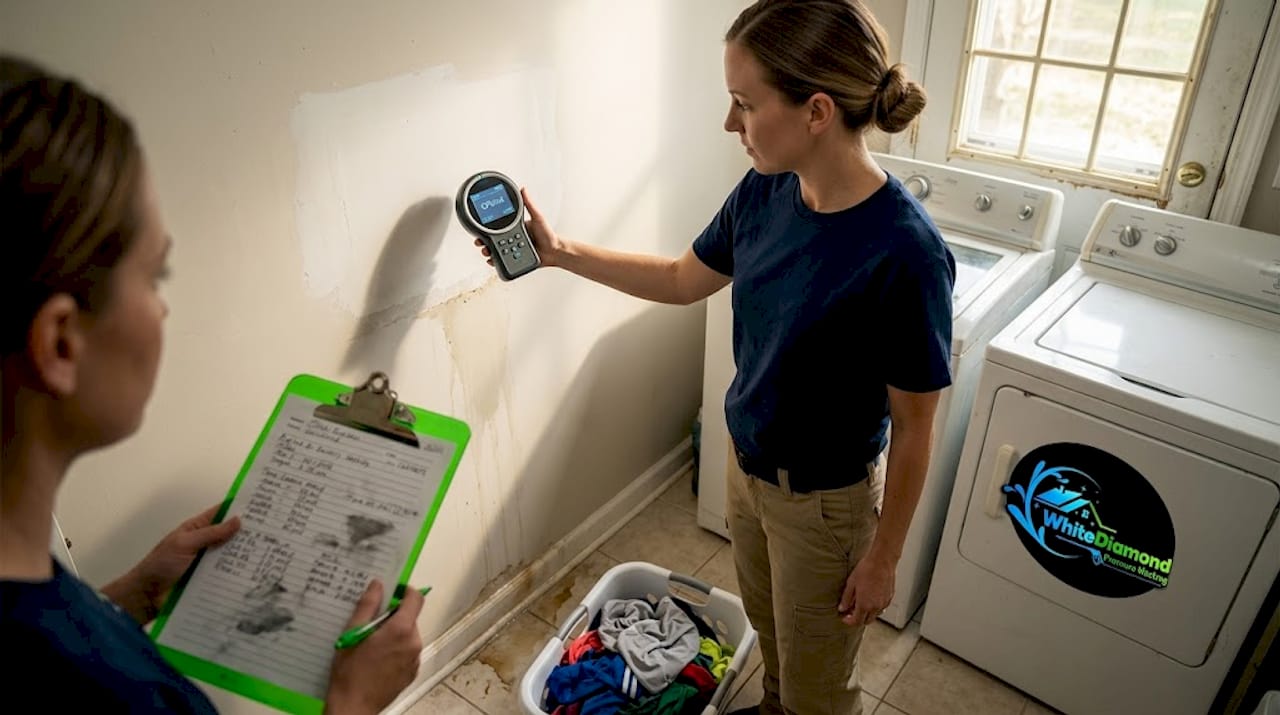
- Assessment and moisture source identification — Technicians use moisture meters and thermal imaging to find hidden water intrusion points.
- Containment setup — Physical barriers (plastic sheeting) and negative air pressure machines isolate the work zone to prevent cross-contamination.
- Air filtration — HEPA air scrubbers run continuously to capture airborne spores during the entire removal process.
- Removal of contaminated porous materials — Drywall, insulation, carpeting, and wood that cannot be cleaned are bagged and disposed of safely.
- Cleaning non-porous surfaces — Remaining hard surfaces are treated with EPA-registered biocides or antimicrobials to kill residual mold.
- HEPA vacuuming — All surfaces in the work area are vacuumed with HEPA-filtered equipment to remove fine particles.
- Structural drying — Industrial dehumidifiers and air movers bring wood moisture content below 15%, eliminating conditions for regrowth.
- Post-remediation verification (PRV) testing — Air and surface samples confirm mold levels are at or below outdoor baseline levels before the job is considered complete.
| Phase | What happens | Typical timeframe |
|---|---|---|
| Assessment | Moisture mapping, visual inspection | 1 to 4 hours |
| Containment and air setup | Barriers, negative pressure machines | 2 to 6 hours |
| Material removal | Cutting, bagging, disposal | 4 to 24 hours |
| Surface cleaning | Biocides, scrubbing, HEPA vac | 4 to 16 hours |
| Structural drying | Dehumidification cycle | 24 to 72 hours |
| Post-remediation verification | Air and surface lab testing | 24 to 48 hours for results |
One of the most overlooked phases is the final verification. An incomplete cleanup can leave mold counts above 10,000 CFU per cubic meter (colony-forming units), which is a threshold that signals the job has failed. Surface appearance alone cannot confirm success. Only lab-verified testing tells the whole story.
Understanding the mildew removal steps on exterior surfaces is also helpful context because outdoor mold and mildew pressure directly affects indoor air quality, particularly in Florida homes with poor attic ventilation. Similarly, removing exterior mildew correctly prevents spores from migrating indoors through gaps in siding, fascia boards, and window frames.
Understanding the process is only part of the equation. Let’s look at how to decide who should try DIY versus hire a professional.
When should you handle mold yourself, and when should you call a pro?
This is where homeowners most often make costly mistakes. The instinct to save money on a DIY cleanup is understandable, but it only makes sense under a narrow set of conditions. Getting this decision wrong can spread contamination or create health risks that cost far more to fix later.
Here is a practical checklist to guide your decision:
- Measure the affected area. Anything under 10 square feet on a hard, non-porous surface like ceramic tile or glass can be cleaned with appropriate safety gear and EPA-approved cleaning products.
- Identify the surface type. Mold on drywall, wood studs, carpet, or ceiling tiles requires professional removal. These materials absorb mold deeply, making surface cleaning ineffective.
- Check for HVAC involvement. If you see mold inside ducts, on air handler components, or near vents, stop immediately. HVAC-related mold spreads contamination to every room in the house.
- Consider the water source. Mold caused by sewage backup or floodwater from outside carries additional biological contaminants. This is never a DIY job.
- Assess who lives in your home. Children under 5, seniors, pregnant women, or anyone with asthma, allergies, or a weakened immune system means you should call a professional even for smaller areas.
| Situation | DIY acceptable | Professional required |
|---|---|---|
| Small spot, tile or glass, under 10 sq ft | Yes | No |
| Mold on drywall or wood | No | Yes |
| HVAC system involvement | No | Yes |
| Sewage or floodwater source | No | Yes |
| Vulnerable occupants in home | No | Yes |
| Musty odor without visible mold | No | Yes |
The EPA and CDC both emphasize that moisture control is the primary goal, and routine testing is not always necessary before remediation. However, the IICRC S520 standard does require post-remediation verification when professionals handle the job to confirm successful cleanup.
Pro Tip: Encapsulation products that paint over moldy surfaces are not a substitute for full removal. They may hold mold at bay temporarily, but without removing the colonized material, the mold remains active underneath and will eventually break through.
Watch for the signs you need professional help on your home’s exterior as well. Mold on siding and roof surfaces is a strong indicator of moisture problems that could already be affecting your interior walls and attic space.
Knowing who should do the work is vital, but budget matters too. Let’s examine what mold removal typically costs so you can plan ahead.
Mold removal costs: What Citrus County homeowners should expect
Professional mold remediation is an investment, but cutting corners costs far more in the long run. Here is a grounded look at what you can expect to pay and what drives those numbers.
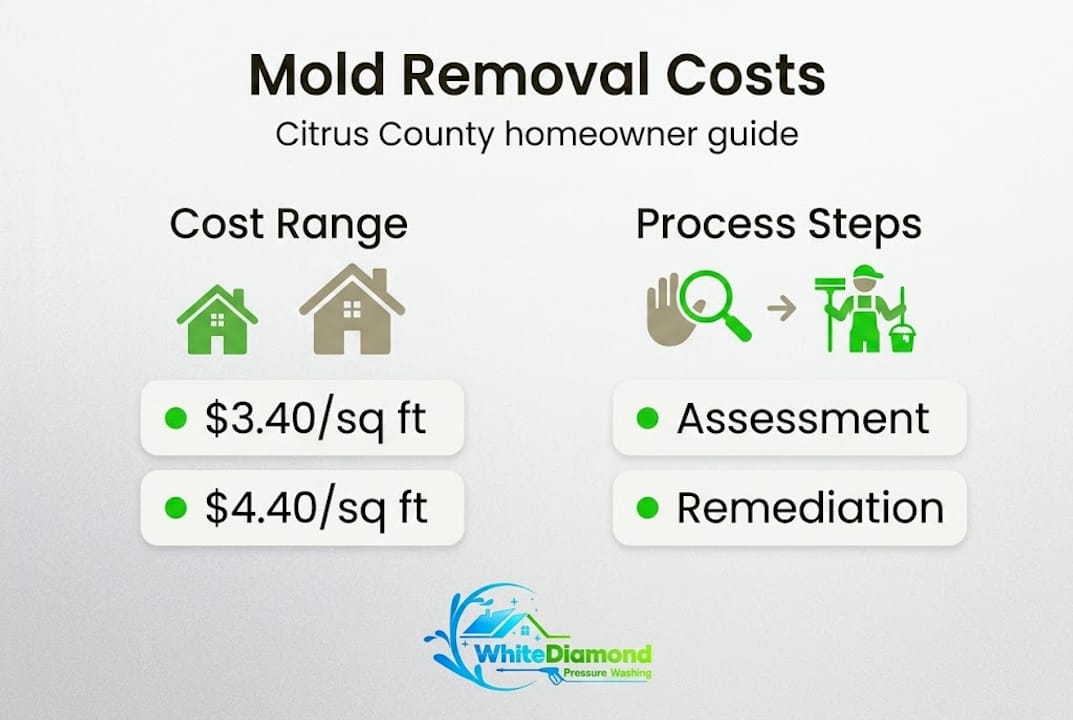
Research including studies following Hurricane Katrina’s widespread mold damage shows that remediation costs $3.40 to $4.10 per square foot when performed using proper protocols including debris removal, HEPA filtration, borate treatment, and full structural drying. Jobs completed without all these steps had significantly higher failure rates and often required retreatment, effectively doubling total costs.
| Project type | Approx. square footage | Estimated cost range |
|---|---|---|
| Small bathroom or closet | 25 to 50 sq ft | $85 to $205 |
| Single room remediation | 100 to 200 sq ft | $340 to $820 |
| Crawl space treatment | 400 to 600 sq ft | $1,360 to $2,460 |
| Whole-floor remediation | 800 to 1,200 sq ft | $2,720 to $4,920 |
Several factors push costs higher or bring them down:
- Location of the mold. Crawl spaces, attics, and inside wall cavities are harder to access and require more labor.
- Severity of contamination. Heavy colonization with structural damage means more material removal and longer drying cycles.
- Type of building materials. Removing and disposing of asbestos-containing drywall or insulation adds significant cost.
- Moisture source complexity. Fixing a plumbing leak is straightforward. Correcting foundation water intrusion or roof damage involves additional contractors.
- Post-remediation verification. Lab testing adds cost but is the only reliable way to confirm success.
When reviewing a mold removal quote, look for these signs of a quality bid:
- Itemized breakdown of each phase (inspection, containment, removal, treatment, drying, testing)
- Mention of HEPA filtration equipment and containment barriers
- Post-remediation verification included or offered as an add-on
- Licensing and insurance clearly stated
- Written scope of work with a clear moisture source fix plan
- No promises that encapsulation alone is the solution
Addressing moisture at the exterior of your home is also a critical step in preventing water damage that feeds indoor mold problems. Clogged gutters, dirty downspouts, and mold-covered siding all contribute to moisture infiltration that drives up remediation costs over time.
With clear costs in mind, let’s recap with a fresh perspective on why thorough mold removal matters and what most homeowners miss.
Why quick fixes miss the mark: Our take on mold removal success
We have seen this situation play out many times in Citrus County. A homeowner notices a dark patch behind the bathroom vanity, sprays it with a store-bought mold killer, and considers the problem solved. Three months later, they call us because the smell never went away and now there is visible staining on the adjacent wall.
The truth is that mold does not behave the way most people think. It is not sitting on top of your wall waiting to be wiped off. It is growing inside the paper facing of your drywall, threading into the wood behind it, and sending spores into the wall cavity every time air moves through. Surface treatments cannot reach any of that.
What consistently works is full, protocol-driven remediation by technicians who understand both the biology of mold and the construction of your home. That means identifying exactly where moisture enters, removing every piece of material that cannot be decontaminated, and then proving with lab tests that the job is complete.
We also believe that exterior maintenance is one of the most underappreciated forms of mold prevention. The benefits of exterior cleaning extend well beyond curb appeal. Removing mold and mildew from siding, roofs, and concrete prevents that biological material from migrating indoors. The advantages of low-pressure washing are especially relevant here because high-pressure methods can drive moisture deeper into porous surfaces, creating exactly the conditions mold needs to thrive inside walls.
If there is one lesson from years of working with Citrus County homes, it is this: treat mold as a symptom, not the disease. The disease is uncontrolled moisture. Fix that, and you solve the problem permanently.
Protect your Citrus home with expert help
Mold removal is not a weekend project for most situations, and waiting too long always makes the problem more expensive to solve. Timely, thorough remediation combined with consistent exterior maintenance is the most reliable approach to keeping your Citrus County home safe, structurally sound, and comfortable.

At White Diamond Pressure Washing, we specialize in the exterior cleaning side of this equation, which is a critical layer of mold and moisture prevention for your home. From roof washing to house soft washing, our all cleaning services are designed to remove the mold, mildew, and algae that threaten your home’s exterior surfaces before they become interior problems. Explore our preventative exterior cleaning options and get a free estimate today.
Frequently asked questions
Can mold come back after professional removal?
Mold can return if the underlying moisture problem is not resolved, which is why effective remediation always includes fixing all moisture sources as a required step, not an optional one.
How long does a typical professional mold removal take?
Most professional mold removals take 1 to 5 days depending on the area size, severity of contamination, and building materials involved in the affected space.
Are all molds dangerous to my health?
Some molds can cause significant allergic reactions and health problems, particularly for people with asthma, allergies, or immune issues, as mold exposure affects health most severely in sensitive individuals.
Is testing for mold always necessary before removal?
Routine pre-testing is not always needed according to the EPA and CDC moisture guidelines, but professionals do use post-remediation testing to confirm that cleanup was successfully completed.
What’s the average cost of mold removal in Citrus County?
Professional mold remediation typically runs $3.40 to $4.10 per square foot, with final pricing driven by the project’s size, location, and overall complexity.
Recommended
- Mildew removal guide: clean, protect, and prevent in Citrus homes – white-diamond-pressure
- Prevent exterior mold: boost health, home value, curb appeal – white-diamond-pressure
- Citrus County home prep checklist: 1 cleaning session/year – white-diamond-pressure
- Stain Removal Guide: Restore Outdoor Surfaces in 2026 – white-diamond-pressure