

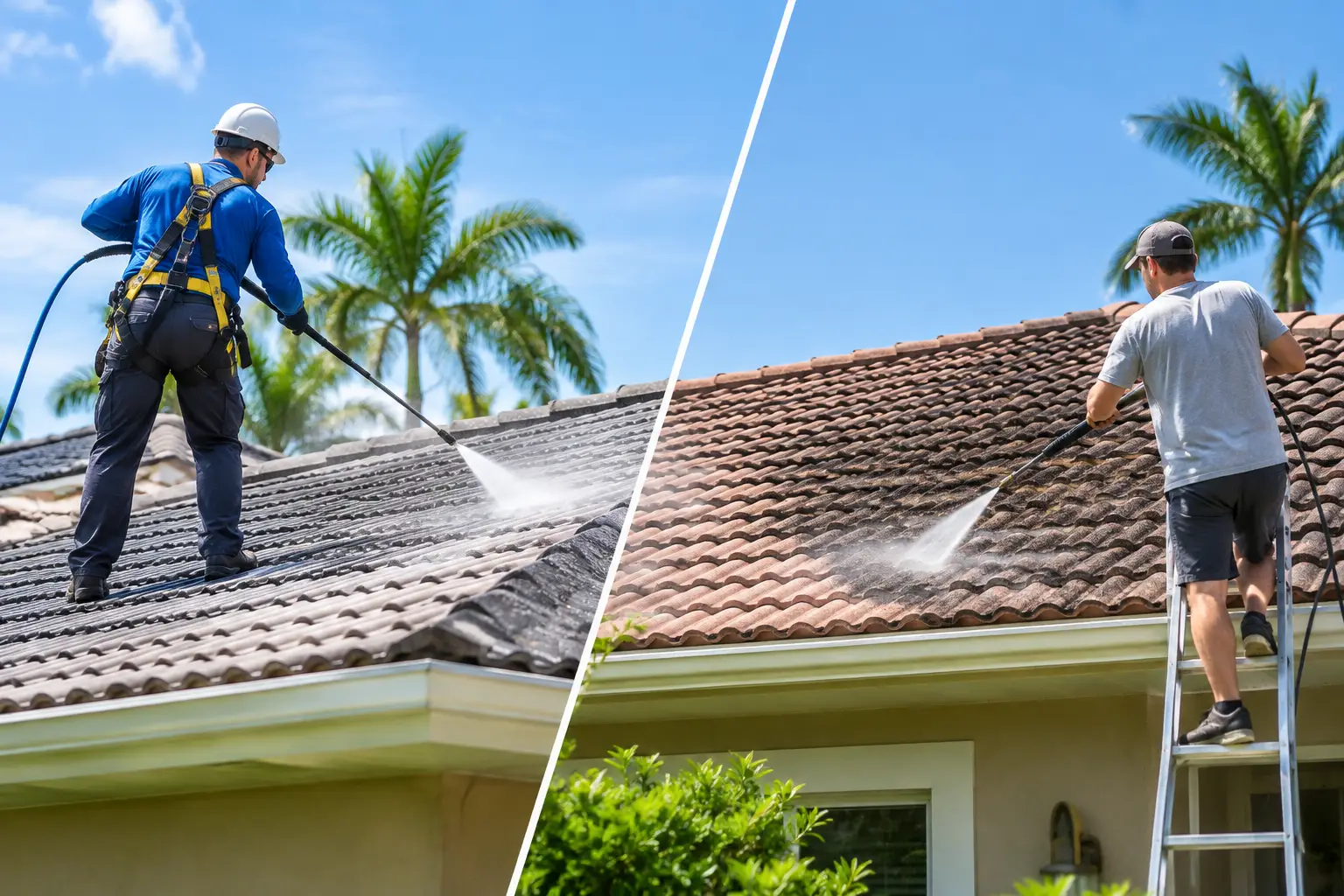
A black-streaked roof can make an otherwise well-kept Florida home look neglected. In Citrus County, those stains are usually more than surface dirt. Humidity, shade, rain, and airborne moisture create the right conditions for algae, mildew, and other organic growth to settle in. When homeowners weigh professional versus DIY roof cleaning, the real question is not simply who can make the roof look cleaner. It is whether the method will protect the roof, landscaping, and everyone on the property.
A do-it-yourself project can feel like a sensible way to save money, especially when the discoloration is easy to see from the driveway. But roofs are not driveways. The wrong pressure, cleaner, footing, or rinse technique can turn a maintenance task into a repair bill. Here is how to make a clear, practical choice for your home.
Professional Versus DIY Roof Cleaning: The Real Difference
The biggest difference is not effort. It is control. A qualified roof-cleaning professional uses a roof-appropriate soft-wash process that applies manufacturer-endorsed cleaning agents at low pressure. The solution does the cleaning work, breaking down algae and organic staining without blasting the roofing material.
DIY roof cleaning often involves a rental pressure washer, a garden sprayer, or a store-bought cleaner. Some of those tools can be useful for the right job, but they leave more room for error on a roof. High pressure can dislodge shingle granules, force water beneath shingles, crack or shift tile, and damage flashing, vents, gutters, or ridge caps. Even a pressure setting that seems gentle at ground level may be too aggressive when it is held close to an aging roof.
A professional also knows that roof materials do not all respond the same way. Asphalt shingles, concrete tile, clay tile, metal, and specialty roofing each require a different level of care. The goal is always the same: remove growth and restore curb appeal while preserving the material that keeps your home dry.
Why Florida Roofs Need a Careful Method
Florida’s climate keeps exterior surfaces working year-round. A roof may look fine after a dry spell, then develop dark staining quickly after weeks of warm rain. Trees can make the issue worse by holding moisture over the roof and dropping debris into valleys and gutters.
Those dark streaks are often algae, especially on light-colored shingles and tile. Left alone, buildup can trap moisture and contribute to a dull, worn appearance. Cleaning is a smart part of routine exterior maintenance, but it should never come at the expense of the roof itself.
A low-pressure soft wash is designed for this balance. Instead of relying on force, it uses the appropriate cleaning solution and enough contact time to treat the growth. The roof is cleaned carefully, and the process is planned around drainage, nearby plants, screens, painted surfaces, and outdoor living areas.
That preparation matters in homes with lanais, pool cages, flower beds, citrus trees, or decorative landscaping. A conscientious crew wets and protects sensitive vegetation, controls runoff, and rinses surrounding surfaces as needed. This is often the detail homeowners do not see in an online video, but it can make all the difference after the job is complete.
The Risks of Cleaning a Roof Yourself
The most immediate DIY risk is a fall. Roofs are steep, uneven, and slippery even before cleaning begins. Add wet algae, cleaning solution, hoses, and Florida humidity, and stable footing becomes much harder to maintain. A ladder can shift, a hose can snag, and a slick patch can be difficult to spot until it is too late.
There is also the risk of material damage. Pressure washing is excellent for many hard surfaces when performed correctly, but it is not the right answer for every roof. Too much force can strip protective granules from asphalt shingles. On tile roofs, it can disturb loose pieces or drive water into areas that should remain dry. Scrubbing aggressively can create similar problems.
Chemical handling requires care as well. Strong roof-cleaning products can irritate skin and eyes, discolor fabrics, and harm plants if mixed, applied, or rinsed incorrectly. Homeowners who choose a DIY approach should never guess at dilution, never mix cleaning products, and never apply a product without reading the roof manufacturer’s guidance and the product label.
Finally, a DIY job can make a roof look temporarily better while missing the underlying issue. A trained eye may notice cracked tiles, lifted shingles, clogged gutters, loose flashing, or areas where growth returns because water is not draining properly. Cleaning does not replace roof repair, but it can be a useful opportunity to spot a concern early.
When DIY May Make Sense
There are limited situations where homeowners can safely handle small roof-related maintenance from the ground. Clearing loose leaves from accessible gutters, trimming back branches that rub the roof, or using a hose to rinse light debris from a low, easily reachable section may be reasonable when it can be done without climbing or using harsh cleaners.
DIY may also make sense for prevention around the roof rather than washing the roof itself. Keeping gutters clear, reducing heavy shade where practical, and scheduling regular exterior cleaning can slow the return of staining. These small steps help protect the work of a professional cleaning and keep the home looking cared for between visits.
If the roof has visible black streaks, widespread green growth, heavy debris, or stains near difficult edges and valleys, it is usually time to step back from the ladder. The cost savings of doing it yourself can disappear quickly if the roof, landscaping, or gutter system is damaged.
What a Professional Roof Cleaning Service Provides
A reputable provider begins by assessing the roof material, the degree of staining, access points, and the areas surrounding the house. That allows the crew to choose the proper soft-wash approach instead of treating every roof the same way.
The work should include thoughtful preparation. That means protecting plants, managing hoses carefully around the property, and paying attention to pool enclosures, painted trim, screens, pavers, and outdoor furniture. It also means arriving with the equipment needed to apply solutions evenly and safely, rather than improvising with a rental machine.
Results matter, but so does how those results are achieved. A properly cleaned roof can brighten the entire exterior, making siding, soffits, driveways, and landscaping look better by comparison. For homeowners preparing for guests, listing a property, returning to a seasonal home, or simply wanting to revive their space, that change can be dramatic.
At White Diamond Pressure Washing, the focus is on low-pressure roof cleaning that respects the materials on your home. The aim is not to rush through a stain with brute force. It is to remove the algae and grime carefully, protect the details around the roofline, and leave the property shining like a diamond.
Comparing Cost, Time, and Long-Term Value
DIY cleaning usually has a lower upfront cost. You may pay for a rental machine, cleaning product, protective gear, ladder equipment, and several hours or more of your time. That can be appealing for a very small, low-risk maintenance task.
Professional cleaning costs more at the start because it includes trained labor, specialized equipment, proper cleaning agents, preparation, and the accountability of an insured service provider. Yet that cost can represent better value when it helps avoid roof damage, landscape loss, or an injury. It also saves a weekend of climbing, spraying, rinsing, and worrying about whether the job was done correctly.
The right choice depends on the condition and design of your roof. A newer, low-slope roof with a small amount of accessible debris presents a different situation than an older tile roof covered in algae. Homeowners should also consider their comfort with heights, physical mobility, and the value of protecting a major investment.
Choosing a Roof Cleaner You Can Trust
Look for a local company that can explain its process in plain language. You should hear low pressure or soft washing for roof cleaning, not promises to blast stains away. Ask how the company protects landscaping, whether it provides a written estimate, and how it handles different roof materials.
Clear communication is a good sign. A dependable contractor should respect your property, show up as scheduled, answer questions without pressure, and leave the work area tidy. Before-and-after results are valuable, but careful preparation and material protection are what make those results worth having.
Your roof works hard through summer storms, salt air, heat, and months of moisture. Treating it with the right cleaning method is one of the simplest ways to keep your home looking cared for without taking unnecessary risks. When the roof needs more than a light ground-level task, choosing experienced, low-pressure care can protect both its appearance and the years ahead.