

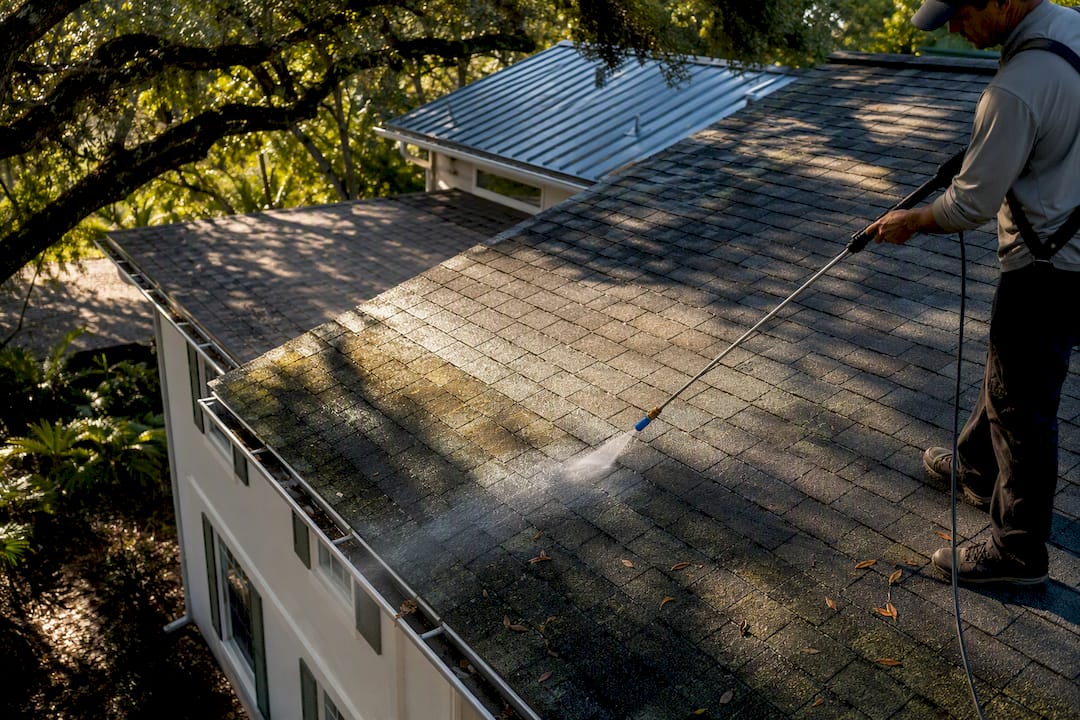
Most roofs need a professional wash every few years, though the right interval depends heavily on material and climate: asphalt shingles typically need cleaning more frequently than metal or tile roofs, cedar shake often requires the most frequent attention, and flat membrane roofs benefit from regular yearly checks. Humid regions push every timeline shorter; dry climates stretch them longer. Whatever the schedule, stick to soft washing. High-pressure equipment can void manufacturer warranties and strip the granules that protect asphalt shingles.
TL;DR:
- Shingle roofs in humid regions typically need cleaning every 1 to 2 years, while drier areas can extend to 2 or 3 years, depending on growth.
- Cedar and wood shake roofs require more frequent cleaning, especially in humid climates, due to moss and moisture infiltration.
- Heavy tree cover, shaded slopes, and proximity to water features significantly accelerate biological growth, shortening the cleaning interval.
- Using soft washing with low pressure and a chemical solution is essential to protect shingles and prevent warranty voiding, unlike high-pressure power washing.
- Homeowners should inspect north-facing roof sections seasonally and treat moss early, rather than waiting for visible damage or widespread streaking.
Table of Contents
- Recommended Roof Washing Frequency by Material
- What Factors Push Your Roof’s Cleaning Schedule Up or Down?
- Signs Your Roof Is Overdue for a Cleaning
- When Is the Best Time of Year to Wash Your Roof?
- Why Soft Washing Beats Pressure Washing for Roofs
- Safety, Warranty, and Cost Considerations Before You Book
- What a Field Technician Actually Looks For
- Our Take: Stop Treating Roof Cleaning Like a Guessing Game
- Get a Roof Washing Schedule Built Around Your Actual Roof
- Sources
Recommended Roof Washing Frequency by Material
The right roof cleaning schedule starts with what’s actually on your roof, not a generic calendar reminder. Different materials weather biological growth and moisture differently, and treating a metal roof like an asphalt one wastes money in one direction or invites damage in the other.
Asphalt shingles need the most frequent attention. In humid climates, expect to wash every 1 to 2 years; in drier, temperate regions, you can often stretch to 2 to 3 years between cleanings, according to roof maintenance guidance from Solar Roofing Guide. Metal roofing holds up better against algae and moss, so cleaning every few years is typical unless heavy tree cover accelerates growth. Tile and clay roofs trap less surface moisture than shingles but their textured surface gives algae spores somewhere to grip, so more frequent cleaning helps prevent stains from setting in.
Cedar and wood shake are the outliers. Wood absorbs moisture, and once moss gets a foothold, it can work into the grain. Regular cleaning is recommended for wood roofs except in the driest climates. Slate holds up closer to metal timelines with less frequent cleaning needed, since it’s dense and largely inert. Flat and membrane roofs, common on additions and commercial buildings, need at least an annual inspection and clean because standing water and debris accumulate faster on a low slope.
Regional data backs up the pattern: the humid Southeast often needs shingle cleaning every 1 to 2 years, the Pacific Northwest frequently requires annual moss treatment, and the arid Southwest can often go 2 to 3 years between service calls, per regional frequency guidelines from the National Roof Cleaning Authority.
A few conditions consistently shorten these intervals:
- Heavy tree canopy or nearby pines and oaks that shed onto the roof
- North-facing slopes that stay shaded and damp longer after rain
- Roofs near water features, coastlines, or areas with morning fog
- Homes in neighborhoods with visible moss or algae on multiple roofs nearby
Pro Tip: If your neighbors’ roofs are showing black streaks or moss patches, treat that as an early warning for your own roof, even if yours still looks clean. Biological growth spreads by spore, and it doesn’t respect property lines.
Cost tracks complexity more than square footage alone. A single-story asphalt roof with a simple soft wash often runs at the lower end of the market, while steep pitches, multiple stories, heavy moss remediation, or hard-to-reach valleys push the price up. Get quotes that specify the method, since a cheaper high-pressure job can cost you far more in shingle life.
What Factors Push Your Roof’s Cleaning Schedule Up or Down?
Climate does the heaviest lifting here. NOAA’s regional humidity and precipitation data help explain why two identical roofs in different states need completely different cleaning cadences — algae and moss thrive where moisture lingers, so consistently wet, humid air accelerates growth regardless of material.
Beyond weather, a handful of site-specific details matter just as much:
- Tree type overhead: oaks and pines drop more organic debris than smooth-leaf species, feeding algae faster
- Proximity to bird roosts, ponds, or dense shrubs that keep humidity elevated at roof level
- Roof pitch and valley design, since low-slope areas and poor drainage trap standing water
- Roof age and repair history, since older or patched sections often show growth first
Pro Tip: Walk your property line once a season and look up at the north side of your roof specifically. That’s usually where moss appears first, well before it’s visible from the street.
Signs Your Roof Is Overdue for a Cleaning
Black streaks are cosmetic, caused by algae, and don’t need emergency attention. Moss and lichen are a different problem entirely. Once moss develops rhizoid anchors into shingles or wood, cleaning alone may not be enough, and a roofing contractor should assess the underlying material before any wash happens.
Watch for these signals that cleaning has become urgent rather than routine:
- Dark streaking that covers more than a third of a slope
- Visible moss clumps, especially in shaded valleys or under overhangs
- Granules collecting in gutters, a sign the shingle surface is degrading
- Attic moisture, musty odors, or ceiling stains that suggest trapped water
- Clogged valleys or down spouts holding standing debris after rain
Inspect from the ground with binoculars when possible. Steep or multi-story roofs call for a professional, not a homeowner on a ladder.
When Is the Best Time of Year to Wash Your Roof?
Timing affects both results and safety. Here’s how the four major climate patterns typically break down:
- Cold climates: clean in spring, after snowmelt clears and before summer algae bloom sets in.
- Humid/subtropical climates: plan two cleanings, one in spring and one in early fall, to interrupt algae’s fastest growth windows.
- Temperate climates: a single annual clean in late spring usually holds through the year.
- Arid climates: cleaning can wait until early fall, ahead of any seasonal rain, since growth is naturally slower.
Avoid scheduling around freezing temperatures or immediately before heavy storms. If you’re planning solar panel installation or exterior painting, book the roof wash first. A clean surface makes inspection and prep work far more accurate.
Why Soft Washing Beats Pressure Washing for Roofs
Soft washing uses a diluted sodium hypochlorite solution with a surfactant, applied at low pressure and left to dwell before a gentle rinse. It kills algae, moss, and lichen at the root without disturbing the shingle surface. High-pressure power washing, by contrast, can blast away the protective granule layer that shields asphalt shingles from UV damage, shortening the roof’s usable life by years.
For established moss with rhizoids already gripping into the material, a gentle mechanical removal step sometimes has to come before chemical treatment. Follow-up prevention can include zinc sulfate or potassium salt of fatty acids, though zinc sulfate corrodes copper, so skip it if your roof has copper gutters or flashing.
Before hiring anyone, confirm:
- They carry liability insurance and can provide proof on request
- They use soft washing as the default method, not pressure washing
- They offer a written estimate specifying chemicals, dwell time, and rinse method
- They can show references or prior roof-cleaning work, not just siding or driveways
Pro Tip: Ask any contractor point blank whether they use bleach-based soft wash or a pressure nozzle on shingles. A vague answer is your cue to keep calling around. Learn more about the soft washing process before you book, so you know exactly what to expect on the day.
Safety, Warranty, and Cost Considerations Before You Book
Steep or multi-story roofs are professional territory, full stop. OSHA’s fall-protection standards exist because roof work is one of the most dangerous home maintenance tasks a person can attempt without the right harness and anchor setup.
Warranty language matters just as much. Major shingle manufacturers warn that pressure washing voids coverage because it strips granules, and that warning holds regardless of how careful the operator is with the wand.
Before hiring:
- Confirm the company uses soft washing, not high-pressure equipment, on shingles
- Ask for proof of general liability insurance
- Expect national pricing to reflect roof pitch, story count, and moss severity
- Request references specific to roof cleaning, not general pressure washing
What a Field Technician Actually Looks For
From the ground, a real inspection starts with photos: north-facing slopes, valleys, and anywhere gutters meet the roofline. Those spots trap moisture longest and show growth first, which lines up with what certified home inspectors consistently flag as the highest-risk zones on any roof.
Setting a realistic schedule means weighing material against local tree cover and sun exposure, not just defaulting to “every two years.” A shaded asphalt roof in a humid zone might need attention annually, while an exposed metal roof in the same yard could go three years without issue. For roofs with a history of moss, some technicians install zinc or copper strips near the ridge; rainfall carries trace metal ions down the surface and helps prevent regrowth between cleanings.
If you’re not sure where your roof falls on that spectrum, request an inspection and get a straight answer instead of guessing.
Our Take: Stop Treating Roof Cleaning Like a Guessing Game
Most advice on this topic hedges everything into vague ranges: “clean every couple of years, depending.” That’s technically true and practically useless. The more honest answer is that your roof is already telling you what it needs. A north-facing valley under an oak tree is not on the same schedule as a south-facing metal roof in a dry climate, even on the same street.
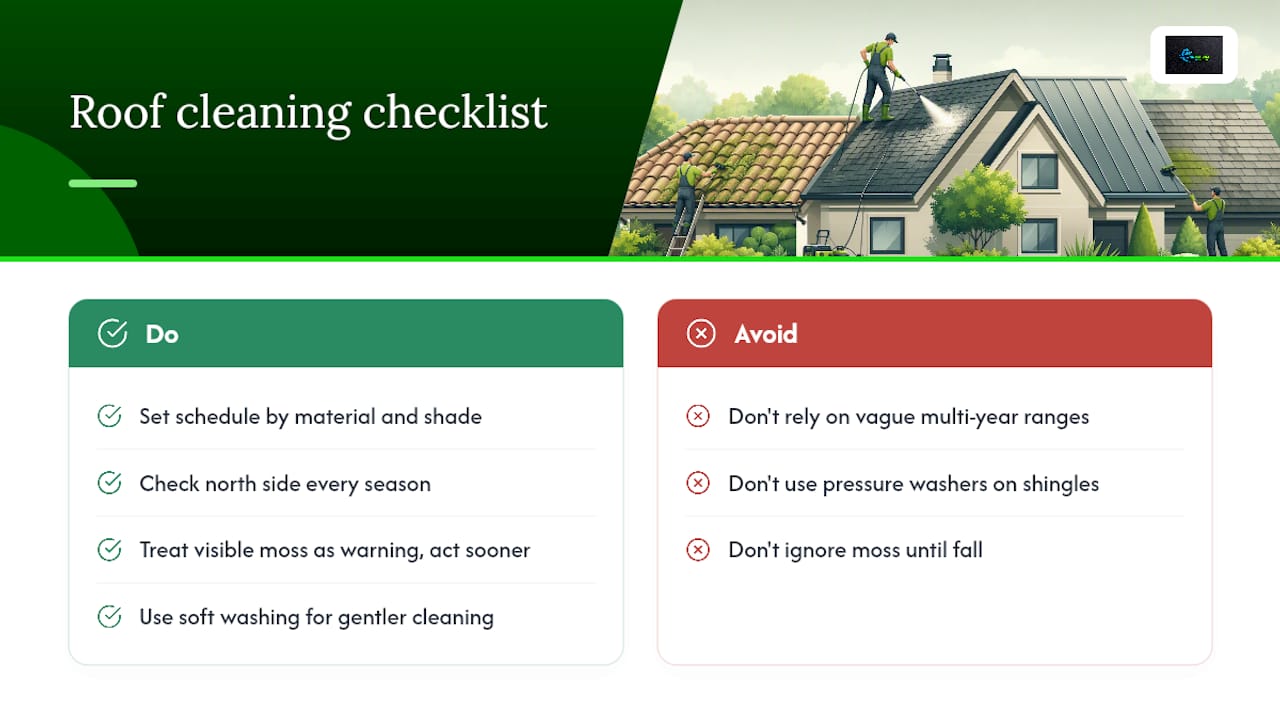
The bigger mistake homeowners make isn’t washing too rarely. It’s reaching for a pressure washer because it feels more thorough, then wondering why granules are collecting in the gutters two years later. Soft washing looks less dramatic in the moment, and that’s exactly the point. It’s doing the work at the material level instead of blasting the surface.
Set your calendar by material and shade, not by habit. Check the north side of your roof every season, and treat visible moss as a signal to move your timeline up, not a cosmetic issue to ignore until fall.
— Bobby
Get a Roof Washing Schedule Built Around Your Actual Roof
Professional pressure washing services can offer homeowners and property managers a soft-wash schedule built around specific roof material, tree cover, and sun exposure, rather than a one-size-fits-all interval pulled from a national average.

Many professional roof cleaning jobs use low-pressure, biodegradable methods designed to protect shingle warranties instead of voiding them, which matters if you’ve ever seen what a careless pressure washer can do to a roofline. Whether you’re dealing with early algae streaks or moss that’s already taken hold, getting an inspection now beats waiting until granules start showing up in your gutters. Request a free estimate and find out exactly where your roof stands before the next season’s growth gets ahead of you.
Sources
- How Often Should You Clean Your Roof? A Smart Maintenance Guide For Homeowners – Solar Roofing Guide
- Maintaining moss-free roof takes some effort – Oregon State University
- National Centers for Environmental Information (NCEI) / NOAA
- OSHA standard 1926.502 — Fall protection systems criteria and practices
- How to Power Wash Your Shingle Roof on Long Island | County Roofing Long Island