

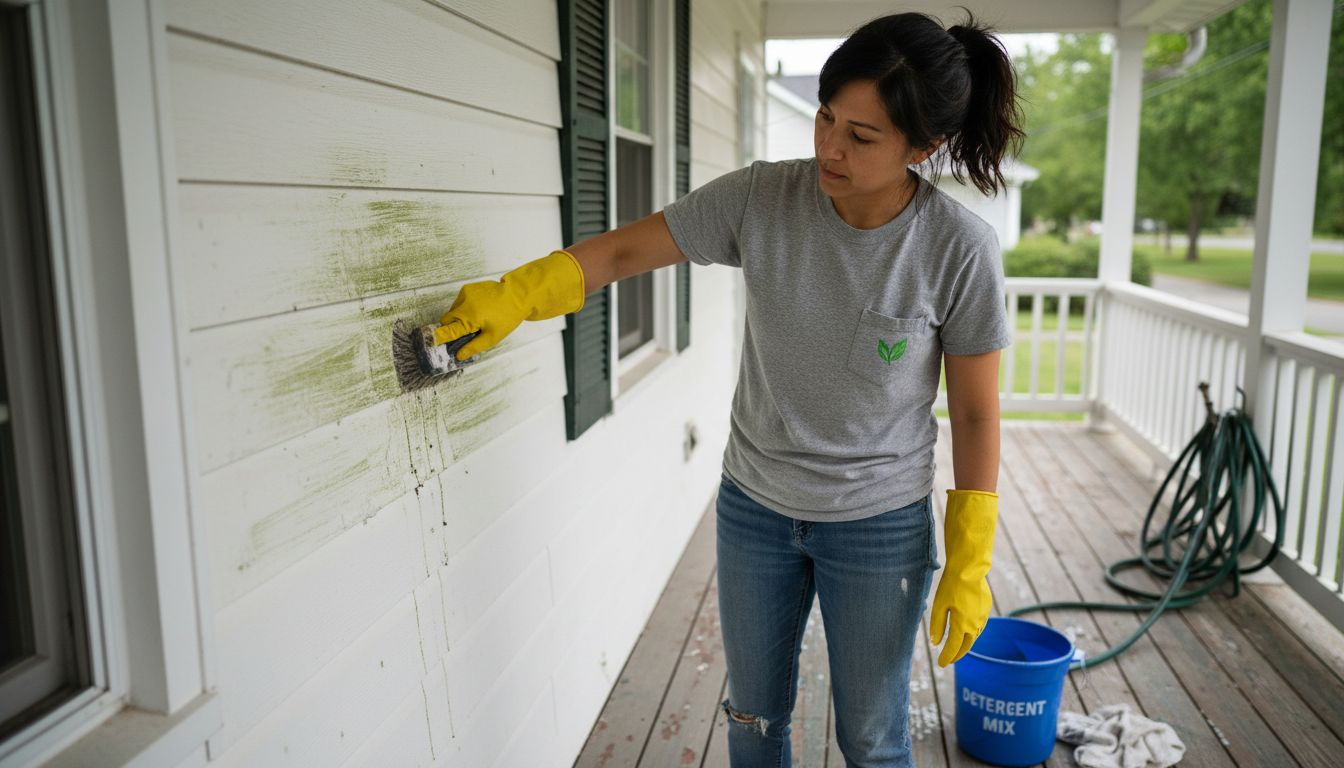
Florida’s humidity and frequent storms can leave outdoor spaces in Citrus County looking dingy and weatherworn. For homeowners who care about both shining results and preserving their investment, understanding the role of detergents with advanced surfactants is key. With so many products promising spotless surfaces, this guide helps you identify which detergents truly lift away grime while safeguarding everything from patios to garden plants.
Table of Contents
- Defining Detergents In Exterior Cleaning
- Types Of Detergents For Outdoor Surfaces
- How Detergents Enhance Cleaning Power
- Protecting Materials And Surfaces Safely
- Common Mistakes And Safe Application Tips
Key Takeaways
| Point | Details |
|---|---|
| Specialized Detergents | Detergents are engineered for specific surfaces, employing complex surfactants for effective cleaning. Always choose a product formulated for the surface you are cleaning to prevent damage. |
| Types of Detergents | Different detergent types cater to various outdoor cleaning needs, including heavy-duty and light-duty options. Selecting the appropriate type is essential based on the material and contamination level. |
| Chemical Cleaning Power | Effective cleaning relies on the interaction of chemical, mechanical, and thermal energy. Understanding these interactions can enhance your cleaning strategy and improve results. |
| Surface Protection | Protecting materials during cleaning involves using surface-specific formulas and adhering to dilution guidelines. Conduct patch tests to avoid damaging delicate surfaces. |
Defining Detergents in Exterior Cleaning
Detergents represent specialized chemical solutions designed specifically for cleaning various surfaces through advanced scientific mechanisms. Unlike traditional cleaning agents, these products leverage complex molecular interactions to remove dirt, grime, and environmental contaminants from exterior surfaces.
At their core, detergents function through unique chemical properties that enable them to break down and disperse different types of soils. Chemical mixtures designed to remove contaminants typically contain sophisticated surfactant compounds that interact strategically with water and dirt particles. These surfactants possess remarkable characteristics that allow them to:
- Reduce water’s surface tension
- Surround and lift dirt particles
- Enable easier rinsing and removal of contaminants
- Work effectively across multiple surface types
The molecular structure of detergents includes both hydrophilic and hydrophobic components, which enables them to interact with water while simultaneously breaking down greasy or oily substances. Surfactants with complex molecular arrangements provide the critical mechanism for lifting and removing dirt from surfaces during exterior cleaning processes.
Modern detergent formulations often incorporate additional elements like enzymes, which can break down specific types of organic matter such as proteins, fats, and starches. This advanced approach ensures more comprehensive and efficient cleaning across different exterior surfaces.
Pro tip: Always select a detergent specifically formulated for the surface material you are cleaning to prevent potential damage and achieve optimal results.
Types of Detergents for Outdoor Surfaces
Exterior surface detergents represent a diverse category of cleaning solutions engineered to address specific outdoor cleaning challenges. These specialized formulations are meticulously designed to tackle different types of dirt, grime, and environmental contaminants encountered during exterior maintenance.
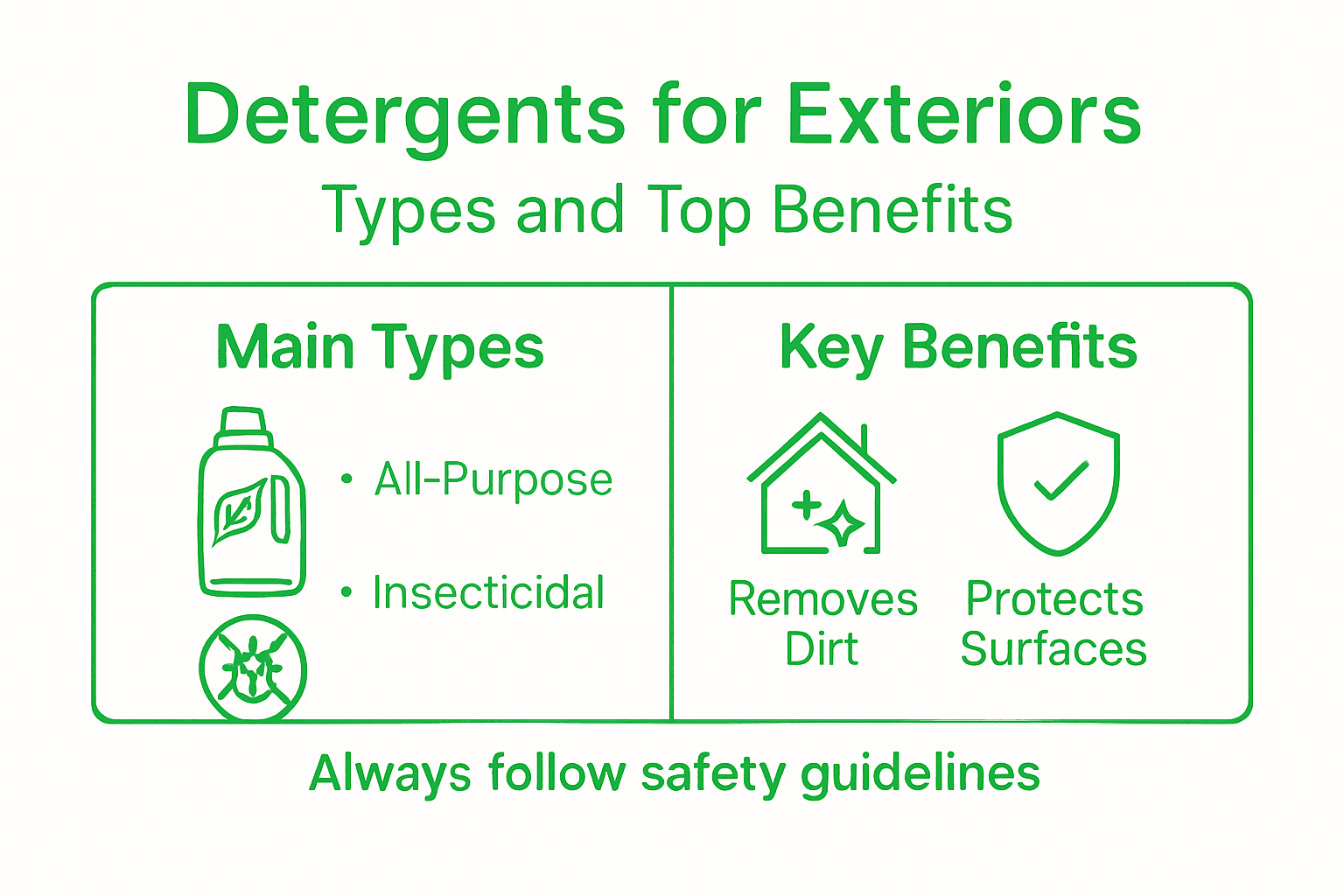
Detergent varieties for exterior applications encompass multiple categories with unique cleaning capabilities. The primary types include:
- Heavy-duty laundry detergents
- Light-duty dishwashing liquids
- Hard-surface cleaners
- Automatic dishwasher detergents
Each detergent type contains a strategic blend of surfactants, builders, stabilizers, and enzymes that optimize cleaning performance under varying conditions such as water hardness and temperature. Some specialized formulations are engineered to address specific surface materials and contamination levels.
Insecticidal soaps and cleaning agents offer unique advantages in garden and exterior environments. These products serve dual purposes of cleaning and pest management, utilizing potassium salts of fatty acids to minimize plant injury while providing consistent performance.
The selection of an appropriate detergent depends on multiple factors including surface material, type of contaminant, environmental conditions, and specific cleaning objectives. Professional exterior cleaning services carefully evaluate these variables to choose the most effective cleaning solution.
Here’s a comparison of common detergent types for outdoor surfaces:
| Detergent Type | Best For | Typical Ingredients | Application Cautions |
|---|---|---|---|
| Heavy-duty laundry | Brick, concrete, siding | Strong surfactants, enzymes | Test colored surfaces first |
| Light-duty dishwashing | Outdoor furniture, glass | Mild surfactants, fragrances | May leave residue on stone |
| Hard-surface cleaners | Decks, patios, walkways | Builders, solvents | Avoid use on soft metals |
| Automatic dishwasher | Metal furnishings | Oxygen-based bleaches | Rinse thoroughly; never on wood |
| Insecticidal soaps | Plant leaves, garden | Potassium salts, fatty acids | Monitor for plant sensitivity |
Pro tip: Always dilute concentrated detergents to the recommended 2-3% solution to prevent potential surface damage and ensure optimal cleaning results.
How Detergents Enhance Cleaning Power
Chemical cleaning power represents a sophisticated interaction between detergent molecules and various types of dirt, grime, and contaminants. This intricate process goes far beyond simple surface wiping, involving complex molecular mechanisms that break down and remove stubborn substances.
Molecular interactions in cleaning processes reveal how detergents provide critical chemical energy to dismantle stains at their most fundamental level. The cleaning mechanism involves three primary energy sources:
- Chemical energy from surfactant molecules
- Mechanical energy through physical agitation
- Thermal energy generated by water temperature
Surfactant molecules function like precision microscopic tools, strategically surrounding and solubilizing oils and dirt particles. Surfactant molecular structures are uniquely designed with hydrophilic heads and hydrophobic tails, enabling them to break down complex contaminants by disrupting their internal structures.
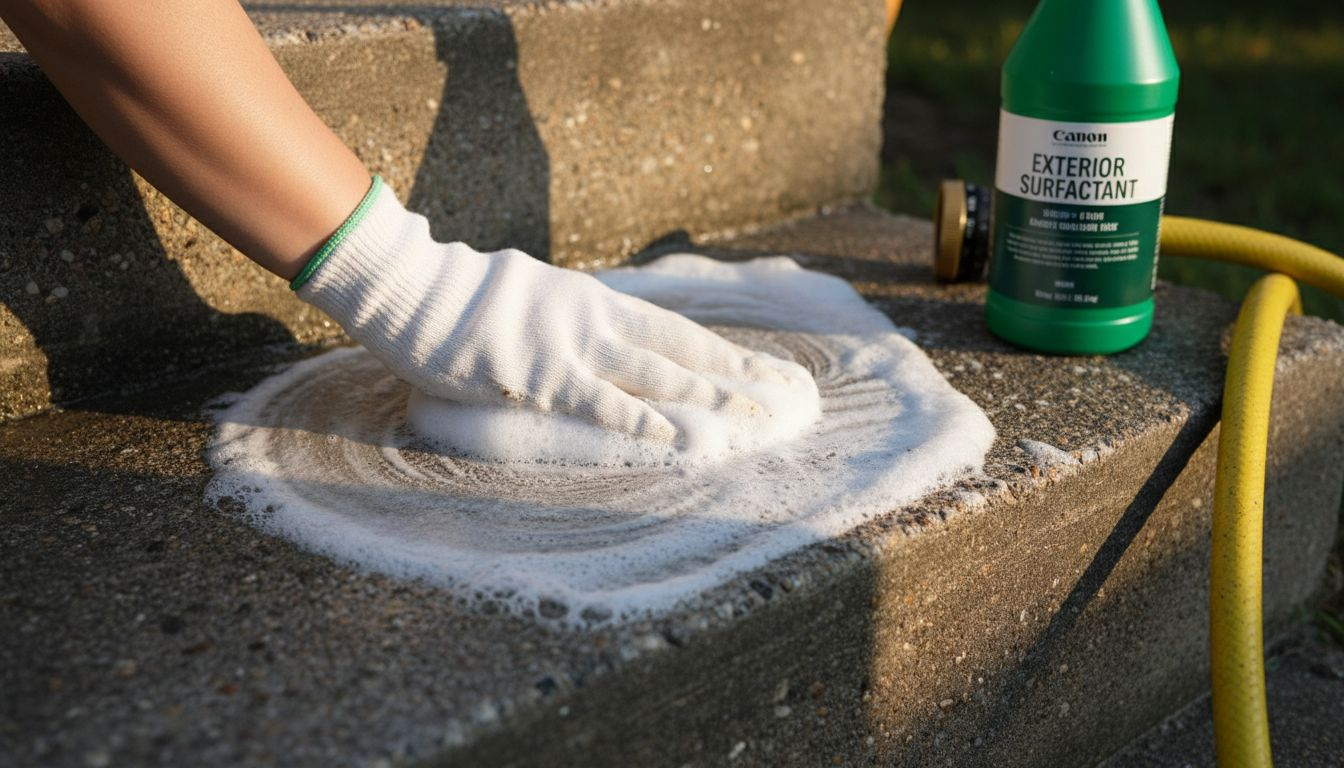
The remarkable cleaning effectiveness stems from these surfactants’ ability to create microscopic interactions that essentially cause membrane breakdown. By binding to molecular membranes and causing expansion and pore formation, detergents can remove tough stains and eliminate potential pathogens with remarkable efficiency.
Pro tip: Select detergents with balanced surfactant compositions that match your specific surface cleaning requirements to maximize cleaning performance and minimize potential material damage.
Protecting Materials and Surfaces Safely
Surface protection represents a critical consideration in exterior cleaning, requiring precise understanding of chemical interactions and application techniques. Professional cleaning demands a nuanced approach that preserves material integrity while effectively removing dirt and contaminants.
Proper cleaning product application involves understanding critical safety parameters that prevent unintended damage. Key strategies include:
- Carefully reading product labels
- Following manufacturer-recommended dilution ratios
- Using specialized formulations for specific surfaces
- Avoiding generic household detergents on delicate materials
- Testing cleaning solutions on small, inconspicuous areas first
Different surfaces require tailored approaches to prevent potential degradation. Commercial cleaning solutions are engineered with specific chemical compositions that minimize risks associated with improper application. Cleaning protocol safety standards emphasize maintaining consistent application techniques that protect both the cleaning surface and the environment.
Professional exterior cleaning services utilize advanced techniques that balance cleaning effectiveness with material preservation. This involves selecting appropriate detergent concentrations, using correct application methods, and understanding the unique characteristics of different surface materials.
Pro tip: Always consult manufacturer guidelines and conduct a small patch test before applying any cleaning solution to ensure compatibility with your specific surface material.
Below is a summary of top material-protection practices in exterior cleaning:
| Practice | Benefit | Typical Application |
|---|---|---|
| Always follow dilution guidelines | Reduces surface damage risk | All detergents and surfaces |
| Use surface-specific formulas | Preserves material integrity | Delicate or specialty surfaces |
| Patch test before full cleaning | Prevents discoloration | Painted or porous materials |
| Avoid mixing chemicals | Minimizes toxic reactions | When using multiple products |
| Wear protective gear | Protects skin and health | During extended cleaning tasks |
Common Mistakes and Safe Application Tips
Exterior cleaning involves numerous potential pitfalls that can compromise both surface integrity and cleaning effectiveness. Homeowners often inadvertently damage surfaces by overlooking critical application guidelines and misunderstanding product specifications.
Detergent application mistakes frequently stem from misguided assumptions about product versatility. The most common errors include:
- Using dish soap as a universal cleaning solution
- Ignoring manufacturer-specific dilution instructions
- Applying non-labeled products inappropriately
- Mixing different cleaning chemicals without understanding interactions
- Assuming all detergents work identically across surfaces
Safer cleaning product selection requires careful consideration of ingredient transparency and potential health implications. Professional exterior cleaning demands a strategic approach that prioritizes both surface protection and thorough cleaning.
Proper application involves understanding each product’s unique chemical composition, recommended dilution rates, and specific surface compatibility. Professionals meticulously evaluate environmental conditions, surface materials, and potential chemical interactions to ensure optimal cleaning results without risking damage.
Pro tip: Always perform a small test patch in an inconspicuous area and wear protective gloves when experimenting with new cleaning solutions to prevent unexpected surface reactions.
Discover the Power of Expert Detergent Use with White Diamond Pressure Washing
Choosing the right detergent and cleaning approach is essential to preserve your property’s exterior materials while achieving a deep clean. This article highlights how specialized detergents break down grime through chemical energy and the importance of tailored formulations to avoid surface damage. If you have faced challenges in selecting effective yet safe cleaning agents or struggled with residue and discoloration, those concerns are exactly why professional expertise matters.
At White Diamond Pressure Washing, we understand these critical chemical interactions and employ industry-approved soft washing and low-pressure techniques. Our team uses high-quality detergents suited for different surface types, ensuring powerful results without risking damage or fading. Our commitment to safety and reliability means your home or commercial property receives a thorough clean that also protects the integrity of your exterior surfaces.

Ready to experience the difference that expert detergent application and professional pressure washing can make? Visit White Diamond Pressure Washing now to explore our services, view customer reviews, and get started with a personalized cleaning solution tailored to your home or business. Don’t wait to safeguard your investment and restore curb appeal—Book Now or Get Your Free Estimate today.
Frequently Asked Questions
What are detergents used for in exterior cleaning?
Detergents are specialized chemical solutions designed to clean various outdoor surfaces by breaking down dirt, grime, and environmental contaminants through chemical interactions.
How do detergents work to enhance cleaning power?
Detergents use surfactant molecules that reduce water’s surface tension, allowing them to surround and lift dirt particles for easier rinsing and removal. They also involve chemical, mechanical, and thermal energy for effective cleaning.
What types of detergents are best for different outdoor surfaces?
Heavy-duty laundry detergents are great for brick and concrete, while light-duty dishwashing liquids work well on outdoor furniture. Hard-surface cleaners are ideal for decks and patios, and specialized formulations like insecticidal soaps can help with plant care.
How can I safely apply detergents to prevent damage to surfaces?
To safely apply detergents, always read product labels, follow dilution guidelines, use surface-specific formulations, and conduct patch tests on inconspicuous areas to ensure compatibility with the materials being cleaned.
Recommended
- Benefits of Exterior Cleaning for Homeowners – white-diamond-pressure
- Why Invest in Exterior Cleaning for Citrus County Homes – white-diamond-pressure
- Why Choose Professional Pressure Washing Services – white-diamond-pressure
- 7 Essential Types of Exterior Cleaning Every Homeowner Should Know – white-diamond-pressure
8 thoughts on “Role of Detergents in Exterior Cleaning Success”