

Property owners in Citrus County know how important it is to keep homes and buildings looking their best, but the risks tied to exterior cleaning can make finding a trustworthy pressure washing service a challenge. Unchecked water damage or chemical use may spell costly repairs if something goes wrong. Understanding insurance coverage for pressure washing services helps homeowners and property managers gain peace of mind, knowing their investments are protected and their interests secure.
Table of Contents
- Defining Insurance For Pressure Washing Services
- Core Types Of Pressure Washing Insurance Policies
- Legal Requirements And Compliance Obligations
- How Insurance Protects Property Owners And Managers
- Common Claims, Pitfalls, And Risk Scenarios
Key Takeaways
| Point | Details |
|---|---|
| Importance of Insurance | Insurance provides essential financial protection for pressure washing services against risks such as property damage, worker injuries, and legal liabilities. |
| Core Insurance Types | Key policies include General Liability, Workers’ Compensation, and Professional Liability, each addressing different risk areas for pressure washing businesses. |
| Legal Compliance | Compliance with laws, including necessary licenses and safety regulations, is critical to operate a pressure washing business safely and legally. |
| Common Risk Scenarios | Awareness of common insurance claims, such as water damage and worker injuries, helps businesses implement preventive measures and avoid costly incidents. |
Defining Insurance for Pressure Washing Services
Insurance plays a critical role in protecting pressure washing businesses and their clients from potential financial risks. At its core, insurance is a legal contract where one party agrees to provide financial protection against specific risks in exchange for regular premium payments. In the context of pressure washing services, this means comprehensive coverage that safeguards both the service provider and the property owner.
According to the legal definition of insurance, the contract allocates economic loss from individuals to a larger risk pool, ensuring that unexpected damages or accidents do not result in catastrophic financial consequences. For pressure washing professionals, this translates to protection against scenarios like:
- Property damage during cleaning
- Equipment malfunction
- Worker injuries on job sites
- Accidental damage to client property
- Legal liability from service-related incidents
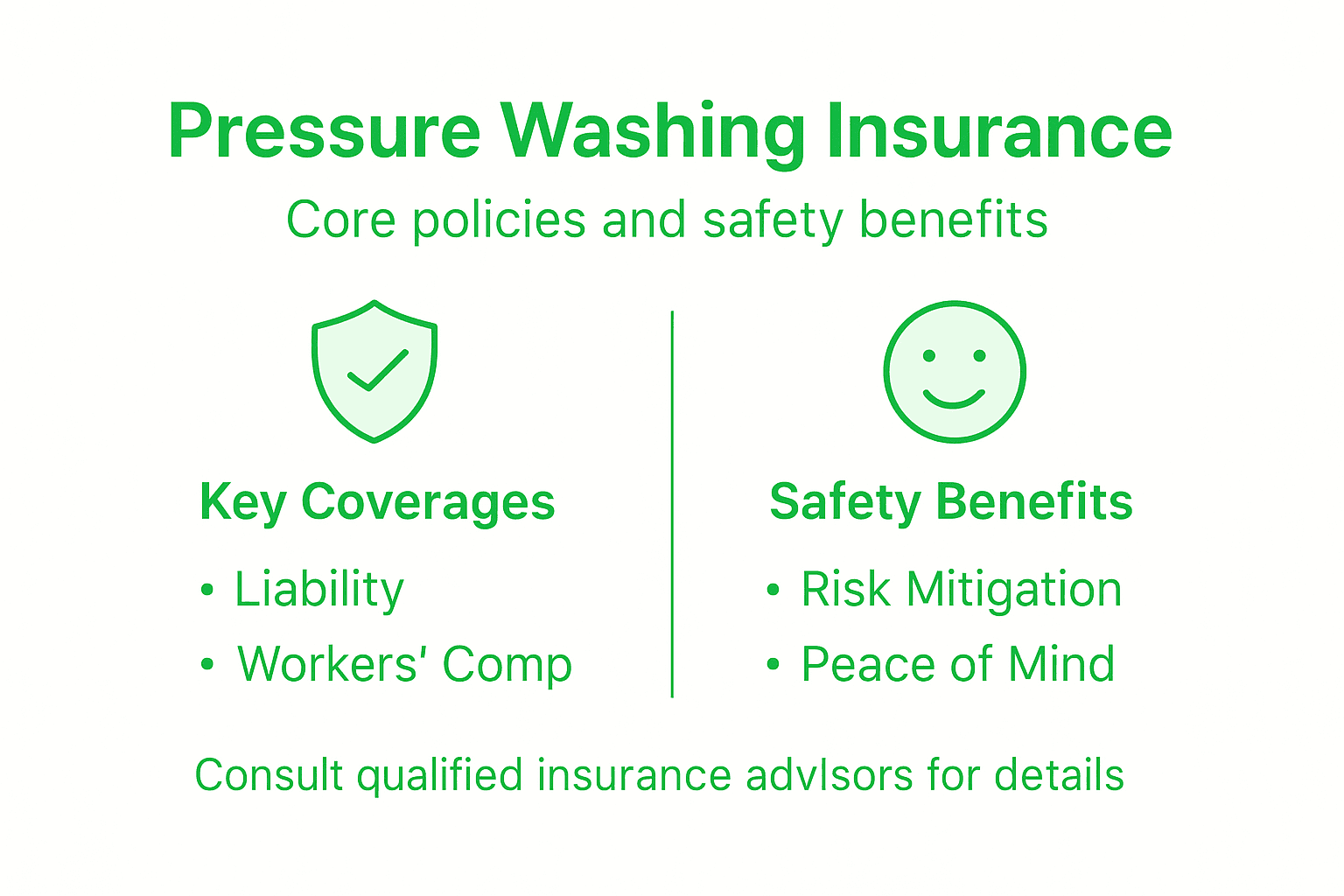
Insurance for pressure washing services typically encompasses several key coverage types. Commercial general liability insurance forms the foundation, protecting businesses from third-party claims involving bodily injury or property damage. Workers’ compensation insurance covers employee injuries, while professional liability insurance guards against claims of negligence or inadequate service.
Insurance transforms unpredictable risks into manageable financial protection, acting as a critical safety net for pressure washing businesses.
Pro tip: Always request proof of insurance and verify coverage details before hiring a pressure washing service to ensure comprehensive protection for your property.
Core Types of Pressure Washing Insurance Policies
Pressure washing businesses require multiple insurance policies to comprehensively protect their operations from potential risks. Property and casualty insurance policies provide critical financial safeguards that address the unique challenges faced by professional exterior cleaning services.
The most essential insurance types for pressure washing professionals include:
- General Liability Insurance: Protects against third-party property damage and bodily injury claims
- Commercial Property Insurance: Covers physical assets like equipment and work vehicles
- Workers’ Compensation Insurance: Provides medical and wage replacement for employee injuries
- Professional Liability Insurance: Guards against claims of negligence or inadequate service
- Commercial Auto Insurance: Covers vehicles used for business transportation and equipment delivery
Business Owner’s Policies (BOPs) offer a comprehensive solution by bundling multiple coverage types into a single package. These integrated policies typically combine general liability, property protection, and business interruption coverage, providing a robust safety net for pressure washing contractors.
Comprehensive insurance coverage transforms potential financial disasters into manageable business risks, ensuring long-term operational stability.
Environmental liability insurance represents an increasingly important coverage for pressure washing services, protecting businesses against potential claims related to water runoff, chemical usage, and environmental damage during cleaning operations.
Here is a quick comparison of key insurance policies and their impact on pressure washing businesses:
| Insurance Policy | Main Focus | Business Benefit |
|---|---|---|
| General Liability | Third-party injury or damage | Reduces lawsuit and claim costs |
| Workers’ Compensation | Employee injuries | Ensures legal wage and medical aid |
| Commercial Auto | Business vehicle accidents | Covers vehicle-related losses |
| Property Insurance | Equipment and assets | Protects against theft or damage |
| Environmental Liability | Pollution or chemical risks | Shields from environmental claims |
Pro tip: Consult with an insurance professional specializing in contractor services to customize your coverage and ensure complete protection for your specific pressure washing business model.
Legal Requirements and Compliance Obligations
Pressure washing businesses must navigate a complex landscape of legal requirements to operate safely and professionally. OSHA workplace safety regulations establish critical standards that pressure washing companies must follow to protect their employees and clients.
Key legal compliance obligations for pressure washing businesses include:
- Obtaining necessary business licenses and permits
- Maintaining required insurance coverage
- Adhering to workplace safety regulations
- Implementing proper employee training protocols
- Following environmental protection guidelines
- Complying with local and state regulatory requirements
Worker safety represents a critical legal consideration for pressure washing operations. This involves comprehensive risk management strategies that go beyond basic protective equipment. Businesses must conduct thorough workplace hazard assessments, provide mandatory safety training, and ensure employees have appropriate personal protective equipment (PPE) for chemical handling and high-pressure equipment operation.
Legal compliance is not just about avoiding penalties – it’s about creating a safe, professional work environment that protects both workers and clients.
State-level regulations add another layer of complexity, particularly regarding insurance producer licensing. Each state maintains unique requirements for business operations, which can vary significantly in terms of licensing, insurance mandates, and operational standards.
Pro tip: Consult with a local business attorney specializing in contractor regulations to ensure your pressure washing business remains fully compliant with all applicable local, state, and federal requirements.
How Insurance Protects Property Owners and Managers
Property owners and managers face numerous potential risks during pressure washing services, making comprehensive insurance coverage essential. Homeowners insurance policies provide critical financial protection against potential damages and liability issues that might arise during exterior cleaning projects.
Key protections for property owners through insurance include:
- Coverage for accidental property damage during pressure washing
- Liability protection against worker injuries on the property
- Financial compensation for equipment-related accidents
- Protection against potential environmental contamination
- Legal defense costs in case of service-related disputes
- Reimbursement for unexpected repair or restoration expenses
Beyond standard property insurance, professional liability coverage plays a crucial role in safeguarding property owners. This specialized insurance protects against potential damages caused by improper cleaning techniques, chemical applications, or unintended surface harm during pressure washing operations.
Insurance transforms unexpected risks into manageable financial scenarios, providing peace of mind for property owners and managers.
Title insurance protections extend additional legal safeguards, ensuring property owners maintain clear ownership rights and are protected against potential liens or ownership disputes that might arise from service-related complications.

Pro tip: Always request and verify a pressure washing service’s current insurance certificates before authorizing any work on your property.
Common Claims, Pitfalls, and Risk Scenarios
Pressure washing businesses encounter numerous complex risk scenarios that can lead to significant insurance claims. Insurance fraud remains a critical concern across property and liability coverage, with potential complications arising from misrepresented or exaggerated damage claims.
Most common insurance claim scenarios for pressure washing services include:
- Water damage to structural surfaces
- Chemical solution-related property deterioration
- Equipment malfunction causing property damage
- Worker injuries during service delivery
- Environmental contamination incidents
- Unintended surface degradation
- Third-party property damage claims
Professional liability risks represent a particularly nuanced challenge for pressure washing contractors. These risks often stem from inadequate risk assessment, improper technique application, or insufficient understanding of surface-specific cleaning requirements. Complex scenarios might involve unintended damage to delicate surfaces like historical building facades, specialized landscaping, or sensitive exterior materials.
Insurance claims are not just financial transactions – they represent critical moments that test a company’s professional competence and risk management strategies.
Professional risk management guidance emphasizes the importance of understanding coverage limitations, maintaining comprehensive documentation, and implementing rigorous safety protocols to mitigate potential claim scenarios.
The following table summarizes common insurance claim risks and ways businesses can prevent them:
| Risk Scenario | Example Issue | Preventive Action |
|---|---|---|
| Water Damage | Leaks into building structure | Perform surface pre-inspection |
| Chemical Deterioration | Surface discoloration | Use surface-appropriate detergents |
| Worker Injury | Slip during equipment use | Provide proper safety training |
| Environmental Contamination | Runoff harming landscaping | Use containment and safe chemicals |
Pro tip: Maintain detailed photographic documentation of pre-existing conditions and service processes to provide clear evidence in potential insurance claim situations.
Protect Your Property with Expert Pressure Washing Backed by Safety and Insurance
Understanding the critical role of insurance in pressure washing safety highlights the risks of property damage, worker injury, and environmental impact. At White Diamond Pressure Washing, we recognize these challenges and prioritize comprehensive safety protocols alongside industry-approved cleaning techniques like soft washing and low-pressure methods to keep your home or business safe and pristine.
Our experienced team operates fully insured and trained to reduce risks such as accidental damage or chemical runoff. This commitment aligns perfectly with the legal standards and insurance requirements detailed in the article, ensuring you receive professional service without exposing yourself to costly liabilities. When you choose White Diamond Pressure Washing, you gain peace of mind knowing your property is protected by high-quality workmanship and rigorous safety practices.
Ready to experience a trusted pressure washing service that values both excellence and security?

Book your service today to benefit from expert cleaning with a focus on safety and insurance compliance. Visit our website to Get a Free Estimate or simply Book Now to protect your property and enhance its curb appeal.
Frequently Asked Questions
What types of insurance are essential for pressure washing businesses?
Pressure washing businesses should consider obtaining general liability insurance, workers’ compensation insurance, commercial property insurance, professional liability insurance, and commercial auto insurance to protect against various risks.
How does insurance protect property owners during pressure washing services?
Insurance protects property owners by covering accidental property damage, liability for worker injuries, financial compensation for equipment-related accidents, and legal defense costs in service-related disputes.
Why is professional liability insurance important for pressure washing contractors?
Professional liability insurance is important because it safeguards against claims arising from improper cleaning techniques, chemical applications, or unintended damage to surfaces during pressure washing operations.
What should I check before hiring a pressure washing service?
Always request proof of insurance and verify coverage details to ensure that the pressure washing service has comprehensive insurance coverage to protect your property.
Recommended
- Pressure Washing Safety – How It Protects Your Home – white-diamond-pressure
- Industry Standards for Pressure Washing Safety – white-diamond-pressure
- 7 Essential Roof Washing Safety Tips for Homeowners – white-diamond-pressure
- Why Avoid High-Pressure Washing: Lasting Home Risks – white-diamond-pressure
2 thoughts on “Role of Insurance in Pressure Washing Safety”