

TL;DR:
- Soft washing, which uses low pressure and biocides, effectively removes organic stains from various exterior surfaces. High-pressure washing is suitable only for durable, hard surfaces like concrete, where mechanical force is needed. Proper assessment and chemical-specific treatment ensure long-lasting results and prevent surface damage.
Soft washing — low pressure combined with a sodium hypochlorite-based biocide — is the correct method for most organic exterior stains on roofs, siding, stucco, and painted surfaces. High-pressure washing is the right call only for durable hard surfaces like concrete driveways and walkways, where mechanical force is needed to lift embedded dirt and oil. If you’re looking at dark streaks on your roof, green patches on your siding, or mildew creeping across your stucco, the first step is a surface-specific assessment from a qualified exterior-cleaning pro who follows documented soft-wash protocols. Whitediamondpressurewashing offers exactly that for homeowners and property managers across Citrus County and surrounding areas.
Table of Contents
- What are organic stains, and why do they keep coming back?
- Soft wash vs. pressure wash: which method fits your surface?
- What does a professional cleaning job actually look like?
- How long do results last, and what does it cost?
- How do you choose a qualified exterior-cleaning provider?
- Key Takeaways
- Why soft washing is the right call most of the time
- Whitediamondpressurewashing: get a surface-specific assessment
- Useful sources
What are organic stains, and why do they keep coming back?
Organic stains are caused by living or once-living biological organisms, not dirt or mineral deposits. The most common culprits on exterior surfaces in the US are:
- Gloeocapsa magma — the photosynthetic bacteria behind those dark black streaks on roof shingles
- Green algae — the slick green film on north-facing siding, fences, and walkways
- Mold and mildew — fuzzy or powdery patches that thrive in shaded, damp joints
- Lichen — a tougher composite organism that bonds directly to roofing and masonry
The reason these stains return after a simple rinse is structural. Organisms like algae and lichen anchor into porous materials using microscopic root-like structures. High pressure alone blasts away the visible layer but leaves spores and root systems embedded in the substrate. Within months, growth returns, sometimes more aggressively than before.
Environmental conditions accelerate re-colonization. Shade, north-facing walls, poor drainage, and high humidity all create ideal conditions for biological growth. Properties in Florida and the Southeast face this cycle faster than most of the country.
How to tell organic from inorganic stains at a glance:
- Organic: green, black, or gray; grows in patches; spreads from shaded areas outward
- Inorganic (rust, mineral): orange or reddish-brown; fixed location; doesn’t spread or grow
- Organic: returns within months if not treated with a biocide
- Inorganic: stays put but doesn’t expand; requires acid-based cleaners, not biocides
Using the wrong chemical class can permanently discolor a surface or simply fail to clean it. Sodium hypochlorite-based algaecides work for organic growth; acid-based cleaners handle mineral and rust stains. Diagnosing the stain type before picking a product isn’t optional.
Pro Tip: If a stain reappears within a few weeks of rain, especially in a shaded joint or on a north-facing wall, it’s biological. An inorganic stain stays exactly where it is.
Soft wash vs. pressure wash: which method fits your surface?
The decision comes down to one question: can the surface be dented or damaged by force? If yes, soft wash it.
| Surface | Recommended method | Pressure / chemistry | Result longevity | Typical cost range |
|---|---|---|---|---|
| Asphalt shingle roof | Soft wash | 30–100 PSI + sodium hypochlorite | 4–6 years | — |
| Vinyl / fiber cement siding | Soft wash | low pressure + surfactant biocide | 18–30 months | — |
| Stucco / EIFS | Soft wash | low pressure + biocide | 18–30 months | — |
| Painted wood siding | Soft wash | low pressure + wood-safe cleaner | 18–30 months | — |
| Concrete driveway / walkway | Pressure wash | high pressure + surface cleaner | 12–18 months | — |
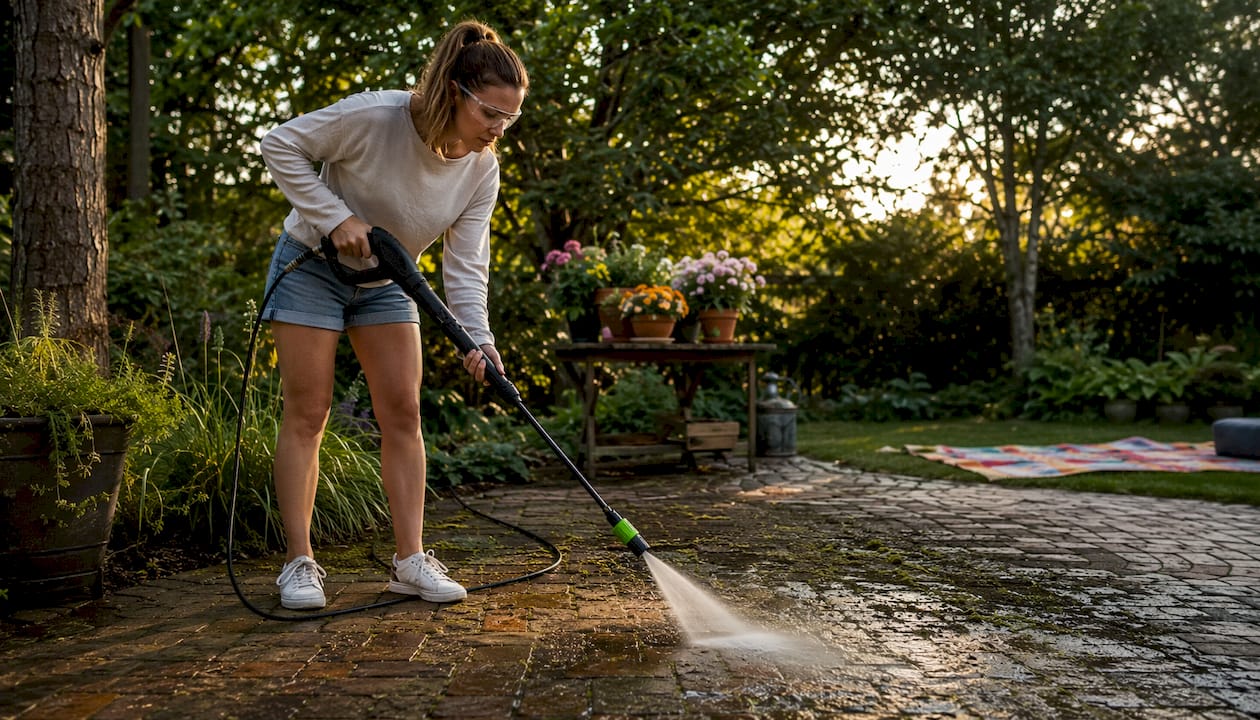
Soft washing operates at low pressure at the surface, relying on sodium hypochlorite-based biocides and surfactants to do the actual cleaning work. Pressure washing uses high pressure of mechanical force appropriate for concrete and masonry but will strip paint, crack vinyl seals, erode stucco, and void most roofing warranties if applied to the wrong surface.
Many jobs are hybrid. A full property cleaning might mean soft washing the house siding, then switching to a surface-cleaner attachment on a pressure washer for the adjacent driveway. Sequencing matters: always clean the roof and siding first so runoff doesn’t re-contaminate freshly cleaned concrete below.
Pro Tip: A quick rule for hiring time: if it can be dented, soft wash it. Roofs, siding, stucco, painted wood — all soft wash. Concrete and brick pavers — pressure wash.
What does a professional cleaning job actually look like?
Knowing the workflow helps you verify that a contractor is doing the job right, not just showing up with a pressure washer.
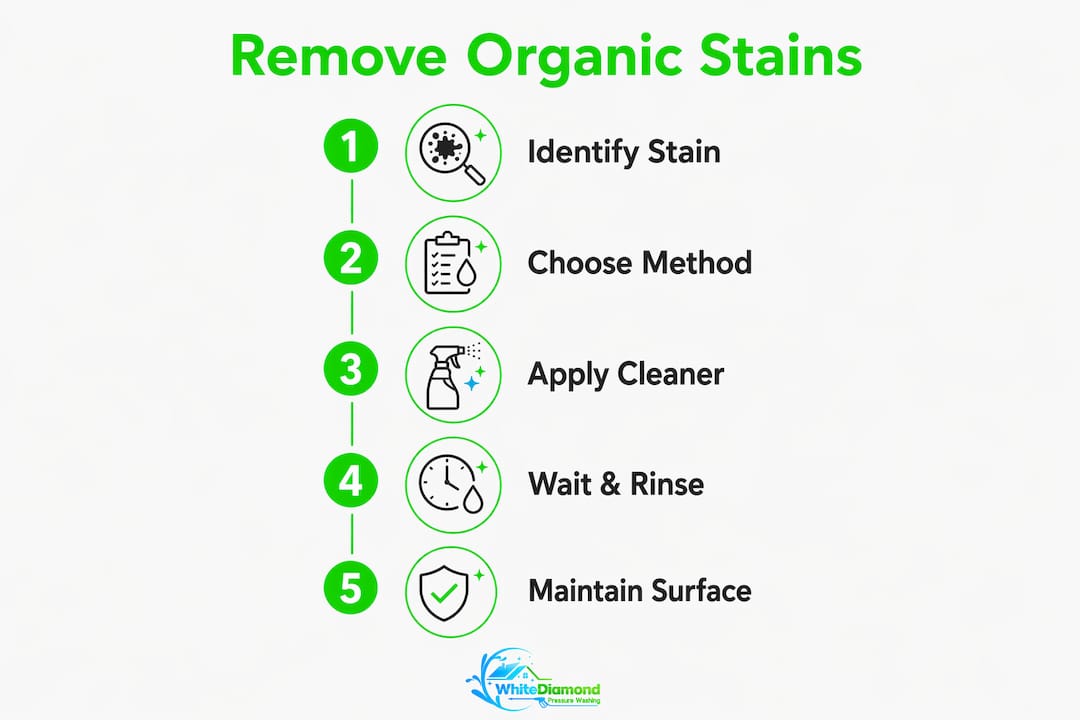
- Assessment and diagnosis — the technician identifies stain types (organic vs. inorganic), surface materials, and access challenges before quoting a method.
- Scope and written treatment plan — a reputable pro provides the specific method, chemical class, and dilution rate for each surface in writing.
- Site protection — plants and mulch beds are pre-wetted to buffer chemical contact; vents, windows, and electrical fixtures are covered or taped.
- Chemical application — sodium hypochlorite solution with surfactant is applied at low pressure, typically from the bottom up to prevent streaking.
- Active dwell period — the solution sits on the surface for 10–20 minutes, allowing biocides to kill organisms at the cellular level and surfactants to encapsulate dirt.
- Low-pressure rinse — controlled water flow at 30–100 PSI removes dead growth and chemical residue without risking surface damage.
- Post-clean inspection and photos — before-and-after documentation confirms results and provides a record for warranty or insurance purposes.
Safety and environmental checklist a professional should follow:
- Runoff containment or diversion away from storm drains
- Pre-wetting and post-rinse of all landscaping near the work area
- Pool and pet protection protocols in place before chemical application
- Full PPE for the technician (gloves, eye protection, respirator for concentrated biocides)
- Ladder and fall-protection equipment for any roof work
One thing worth setting expectations on: soft-wash results often continue improving in the days and weeks after service. Rain and UV help flush dead biological matter from the surface, so the final result may look noticeably better two weeks out than it did on day one.
How long do results last, and what does it cost?
| Surface | Expected longevity | Notes |
|---|---|---|
| Roof (asphalt shingles) | 4–6 years | Soft wash kills Gloeocapsa magma at root; pressure washing provides shorter duration |
| Siding (vinyl, fiber cement) | 18–30 months | Shade and humidity shorten this; annual inspection recommended |
| Concrete / driveways | 12–18 months | Foot and vehicle traffic accelerate re-soiling |
Cost drivers vary more than most homeowners expect. Job size and linear footage are obvious factors, but access difficulty (two-story homes, steep roofs), the extent of biological growth, required chemical volume, and local labor rates all move the number. Properties in high-humidity regions like Central Florida typically need more concentrated treatments and shorter service intervals.
Three maintenance habits that meaningfully extend results: schedule preventive soft-wash cycles before growth becomes visible, trim back trees and shrubs that shade exterior walls, and improve drainage around the foundation to reduce standing moisture. Pairing exterior cleaning with sustainable home maintenance practices keeps surfaces cleaner between professional visits.
How do you choose a qualified exterior-cleaning provider?
The hiring decision is where most property owners make costly mistakes. A contractor who uses the wrong method on the wrong surface can void your roofing warranty, crack vinyl siding, or strip paint — damage that costs far more to repair than the cleaning itself.
Red flags to watch for:
- Insists on high-pressure washing for roofs or siding with no soft-wash option
- Cannot name the specific chemicals or dilution rates they plan to use
- Refuses to provide proof of liability insurance or won’t put the treatment plan in writing
- Gives a flat bid with no line items for chemistry, surface protection, or runoff management
- No before-and-after photo documentation offered
Questions to ask before booking:
- What specific method do you use for each surface on my property?
- What chemicals and dilution rates will you apply, and are they biodegradable?
- How do you protect my plants, pool, and landscaping during treatment?
- Do you carry liability insurance, and can I see the certificate?
- What does your service guarantee or warranty cover, and how do you handle re-growth?
Request itemized quotes from at least two providers. Ask each one how they measure success and what their follow-up process looks like if growth returns before the expected longevity window closes. A contractor who can answer those questions clearly and in writing is worth paying a little more for. For a deeper look at evaluating exterior cleaning vendors, Whitediamondpressurewashing has published a practical checklist on their site.
Key Takeaways
Professional soft washing kills organic growth at the cellular level, producing results that last 3–5 times longer than pressure washing on roofs and siding.
| Point | Details |
|---|---|
| Soft wash for most surfaces | Roofs, siding, stucco, and painted wood all require soft wash (30–100 PSI + biocide), not high pressure. |
| Chemistry kills; pressure rinses | Sodium hypochlorite biocides destroy organisms at the root; pressure alone leaves spores behind and causes faster regrowth. |
| Longevity by surface | Roofs: 4–6 years; siding: 18–30 months; concrete: 12–18 months after professional treatment. |
| Hiring red flags | Avoid contractors who insist on high-pressure for roofs, won’t show insurance, or refuse a written treatment plan. |
| Whitediamondpressurewashing | Serves Citrus County and surrounding areas with documented soft-wash protocols, before-and-after photos, and insured service. |
Why soft washing is the right call most of the time
The single most common mistake I see on properties that come to us for a re-clean is blast damage from a previous contractor who used too much pressure on the wrong surface. Granule loss on shingles, cracked vinyl seals, powdered stucco edges — all of it preventable. Chemistry does the work; low pressure just delivers and rinses it. That’s not a philosophy, it’s what produces a clean surface that stays clean for years instead of months.
What customers consistently value most isn’t the dramatic before-and-after on day one. It’s the fact that the growth doesn’t come back in six months. When you kill the organism at the cellular level rather than blast the visible layer off, you’re treating the actual problem. The surface keeps improving for weeks after service as rain flushes dead matter away, and then it just stays clean.
Whitediamondpressurewashing serves homeowners and property managers across Citrus County and the surrounding region. Scheduling is flexible, and we work with property managers who need recurring service agreements as well as homeowners booking a single visit.
Whitediamondpressurewashing: get a surface-specific assessment
Whitediamondpressurewashing delivers professional soft washing and pressure washing for residential and commercial properties across Citrus County, with documented protocols, full liability insurance, and before-and-after photo records on every job. The difference from a generic pressure-washing crew is straightforward: the right method for each surface, applied by experienced technicians who know when chemistry does the work and when mechanical force is appropriate.
Services available:
- Roof cleaning (soft wash, warranty-safe)
- House washing (siding, stucco, painted surfaces)
- Driveway and walkway cleaning
- Concrete sealing
- Soft washing for patios and commercial building exteriors
Every job includes a written treatment plan, chemical disclosure, and post-service inspection. Service guarantees are available — ask when you book.
Ready to book? Visit Whitediamondpressurewashing to request a free estimate or schedule a surface-specific assessment. Have your property address and a description of the staining ready, and a technician will confirm the right method and timeline before any work begins.
Useful sources
- The Complete Guide to Soft Washing: Why Low Pressure Delivers Superior Results — covers soft-wash chemistry, dwell times, and why results improve in the weeks after service.
- Soft Wash vs Pressure Wash: The Tampa Bay Homeowner’s Guide — practical surface-by-surface breakdown of when each method is appropriate.
- Soft Wash vs Pressure Wash — When to Use Each Method — PSI ranges, chemistry classes, and why high pressure fails on organic growth.
- Pressure Washing vs Soft Wash: When to Use Each — longevity data by surface type (roofs, siding, concrete).
- Organic vs Inorganic Matter on the Exterior of Your Home — explains why chemical class selection matters and what happens when you use the wrong one.
- How Sodium Hypochlorite Works in Exterior Cleaning — detailed breakdown of how sodium hypochlorite kills biological contamination at the cellular level.
- Why Organic Stains Need Different Treatment to Oil Stains — contrasts organic and inorganic stain chemistry and explains why each requires a different removal approach.
Recommended
- Stain Removal Guide: Restore Outdoor Surfaces in 2026 – white-diamond-pressure
- Role of Detergents in Exterior Cleaning Success – white-diamond-pressure
- Ensure safe exterior cleaning: a guide to materials compatibility – white-diamond-pressure
- Eco-friendly outdoor cleaning guide for Citrus County homes – white-diamond-pressure