

TL;DR:
- Regular inspection and maintenance prevent costly asphalt damage by sealing cracks, removing debris, and scheduling sealcoating every two to three years. Proper drainage, timely stain removal, and professional cleaning ensure safety and longevity of parking lots, especially when issues like standing water or alligator cracking arise. Hiring licensed professionals with proper equipment is essential for addressing structural problems and complying with stormwater regulations.
The fastest way to clean a small-to-medium asphalt parking lot is to inspect first, then work in sequence: remove large debris, sweep the full surface, spot-treat oil and grease stains, pressure or soft wash, fill any cracks, and sealcoat on a two-to-three-year schedule. Call a professional when you see alligator cracking, standing water that sits longer than 24 hours, oil contamination beyond a few isolated spots, or when you simply lack the equipment and staff to do the job safely.
Immediate actions to take today:
- Post signage and set out cones before any cleaning begins
- Remove trash, loose debris, and any hazardous material by hand
- Check that catch basins and drain grates are clear
- Note cracks wider than 1/4 inch, potholes, and any standing water
- Confirm ADA accessible spaces remain accessible throughout the work
When to call a pro instead of DIYing it:
- Alligator cracking (interconnected crack networks indicating base failure)
- Standing water that does not drain within 24 hours
- Large-scale oil or chemical contamination
- No access to a commercial sweeper or pressure washer
- Safety or stormwater permit requirements you are not equipped to handle
Table of Contents
- 1. How to inspect your lot and prepare safely before cleaning
- 2. How to remove loose debris with the right sweeping equipment
- 3. How to remove oil, grease, and other surface stains
- 4. When to use pressure washing vs. soft washing on asphalt
- 5. How to fill cracks and repair potholes before they grow
- 6. Sealcoating on a multi-year schedule is the standard recommendation for extending asphalt life. Sealcoat blocks UV oxidation, slows moisture intrusion, and restores a uniform appearance. Apply it in warm, dry conditions, ideally when temperatures will remain above 50°F for at least 24 hours after application.
- 7. How to diagnose and fix drainage problems
- 8. A maintenance schedule and budgeting framework that actually works
- 9. When to hire a professional and what to ask them
- Key Takeaways
- The maintenance mistake most property managers make
- What to expect when you hire Whitediamondpressurewashing for your parking lot
- Useful sources for deeper guidance
1. How to inspect your lot and prepare safely before cleaning
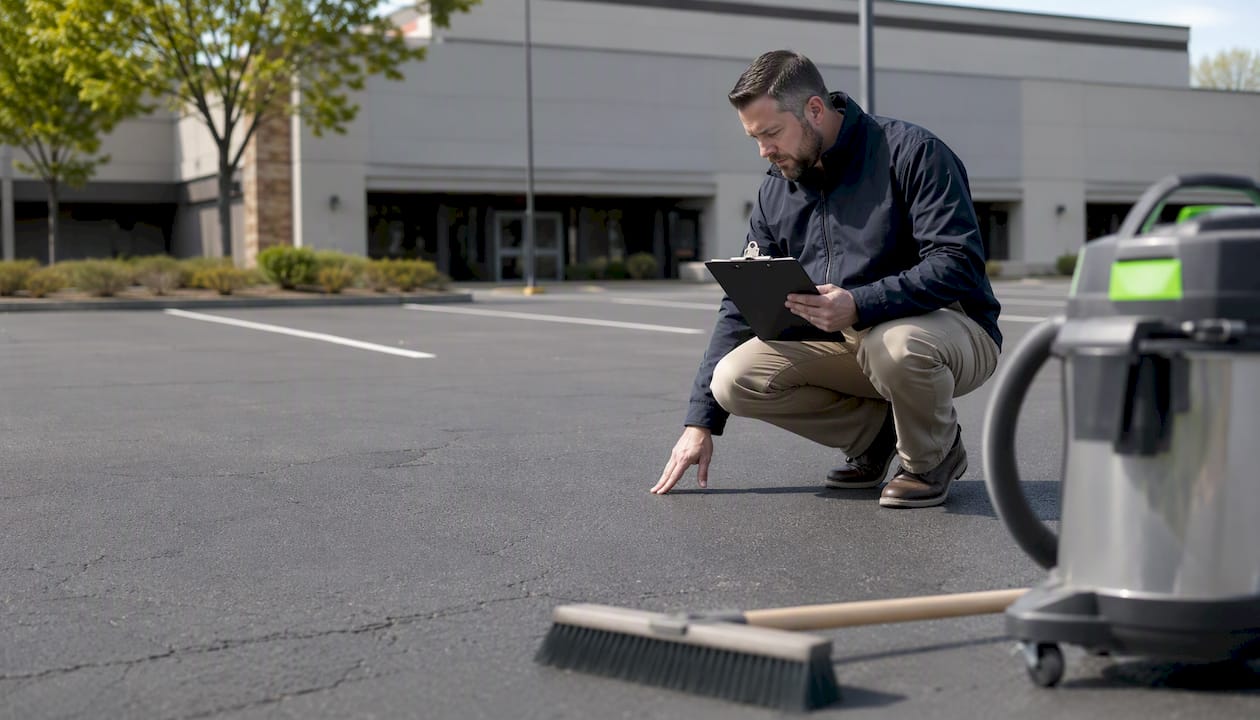
A thorough walkthrough before you touch a single piece of equipment saves you from cleaning over a problem that needs repair first. Walk the entire lot with a clipboard or phone camera and check six things: surface condition (cracks, raveling, potholes), striping visibility, drainage and low spots, lighting, wheel stops and curbs, and catch basin grates.
Layered inspection checklist:
- Surface: mark cracks by width (hairline, 1/4 inch or wider, alligator pattern)
- Striping: faded lines, missing ADA symbols, fire-lane markings
- Drainage: low spots, blocked grates, standing water stains
- Lighting: burned-out fixtures that create safety gaps
- Wheel stops: cracked, shifted, or missing
- Catch basins: debris buildup, damaged grates
For safety and traffic control, set cones and signage at every entry point before work starts. If the lot stays open during cleaning, assign a flagger and keep ADA spaces accessible or provide a compliant temporary alternative. Before heavy pressure washing, check your municipality’s stormwater discharge ordinance. Many jurisdictions require that wash water containing detergents or oil not enter storm drains untreated. Personal protective equipment for chemical treatments includes nitrile gloves, safety glasses, and a respirator rated for organic vapors. Dispose of absorbent materials used on oil spills as solid waste, not down a drain.
Pro Tip: Keep a timestamped photo log of every inspection. Those records are your best evidence of due diligence if a slip-and-fall claim ever lands on your desk.
2. How to remove loose debris with the right sweeping equipment
Mechanical sweeping is the foundation of parking lot housekeeping, and the equipment choice matters more than most managers realize. Rotary brush sweepers push fine particles around; regenerative-air sweepers actually capture them, which matters for both cleanliness and stormwater compliance.
Step sequence:
- Pick up large debris by hand or with a grabber tool
- Edge-blow along curbs, wheel stops, and building perimeters
- Sweep the full surface in overlapping passes
- Clear catch basins and drain grates last
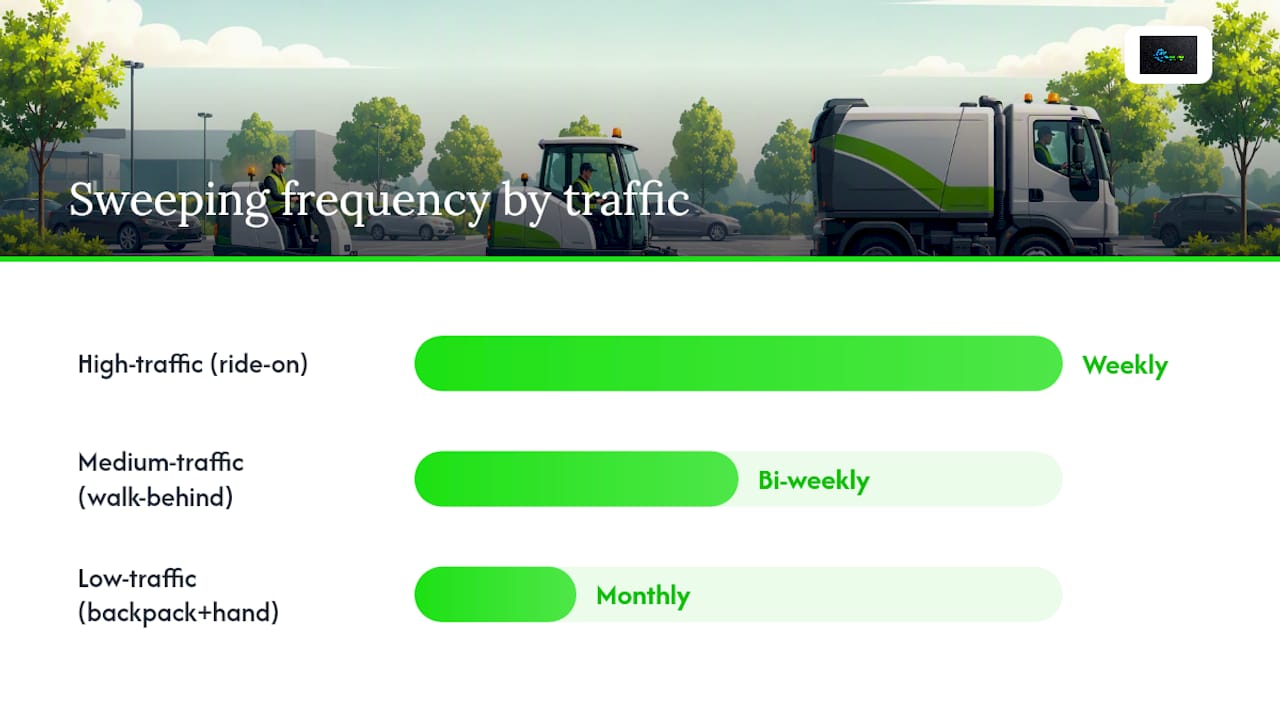
Sweeping frequency by traffic class:
| Lot Type | Recommended Frequency | Equipment Fit |
|---|---|---|
| High-traffic (retail, medical) | Weekly | Ride-on regenerative-air sweeper |
| Medium-traffic (office, light commercial) | Bi-weekly | Walk-behind sweeper or ride-on |
| Low-traffic (storage, occasional use) | Monthly | Backpack blower + hand sweep |
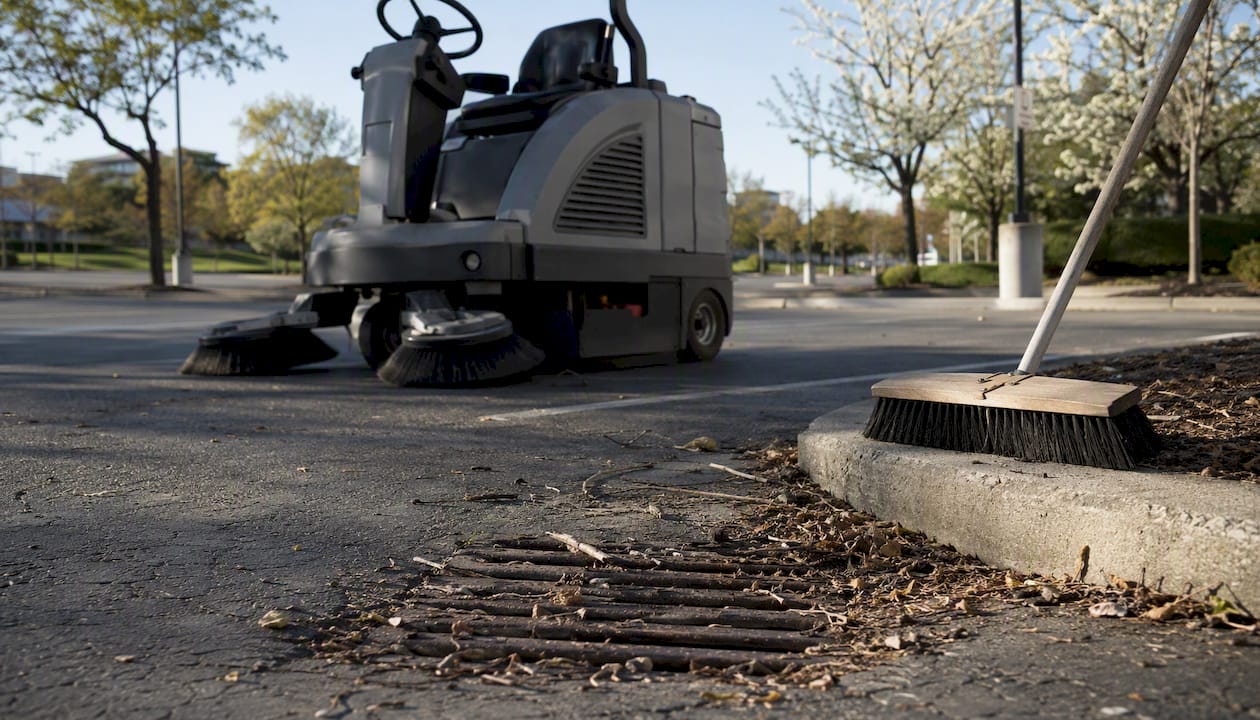
Spring is the single most important seasonal cleaning window. After winter, sand, grit, and road salt accumulate in drains and along curbs. Clear that material before it works into surface cracks or washes into storm systems.
3. How to remove oil, grease, and other surface stains
Fresh oil and set-in grease need different approaches. A spill from this morning responds well to absorbent and a biodegradable degreaser. A stain that has been baking into asphalt for two seasons needs a stronger emulsifier, more dwell time, and realistic expectations about full removal.
Step-by-step spot treatment:
- Contain the stain. Apply an absorbent (cat litter, oil-dry, or commercial absorbent granules) to any fresh spill. Let it sit 15–30 minutes, then sweep up and bag as solid waste.
- Pre-treat. Apply a biodegradable degreaser or citrus-based emulsifier directly to the stain. Follow the product’s dwell time, typically 5–10 minutes.
- Agitate. Scrub with a stiff-bristle brush to work the chemistry into the pore structure of the asphalt.
- Rinse. Use a pressure washer at moderate pressure (1,500–2,000 PSI) or a low-pressure rinse if the sealcoat is in good condition. Direct runoff away from storm drains or use a wash mat to capture it.
Safe product and disposal notes:
- Choose degreasers labeled biodegradable and phosphate-free
- Capture wash water if your local ordinance requires it (check before you start)
- Bag and dispose of used absorbents as solid waste, not in recycling
For detailed guidance on driveway oil stain removal techniques that scale to parking lots, Whitediamondpressurewashing covers safe chemical choices and rinse strategies that protect both the surface and surrounding drainage.
When oil has saturated the asphalt matrix over a large area, spot treatment is a temporary cosmetic fix. Saturated pavement softens under heat and traffic load. That is a professional remediation job, not a DIY one.
4. When to use pressure washing vs. soft washing on asphalt
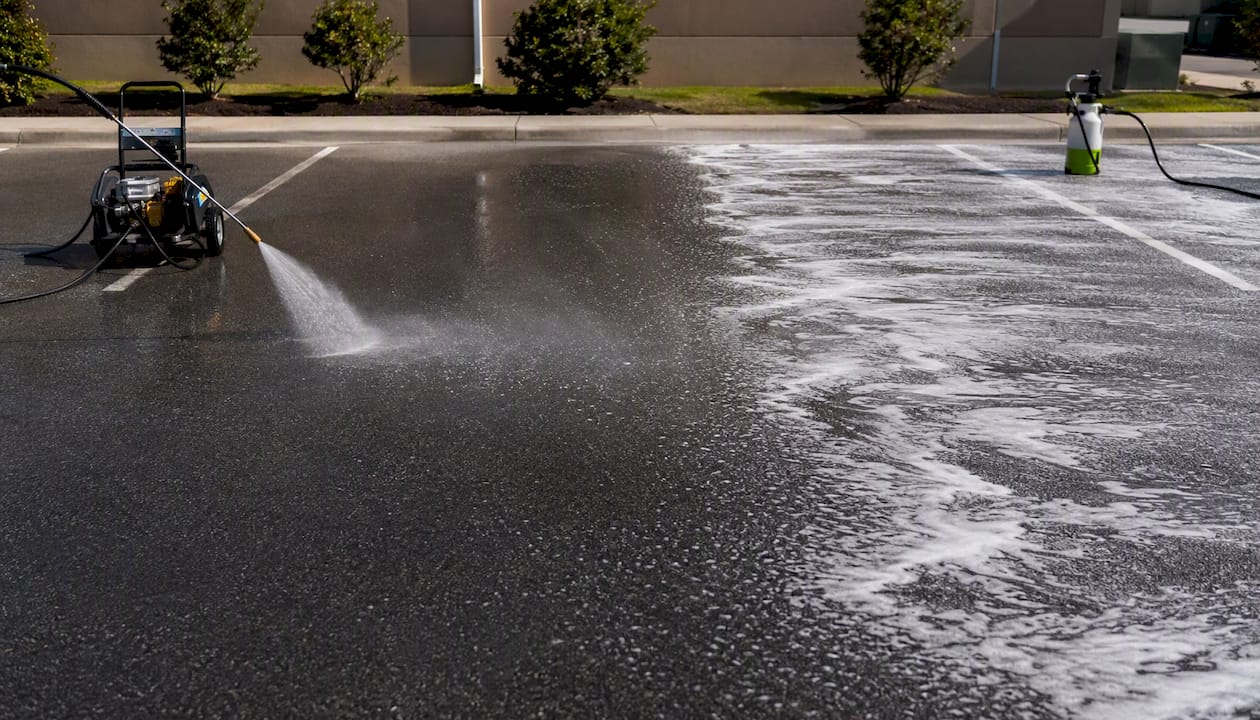
The right method depends on what you are removing and the condition of the surface. Pressure washing uses high-velocity water (typically 2,000–3,500 PSI for commercial surfaces) to blast away heavy soils, gum, and paint overspray. Soft washing, or low-pressure washing, pairs a lower PSI with cleaning chemistry to lift biological growth, algae, and light grime without mechanical force.
| Method | Best For | PSI Range | Risk on Asphalt |
|---|---|---|---|
| Pressure washing | Heavy oil, gum, paint, tire marks | 2,000–3,500 PSI | Surface raveling if too close or too high |
| Soft/low-pressure wash | Algae, mildew, light soiling | — | Minimal when chemistry is correct |
| Surface cleaner attachment | Large flat areas, uniform soiling | 2,000–3,500 PSI | Low if kept moving |
Pressure washing safety rules for asphalt:
- Keep the nozzle at least 12 inches from the surface; closer strips sealcoat
- Use a 25-degree or 40-degree fan nozzle, never a zero-degree tip on asphalt
- Pre-treat with chemical before high-pressure rinse when removing oil or biological growth; chemical pre-treatment improves results over water-only rinsing
- Watch for surface raveling (loose aggregate) as a sign you are using too much pressure
For high-traffic lots, professional pressure washing quarterly is a reasonable target. Lower-traffic surface lots can often get by with an annual wash. Signs you are using the wrong method: aggregate loosening from the surface, sealcoat stripping in patches, or stains spreading rather than lifting.
5. How to fill cracks and repair potholes before they grow
Crack sealing is the single most cost-effective preventive treatment available to a property manager. A hairline crack costs almost nothing to seal. Left alone for one winter, that same crack admits water, freezes, expands, and becomes a pothole that costs significantly more to repair.
Crack triage:
- Hairline cracks (under 1/8 inch): Apply a liquid crack filler or rubberized sealant. Clean the crack with compressed air first to remove debris.
- Moderate cracks (1/4 inch to 1 inch): Clean thoroughly, install a backer rod if depth exceeds 1 inch, then apply hot-pour rubberized crack sealant. Hot-pour bonds better than cold-mix in most climates.
- Alligator cracking (interconnected network): Do not attempt DIY repair. This pattern signals base failure. Filling the surface is cosmetic only; the lot needs professional evaluation and likely partial or full reconstruction.
Pothole repair steps:
- Cut or saw-cut the damaged area to clean, vertical edges
- Remove all loose material and debris
- Apply tack coat to the edges
- Fill with cold-mix or hot-mix asphalt (hot-mix is more durable)
- Compact thoroughly with a plate compactor or hand tamper
- Allow to cure before reopening to traffic (cold-mix: 24 hours minimum; hot-mix: 2–4 hours)
Decision checklist — when to escalate to a paving contractor:
- Alligator cracking covering more than a few square feet
- Potholes deeper than 3 inches or with soft, unstable base material
- Cracks that reopen within one season of sealing
- Visible base erosion or settlement
Best repair window: late spring through early fall, when temperatures stay above 50°F and rain is not forecast for 24 hours after application.
6. Sealcoating on a multi-year schedule is the standard recommendation for extending asphalt life. Sealcoat blocks UV oxidation, slows moisture intrusion, and restores a uniform appearance. Apply it in warm, dry conditions, ideally when temperatures will remain above 50°F for at least 24 hours after application.
One important caveat: sealcoat will not fix a failing base. Applying it over alligator cracking or structural failure masks the problem without addressing it. Sealcoat is a preservation tool, not a repair.
Sealcoating and striping data:
| Task | Frequency | Ideal Season | Notes |
|---|---|---|---|
| Sealcoating | Every 2–3 years | Late spring to early fall | Requires dry surface, 50°F+ temps |
| Restriping | After every sealcoat | Same window | ADA symbols, fire lanes required |
| ADA space repainting | With restriping | As needed | Confirm current ADA standards |
| Fire-lane marking | With restriping | As needed | Check local fire code |
Scheduling checklist to minimize disruption:
- Notify tenants or customers at least 48 hours in advance
- Plan for a full-lot closure of 24–48 hours for sealcoat curing
- Stripe immediately after sealcoat cures (typically 24 hours)
- Schedule during low-traffic periods (weekends, holidays, off-season)
Pricing varies widely by lot size, prep work required, and region. Get at least three bids and confirm that each includes surface prep, crack filling before sealcoat, and a line-item for striping.
7. How to diagnose and fix drainage problems
Standing water that remains 24 hours after rain is an urgent signal, not a cosmetic issue. Water sitting on asphalt accelerates oxidation, softens the base, and creates slip hazards. The 24-hour threshold is a useful rule: if it is still pooling the next morning, you have a drainage problem that needs attention before the next cleaning cycle.
Routine drainage maintenance:
- Clear catch basin grates of leaves, gravel, and debris monthly
- Inspect outfall pipes for blockages or damage after heavy rain
- Check that drain covers are intact and not sunken below the pavement surface
The target grade for asphalt parking lots is a minimum 2% slope toward drains. Anything flatter creates ponding zones. Low spots are easy to identify after rain: walk the lot within an hour of a storm and mark every puddle.
Short-term vs. long-term fixes:
- Short-term: Clear blocked drains, add temporary channel drains at persistent low spots
- Long-term: Regrade affected areas, install slot drains or trench drains, address base erosion that has caused settlement
Pro Tip: Schedule a drainage audit in early spring, before the heavy rain season. A contractor who can identify grade issues before they cause base damage will save you far more than the audit costs.
8. A maintenance schedule and budgeting framework that actually works
A layered inspection cadence catches problems at the right scale. Weekly debris checks catch what daily traffic deposits. Monthly walkthroughs catch developing cracks and drainage issues. Bi-annual seasonal checks (spring and fall) catch winter damage and pre-season prep needs. An annual professional evaluation catches what untrained eyes miss.
Facilities experts recommend organizing parking-lot expenses into three budget buckets to make spending decisions clearer:
- Routine maintenance: Sweeping, debris removal, drain clearing, minor spot treatments. Predictable, recurring cost.
- Corrective repairs: Crack sealing, pothole patching, drainage fixes. Triggered by inspection findings.
- Capital rehabilitation: Sealcoating, full restriping, resurfacing, base repair. Planned on a multi-year cycle.
Typical intervention timeline:
| Interval | Task | Budget Bucket |
|---|---|---|
| Weekly | Debris removal, litter pickup | Routine |
| Monthly | Drain clearing, walkthrough inspection | Routine |
| Quarterly | Pressure washing (high-traffic lots) | Routine |
| Annually | Pressure washing (low-traffic), crack sealing, professional audit | Corrective |
| Every 2–3 years | Sealcoating and full restriping | Capital |
| As needed | Pothole repair, drainage remediation | Corrective |
Preventive pressure washing fits squarely in the routine bucket and pays dividends by keeping surface soils from accelerating oxidation between sealcoat cycles. Prioritize work by safety impact first (potholes, standing water, faded ADA markings), then by cost-effectiveness (crack sealing before it becomes a base repair).
9. When to hire a professional and what to ask them
Some jobs are genuinely beyond what in-house staff can handle safely or cost-effectively. Knowing the line saves you from both over-spending on outside help and under-spending until a small problem becomes a large one.
Hiring triggers:
- Widespread structural cracking or base failure
- Standing water that persists despite cleared drains
- Oil or chemical contamination beyond isolated spots
- No access to commercial sweeping or pressure-washing equipment
- Stormwater permit requirements or chemical disposal rules you cannot meet in-house
- Safety concerns: uneven surfaces, poor lighting, high-traffic conditions during cleaning
Vendor evaluation checklist:
- Valid contractor’s license for your state
- General liability insurance and workers’ compensation coverage (ask for certificates)
- References from comparable commercial properties
- Clear description of methods: soft wash vs. pressure wash, chemical types, runoff controls
- Written scope of work with deliverables (before/after photos, cleaning log, follow-up recommendations)
- Warranty or callback policy for unsatisfactory results
Questions to ask during the estimate:
- What PSI and nozzle settings do you use on asphalt?
- How do you handle wash-water runoff and stormwater compliance?
- Do you provide before-and-after documentation?
- What is your process if you find structural damage during the job?
- Are your crews licensed and insured, and can you provide certificates?
Red flags in proposals: vague scope (“clean the lot”), no mention of chemical handling or runoff, no insurance certificates, pressure to sign same-day, or a price dramatically below other bids without explanation.
For a full vendor evaluation framework, Whitediamondpressurewashing outlines what good deliverables look like and what to watch for when comparing bids. You can also review parking lot fencing and perimeter security options as part of a broader facility upgrade plan when you are already working with contractors on-site.
Key Takeaways
Clean parking lots early and often: crack sealing, regular sweeping, and scheduled sealcoating every two to three years prevent the vast majority of costly structural repairs.
| Point | Details |
|---|---|
| Sweep on a schedule | High-traffic lots need weekly mechanical sweeping; lower-traffic lots bi-weekly to monthly. |
| Sealcoat every 2–3 years | Apply in warm, dry conditions to block UV oxidation; sealcoat preserves but does not repair structural failure. |
| Seal cracks immediately | Hairline cracks sealed early cost far less than the potholes they become after one freeze-thaw cycle. |
| 24-hour standing water rule | Water still pooling 24 hours after rain signals a drainage problem that needs repair before the next cleaning. |
| Whitediamondpressurewashing | Provides professional pressure and soft washing for commercial lots in Citrus County, with before/after documentation and follow-up recommendations. |
The maintenance mistake most property managers make
The conventional wisdom on parking-lot maintenance is that it is mostly about appearance. Keep it looking clean, repaint the lines every few years, and you are fine. That framing is wrong, and it is expensive.
The real function of routine cleaning is moisture management. Every oil stain, every crack left unsealed, every clogged drain is a pathway for water to reach the base layer. Once water gets into the base, the freeze-thaw cycle does the rest. What started as a $50 crack-sealing job becomes a $5,000 base repair. The surface looked acceptable right up until it did not.
Soft washing and low-pressure techniques, the kind Whitediamondpressurewashing uses on commercial surfaces, are not just gentler on the asphalt. They are more effective at removing biological growth and light soiling without stripping the sealcoat that is doing the actual protective work. High-pressure washing applied incorrectly to a lot that was sealcoated 18 months ago can undo that investment in a single pass.
The other thing most managers underestimate is documentation. A cleaning log with timestamped photos is not bureaucratic overhead. It is your defense in a slip-and-fall claim and your evidence when a tenant disputes property condition.
What to expect when you hire Whitediamondpressurewashing for your parking lot
Whitediamondpressurewashing brings the same low-pressure, material-specific approach to commercial parking lots that it applies to roofs, driveways, and building exteriors across Citrus County and surrounding areas. The difference from a generic pressure-washing crew is method: soft washing and calibrated PSI settings matched to your surface condition, not a one-size-fits-all blast that risks stripping sealcoat or spreading contaminated runoff.
A typical commercial lot service includes a pre-job inspection, spot treatment of oil and grease stains with biodegradable degreasers, full-surface pressure or soft washing, and a written summary with before-and-after photos. If the inspection turns up cracks, drainage issues, or sealcoating needs, you get a documented recommendation, not a surprise upsell on the day of the job. Scheduling is flexible around your business hours, and proof of insurance is standard.
Get a free estimate for your lot at Whitediamondpressurewashing or browse the full range of commercial cleaning services to see what fits your property.
Useful sources for deeper guidance
The recommendations in this guide draw on industry maintenance standards, facility management protocols, and Whitediamondpressurewashing’s own commercial cleaning experience. The sources below are worth bookmarking for ongoing reference.
| Source | What It Covers |
|---|---|
| ADA Parking Guidance | Federal standards for accessible parking space dimensions, markings, and signage |
| OSHA General Industry Standards | Worker safety requirements relevant to chemical handling and outdoor cleaning operations |
| Asphalt Pavement Alliance | Technical guidance on asphalt maintenance, repair methods, and pavement life cycles |
| Parking Facility Cleaning Protocols | Sweeping frequencies, documentation practices, and seasonal cleaning priorities |
| Commercial Parking Lot Maintenance Guide | Sealcoating cadence, inspection checklists, and maintenance scheduling for property managers |
| VF Paving Maintenance Overview | Drainage thresholds, sealcoat limitations, and layered inspection cadence |
| Whitediamondpressurewashing Parking Structure Guide | Pressure-washing methods and maintenance routines specific to parking structures |
For a printable maintenance checklist or to request a site assessment, contact Whitediamondpressurewashing directly through the booking form at whitediamondpressurewashing.com.
Recommended
- Parking Structure Cleaning Guide for Property Managers – white-diamond-pressure
- Property Management Cleaning Contracts: A 2026 Guide – white-diamond-pressure
- Commercial Driveway Cleaning: Impact on Property Value – white-diamond-pressure
- What is property washing? A homeowner’s guide to safer, cleaner homes – white-diamond-pressure