

You can pressure wash in light rain under the right conditions, but the machine type and surface make all the difference. A gas-powered unit on a flat concrete driveway during a mild drizzle? Workable. An electric pressure washer on a wet wood deck during a steady downpour? Stop immediately. The core rule that pro guides consistently land on is simple: never use electric machines in active rain, and postpone any job when lightning, heavy wind, or sloped wet surfaces are in the picture.
Quick verdict:
- Proceed with caution: Gas-powered unit, light drizzle, flat stable surface, no lightning
- Postpone: Electric unit in any rain, heavy downpour, sloped or algae-covered surfaces, gusty wind
- Stop immediately: Lightning within the area, sideways rain, standing water near electrical connections
For timing guidance on when to schedule after rain clears, the next section gives you specific drying windows by surface.
Key Takeaways
Waiting 24–72 hours after rain and matching your technique to the surface type are the two decisions that separate a clean, safe result from a damaged or dangerous one.
| Point | Details |
|---|---|
| Wait 24–72 hours after rain | Drying time varies by surface porosity, humidity, and sun exposure before starting. |
| Never use electric units in rain | Gas-powered machines are the only safe option when any active rain is present. |
| Surface type drives technique | Wood, roofs, and brick need soft-wash and longer wait times than sealed concrete. |
| Use the checklist before starting | Lightning, algae, slopes, and ladder work are automatic stop signals regardless of machine type. |
| Whitediamondpressurewashing | Offers weather-aware scheduling and soft-wash services for rain-sensitive jobs in Citrus County. |
Table of Contents
- How long should you wait after rain before pressure washing?
- Safety risks when washing on wet or rain-soaked surfaces
- Why rain changes your cleaning results
- Surface-by-surface guide: wait times and recommended techniques
- Can you leave your pressure washer out in the rain?
- Should you postpone or proceed? A quick homeowner checklist
- When should you call a professional instead of DIY?
- A note from Bobby on rain, timing, and getting it right
- Whitediamondpressurewashing handles the weather so you do not have to
- Sources
How long should you wait after rain before pressure washing?
The standard professional window is 24–72 hours of dry time after rain, and that range exists because surfaces absorb and release moisture at very different rates. A poured concrete driveway in full sun might be ready in 24 hours. A shaded wood deck after a heavy Florida rainstorm could still be holding moisture at 48 hours. Weather factors like temperature, humidity, and wind all shift that window, which is why pros in high-humidity regions like Citrus County often build in extra buffer time rather than rushing.
Factors that shorten the wait:
- High temperatures and direct sun exposure
- Low humidity and steady breeze
- Sloped surfaces that drain quickly
- Non-porous materials like sealed concrete or vinyl siding
Factors that lengthen the wait:
- Shade, cloud cover, or overnight dew
- High humidity (Florida summers routinely sit above 80%)
- Porous surfaces like unsealed wood, brick, or older concrete
- Heavy rainfall that saturated the surface rather than just wetting it
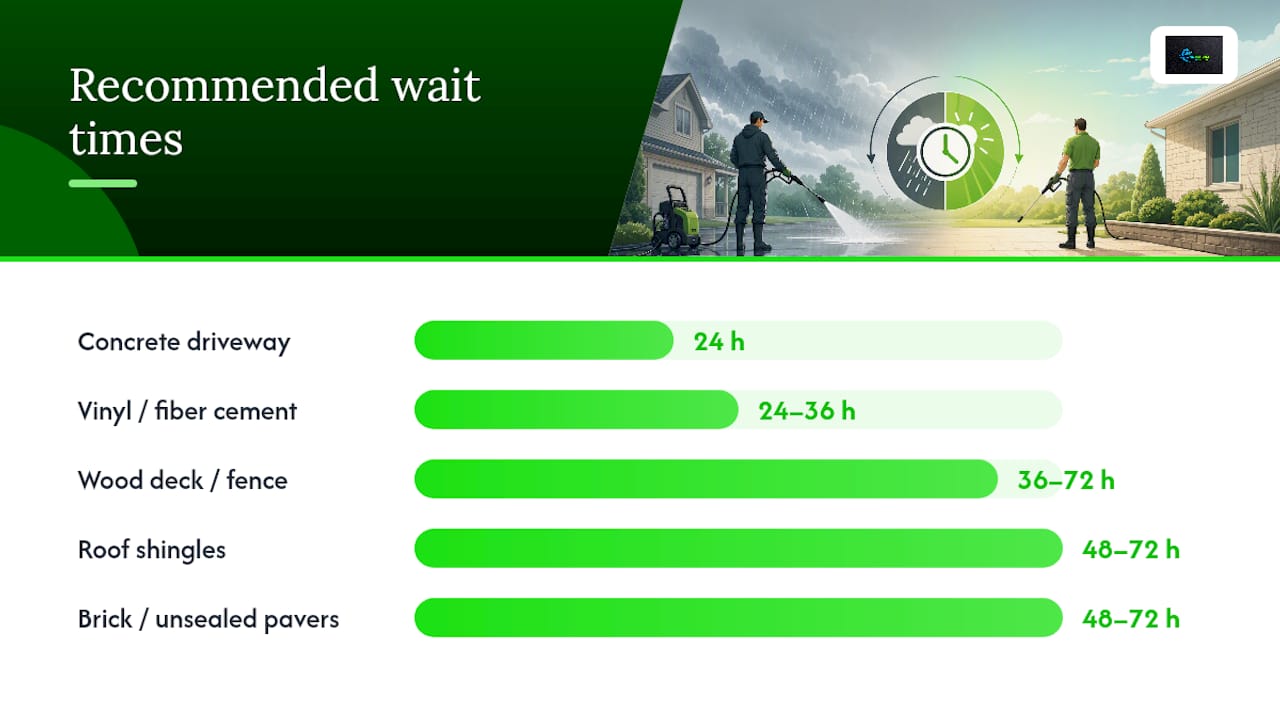
| Surface | Recommended wait after rain | Notes |
|---|---|---|
| Sealed concrete / driveway | 24 hours | Drains fast; check for standing water |
| Vinyl or fiber cement siding | 24–36 hours | Low porosity; watch for trapped moisture at seams |
| Wood deck or fence | 36–72 hours | High porosity; test before starting |
| Roof shingles | 48–72 hours | Wet shingles are fragile; never walk on them |
| Brick or unsealed pavers | 48–72 hours | Porous; detergent won’t penetrate saturated stone |
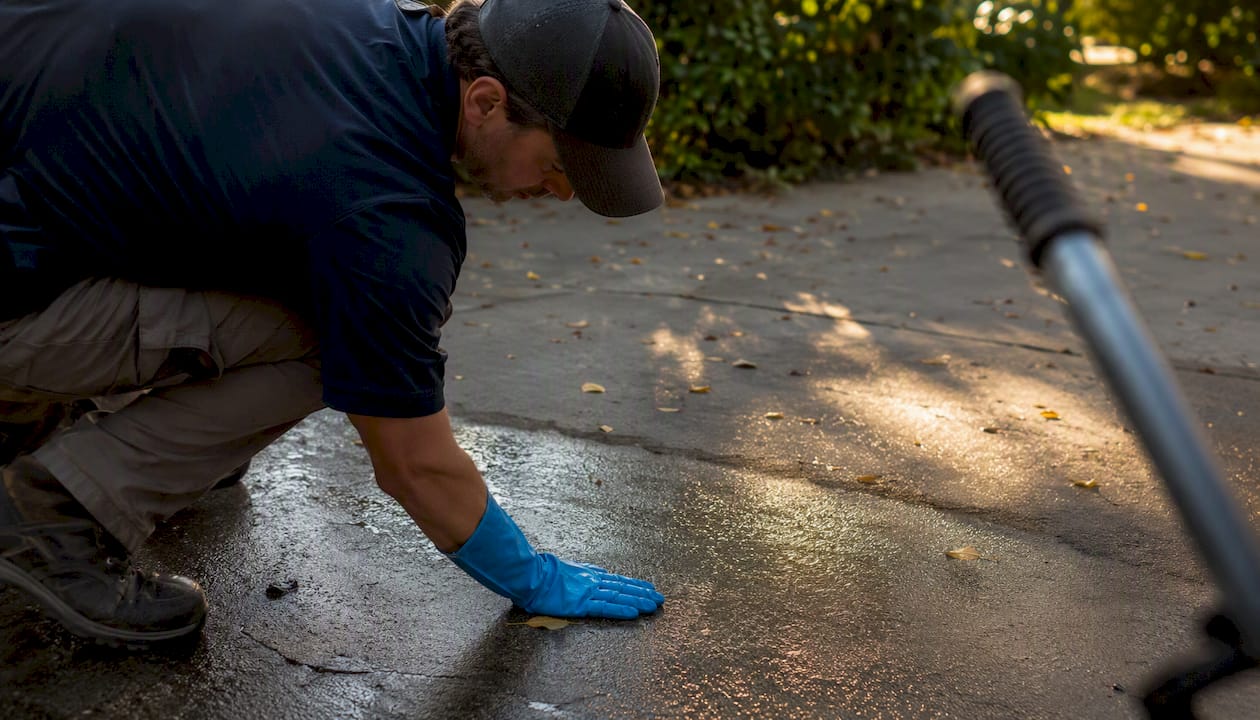
Pro Tip: Press the back of your hand flat against the surface for five seconds. If it feels noticeably cool and damp, wait longer. A dry surface at ambient temperature is ready. You can also drop a few water drops on concrete — if they bead up rather than absorb, the surface is still too saturated for detergent to penetrate.
Safety risks when washing on wet or rain-soaked surfaces
The biggest hazard is electrocution, and it is not theoretical. Electric pressure washers carry real risk in active rain, even with GFCI protection. A ground fault circuit interrupter cuts power when it detects a fault, but it does not make sustained exposure to rain safe. Think of it as a seatbelt, not a crash barrier.
A GFCI outlet reduces the risk of electrocution — it does not make it safe to run an electric pressure washer in active rain. Water and live electrical connections are a dangerous combination regardless of what safety devices are in the circuit. If it’s raining and you’re using an electric unit, stop.
Safety checklist before and during any wet-weather wash:
- Electrical: Use gas-powered equipment in rain; if electric is unavoidable, plug into a GFCI outlet and keep all connections off the ground
- Footing: Wear rubber-soled, non-slip boots; avoid working on any surface with visible algae or moss
- Ladders: Never use a ladder in active rain or on a wet surface — the risk of a fall with a pressurized wand in hand is severe
- Visibility: Rain reduces your ability to see streaks, missed spots, and surface damage as you work
- PPE: Safety glasses, gloves, and closed-toe shoes at minimum; hearing protection for gas units
- Runoff: Keep detergent runoff away from storm drains and landscaping; wet conditions accelerate chemical spread
Red flags that mean stop the job now: lightning anywhere in the area, wind strong enough to push the spray sideways, heavy rain that makes footing unstable, or any electrical connection that has gotten wet. Review Whitediamondpressurewashing’s pressure washing safety protocols for a full operational breakdown.
Why rain changes your cleaning results
Light moisture can actually help. On a hot day, a damp surface slows detergent flash-off, giving the cleaner more contact time before it dries. That is the narrow window where rain and pressure washing work together. Steady rain, though, flips that benefit into a problem.
How rain hurts cleaning effectiveness:
- Detergent dilution: Rain water mixes with your cleaning solution before it can dwell, cutting concentration and reducing cleaning power
- Reduced contact time: Runoff carries detergent off the surface before it can break down grease, mold, or algae
- Pre-rinse effect: Rain essentially pre-rinses the surface, which sounds helpful but often just redistributes surface dirt rather than lifting it
- Hidden streaks: Wet surfaces mask streaking during the job; you only see the full result once everything dries, sometimes 24 hours later
- Contaminant spread: Rain-driven runoff can carry loosened grime, detergent, and biological material into landscaping or storm drains faster than you can control it
Where rain can help: Washing a sun-baked stucco wall on a 95°F afternoon with a light drizzle falling? The moisture keeps the surface from drying the soap before you rinse. That is about the only scenario where active rain is an asset, and even then, the window is narrow.
Surface-by-surface guide: wait times and recommended techniques
Different surfaces behave very differently after rain, and the wrong technique on a wet surface can cause more damage than the dirt you were trying to remove.
Concrete driveways and walkways are the most forgiving. After 24 hours of dry time, high-pressure washing is generally safe and effective. Watch for algae patches near shaded edges — they get slippery fast and can hide under a thin film of water.
Vinyl siding and fiber cement dry relatively quickly but trap moisture at seams and behind trim. Wait 24–36 hours and use low-to-moderate pressure. High pressure on wet siding can force water behind panels, leading to mold issues inside the wall cavity.
Wood decks and fences need the most patience. Wet wood is soft, and high-pressure washing on saturated wood can raise the grain, splinter boards, or drive water deeper into the material. Wait the full 36–72 hours and use a low-pressure soft-wash approach with a wood-safe detergent.
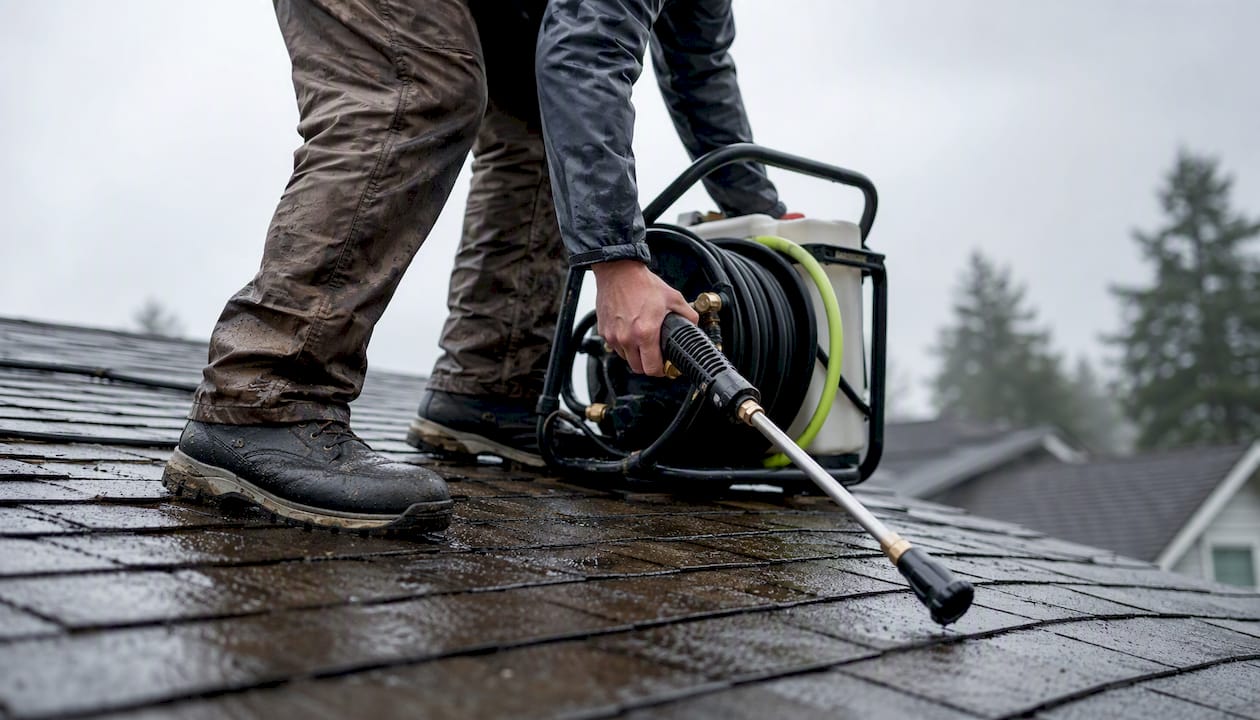
Roofs are the highest-risk surface in wet conditions. Wet shingles are fragile and extremely slippery. The roof washing safety guidance is clear: never walk on a wet roof, and always use soft-wash (low-pressure, chemical-based cleaning) rather than high-pressure rinsing. Wait a minimum of 48–72 hours after rain.
Brick and unsealed pavers are highly porous. Saturated brick will not absorb detergent effectively, and pressure washing wet mortar joints can erode them. Give these surfaces the full 48–72 hours.
| Surface | Wait time | Recommended method |
|---|---|---|
| Concrete driveway / walkway | 24 hours | High pressure, gas unit |
| Vinyl / fiber cement siding | 24–36 hours | Low-to-moderate pressure |
| Wood deck / fence | 36–72 hours | Soft wash, low pressure |
| Roof shingles | 48–72 hours | Soft wash only, no walking |
| Brick / unsealed pavers | 48–72 hours | Low pressure, wood-safe detergent |
Red flags that mean call a pro: Roof shingles older than 15 years, visible algae on any sloped surface, multi-story work requiring a ladder, or any surface where you cannot confirm the material type before applying pressure.
Can you leave your pressure washer out in the rain?
Short answer: no, not if it is electric. Gas units are more tolerant of brief exposure but still need protection from sustained moisture, especially around the carburetor, fuel cap, and air filter.
Post-rain equipment checklist:
- Electric units: Store indoors or under a waterproof cover immediately after use; never leave plugged in outdoors
- Gas units: Run the engine dry if storing for more than a few days; water in the fuel system causes corrosion and starting problems
- Hoses and fittings: Drain completely before storage; trapped water freezes in winter and cracks fittings
- Electrical connections: Inspect all connections for moisture before the next use; replace any corroded fittings
- GFCI test: Press the test and reset buttons before every use to confirm the outlet is functioning
A note on IP ratings: some pressure washers carry an IPX splash rating, which means they can handle water spray from a defined angle. That is not the same as being safe to operate in sustained rain. IP ratings reduce risk from incidental water contact — they are not a green light for working through a storm.
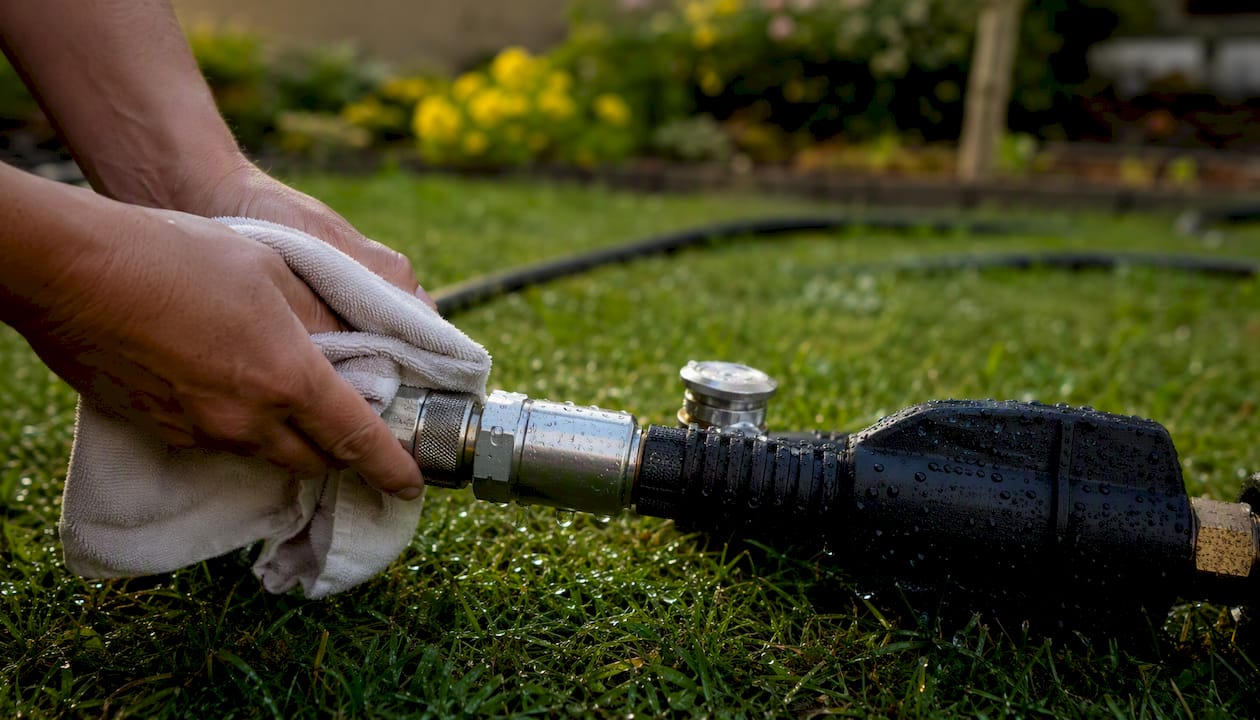
After any job done in damp conditions, wipe down the machine, check for corrosion at metal fittings, and store it dry. A few minutes of maintenance extends equipment life significantly.
Should you postpone or proceed? A quick homeowner checklist
Run through these before you start any job when rain is in the forecast or recently passed.
- Is there lightning in the area? Yes → Stop. No exceptions.
- Are you using an electric pressure washer? Yes + any rain → Stop. Switch to gas or reschedule.
- Is the surface sloped or covered in algae/moss? Yes → Postpone until dry and treat the biological growth first.
- Has it rained heavily in the last 24 hours? Yes → Wait. Check the surface dryness test before proceeding.
- Is wind strong enough to push your spray sideways? Yes → Postpone. You lose control and coverage.
- Are you working above ground level? Yes + wet conditions → Call a pro. Ladder work in rain is a fall risk.
- Is the surface wood, brick, or a roof? Yes → Confirm 36–72 hours of dry time and use soft-wash technique.
- Is it a light drizzle, gas unit, flat surface, no lightning? Yes to all → Proceed with caution, stay alert, stop if conditions change.
Bookmark Whitediamondpressurewashing’s common pressure washing mistakes guide for a broader checklist of errors to avoid before any job.
When should you call a professional instead of DIY?
Hire a pro when the combination of surface type, weather conditions, and height makes the job genuinely risky or when finish quality matters enough that a bad result is costly. Professionals working in marginal weather use gas-powered rigs, trained crews, and established safety protocols that most homeowners simply do not have access to.
Situations that call for a professional:
- Roof cleaning of any kind, especially after rain
- Any surface requiring ladder work above one story
- Visible algae or mold on sloped walkways or driveways
- Fragile finishes: painted wood, older stucco, weathered brick
- Jobs with a hard deadline (pre-sale, event, tenant move-in) where a redo is not an option
- Post-storm cleaning where debris, standing water, and surface damage are all present at once
Questions to ask before booking a pro:
- What is your weather policy? Do you reschedule for rain, or work through it?
- Are your crews using gas or electric equipment?
- Do you offer soft-wash for roofs and delicate surfaces?
- How do you contain runoff and protect landscaping?
- Are you licensed and insured for work in Citrus County?
A weather-aware pro will reschedule proactively rather than push through conditions that compromise results. That judgment call is part of what you are paying for.
A note from Bobby on rain, timing, and getting it right
Working in Citrus County means dealing with Florida’s pressure washing season reality: afternoon thunderstorms from May through October, high humidity that stretches drying times, and homeowners who understandably want their property cleaned before the next wave of rain rolls in.
My professional instinct, built from years of scheduling around Florida weather, is always safety first and results second. A clean house that took two visits is better than a damaged surface or an injured operator. Soft-wash is almost always the right call on roofs and older siding here, regardless of weather, because the chemistry does the work rather than the pressure.
Whitediamondpressurewashing handles the weather so you do not have to
Rain-sensitive jobs are exactly where professional scheduling and the right equipment make a real difference. Whitediamondpressurewashing serves Citrus County and surrounding areas with weather-aware booking, gas-powered rigs, and soft-wash methods built for Florida’s fragile surfaces and unpredictable rain patterns.

When conditions are marginal, the crew reschedules proactively rather than delivering a compromised result. Every job comes with runoff containment, GFCI-safe protocols, and surface-specific technique selection.
What you get:
- Insured crews trained in wet-weather safety protocols
- Gas-powered equipment for jobs where electric units are not safe
- Soft-wash options for roofs, older siding, and fragile finishes
- Flexible post-rain scheduling built around your timeline
Book a free estimate or browse the full services list to find the right option for your property.
Sources
- Can You Pressure Wash in the Rain? A Pro’s Guide
- Can You Use A Pressure Washer In The Rain? – Complete Guide
- Can You Pressure Wash In The Rain? (Solved)
- Power Washing in Rain: Safety Tips | Perfect Power Wash
- How Weather Affects Pressure Washing Results: Temperature, Rain, Humidity, and Wind Explained
Recommended
- Pressure vs Power Washing—Choosing the Right Method – white-diamond-pressure
- Why inspection matters before pressure washing your home – white-diamond-pressure
- Why Pressure Washing Is Essential for Storm Prep in Citrus County – white-diamond-pressure
- The Role of Weather in Surface Cleaning Results – white-diamond-pressure