

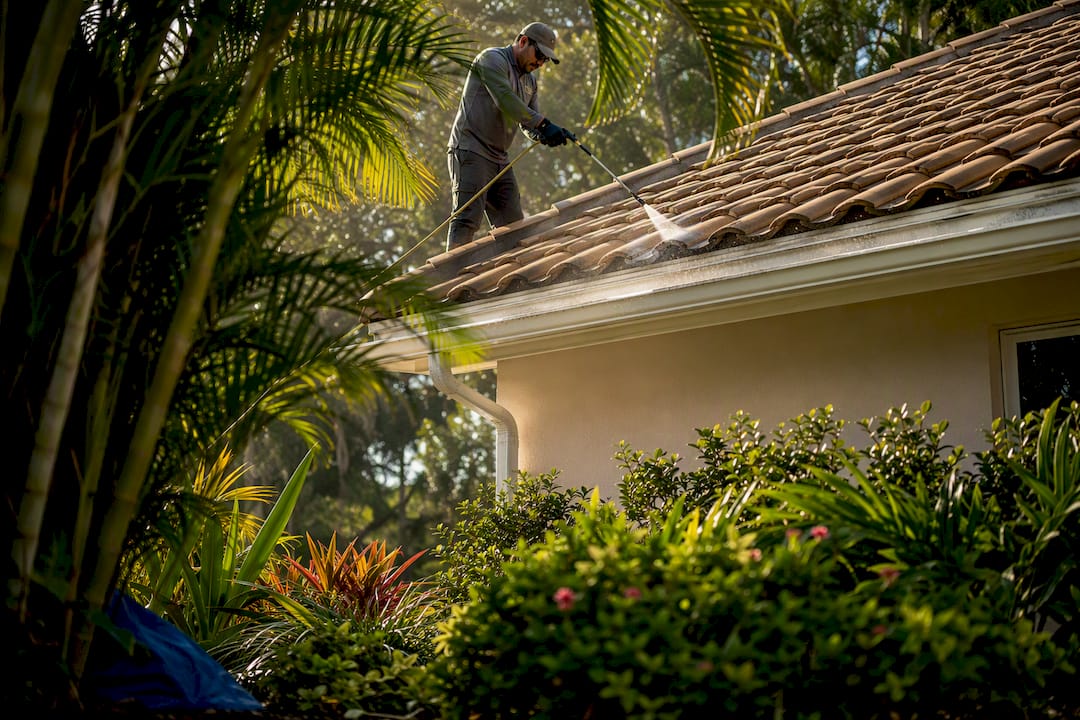
The most effective eco-friendly method is a soft wash: a low-pressure application using either a biodegradable cleaner or a carefully diluted sodium hypochlorite mix, followed by proper plant and runoff protection. Asphalt shingles should never be pressure washed. For steep pitches, heavy moss buildup, or roofs near sensitive landscaping, hiring a professional service gets the concentration and containment right the first time.
TL;DR:
- Soft washing with diluted sodium hypochlorite is the recommended eco-friendly method, especially for heavy moss and algae infestations, with professional concentration often around 3% to 6%.
- Pressure washing is strongly discouraged as it damages shingles and voids warranties, making chemical soft washing the only safe option for asphalt roofs.
- Proper application involves inspecting the roof, sectioning it, applying solutions from top down, and protecting nearby plants and landscaping to minimize environmental impact.
- Using the lowest effective chemical concentration, pre-wetting foliage, and avoiding runoff into storm drains are critical to ensuring safe, eco-conscious results.
- Costs typically range from $300 to $800 for professional soft washing, with DIY supplies costing as little as $30, but steep or heavily infested roofs benefit from experienced technicians.
Table of Contents
- What Are the Best Biodegradable Roof Cleaning Methods?
- How Do You Apply a Biodegradable Roof Cleaner Safely?
- Is Biodegradable Roof Cleaner Actually Safe for Plants?
- How Much Does Eco-Friendly Roof Cleaning Cost?
- How Do You Choose a Roof Cleaning Company?
- Why Trust ARMA-Aligned Soft-Wash Guidance?
- What I’d Actually Do With My Own Roof
- Get a Professional Soft Wash Without the Guesswork
- Where This Guidance Comes From
- Sources
What Are the Best Biodegradable Roof Cleaning Methods?
Soft washing sits at the top of the list, and it’s not close. The Asphalt Roofing Manufacturers Association recommends low-pressure chemical cleaning over pressure washing and offers a consumer benchmark: a 50:50 mix of laundry bleach and water with a 15 to 20 minute dwell time. Professionals often run stronger, in the 3% to 6% range at the shingle surface for heavy infestations, applied top down and left to work before rinsing, according to one veteran soft-wash operator’s field process. Here’s how the main approaches stack up:
- Soft wash with diluted sodium hypochlorite. Fast-acting on algae and moss, effective on heavy infestations, but requires careful dilution and plant protection since concentrated runoff isn’t biodegradable-friendly.
- Oxygen-based cleaners (sodium percarbonate or hydrogen peroxide). Gentler on surrounding plants and often marketed as safer alternatives for lighter infestations, though they tend to have a shorter residual effect than chlorine-based mixes and struggle against thick, established moss mats.
- Vinegar and household DIY mixes. Fine for a few shingles of light algae staining on a single-story ranch. Not practical for a full roof with real moss coverage; acidity that’s mild enough to be safe is usually too mild to work.
- Commercial biodegradable products (quat-based, enzymatic, oxygen bleach). Look for labels that specify active ingredient percentage and biodegradability testing rather than vague “eco” branding, since plant-safe roof cleaning depends on concentration, not marketing language.
- Manual moss removal. A soft brush or plastic scraper works for isolated patches, but scraping wet moss off shingle granules can do more damage than the moss itself.
Pressure washing doesn’t belong on this list at all. It strips protective granules, can force water beneath shingles, and routinely voids manufacturer warranties on asphalt roofing. If a bid includes a pressure washer for your shingle roof, that’s the moment to ask for a different plan.
How Do You Apply a Biodegradable Roof Cleaner Safely?
A soft-wash job that protects the roof and everything around it follows a fairly consistent sequence, whether it’s a DIY weekend project or a scheduled professional visit.
- Inspect first. Check shingle condition, loose or curling tabs, gutter buildup, roof pitch, and whether the surface is safely walkable. A roof with brittle or lifting shingles is a signal to call a pro rather than climb up.
- Mix at the lowest effective concentration. ARMA’s consumer guidance starts at 50:50 bleach and water; pros often adjust upward for heavy moss but rarely exceed the 3% to 6% range at the shingle, paired with a surfactant to help the mix cling to sloped surfaces.
- Section the roof and work top down. Spraying from ridge to eave keeps runoff moving in the direction water naturally flows, avoiding re-contamination of already-treated areas.
- Let it dwell. Fifteen to twenty minutes is the standard consumer window. Professional workflows often let the chemical sit longer and rely on the chemistry plus a rinse or natural rainfall to finish the job rather than blasting it off.
- Protect landscaping before you start. Pre-wet shrubs and garden beds near the drip line, lay down plastic sheeting or tarps where runoff will concentrate, and plan a light freshwater rinse of plantings once the job is done.
Pro Tip: Wet foliage absorbs less of the cleaning solution than dry foliage does, so a five-minute garden hose pass before you start is one of the cheapest insurance policies against plant damage.
DIY works fine for single-story roofs with light staining and safe ground access. Anything steep, two-story, or heavily infested is where a low-pressure roof washing specialist earns their fee, both for safety and for getting the mix right.
Is Biodegradable Roof Cleaner Actually Safe for Plants?
Biodegradable does not mean harmless, and that distinction trips up a lot of well-meaning homeowners. A cleaner can break down naturally over time in soil or water and still be biocidal on contact, meaning it kills algae, moss, and yes, garden plants, at the moment of application. The Oregon State University Extension Service makes this point directly: professional caution centers on using the lowest effective concentration and precise application, not on chasing an “eco” label as a substitute for careful technique.
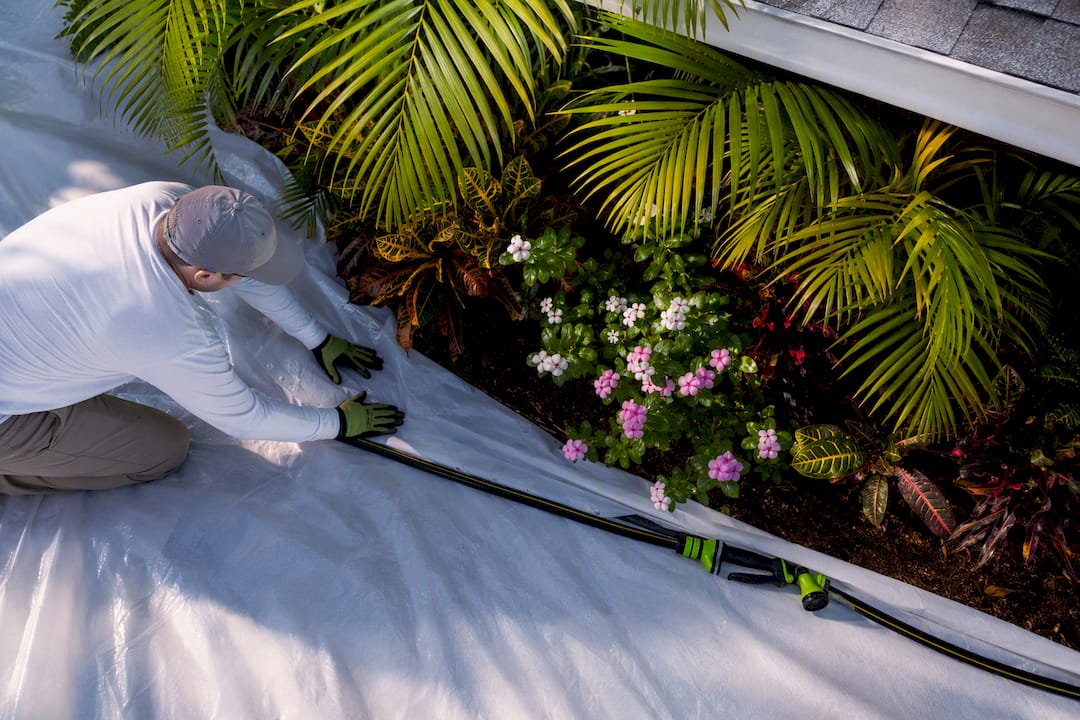
Runoff is where most environmental harm actually happens. A concentrated mix that pools in a flower bed or flows into a storm drain does real damage regardless of what’s printed on the jug. Sodium hypochlorite, in particular, degrades under standard wastewater treatment but should never be allowed to run concentrated into creeks, ponds, or storm systems.
Practical safeguards that reduce ecological impact:
- Never let runoff enter storm drains, ditches, or open water.
- Pre-wet and post-rinse all nearby plantings with fresh water.
- Use tarps or barriers to redirect or capture heavy runoff during application.
- Dilute to the label’s minimum effective rate rather than the maximum.
One figure worth remembering: ARMA’s own consumer benchmark is a 50:50 bleach dilution, not a stronger mix, which tells you how little concentration is actually needed for most moss and algae removal jobs.
How Much Does Eco-Friendly Roof Cleaning Cost?
DIY materials for a soft wash typically run $30 to $150, mostly for bleach, surfactant, sprayers, and tarps for plant protection. A professional soft-wash visit generally falls between $300 and $1,050 for a typical residential roof, or roughly $0.30 to $0.75 per square foot, with most single-family jobs landing in the $400 to $800 range.
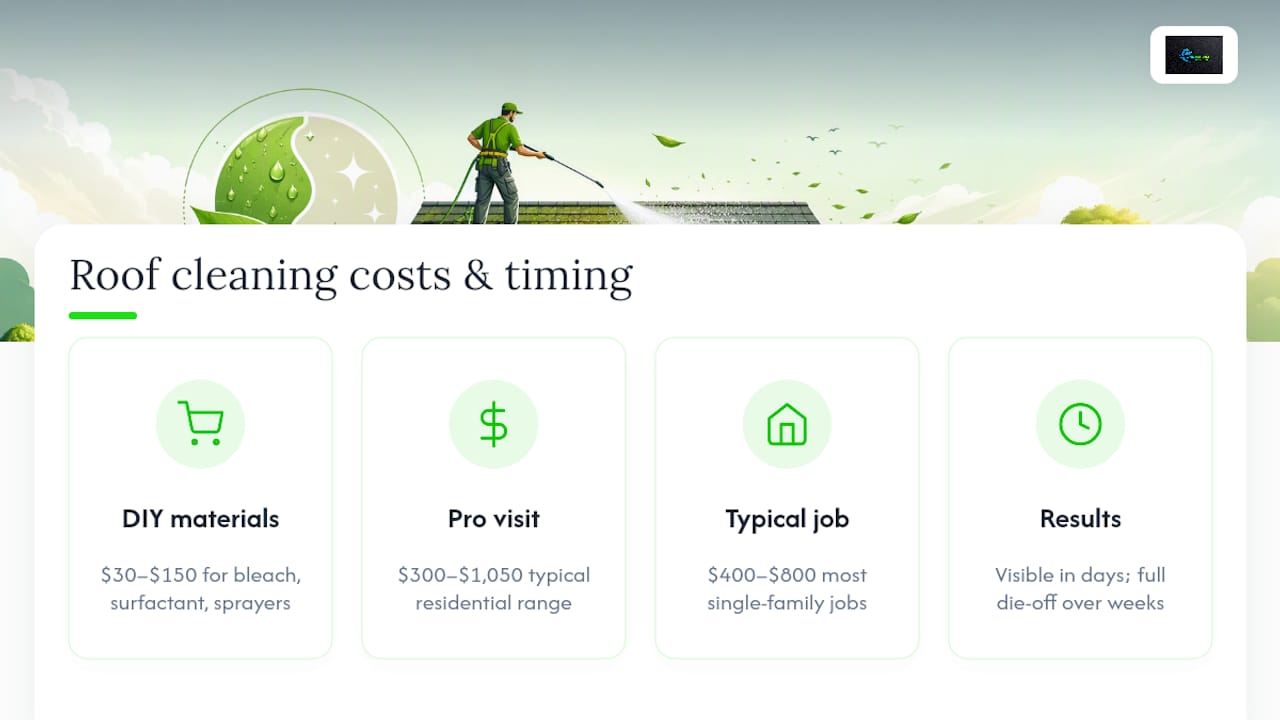
Several factors push that cost higher including steep or multi-story roofs requiring specialized access, heavy moss coverage needing stronger or repeated treatments, sensitive roof materials requiring special chemistry, and containment needs near pools or gardens. Typically, results appear within days as the chemicals take effect, with full die-off over a few weeks. Roofs generally need re-cleaning every few years; shaded roofs under tree cover may require more frequent attention. Compared to a full roof replacement running into the thousands, a periodic soft wash is cheap insurance for extending shingle life.
How Do You Choose a Roof Cleaning Company?
Not every contractor advertising “roof cleaning” actually practices soft washing correctly, so vetting matters as much as price.
- Confirm insurance and ask for references, ideally from jobs on a similar roof material and age.
- Ask exactly what chemical and concentration they use, and whether their process aligns with ARMA guidance rather than a generic pressure-washer setup.
- Ask how they handle runoff and protect landscaping, including whether they pre-wet plants and use containment barriers.
- Ask how the process interacts with your shingle warranty, since some manufacturers specify approved cleaning methods.
- Request before-and-after photos from comparable jobs, not just testimonials.
Red flags are easy to spot once you know what to look for: any mention of a pressure washer on shingles, vague answers about “our special solution” with no percentage given, or no plan at all for protecting nearby plants and hardscape. When comparing quotes, weigh the method and safeguards described, not just the bottom-line number. Two bids $200 apart aren’t equal if one includes a written containment plan and a re-treat guarantee and the other doesn’t.
Why Trust ARMA-Aligned Soft-Wash Guidance?
ARMA’s own guidelines set the industry baseline: soft wash, never pressure wash, dwell before rinse. Field practice among experienced pros often runs slightly stronger than ARMA’s consumer benchmark, but the emphasis stays the same: lowest effective concentration, documented containment, and precise application over brute force. That’s the standard worth measuring any contractor against.
What I’d Actually Do With My Own Roof
If it were my house, I’d default to soft wash every time and treat “biodegradable” as a starting point, not a green light to skip plant protection. DIY works for light jobs on safe, low roofs. Anything steep, heavily mossed, or near landscaping I cared about, I’d get a written plan and hand it to a pro.
— Bobby
Get a Professional Soft Wash Without the Guesswork
Getting the concentration, dwell time, and runoff containment right every single time is the hard part of DIY soft washing, and professional services can help remove the risk for homeowners.
Every job starts with an on-site inspection of shingle condition, pitch, and nearby landscaping, followed by a written plan detailing the cleaning approach and containment measures before any chemical touches the roof. Crews use low-pressure equipment and material-specific mixes rather than a one-size-fits-all pressure washer, protecting shingle granules and keeping warranties intact. Plant protection and runoff containment are built into the process, not an afterthought. If your roof shows algae streaking, moss buildup, or you’re simply not confident mixing chemicals on a ladder, book a free estimate and get a plan built around your specific roof.
Where This Guidance Comes From
- ARMA: industry standards for algae and moss prevention, plus warnings against pressure washing.
- This Old House: consumer-facing comparison of bleach versus gentler alternatives.
- Softwash Technologies: technical explanation of soft-wash mechanics and warranty risk.
- RoofingBrief: cost breakdowns for DIY versus professional cleaning.
- Mike Vidan: field-level soft-wash process from a longtime practitioner.
Sources
- Algae & Moss Prevention and Cleaning for Asphalt Roofing Systems – Asphalt Roofing Manufacturers Association (ARMA)
- How to Soft Wash a Roof: Full Process From a 25-Year Veteran
- What You Need to Know to Clean and Prevent a Mossy Roof – This Old House
- Soft Wash Roof Cleaning: How It Works & What It Pays
- Sodium hypochlorite research summary — Cleaning Institute