

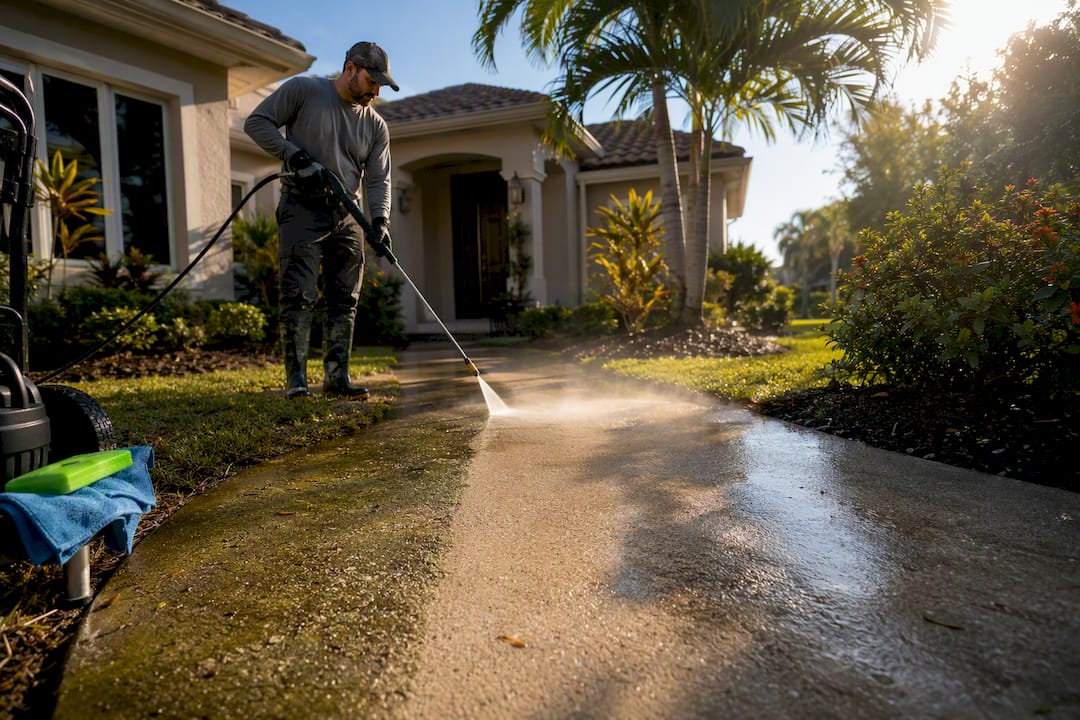
Yes, in most cases, washing your home’s exterior before an appraisal is worth doing, but not because a clean driveway adds a line item to the report. It matters because grime, algae, and mold streaks read as deferred maintenance to an appraiser, and that impression can nudge a condition rating down. Wash the visible surfaces, skip the risky ones, and hire a pro when a roof or old siding is involved.
TL;DR:
- Cleaning visible surfaces before an appraisal can improve the condition rating by removing grime, algae, and mold streaks that suggest deferred maintenance.
- Focus on the entry path, driveway, siding, gutters, roofline, and concrete areas, prioritizing those most visible to appraisers and buyers.
- Use soft washing rather than pressure washing on roofs, old siding, and delicate surfaces to prevent damage and ensure proper cleaning.
- Schedule exterior cleaning two to four weeks before listing and a light touch-up one week prior to photos or showings for the best results.
- Hire professionals when dealing with roofs, old siding, or extensive algae growth, and always inspect first to identify underlying issues before washing.
Table of Contents
- Does Pressure Washing Affect a Home Appraisal?
- Which Exterior Surfaces Should You Clean First?
- What Should You Never Pressure Wash?
- When Should You Wash Your House Before the Appraisal?
- Should You Hire a Professional or Do It Yourself?
- How Much Does Pressure Washing Cost, and What’s the Real Return?
- Pre-Appraisal Cleaning Checklist
- An Inspection-First Approach to Pre-Appraisal Cleaning
- Get Your Exterior Appraisal-Ready With White Diamond Pressure Washing
- Sources
- FAQ
Does Pressure Washing Affect a Home Appraisal?
Appraisals run on hard data: recent comparable sales, square footage, lot size, and a condition grade the appraiser assigns after walking the property. Cleaning does not show up as its own entry on that report. What it does is remove the visual noise that makes an appraiser second-guess a home’s actual condition.
Appraisers are trained to stay objective, but they’re still human, and a well-maintained exterior reduces the chance of negative assumptions about how the rest of the house has been cared for. Heavy algae on a roof or black streaks on siding can look like material failure even when the roofing or siding underneath is perfectly sound, which sometimes pushes an appraiser toward a more conservative bracket than the home deserves.
The market-value case for cleaning is stronger than the appraisal case. A University of Texas at Arlington study found curb appeal can account for roughly 7% of a home’s sale price, with the premium even larger in softer markets. That effect reflects buyer psychology and comparable-sale pricing, not the appraiser’s checklist, but the two are connected: a home that shows well tends to attract offers closer to list price, which shapes the comparables future appraisers will use.
Where cleaning genuinely helps the appraisal itself:
- It clears away signs of deferred maintenance that can trigger a lower condition rating.
- It lets the appraiser see the actual state of siding, roofing, and concrete instead of guessing through grime.
- It removes visual cues that sometimes prompt an appraiser to request a closer look at a specific area.
Which Exterior Surfaces Should You Clean First?
Not every surface deserves the same attention, and not every dollar you spend cleaning pays off equally. Focus on the areas an appraiser and a buyer both walk past on the way to the front door, then work outward.
- Entry path and front door. This is the first thing anyone sees. A quick sweep, a soft wash on the porch, and a wipe-down of the door frame go a long way for almost no cost.
- Driveway and walkways. Cleaning reveals cracks and settling instead of hiding them, which sounds risky but actually works in your favor: appraisers and inspectors trust a home more when problems are visible and clearly documented, not papered over.
- Siding and foundation line. Dirt buildup along the foundation can look like moisture damage. Clearing it lets the appraiser see the actual wall material.
- Gutters and roofline. Streaked gutters and moss on the roof edge are two of the most common visual red flags for “this house hasn’t been maintained.”
- Concrete patios and pool decks. Algae here is both a slip hazard and a maintenance signal, worth addressing before showings.
- Windows near the entry. Not appraisal-critical, but cheap, fast, and immediately noticeable in photos.
Pro Tip: Don’t chase perfection on every surface. If your budget or timeline is tight, prioritize the roofline, gutters, and foundation area first. Those are the spots most likely to make an appraiser pause, while a slightly dusty window rarely raises an eyebrow.
What Should You Never Pressure Wash?
High-pressure washing is the wrong tool for a surprising number of common home surfaces, and using it anyway can cost you more than the grime ever would. Full-force water pressure can lift shingle granules, crack older lap siding, force water behind window seals, or strip paint down to bare wood.
Surfaces that call for soft washing instead of standard pressure washing:
- Roof shingles, especially asphalt, which lose granules and years of life under high PSI.
- Older wood siding and trim, which can splinter or absorb water it can’t release.
- Painted surfaces near windows and doors, where seals are easy to blow open.
- Stucco with hairline cracks, which pressure can widen.
- Anything already showing rot, soft spots, or previous water damage.
Soft washing uses low pressure combined with a cleaning solution to lift algae, mold, and dirt without the mechanical force that damages these materials. It’s the standard method professionals recommend inspecting for before washing, since a five-minute walk-around before any water touches the house catches loose shingles, existing cracks, or exposed wiring near an outdoor outlet.
Pro Tip: Cover garden beds and reroute runoff away from ponds or vegetable gardens before washing. Most cleaning solutions are biodegradable, but concentrated runoff can still stress plants, and EPA guidance on mold notes that proper removal methods matter as much for the surrounding environment as for the surface itself.
When Should You Wash Your House Before the Appraisal?
Timing determines whether washing helps or backfires. Wash too early and pollen or rain undoes the work before anyone sees it. Wash too late and you’re rushing a job that needs to dry and settle.
A reasonable schedule looks like this:
- 2 to 4 weeks before listing: Handle the whole-house wash, roof soft wash, and any driveway or walkway cleaning. This gives surfaces time to fully dry and any minor color changes (concrete often looks different clean) time to even out.
- 2 to 7 days before photos or showings: A lighter touch-up, mainly the entry, windows, and any spots that collected dust or pollen since the first pass. Practitioners in the field commonly recommend this two-stage timing to keep the property camera-ready through the listing period.
- Watch the season. Spring pollen can undo a driveway wash within days. Rainy stretches delay drying and can streak freshly cleaned siding. Freezing temperatures rule out washing altogether in some regions, since water can seep into cracks and freeze.
Sequence matters too: wash first, fix any problems the wash reveals (a cracked step, a loose gutter), touch up landscaping, then shoot photos, then do a final walk-through before the appraiser’s visit.
Should You Hire a Professional or Do It Yourself?
Small, forgiving jobs are reasonable to DIY. A concrete patio, a short stretch of walkway, or a fence made of pressure-treated wood can usually handle a consumer-grade washer if you keep the nozzle wide and the distance safe. Roofs, older siding, anything with visible cracking, or a house with heavy, persistent algae growth is a different story. That’s when hiring someone who inspects before they wash pays for itself.
When DIY makes sense:
- The surface is bare concrete or masonry with no existing cracks.
- You’re working with a pressure washer under 2,000 PSI and a wide fan tip.
- The area is small enough to finish in an afternoon without rushing.
When to call a professional:
- The job involves a roof, old wood, or stucco.
- You see algae, moss, or mold covering more than a small patch.
- The exterior has multiple material types (brick, siding, trim, concrete) that each need different pressure and solution.
Before hiring anyone, run through this vendor checklist:
- Ask for proof of insurance, not just a verbal assurance.
- Confirm they inspect the surface before washing, not just quote a flat rate over the phone.
- Ask specifically whether they use soft washing on roofs and older siding.
- Request references or recent before-and-after photos from similar homes.
- Get the scope, price, and materials covered in writing before work starts.
Red flags worth walking away from: no interest in inspecting the property first, promises that washing will “guarantee a higher appraisal,” or reluctance to show proof of insurance. Anyone offering guaranteed appraisal outcomes is selling something appraisal mechanics simply don’t support.
How Much Does Pressure Washing Cost, and What’s the Real Return?
Costs vary by region, house size, and how much buildup has accumulated, but homeowners typically see driveway or walkway spot cleaning priced lower than a full house wash, with roof soft washing running higher due to the extra care and time involved. Regional labor rates and the size of the property swing these numbers more than almost any other factor, so treat any online range as a starting point for a conversation, not a quote.
The return isn’t a guaranteed appraisal bump. It’s marketability and risk reduction. The UTA curb-appeal research ties exterior presentation to roughly 7% of sale price, and that effect flows through buyer interest and comparable pricing, not a direct appraisal formula. Academic work on photo-based curb-appeal scoring backs up the same pattern: how a home photographs correlates with how it prices.
Where the spend is smartest:
- Removing algae or mold that could be mistaken for material failure.
- Cleaning surfaces that will appear in listing photos, since those drive first impressions before anyone visits in person.
- Addressing anything that looks like ongoing water damage or rot risk.
Where it’s purely cosmetic: a slightly dusty fence far from the house, or window trim that already looks fine in daylight. Those jobs help photos but won’t move an appraisal either way.
Pre-Appraisal Cleaning Checklist
Work through this in order, starting two to four weeks out if your schedule allows it.
- Tidy the yard first. Mow, trim overgrown shrubs, and clear debris so the foundation and roofline are actually visible. You can’t judge what needs washing if it’s buried under landscaping.
- Clean by priority. Start with the driveway and walkways, move to siding, then gutters, then the roof if algae or moss is present. Inspect each surface before washing and switch to soft washing for anything delicate.
- Gather your paperwork. Pull together maintenance receipts and a short list of recent upgrades, a new roof, updated HVAC, fresh gutters, anything that shows ongoing care. Handing this to the appraiser directly supports a fair condition rating.
- Do a final walk-through the morning of. Check for stray leaves, spider webs near the entry, and anything that collected dust since the wash.
Pro Tip: Keep before-and-after photos of anything you clean, especially the roof and siding. If an appraiser asks about a stain that’s already gone, having proof it was addressed (and wasn’t structural) can settle the question fast.
An Inspection-First Approach to Pre-Appraisal Cleaning
The biggest mistake homeowners make before an appraisal isn’t skipping the wash. It’s washing without checking what’s underneath first. Inspecting before any water touches the house catches loose shingles, hairline cracks, and worn seals before they turn into repair bills, and it gives homeowners a clear answer about which surfaces need soft washing instead of standard pressure.
That inspection-first habit matters more than the wash itself. A clean house with a hidden crack in the siding doesn’t help anyone at appraisal time. Revealing the real condition of the materials, good or bad, beats a cosmetic shine that papers over a problem the appraiser will eventually notice anyway.
— Bobby
Get Your Exterior Appraisal-Ready With White Diamond Pressure Washing
A professional pressure washing service offers a low-risk alternative to guessing which pressure setting is safe for your roof or older siding. Every job ideally starts with an inspection before any washing, then uses soft washing on delicate surfaces, biodegradable solutions, and is scheduled to suit the homeowner’s timeline rather than a generic schedule.

Services cover roof cleaning, house washing, driveway and walkway cleaning, and pool cage and lanai washing, all handled with the same inspect-first standard. Issues such as hidden driveway cracks or moss on the roofline are worth addressing before an appraiser visits. Book a visit and get your exterior ready on a schedule that lines up with your photos and your appraisal date, not the other way around.
Sources
Claims in this article draw on the UTA curb-appeal study on sale-price impact, Realtor.com’s reporting on appraiser impressions, EPA mold guidance, Energy, and practitioner guidance on inspection-before-wash practices.
- News Center | The University of Texas at Arlington — The cost of curb appeal? Study says 7%.
- Realtor
- Mold | US EPA
FAQ
Do Appraisers Care if Your House Is Messy?
Appraisers focus on structural condition and comparable data, not clutter, but a genuinely dirty or poorly maintained exterior can shape their overall impression of upkeep. A clean, well-kept exterior reduces the odds of negative assumptions about how well the rest of the home has been cared for.
What Will Fail a Home Appraisal?
Homes don’t technically “fail” an appraisal, but structural issues, safety hazards, and clear signs of deferred maintenance, like a sagging roofline, exposed wiring, or major water damage, tend to trigger the lowest condition ratings. Heavy algae or mold buildup can worsen that impression even when the material underneath is fine.
What Should You Not Say to an Appraiser?
Avoid volunteering opinions about what you think the home is worth or pointing out unrelated issues they haven’t asked about. Stick to answering their questions directly and, if relevant, share maintenance records or recent upgrades that support the home’s condition.
What Devalues a Home Appraisal?
Deferred maintenance signals, unpermitted work, outdated systems, and visible damage tend to devalue an appraisal more than cosmetic issues. Removing algae, mold, and heavy grime through soft washing helps because it lets the appraiser judge the real condition of siding and roofing instead of guessing through buildup.