

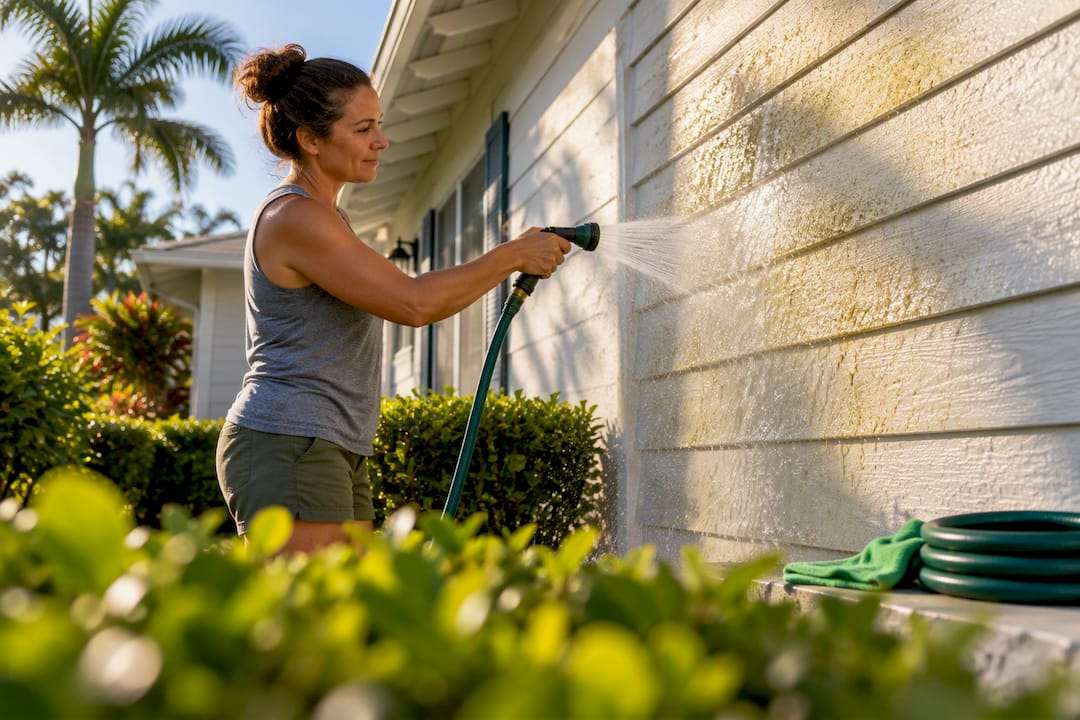
Soft-washing with a siding-safe cleaner, not high-pressure blasting, is the correct fix for pollen buildup. Rinse the loose surface layer first, then apply a mild detergent or enzyme cleaner to break down the bonded film pollen leaves behind. Homes with heavy staining, mold risk, fragile siding, or more than one story usually get better and safer results from a professional soft-wash than from a weekend DIY attempt.
TL;DR:
- Heavy, sticky pollen residues are difficult to rinse off siding with water alone because of their chemical toughness and ability to trap airborne debris.
- Soft-wash cleaning using low-pressure chemical solutions is safer and more effective than aggressive pressure washing, especially for fragile or painted siding.
- DIY cleaning is suitable for light, single-story pollen buildup, but professionals are recommended for stained, mold-affected, or multi-story siding to prevent damage.
- Cleaning should be timed after heavy pollen deposits taper off, usually late March to early April, and regular rinsing can extend the results during peak season.
- Proper protection of landscaping, careful spot testing, and avoidance of dry brushing are crucial for safe, effective pollen removal from different siding materials.
Table of Contents
- What Makes Pollen So Hard to Rinse Off Siding?
- How Do You Safely Clean Pollen Off Siding Yourself?
- Should You DIY or Call a Professional Soft-Wash Service?
- When Should You Wash Siding to Keep Pollen From Coming Right Back?
- Does Your Siding Material Change How You Should Clean Pollen?
- What Happens to Pollen Runoff After You Rinse It Away?
- Publisher Perspective: How White Diamond Pressure Washing Handles Pollen Safely
- Ready for a Pollen-Free Exterior Without the Ladder Work?
- Sources
- FAQ
What Makes Pollen So Hard to Rinse Off Siding?
Pollen grains carry sporopollenin, an outer shell that is chemically tough enough to survive fossilization for millions of years. That same toughness is what makes fresh pollen resist a garden hose. A 2013 study on pollen biochemistry notes this coating can leave pigmented residues that don’t simply wash away with water pressure alone.
The bigger problem shows up after the first rain. Pollen becomes sticky once it gets wet, according to the American College of Allergy, Asthma & Immunology, and that stickiness lets it grab dust, tree sap, and other airborne debris. On textured siding like stucco, board and batten, or shakes, light rain can press that mix directly into the grooves, which is exactly why a quick rinse a week later often does nothing.
There’s a second risk hiding in that yellow film: food. Pollen buildup can act as a nutrient source for mold and algae, and local house-washing data shows visible growth often appears in shaded areas within a few weeks of heavy deposits. That’s the moment a cosmetic problem becomes a maintenance problem.
High pressure seems like the obvious answer, but it usually backfires. BobVila’s pressure washing guidance warns that aggressive PSI can force water behind siding panels, and that hidden moisture can lead to:
- Interior wall cavity dampness that invites mold growth you can’t see
- Paint failure and bubbling as trapped water pushes outward
- Loosened seams on vinyl and lap siding that let future water in
Soft-wash works because it treats pollen chemically instead of trying to blast it off. The cleaning solution gets time to break down the residue at a low pressure, so the mechanical force never has to do the heavy lifting. That’s the whole logic behind why professionals lean on it for siding.
How Do You Safely Clean Pollen Off Siding Yourself?
A careful DIY pollen cleanup follows a set order. Skipping steps, especially the test patch, is how people end up with a discolored patch of siding instead of a clean one.
- Inspect the siding and staining. Note the material (vinyl, wood, fiber cement, stucco) and whether the film looks like fresh pollen dust or something greenish and fuzzier, which points to algae instead.
- Test a hidden spot first. Apply your chosen cleaner to a small, inconspicuous area and wait 10 to 15 minutes to check for discoloration or texture changes before treating the whole wall.
- Pre-rinse top to bottom. A gentle hose rinse removes loose pollen and cuts down on runoff mess before any cleaner goes on.
- Apply the cleaner. Mild dish soap or an enzyme-based cleaner handles most pollen film. Diluted bleach is for confirmed mold or algae only, and only after a successful spot test.
- Let it dwell. Follow the product label’s dwell time so the chemistry actually has a chance to break the residue down.
- Soft-scrub or low-pressure rinse. Use a soft-bristle brush for stubborn spots, or rinse with a low-pressure sprayer, then flush thoroughly with clean water.
- Check and spot-treat. Re-treat only the areas still showing residue. Avoid scrubbing harder or reaching for higher pressure as a shortcut.
InspectAPedia’s guidance on pollen stains specifically warns against brushing dry pollen, since dry scrubbing can press grains deeper into the finish instead of lifting them out.
Pro Tip: Work in the shade or during overcast weather. Cleaner that dries on the wall before it has time to dwell won’t break down the residue, and you’ll end up scrubbing harder than necessary.
Should You DIY or Call a Professional Soft-Wash Service?
A single-story home with a light, recent pollen coating is a fair DIY candidate. If you can reach every wall from the ground with a garden hose and a soft brush, there’s no reason to bring in a crew for a quick seasonal touch-up.
Hire a professional soft-wash service when any of these apply:
- The staining is baked in from a prior season and hasn’t budged with a hose
- You see green or black patches that suggest active mold or algae, not just pollen
- The home is two stories or taller, which turns ladder work into a real fall risk
- The siding is older, painted, or otherwise fragile enough that the wrong cleaner could strip it
- You’d rather not store or mix chemicals like diluted bleach around kids or pets
A professional visit typically includes a pre-inspection of your siding material, chemistry matched to that material, and protection for landscaping and windows before any spraying starts. Pros also control pressure and dwell time precisely, which is the exact variable InspectAPedia notes can turn a bleach solution from effective into damaging if it sits too long.
When Should You Wash Siding to Keep Pollen From Coming Right Back?
Timing determines how long your results actually hold. Wash in the middle of peak pollen season and you’re cleaning a wall that will look dusty again within days. The better window is after the heaviest initial deposits taper off, often late March through mid April in many temperate regions, when trees have shed their first heavy wave but before the next one recoats what you just cleaned.
A few habits stretch the results further:
- Rinse lightly every few weeks during peak season instead of waiting for one big cleaning
- Trim tree branches back from siding to cut down on direct pollen and sap contact
- Clear gutters regularly so pollen and debris don’t wash down the wall face during rain
- Schedule an annual or seasonal soft-wash if your property sits under heavy tree cover
How long a wash lasts depends on local pollen volumes, how close you live to pines or oaks, and how much rain falls afterward. Homes tucked under dense tree canopy may need a touch-up within a couple of months, while more open lots can go considerably longer. Our guide to timing a house wash breaks down seasonal windows in more detail.
Does Your Siding Material Change How You Should Clean Pollen?
Not every siding reacts to cleaners and pressure the same way, so material matters as much as the cleaner you pick.
- Vinyl generally holds up well to soft-wash, but keep the nozzle back during any pressure rinse and test solvent-based cleaners first since some can haze the finish.
- Painted wood needs a gentle hand. Abrasive scrubbing and harsh solvents can strip or dull paint, so test any cleaner in a hidden spot before treating a full wall.
- Fiber cement and stucco do best with gentler cleaners and lower pressure. Check your manufacturer’s warranty guidance since some brands specify exact cleaning methods.
For cleaner choice, mild dish detergent and enzyme-based cleaners cover most pollen film, and commercially formulated soft-wash products are built specifically for exterior siding. Diluted bleach belongs on active mold or algae only, and only after a spot test, since it’s the most aggressive option on this list. Our guide to removing organic stains walks through cleaner selection by stain type in more depth.
What Happens to Pollen Runoff After You Rinse It Away?
Pollen runoff itself is organic and biodegradable, so a plain water rinse of pollen dust generally poses little environmental concern once it soaks into soil or a lawn. The bigger issue is what you mix it with. Any detergent, enzyme cleaner, or diluted bleach solution you use to break down bonded pollen film should be directed away from storm drains, ponds, and vegetable gardens, since concentrated cleaning chemicals can stress plants and aquatic life even when they’re labeled safe for exterior use.
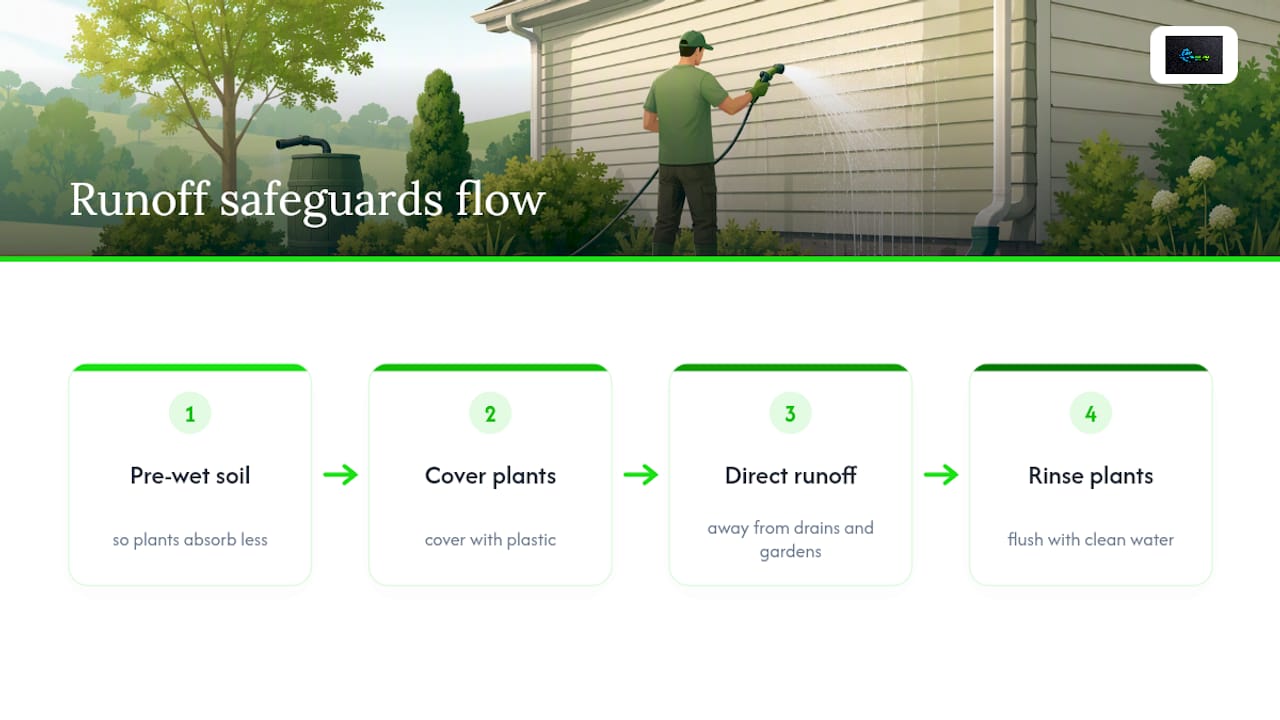
Before you start, protect the landscaping directly beneath the wall you’re cleaning. Pre-wet garden beds and shrubs with plain water so they absorb less of the runoff chemical, and cover especially sensitive plants with plastic sheeting during the actual cleaning pass. Rinse those plants again with clean water once you’re done.
If you’re using bleach on confirmed mold or algae, dilute it exactly to label ratios and never let it pool. A diluted bleach mix that reaches a storm drain untreated can affect local waterways, which is part of why many municipalities have runoff guidelines for exterior cleaning work. Professionals often use biodegradable, siding-safe chemistries specifically because they break down faster and carry less runoff risk than stronger commercial-grade products, which is worth asking about if you’re comparing DIY cleaners against what a pro would use on the same job.
Publisher Perspective: How White Diamond Pressure Washing Handles Pollen Safely
Whitediamondpressurewashing builds every siding job around soft-wash, material-specific chemistry, and protecting what surrounds the house, not just what’s on it. That means securing landscaping, covering fixtures, and running a test patch before committing to a full wall, the same discipline this guide recommends for DIY work. Dwell time and biodegradable cleaning solutions do the actual work, while pressure stays low enough to protect the finish underneath.
If your pollen buildup looks more like mold, spans two stories, or you’d simply rather not handle ladders and chemicals yourself, that’s the point to bring in a professional. Our soft-washing examples for homeowners show what that process looks like in practice.
— Bobby
Ready for a Pollen-Free Exterior Without the Ladder Work?
Doing this yourself works fine for a light coating on a single-story wall, but heavy pollen film, tall siding, or any sign of mold changes the math fast. Such jobs are typically handled with soft-wash equipment, material-specific cleaning chemistry, and crews trained to protect landscaping and windows before spraying begins.

Our house washing and roof cleaning services cover exactly the pollen buildup this article walks through, using the low-pressure approach that keeps siding finishes intact. If your walls are already showing the yellow film that won’t rinse off with a garden hose, get a free estimate and book a soft-wash before the next pollen wave recoats what you just cleaned.
Sources
- PubMed entry on pollen biochemistry
- ACAAI — pollen allergies overview
- InspectAPedia — pollen stains removal
- BobVila — how to pressure wash a house
FAQ
Does Pollen Stain Siding Permanently?
Usually not, but it can if left untreated long enough. Fresh pollen film responds well to soft-wash cleaning, while pollen that’s sat through multiple rain cycles and dried repeatedly may leave a residue that needs stronger solvents or, in rare cases, repainting to fully remove.
Does WD-40 Remove Pollen Stains?
WD-40 is not a recommended pollen cleaner for siding because it is a petroleum-based lubricant rather than a detergent or enzyme cleaner, and using it risks leaving an oily residue or damaging painted and vinyl finishes.
How Do You Remove Fungus or Mold From Siding?
Mold and algae typically need a diluted bleach solution rather than plain detergent, applied after a spot test and rinsed thoroughly once the dwell time ends. If growth covers a large area or keeps returning, a professional soft-wash with biodegradable, mildew-targeted chemistry is the more reliable long-term fix.
How Long Does Pollen Stay on Siding Once It Lands?
Fresh pollen sits loosely on the surface for a short window before rain and moisture make it sticky, per the American College of Allergy, Asthma & Immunology. Without cleaning, that bonded film can persist for weeks or months depending on rainfall and nearby tree cover.
How Long Does a House Wash Last Against Pollen?
Results vary by how much tree cover surrounds your home and how heavy the local pollen season runs. Homes under dense trees may need a touch-up within a couple of months, while more open properties often stay clean considerably longer, especially when washed after the season’s heaviest deposits taper off.