

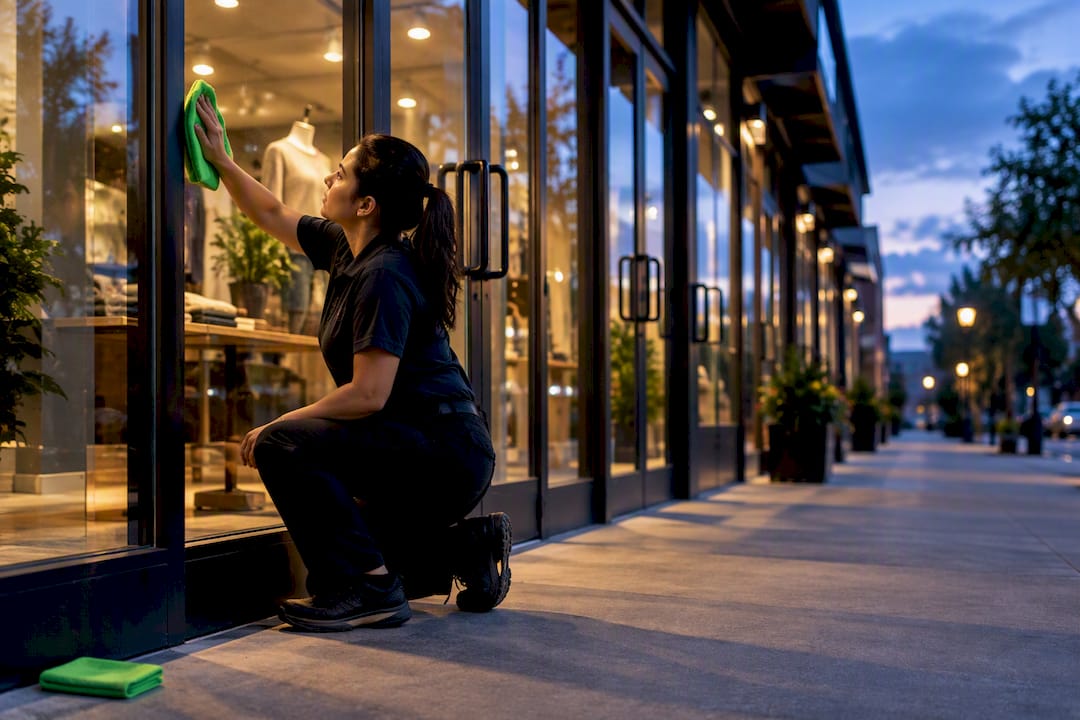
Weekly cleaning fits high-traffic retail and restaurants, every two weeks works for standard retail and cafes, and monthly service with weekly entry touch-ups covers low-traffic offices and professional services. Restaurants, coastal properties, high-pollen regions, and the holiday shopping season all push that schedule tighter. Signing a recurring contract instead of booking one-off visits typically lowers your per-visit rate by a significant margin.
TL;DR:
- Weekly cleaning is essential for high-traffic retail and restaurants, especially during peak seasons and holiday shopping when dirt and grime accumulate faster.
- Environmental factors like salt, pollen, dust, and construction debris often require more frequent cleaning than traffic volume alone suggests.
- Recurring contracts generally reduce per-visit costs by 20 to 40 percent and ensure priority scheduling, especially after storms or salt events.
- Signs to increase cleaning frequency include visible streaks, dust buildup, fingerprints near handles, and salt haze, which can be checked by observing your storefront from the curb.
- Proper scheduling should be tailored to your business type and foot traffic, with outdoor cleaning typically done monthly or biweekly and interior touch-ups handled weekly.
Table of Contents
- What Affects Your Storefront Cleaning Frequency?
- How Often Should Different Business Types Clean Their Storefronts?
- When Should You Increase Cleaning Frequency?
- How Do You Budget for Storefront Cleaning?
- What’s Included in a Storefront Cleaning, and What Should You Handle Yourself?
- What Practitioners Actually See on Storefront Accounts
- What I’d Tell a Business Owner Weighing Frequency Against Budget
- Get a Storefront Cleaning Schedule Built Around Your Traffic
- Sources
- FAQ
What Affects Your Storefront Cleaning Frequency?
Foot traffic is the biggest variable. A downtown boutique with 500 daily visitors builds up smudges, fingerprints, and grime on door glass in days, while a back-office suite might stay presentable for weeks. Doors, handles, and display windows near the entrance take the brunt of it, since hands touch glass more than most owners realize.
Location matters almost as much as traffic. Coastal storefronts fight salt film that etches into glass if left too long. Properties near construction sites or busy roads pick up dust and grit fast, and pollen season can coat a window in a visible haze within days in parts of the country. These environmental factors push frequency toward the higher end of typical ranges, regardless of how busy the store actually is.
Business type sets expectations too. A jewelry store or luxury boutique needs spotless glass because the product sells on presentation. A back-office insurance agency has more flexibility. Property-level rules matter as well: if you’re a tenant in a strip mall, don’t assume the landlord’s exterior contract covers your storefront glass at the frequency you need.
Quick signs you should move up a tier:
- Visible streaks or dried water spots on glass from outside
- Dust buildup on window ledges or door frames
- Fingerprints clustered near handles and push plates
- Salt haze or pollen film noticeable from the sidewalk
Pro Tip: Walk out to the curb once a week and look at your storefront the way a customer would. If you notice grime from ten feet away, your customers noticed it days ago.
How Often Should Different Business Types Clean Their Storefronts?
Match your schedule to your traffic and your customer’s expectations, not to a generic industry average. Here’s how the tiers break down by business category.
- High-traffic retail and restaurants: weekly. Grease from food service, constant door traffic, and grab-and-go customers dirty glass fast. Escalate to weekly even if you’re normally biweekly once the holiday shopping season hits, since foot traffic and sales pressure both spike in November and December.
- Standard retail and cafes: every two weeks. This is the sweet spot for shops with moderate daily traffic. It keeps glass clean enough for window shopping without paying for visits you don’t need.
- Low-traffic retail and professional services: monthly, with weekly touch-ups on entry glass. Law offices, insurance agencies, and boutique service shops can stretch a full cleaning to once a month if someone wipes down the front door and handles weekly.
- Offices and medical facilities: monthly to quarterly. Medical offices lean toward monthly because patients notice cleanliness cues more than typical office visitors. General offices without street-level walk-in traffic can often go quarterly.
- Special cases. Auto dealerships and showrooms need weekly or biweekly service since showroom glass is part of the sales pitch. Seasonal and pop-up stores should book cleaning right before opening and again mid-season. Strip-mall tenants should not assume the property manager’s schedule is enough. Many property-wide contracts run only quarterly, which leaves individual storefronts looking neglected between service dates.
Timing cleanings around new window displays or big sale events pays off, since aligning service with display changes means your glass looks its best exactly when customer traffic peaks.
When Should You Increase Cleaning Frequency?
Certain calendar events call for a temporary bump regardless of your normal tier. Holiday season is the biggest one: high-footfall retailers should escalate to weekly cleaning from Thanksgiving through New Year, when both foot traffic and scrutiny go up.
Winter brings road salt and slush spray that dulls glass within days of a storm, so schedule an extra visit after any major salt event. Spring pollen settles fast and thick in many regions, meaning one additional cleaning after peak pollen release often saves you from weeks of hazy glass. Storms and nearby construction call for ad-hoc cleaning rather than waiting for your next scheduled date.
Signs it’s time to call for an unscheduled visit:
- Visible dust or pollen film after a windy day
- White salt residue on lower glass panels after winter storms
- Construction dust settled on the facade or window sills
- Storm debris or water spots after heavy rain
How Do You Budget for Storefront Cleaning?
Start with a simple calculation: visits per year multiplied by your per-visit price equals annual spend. A retailer on a biweekly schedule (26 visits a year) at a hypothetical $60 per visit lands at $1,560 annually. Move to weekly (52 visits) at the same rate and you’re at $3,120. That’s the math worth running before you commit to a tier.
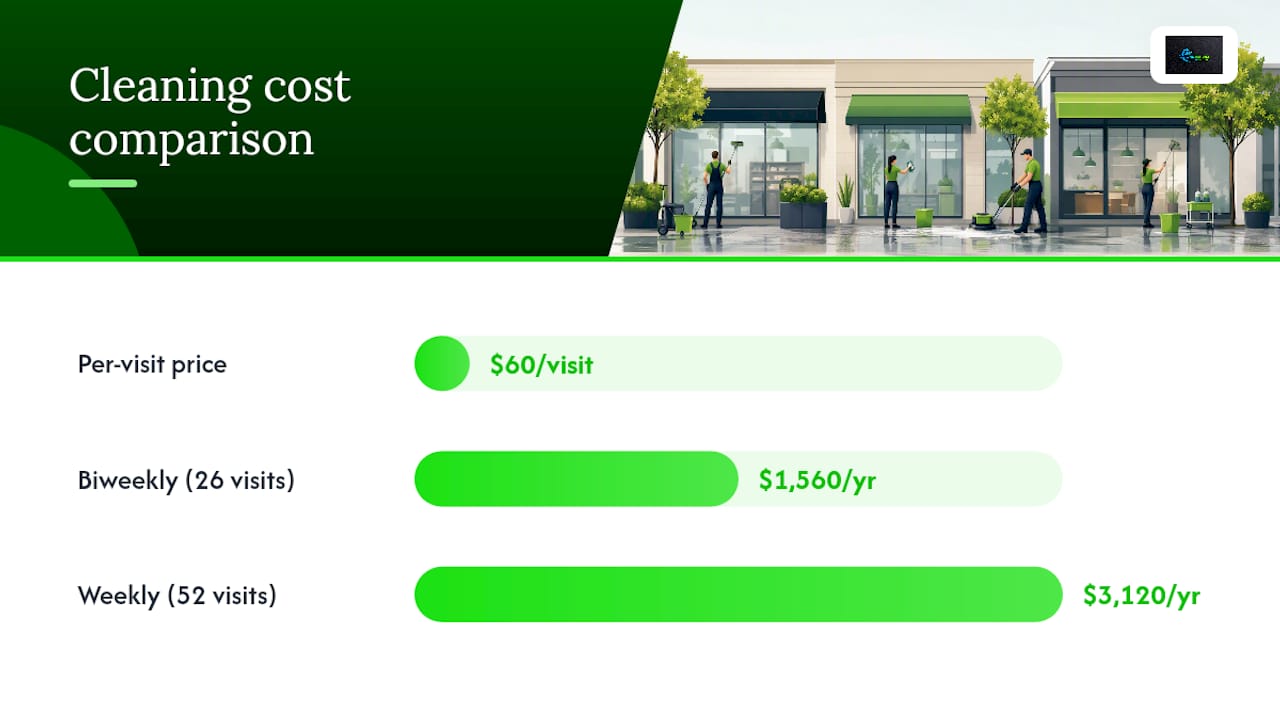
Recurring contracts change that math. Signing a standing agreement instead of booking one-off visits typically drops your per-visit cost by roughly 20 to 40 percent, and recurring customers usually get priority scheduling when a provider’s calendar fills up around holidays or after storms.
Before signing anything, ask for a proposal that spells out:
- Exact scope: which glass, frames, and facade elements are included
- Whether entry touch-ups between full visits are included or billed separately
- Cancellation and rescheduling terms
- Confirmed frequency and priority-scheduling status for recurring clients
Statistic Callout: Recurring commercial contracts commonly run 20 to 40 percent cheaper per visit than one-time bookings, and locking in a schedule also secures faster response after storms or salt events.
What’s Included in a Storefront Cleaning, and What Should You Handle Yourself?
A full storefront cleaning covers exterior glass, interior glass, frames, and sills. Exterior glass needs the cadence you picked above; interior glass can often go longer between visits since it doesn’t face weather, salt, or road spray.
Between full visits, someone on staff should handle the high-touch stuff daily or every few days: door handles, push plates, thresholds, and entry mats. These surfaces collect grime faster than any glass panel because hundreds of hands hit them daily.
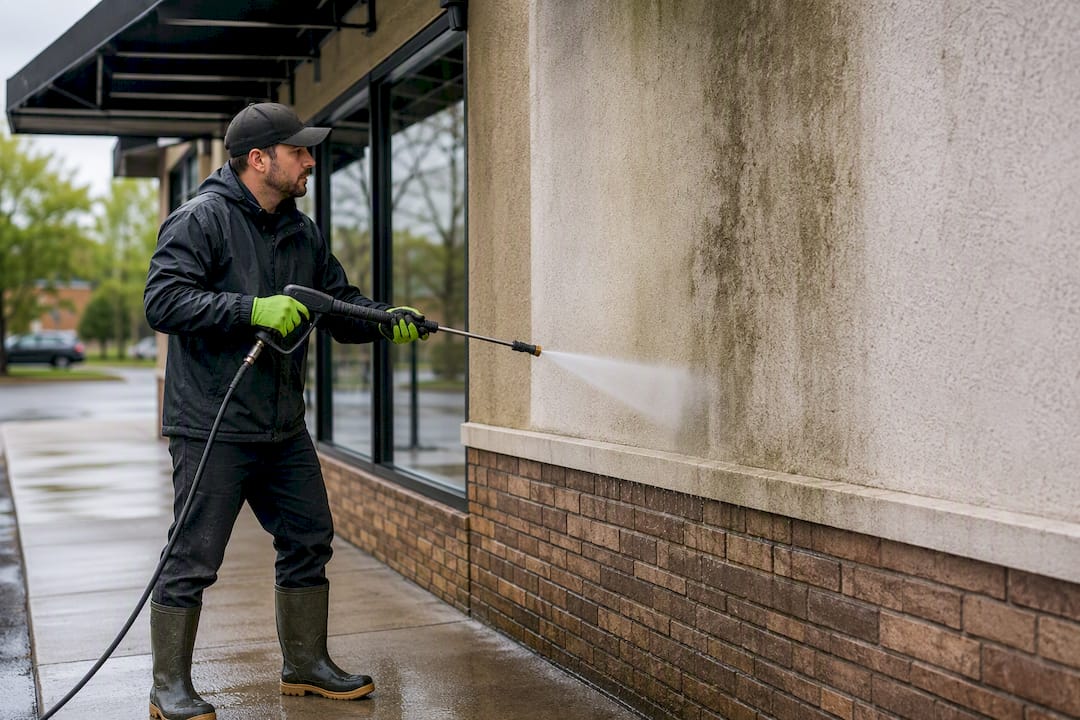
Facade elements like awnings, stucco, and brick don’t need glass-cleaning frequency, but they do need periodic attention. Pairing a soft wash of the facade with your window schedule on a quarterly or semiannual basis keeps buildup from turning into a restoration project. Call for a soft-wash or pressure-washing crew when you see mildew streaks, dirt staining, or algae on brick and stucco. Call a window tech when the issue is limited to glass, frames, and interior touch points.
What Practitioners Actually See on Storefront Accounts
Years of working commercial storefront accounts across Citrus County make one thing clear: the schedule that looks right on paper often needs adjustment once you see how a specific facade holds up to sun, salt, and local traffic patterns.
- Soft-wash and low-pressure techniques protect painted stucco, vinyl signage, and delicate window seals that high-PSI equipment can damage.
- High-PSI pressure washing belongs on concrete and masonry, not on glass frames, awning fabric, or painted facade surfaces.
- Recurring commercial clients typically receive priority scheduling and a lower per-visit rate than one-time bookings.
Pro Tip: If a provider quotes the same PSI setting for your storefront glass and your parking lot concrete, ask why. Those two surfaces need very different pressure and technique.
What I’d Tell a Business Owner Weighing Frequency Against Budget
Most owners undercut their own storefront on price, not appearance. A biweekly schedule beats a monthly one for almost any street-facing shop, because the gap between “clean” and “neglected” shows up in a week, not a month. If your budget is tight, cut somewhere else before you cut window frequency. If you want help settling on the right tier for your location, request a quote and get a schedule built around your actual foot traffic.
— Bobby
Get a Storefront Cleaning Schedule Built Around Your Traffic
A professional cleaning service can provide commercial and residential cleaning tailored to the actual conditions your storefront faces, rather than using a generic template. This can include soft-wash and low-pressure techniques appropriate for various surfaces, with scheduling that considers environmental factors such as coastal salt, seasonal pollen, and holiday traffic spikes specific to your location.

A free estimate covers a walk-through of your storefront, an assessment of which surfaces need which technique, and a recommended frequency tier based on your traffic and exposure. If you’re ready to lock in a schedule instead of guessing at one, book your visit and get on the calendar before the next seasonal spike hits.
Sources
Frequency tiers and pricing context in this guide draw on storefront scheduling data for retail markets, commercial pricing guidance, and retail maintenance standards from Tennant.
- Storefront Window Cleaning Schedules for NJ & NYC Retail (2026 Guide)
- Commercial Window Cleaning Cost & Frequency Guide (2026)
FAQ
What Is the 5-5-5 Rule for Cleaning?
The 5-5-5 rule generally refers to spending five minutes on five key areas, five times a day, as a quick-tidy method for maintaining high-touch spaces. It’s more common in home and hospitality cleaning than in storefront glass maintenance, where scheduled visits matter more than short daily bursts.
What Is the 20/10 Rule for Cleaning?
The 20/10 rule is a productivity technique where you clean for a set time, then rest briefly, repeating until a space is done. It’s a household organizing method, not a storefront maintenance standard, so it doesn’t map directly onto commercial window or facade schedules.
How Often Should You Deep Clean a Commercial Kitchen?
Commercial kitchens typically need daily surface cleaning, weekly deep cleaning of equipment like hoods and fryers, and quarterly professional deep cleans for grease traps and ductwork. Restaurant storefronts follow a separate glass-cleaning schedule, usually weekly given the combination of grease exposure and heavy foot traffic.
How Many Hours Does It Take to Clean a 1,500-Square-Foot House?
A typical home interior clean takes a few hours depending on size and detail work involved. Exterior pressure washing and soft washing run on separate timelines and are quoted individually based on siding material and condition.
How Much Does Commercial Storefront Cleaning Cost With Whitediamondpressurewashing?
Pricing depends on square footage, glass count, and facade material, so current rates are available directly through the services page after a walk-through estimate. Recurring contracts typically cost less per visit than one-time bookings, and Whitediamondpressurewashing gives scheduling priority to standing commercial accounts.