

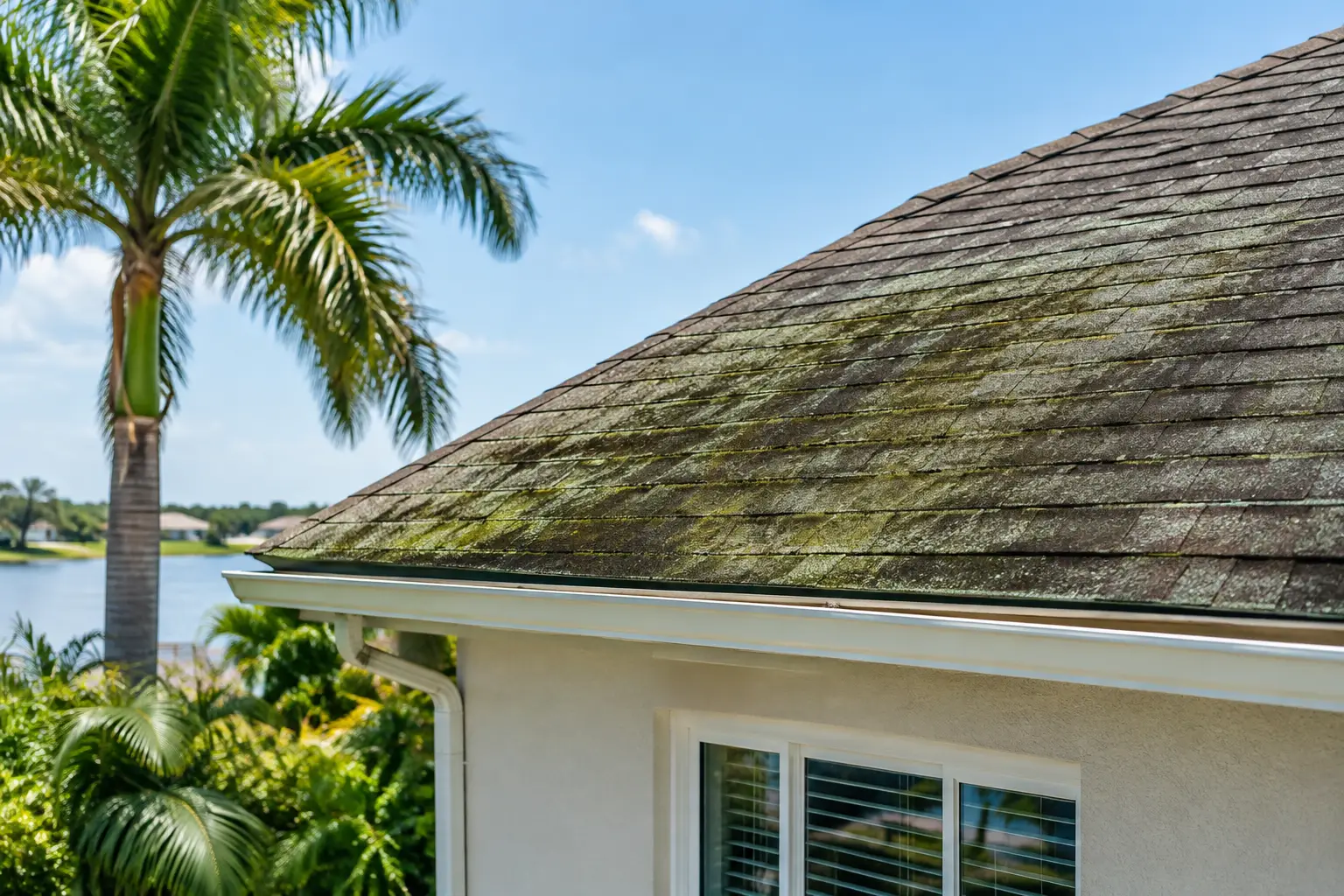
A roof can look perfectly sound from the driveway while dark streaks quietly spread across it. In Citrus County, that familiar staining is often algae fed by heat, humidity, shade, and regular rain. So, is roof algae harmful? It can be. It is not usually an emergency the moment it appears, but leaving it in place for years can affect your roof’s appearance, moisture performance, and long-term condition.
Florida roofs work hard. They take intense sun, tropical downpours, wind-blown debris, and long stretches of humidity. A careful roof-cleaning plan helps remove the growth that makes a home look neglected while protecting the shingles, tile, gutters, landscaping, and surrounding exterior surfaces.
What Roof Algae Is and Why It Shows Up in Florida
Many black or dark gray roof streaks are caused by a type of blue-green algae commonly associated with asphalt shingle roofs. It settles on the roof, holds moisture, and spreads gradually. On tile roofs, homeowners may also see green algae, mildew, moss-like growth, or a combination of organic staining and grime.
Algae does not need a dirty home to get started. Spores travel through the air, and Florida provides the conditions they like best: warmth, moisture, and shade. Roof sections beneath trees, on the north side of the home, or near overhanging branches often stain first. Humid weather and slow-drying areas allow the growth to remain active longer.
The streaks can be easy to dismiss because they do not always come with a leak or obvious roof damage. But roof algae is not simply a cosmetic issue. Its presence can signal that moisture and organic material are lingering where they should not.
Is Roof Algae Harmful to Your Roof?
Roof algae is rarely as destructive as a fallen limb or a missing shingle, but it can contribute to problems over time. The risk depends on the roofing material, the age and condition of the roof, how much growth is present, and whether algae is joined by moss, lichen, or debris.
On asphalt shingles, algae can hold moisture against the surface and obscure early warning signs such as granule loss, lifted edges, or damaged flashing. Dark staining also absorbs more heat than a clean, light-colored roof. That does not mean every stained roof will suffer immediate heat-related damage, but in Florida’s sun, a darker roof surface is not doing your home any favors.
Moss and lichen deserve more attention than light algae staining. They can root into or cling tightly to roofing surfaces, trapping water and making shingles or tile more vulnerable to wear. Moss may lift shingle edges and interfere with proper drainage. On tile roofs, thick growth can collect in overlaps and valleys where water needs a clear path to flow.
A roof covered in algae and debris can also make inspections harder. If a professional cannot clearly see the roof’s surface, small issues may go unnoticed until they become larger repairs. Cleaning does not replace a roof inspection, but a clean roof gives you a much clearer view of what is actually happening up there.
The Harm You Can See From the Street
For many homeowners, the first impact is curb appeal. Dark roof streaks can make a well-kept property look older, dirtier, and less cared for than it really is. Because the roof takes up so much visual space, staining can overshadow fresh landscaping, a clean driveway, or recently painted siding.
That matters when you are preparing for guests, putting a home on the market, or simply taking pride in your property. A professionally cleaned roof can make the whole exterior look brighter and more maintained without the expense of replacement.
There is also a practical resale consideration. Buyers may see a heavily stained roof and assume it needs replacing, even when the roof is structurally serviceable. A proper cleaning cannot hide true damage, and it should not be used to do so. It can, however, remove the staining that creates unnecessary doubt about a roof’s condition.
Can Roof Algae Affect Your Health?
Roof algae growing outdoors is generally not a direct indoor health threat. It is different from discovering active mold growth inside your home, where moisture and air quality concerns need prompt attention. Still, exterior organic growth often travels with mildew, mold-like staining, pollen, and accumulated debris that can make patios, gutters, soffits, and walkways look and feel unclean.
The greater safety concern is usually the roof itself. Homeowners who climb up to scrub stains, rinse with a pressure washer, or apply chemicals without proper equipment can be exposed to slips, falls, and damage from using the wrong cleaning method. Wet algae is slick, and Florida roofs can become dangerously hot.
If roof staining is paired with interior water spots, a musty attic smell, loose shingles, cracked tiles, or clogged valleys, the concern is no longer just algae. Those signs call for a qualified roofing professional to evaluate possible leaks or repairs before cleaning begins.
Why High-Pressure Washing Is the Wrong Answer
A dirty roof can tempt anyone to reach for a powerful pressure washer. That is one of the fastest ways to turn a cleaning project into a repair bill. High pressure can strip protective granules from asphalt shingles, force water beneath roofing materials, crack or dislodge tile, and damage seals around vents or flashing.
The right method is soft washing. This approach uses specialized low-pressure equipment and manufacturer-endorsed cleaning agents designed to treat organic growth without blasting the roof surface. The solution does the cleaning work while the low-pressure application helps protect the material underneath.
A careful professional also considers the entire property, not only the roof. That means preparing and rinsing landscaping, monitoring runoff, protecting sensitive exterior areas, and cleaning with the roof type in mind. Asphalt shingles, concrete tile, clay tile, metal roofing, and older surfaces do not all receive the same treatment.
When Should You Schedule Roof Cleaning?
There is no single calendar date that fits every Florida home. Some roofs need attention every year or two, while others stay cleaner longer because they receive more sun, have fewer nearby trees, or use algae-resistant materials. The goal is not to clean more often than necessary. It is to address growth before it becomes heavy, stubborn, and harder on the roof.
Watch for dark streaks that widen after rainy months, green patches near shaded edges, debris collecting in roof valleys, or discoloration that returns quickly after a previous cleaning. These are good reasons to request an assessment. A reputable exterior-cleaning professional should be willing to explain what they see, recommend the appropriate method, and provide a clear written estimate.
Regular property care can help slow future growth. Keeping branches trimmed back from the roof improves sunlight and airflow. Clearing loose leaves from valleys and gutters helps water move away as intended. It is also wise to keep an eye on nearby trees, especially after storms, since branches and debris can create shaded, damp pockets where algae thrives.
A Clean Roof Is About Care, Not Just Appearance
Roof algae may start as a few faint streaks, but Florida’s climate gives it plenty of opportunity to spread. Addressing it with the right soft-wash process can restore the clean, bright look of your home while helping preserve the materials that protect it.
White Diamond Pressure Washing approaches roof cleaning with low pressure, approved cleaning agents, and close attention to the landscaping and exterior details around your home. The best time to act is when the staining is noticeable, not after it has had years to settle in. A clean roof can leave your whole property looking refreshed, cared for, and shining like a diamond.