

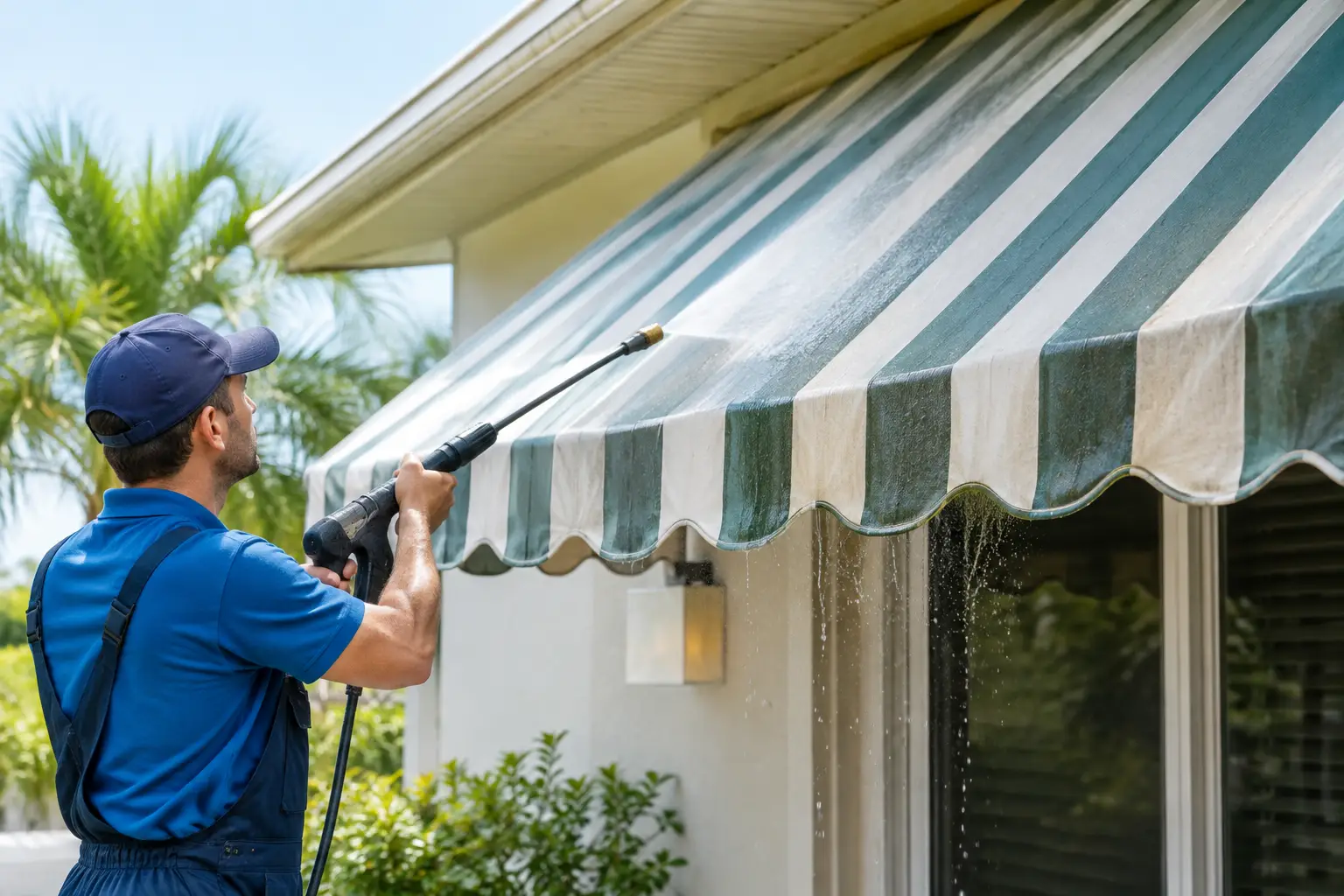
An awning should make the front of your home feel inviting, not leave a green, streaked shadow over the entryway or patio. A professional awning cleaning service Florida homeowners can rely on addresses the stains that thrive in our humidity while treating the awning material, mounting hardware, nearby paint, and landscaping with care.
In Homosassa, Citrus County, and surrounding communities, awnings spend every day facing sun, rain, pollen, tree debris, salt-tinged air, and moisture. That exposure is part of Florida living, but it also creates the ideal setting for algae, mildew, and embedded grime. Routine professional cleaning can revive the color and appearance of the awning before staining becomes harder to remove or the material begins to look prematurely worn.
Why Florida Awnings Get Dirty So Quickly
Florida’s warm, damp climate is the biggest reason awnings need attention. Morning dew and frequent rain keep fabric, vinyl, and shaded surfaces moist. Algae and mildew often appear first along the lower edge, in folds, beneath the valance, or on portions protected from direct sunlight. A green film may look minor at first, yet it can spread quickly across a light-colored awning.
Pollen, dust, leaves, spider webs, and airborne grime add another layer. After a storm, debris can collect where the awning meets the wall or settle into seams. On a retractable awning, that debris can be pulled into the roll when the unit is closed. Metal frames and brackets can also develop dull oxidation or dark runoff marks that take away from an otherwise clean exterior.
The result is more than a cosmetic issue. A stained awning can make freshly cleaned siding, windows, walkways, and patio furniture look neglected. For homeowners getting ready for guests, putting a property on the market, or reopening a seasonal home, it is one of those highly visible details that makes a real difference in curb appeal.
Awning Cleaning Service Florida Homes Need Is Not One-Method Cleaning
Not every awning should be cleaned the same way. Canvas, acrylic fabric, vinyl, aluminum, and composite materials all react differently to water pressure and cleaning solutions. The age of the awning, its condition, whether it is fixed or retractable, and the manufacturer’s care instructions matter too.
That is why the right process starts with an inspection rather than turning a pressure washer toward the surface. High pressure can force water into seams, weaken older fabric, disturb thread, damage a coating, or bend delicate components. It can also push dirty runoff onto walls, windows, and surrounding furnishings.
A careful cleaning approach uses low pressure where appropriate and surface-safe cleaning agents selected for the staining present. The goal is to break down algae, mildew, dirt, and organic buildup without aggressively blasting the material. Thorough rinsing is just as important. Cleaner residue left behind can attract soil, affect fabric appearance, or create streaking as the awning dries.
For a fixed metal awning, the process may focus on lifting grime from panels, supports, and drainage edges. For fabric awnings, gentler application and rinse techniques are usually the better choice. Some older awnings may already have fading, cracking, or weakened stitching. Cleaning can remove the buildup hiding those issues, but it cannot reverse material damage. An honest assessment helps set the right expectation before work begins.
The Details That Protect Your Property
Good exterior cleaning is as much about preparation as it is about the visible result. Nearby plants should be protected and rinsed as needed. Outdoor furniture, décor, and sensitive surfaces beneath the awning should be moved or covered when practical. Windows, siding, trim, and pavers deserve attention too, especially when runoff may travel from the awning.
A professional should also work carefully around electrical fixtures, security cameras, screen enclosures, gutters, and fasteners. Those details are easy to overlook, but they are the difference between a quick rinse and a job performed with respect for the home.
At White Diamond Pressure Washing, the focus is on matching the method to the surface, then leaving the surrounding area neat and cared for. That same thoughtful approach applies whether the awning covers a front door, a lanai, a patio seating area, or windows along the side of the home.
When Should You Schedule Awning Cleaning?
There is no single calendar date that works for every Florida home. An awning in full sun with little tree cover may stay cleaner longer than one beneath oaks or beside a shaded pool area. Still, many homeowners benefit from having awnings checked as part of regular exterior maintenance, often once or twice a year.
Schedule sooner if you notice green or black spotting, a dingy overall color, streaks running from the roofline, pollen packed into seams, or debris caught around the frame. You may also want service before hosting family, listing your home, or having house washing, roof cleaning, driveway cleaning, or pool cage cleaning done. Coordinating these services can give the entire exterior a more consistent, shining-like-a-diamond result.
After extended wet weather or a tropical storm, inspect the awning once conditions are safe. Remove loose branches and leaves without pulling on the fabric. If stains remain, professional cleaning is preferable to repeated scrubbing with a stiff brush. Excessive friction can wear fibers, scuff vinyl, and leave a cleaned spot surrounded by a faded-looking surface.
What Homeowners Can Do Between Professional Cleanings
Simple maintenance helps extend the fresh appearance of an awning. Keep leaves and small branches from collecting on top, particularly after storms. If your awning is retractable, allow it to dry fully before closing it whenever possible. Rolling up wet fabric with organic debris can encourage mildew growth in areas you cannot easily see.
Avoid household bleach mixtures, harsh degreasers, abrasive pads, and high-pressure DIY washing unless the awning manufacturer specifically approves them. A product that works well on concrete or a driveway is not automatically safe for colored fabric, coated metal, painted trim, or nearby plants. When in doubt, use the material care guidance and request a professional evaluation.
It also helps to watch how water moves around the awning. Overflowing gutters, roof runoff, or a sprinkler head that repeatedly sprays one section can cause recurring stains. Cleaning restores the appearance, but correcting the moisture source is what helps it stay clean longer.
Choosing a Local Awning Cleaner With Care
Price matters, but it should not be the only consideration. Ask whether the company adjusts its process for the awning material, uses low pressure when needed, protects plants and adjacent surfaces, and provides a clear written estimate. Local experience matters because Florida algae and humidity create different cleaning challenges than dry-climate dust alone.
A dependable provider should be willing to explain what can realistically be removed and what may be permanent fading, oxidation, or weathering. Be cautious of promises that every stain will disappear without first seeing the surface. Careful work is about restoring the best possible appearance while protecting the awning’s usable life, not taking unnecessary risks for a fast before-and-after photo.
A clean awning does more than brighten a doorway or patio. It gives your outdoor spaces a cared-for feel and helps the rest of your exterior look as polished as it should. If yours is starting to show Florida’s humidity, a timely inspection and surface-appropriate cleaning can bring back the clean, welcoming look you enjoy coming home to.