

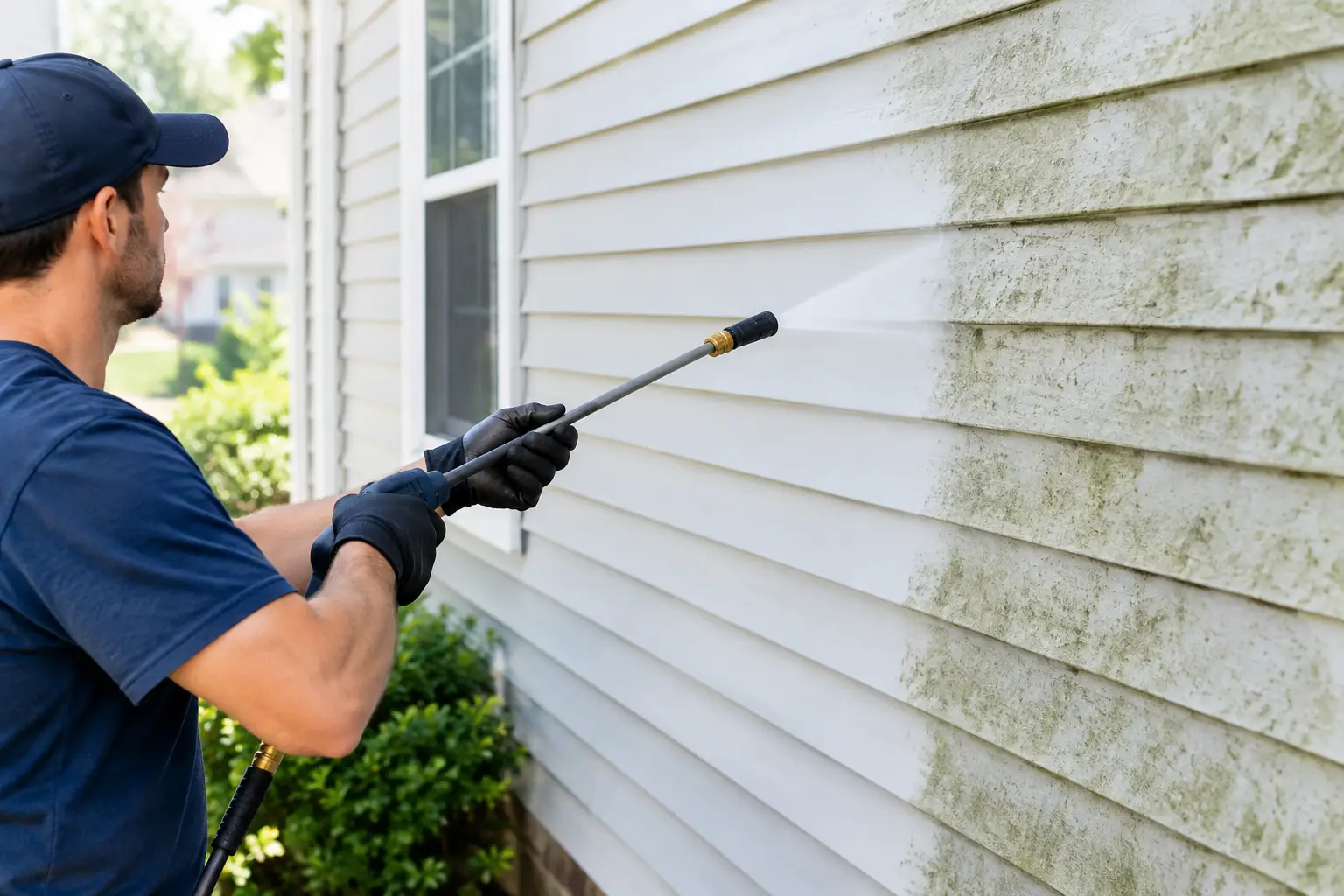
That gray-green film on your siding can make an otherwise well-kept Florida home look tired fast. To remove mildew from siding properly, the goal is not to blast away the visible staining with more pressure than the surface can handle. It is to treat the organic growth, rinse it carefully, and protect the paint, siding, windows, landscaping, and surrounding outdoor spaces along the way.
In Homosassa and throughout Citrus County, warm temperatures, afternoon rain, shade, and coastal moisture create ideal conditions for mildew, algae, and similar growth. The shaded side of the house often shows it first, but soffits, trim, patio walls, and areas behind shrubs can develop staining too. A careful low-pressure cleaning can revive your home’s appearance and help keep that growth from settling in deeper.
Why mildew keeps showing up on Florida siding
Homeowners often call every green, black, or gray stain “mildew.” In practice, exterior staining may include algae, mold, mildew, dirt that has adhered to organic growth, or a combination of all four. The distinction matters less than using a cleaning method that removes the growth rather than simply scattering it across the surface.
Florida siding stays damp longer in places that receive little direct sun. Overhanging trees, thick landscaping, clogged gutters, sprinkler overspray, and poor airflow can all contribute. North-facing walls and areas near lanais or pool cages commonly need attention sooner because they remain shaded and humid.
Mildew is not necessarily a sign that your siding has failed. Often, it is a routine maintenance issue. But leaving it in place can dull painted surfaces, make light-colored siding look permanently discolored, and allow grime to build up around seams, trim, and window frames. Regular cleaning is usually easier and gentler than waiting until staining becomes heavy.
How to remove mildew from siding safely
The safest process depends on what your siding is made of and how it is finished. Vinyl, painted fiber cement, painted wood, stucco, and composite siding may all tolerate different amounts of water pressure and different cleaning products. When in doubt, treat the siding as a delicate painted exterior surface, not as concrete.
Start by identifying the surface and the stain
Walk around the home in daylight and look closely at the affected areas. Is the stain fuzzy, speckled, streaky, or concentrated beneath a gutter? Are there signs of peeling paint, cracked caulk, loose siding, or water intrusion? Cleaning can improve the appearance of a wall, but it cannot correct an active leak or failing paint.
Pay attention to whether the discoloration is actually mildew. Rust stains from irrigation, tannin stains from leaves, oxidation on older vinyl, and red clay splatter need different treatment. Applying a strong cleaner to the wrong stain can leave uneven results or damage a finish.
Protect plants, windows, and nearby materials first
Preparation is where careful exterior cleaning earns its value. Move outdoor furniture, cover or wet sensitive items as appropriate, and give nearby landscaping a thorough pre-rinse. Plants should be protected throughout the job, not treated as an afterthought once cleaning begins.
Close windows and doors, check that screens are secure, and avoid forcing water around weatherstripping, vents, electrical fixtures, or damaged caulk lines. Keep cleaning solution away from unfinished wood, decorative metals, and surfaces that may react to it. If a wall has brittle paint or visible deterioration, a gentler approach is necessary.
Use a siding-safe cleaner and low pressure
For most mildew-covered siding, a properly diluted exterior cleaner applied at low pressure is more effective than plain water alone. The cleaner needs enough contact time to break down organic growth, but it should not be allowed to dry on the surface. Work in manageable sections, especially on warm, sunny days.
A soft-wash approach uses cleaning solution and controlled, low-pressure rinsing rather than a harsh pressure washer setting. This matters because high pressure can drive water behind siding, strip loose paint, scar vinyl, disturb caulk, and leave visible wand marks. It may look clean for the moment, but damaged siding is an expensive trade-off.
After the appropriate dwell time, rinse from the top down with a broad, gentle spray. A steady rinse helps carry away the cleaner and loosened residue without pushing water upward beneath siding laps. Check the wall from different angles before moving on. Streaks often show up only after the surface starts to dry.
Treat stubborn spots without scrubbing aggressively
Heavier buildup around trim, shaded corners, or beneath rooflines may need a second light application. A soft brush can help on durable surfaces when used gently, but abrasive pads and stiff brushes can scratch vinyl and weaken painted finishes.
Do not compensate for a stubborn spot by increasing pressure. If the mark does not respond, it may be oxidation, staining beneath the paint, or a material-specific issue rather than remaining mildew. A professional can test a small area and recommend the right next step instead of turning a minor stain into a repair project.
Common mistakes that can damage siding
The most common mistake is using pressure meant for driveways on a house. Concrete can withstand a much more aggressive cleaning process than painted siding, soffits, window seals, and trim. The right equipment setting is only part of the equation. Spray angle, distance from the surface, cleaning solution strength, and rinsing technique all matter.
Another mistake is cleaning only the visibly green patch. Organic growth often spreads beyond what is easy to see, leaving faint residue that quickly becomes noticeable again. A thorough house wash treats the affected wall and blends the cleaning across adjoining areas for a more even finish.
Homeowners should also avoid mixing cleaners. Household chemicals can react in unsafe ways, and stronger does not automatically mean better. Use products exactly as directed, wear appropriate eye and skin protection, and keep children and pets away from the work area until it has been fully rinsed and dried.
Finally, do not forget the source of recurring moisture. Trim back vegetation that rests against the house, redirect sprinklers, clear gutter blockages, and consider whether dense shade is keeping a wall damp all day. Cleaning removes current growth, while these steps can help slow its return.
When professional house washing is the better choice
A small, accessible patch on sound siding may be manageable for a homeowner who has the right cleaner, safety gear, and a gentle rinsing method. The decision changes when staining covers multiple sides of the home, reaches upper-story walls, appears near rooflines, or surrounds delicate landscaping and screened outdoor areas.
Professional service is also a smart choice for older paint, wood siding, heavy oxidation, or homes with a mix of surfaces. A trained exterior cleaner can adjust the process from one area to the next rather than using a one-size-fits-all pressure setting. That includes protecting plants, applying surface-appropriate cleaning agents, and checking the results before packing up.
White Diamond Pressure Washing uses low-pressure house washing methods designed to remove mildew, algae, dirt, and grime while respecting the materials around your home. For Citrus County homeowners, that careful preparation is especially valuable when siding, soffits, gutters, lanais, and landscaping all need to be considered together.
How often should siding be cleaned?
There is no single calendar that fits every Florida home. A sunny house with good airflow may stay cleaner longer than a shaded home near trees or water. Many homeowners schedule house washing about once a year, while heavily shaded properties may benefit from service every six to nine months.
Instead of waiting for the entire exterior to look dark, watch for early signs: green streaks under gutters, gray spotting along shaded walls, dull trim, or a noticeable color difference between sunny and shaded sides. Catching growth early generally allows for a gentler cleaning and a fresher-looking result.
A clean wall should look like the siding you chose, not like a surface that has been blasted into submission. With the right low-pressure method and attention to the conditions around your home, your exterior can stay bright, protected, and shining like a diamond between cleanings.