

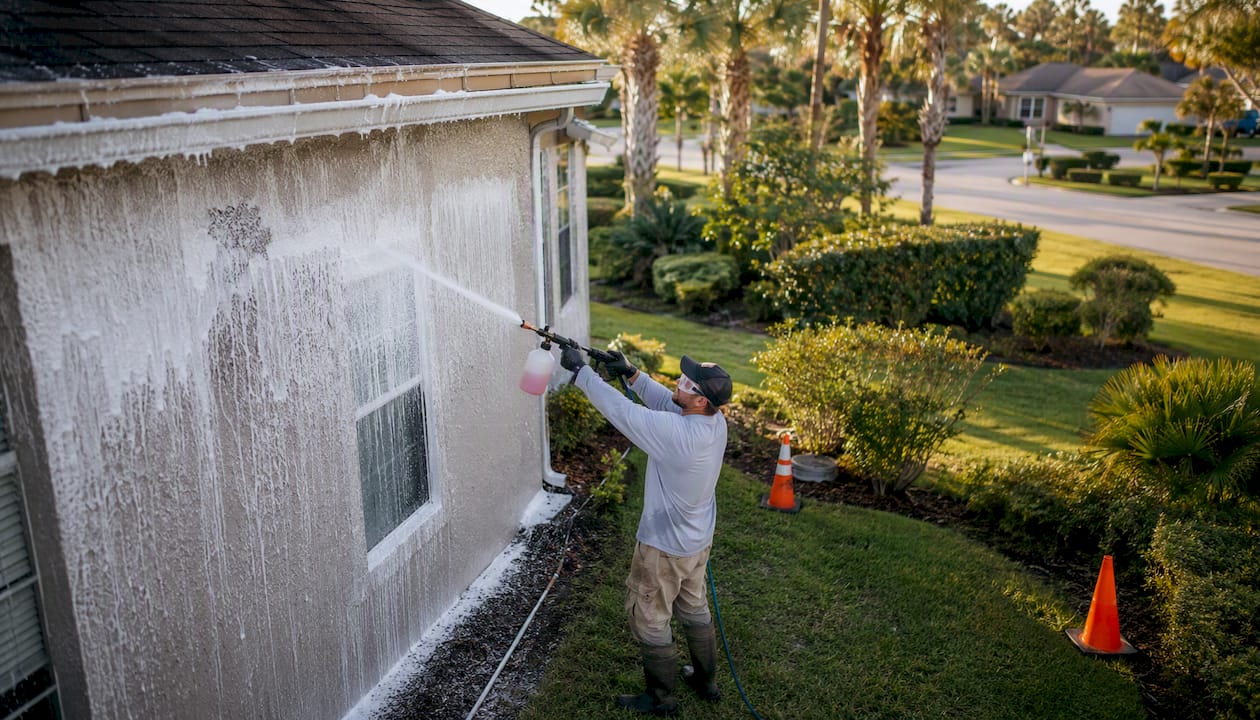
Start a prioritized, zone-by-zone preventive maintenance program today, not next quarter. That single decision does more to protect asset value and limit liability than any other move an owner or property manager can make.
Before anything else, walk the property and flag these now:
- Trip hazards on walkways, steps, or parking areas
- Active water leaks or staining on ceilings, walls, or soffits
- Clogged gutters and downspouts pushing water toward the foundation
- Visible roof damage: lifted shingles, ponding water, or exposed flashing
Grab the downloadable zone-by-zone checklist and use it on your next walk-through.
Pro Tip: Rank every finding by liability exposure first, cost second. A cracked step that could cause a fall outranks a faded coat of paint every time, regardless of your repair budget.
Key Takeaways
A prioritized, component-by-component preventive maintenance schedule, backed by documented inspections, cuts emergency repair costs and liability exposure far more than reactive fixes ever will.
| Point | Details |
|---|---|
| Act on safety items first | Trip hazards, active leaks, and roof damage get fixed before cosmetic concerns, regardless of budget. |
| Match strategy to risk | Use predictive or preventive maintenance for high-consequence assets like roofs and structural connections. |
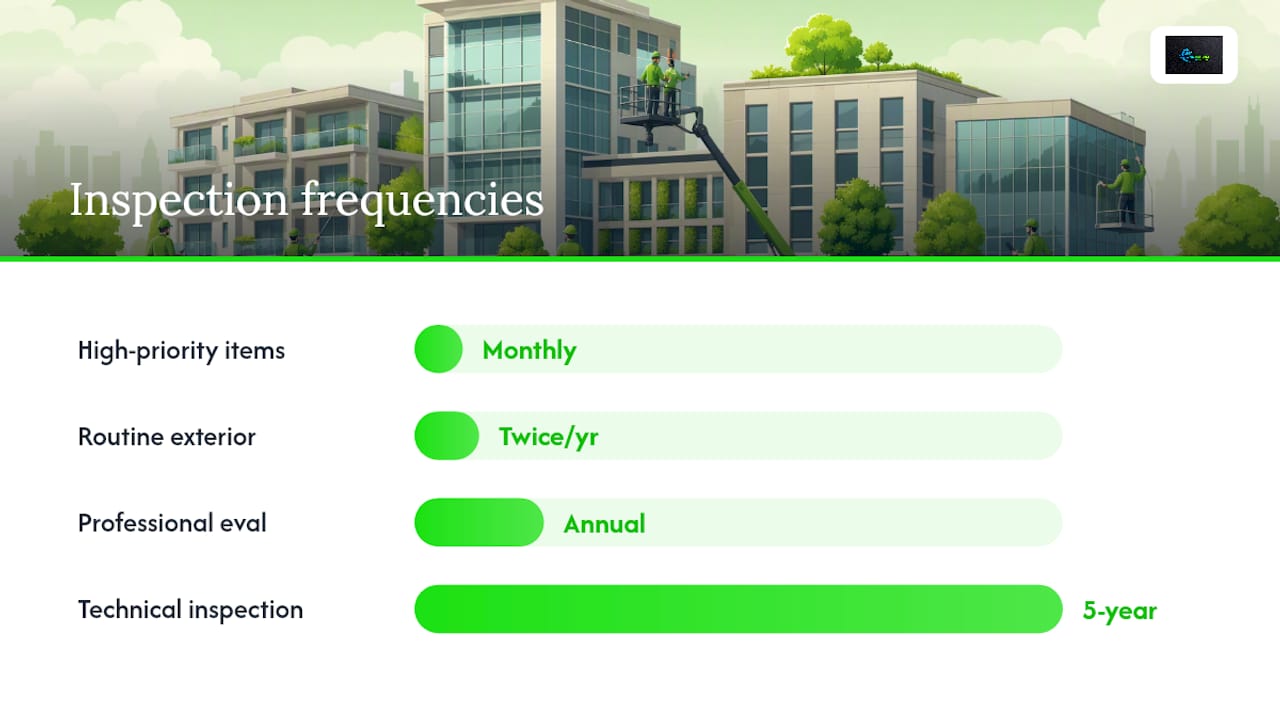
| Inspect on a fixed cadence | Full exterior checks twice yearly, monthly for high-priority items, annual professional roof and foundation reviews. |
| Choose the right cleaning method | Soft washing protects stucco and EIFS; pressure washing suits concrete and sealed hardscape. |
| Document everything | Dated photos and logs support insurance claims and defend against liability disputes. |
| Bring in professional support | Whitediamondpressurewashing handles soft washing, low-pressure cleaning, and documented before/after photos for your maintenance file. |
Table of Contents
- Why Building Exterior Maintenance Matters More Than It Looks
- What Maintenance Strategy Should You Use?
- What Should Be on Your Building Exterior Maintenance Checklist?
- Which Cleaning Method Fits Which Surface?
- What Safety and Environmental Rules Apply to Exterior Cleaning?
- How Do You Build a Realistic Maintenance Schedule and Budget?
- Should You Hire a Professional or Handle It Yourself?
- Get Professional Help Executing Your Maintenance Plan
- Sources
Why Building Exterior Maintenance Matters More Than It Looks
A neglected exterior costs you twice: once in emergency repairs, and again in the tenants or buyers who walk away. Facades that fail outright, gutters that dump water against a foundation, or a loose railing that causes a fall don’t just cost money. They expose owners to liability claims that a $200 repair could have prevented entirely.
The financial gap between planning ahead and reacting late is not small. Preventive façade maintenance costs are notably lower than full restoration after neglect, with preventive maintenance costing significantly less per square foot annually compared to restoration costs, according to OxMaint’s façade inspection research. That same research found systematic inspection programs eliminate a large majority of emergency façade repairs.
Prioritize these high-liability items first:
- Roof and roofline integrity (active leaks, structural sag)
- Exterior stairs, railings, decks, and balconies
- Parking lot and walkway surfaces (trip and slip hazards)
- Foundation drainage and grading
What Maintenance Strategy Should You Use?
Most property teams default to fixing things when they break. That approach, known as corrective or run-to-failure maintenance, works fine for low-cost, low-consequence items like a burned-out landscape light. It’s a poor fit for anything where failure means water intrusion, structural damage, or a lawsuit.
Four strategies cover nearly everything you’ll manage on a building exterior:
- Corrective (run-to-failure): Fix it when it breaks. Reasonable for cheap, low-risk items only.
- Preventive (calendar-based): Scheduled inspections and servicing regardless of visible wear, such as gutter cleaning every spring and fall.
- Predictive (condition-based): Uses monitoring, moisture meters, or sensor data to catch problems before failure. Research on maintenance strategy taxonomy confirms predictive approaches reduce both planned and unplanned downtime by tracking actual condition rather than the calendar.
- Opportunistic: Bundles multiple repairs into a single mobilization, useful when scaffolding or a lift is already on site for one job.
Match the strategy to the asset’s failure consequence. A low-criticality item like exterior signage tolerates run-to-failure. A roof membrane, a load-bearing balcony, or a façade anchor point does not; those need preventive at minimum, predictive where the budget allows. Studies on opportunity-based envelope maintenance show that bundling façade, window, and roof interventions during a single access event lowers lifecycle costs and reduces the total number of separate repair visits.
Track a few key numbers to know if your program is working: PM compliance rate (percentage of scheduled tasks completed on time), emergency repair share (percentage of repairs that were unplanned), and maintenance spend as a percentage of Replacement Asset Value. Best-in-class mixed preventive/predictive programs run 1.5 to 2.5 percent of RAV annually, versus 4 to 6 percent for reactive-only operations, per OxMaint’s maintenance benchmarking.
Pro Tip: Don’t try to make everything predictive at once. Start with your highest-consequence assets (roof membranes, structural connections) and expand the program as you build a baseline of condition data.
What Should Be on Your Building Exterior Maintenance Checklist?
This is the working list. Walk each zone in order, note the condition, photograph anything questionable, and flag repair priority as safety-critical, weather-critical, or cosmetic.
-
Roof and roofline. Check shingles for curling, cracking, or missing granules. Inspect membrane roofs for blistering, punctures, or ponding water. Examine flashing at chimneys, vents, and parapet walls for gaps or rust. Recommended frequency: monthly visual check from the ground, annual hands-on inspection by a roofing professional, and a check after any major storm. Our roof maintenance guide covers drainage patterns specific to sloped and flat roofs. Flag: active leaks or exposed decking are safety-critical.
-
Gutters and downspouts. Confirm free flow of water, check for sagging brackets, and look for granule buildup that signals shingle wear upstream. Clean at minimum twice yearly, more often under heavy tree cover. Flag: standing water or overflow near the foundation is weather-critical.
-
Exterior walls and cladding. Inspect masonry for cracking, efflorescence, or mortar loss. Check EIFS and stucco for hairline cracks, bulging, or soft spots (a sign of trapped moisture). Recommended frequency: biannual visual survey, with a five-year hands-on technical inspection including probe testing on representative sections. Flag: any soft or bulging stucco area is weather-critical and should be investigated before cosmetic repair.
-
Windows, doors, and perimeter seals. Check caulking and weatherstripping for gaps, test for air infiltration, and look for glazing seal failure (fogging between panes). Recommended frequency: annual inspection, more frequently on south and west exposures. Flag: failed seals near structural framing are weather-critical.
-
Balconies, decks, and railings. Test railings for looseness, check deck boards or membrane for rot and delamination, and inspect structural connections where visible. Recommended frequency: monthly visual check, annual load-bearing inspection by a qualified contractor. Flag: any railing movement is safety-critical and requires immediate restriction of access.
-
Foundation and perimeter drainage. Look for cracking, settling, or water pooling against the foundation wall. Confirm grading slopes away from the building. Recommended frequency: biannual visual check, professional evaluation every five years or after significant ground movement. Flag: new or widening cracks are structural and safety-critical.
-
Chimneys and vents. Check for cracked crowns, deteriorated mortar joints, and blocked or damaged vent caps. Recommended frequency: annual inspection, ideally before the heating season. Flag: blocked vents are safety-critical due to carbon monoxide risk.
-
Exterior paint and coatings. Watch for peeling, chalking, or bubbling, especially on wood trim and south-facing walls. Recommended frequency: biannual visual survey. Flag: peeling that exposes bare wood is weather-critical, since it accelerates rot.
-
Exterior lighting and signage. Test fixtures for function, check for water intrusion in housings, and confirm signage anchors are secure. Recommended frequency: monthly. Flag: exposed wiring is safety-critical.
-
Parking lots, driveways, and hardscape. Look for cracking, potholes, heaving, and drainage pooling. Recommended frequency: biannual survey, with sealcoating evaluated every two to three years. Flag: potholes and uneven surfaces near walkways are safety-critical.
OxMaint’s inspection frequency guidance recommends a full exterior inspection at minimum twice a year, spring and fall, with monthly checks on high-priority items and annual professional evaluation of roofing and foundation systems.
Photograph every inspection point, date the images, and log findings in a shared file. Documentation matters more than most owners realize: dated logs and photo records are frequently what supports an insurance claim or defends against a liability suit after the fact.
Which Cleaning Method Fits Which Surface?
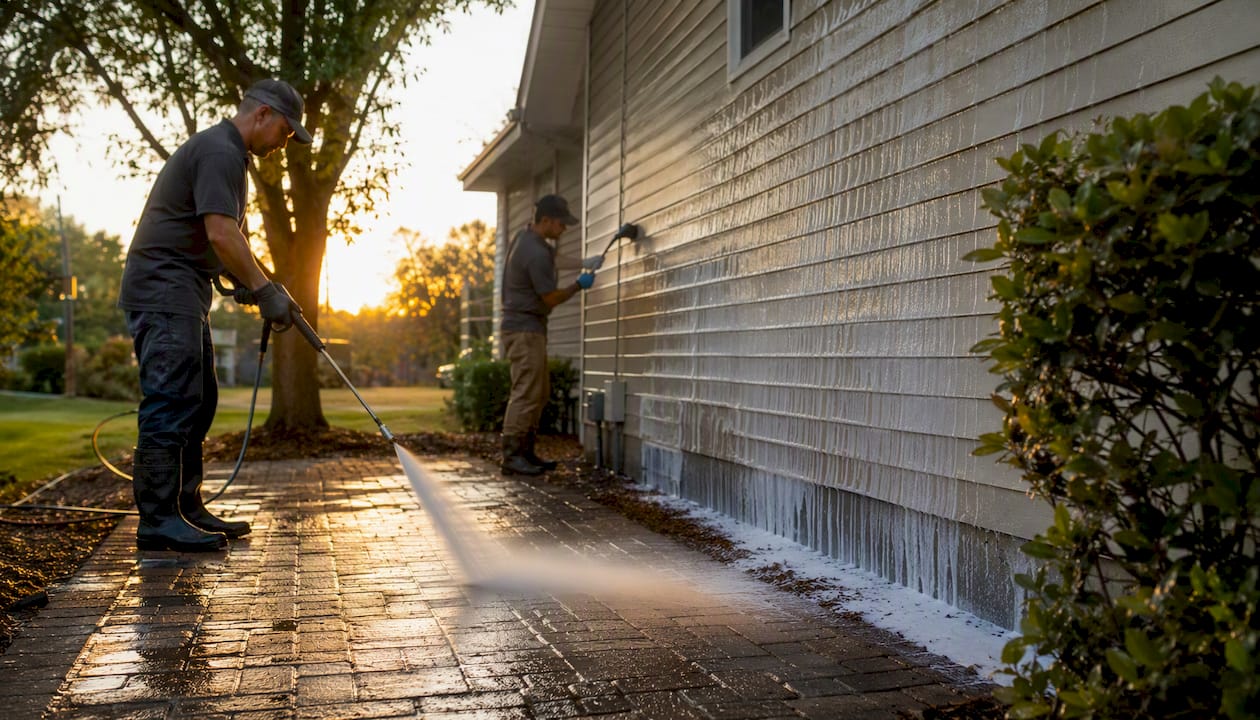
Not every dirty surface calls for the same tool. Using pressure washing where soft washing belongs is one of the most common ways owners damage the very surfaces they’re trying to protect.
| Method | Best For | Risk if Misused |
|---|---|---|
| Pressure/power washing | Concrete, brick, sealed hardscape | Can strip mortar, etch soft masonry, force water behind siding |
| Soft washing (low-pressure, chemical-assisted) | Stucco, EIFS, painted siding, roofs | Rare if done correctly; main risk is under-dwell time on heavy organic growth |
| Hand cleaning/detailing | Windows, delicate trim, signage | Time-intensive but lowest damage risk |
Soft washing uses low pressure with biodegradable detergents to kill algae and mildew at the root, which makes it the right call for humidity-prone surfaces like stucco and EIFS that high pressure can crack or delaminate.
Materials compatibility rules worth memorizing:
- Never use high-pressure spray directly on EIFS or vinyl siding seams.
- Test wood surfaces at low pressure before committing to a full wash; wood fibers raise and splinter easily.
- Avoid acidic cleaners on natural stone; they etch the surface permanently.
- Metal roofing and gutters need a soft brush or low-pressure rinse, never abrasive scrubbing.
Before any full-surface cleaning:
- Choose an inconspicuous section (roughly two square feet).
- Apply the intended method and detergent, and let it dwell per label instructions.
- Rinse and wait 24 hours to check for discoloration, etching, or lifting.
- If the substrate is historic, delicate, or you’re unsure, call a specialist rather than risk the full elevation.
Pro Tip: If a surface has never been professionally cleaned, treat the first pass as a test run. What worked on your neighbor’s siding won’t always work on yours.
What Safety and Environmental Rules Apply to Exterior Cleaning?
Exterior maintenance work carries real safety and environmental exposure, and it’s often overlooked until an inspector or insurer asks about it.
On-site safety basics: fall protection on any elevated work, cordoned-off zones during pressure washing, visible signage for wet or slippery surfaces, and extra caution around electrical panels or exposed wiring near equipment.
Runoff control matters just as much. Detergents and dislodged debris can reach storm drains and harm local waterways, so use biodegradable cleaning agents and divert runoff away from landscaping and drains where possible. Many municipalities require permits for commercial pressure washing runoff, and some jurisdictions enforce façade inspection ordinances on a fixed cycle, so check local building code requirements before large-scale work begins. Some larger commercial portfolios also track sustainable-site practices as part of LEED-aligned operations, which typically include runoff and water-use controls for exterior cleaning.
How Do You Build a Realistic Maintenance Schedule and Budget?
A workable schedule ties specific tasks to specific seasons, so nothing falls through the cracks between “monthly” and “eventually.”
| Season | Task Type | Frequency |
|---|---|---|
| Spring | Deep cleaning, gutter check, roof inspection | Annual |
| Summer | Soft washing, entry and signage detailing | Annual |
| Fall | Gutter clearing, concrete sealing prep | Annual |
| Winter | Safety checks, ice/snow damage review | Monthly during season |
| High-priority items (railings, lighting, drainage) | Visual inspection | Monthly, year-round |
| Roof and foundation | Professional evaluation | Annual, plus after major storms |
This quarterly cadence mirrors what facility managers in variable-climate regions already follow, according to Work Wonders Professional Building Services’ seasonal calendar, and our own seasonal exterior cleaning checklist breaks these tasks down further by month.
Budget by consequence of failure, not just square footage. Spend first on items where failure risks safety or water intrusion; cosmetic touch-ups can wait a season if funds are tight.
For recordkeeping, log at minimum: date of inspection, inspector name, dated photos, corrective action taken, and contractor invoices. Keep records for at least five years to support insurance claims and demonstrate a documented preventive program if a liability question ever comes up.
Should You Hire a Professional or Handle It Yourself?
Some exterior tasks are reasonable for an in-house team. Others aren’t worth the risk.
Hire a professional when the job involves working at height, cleaning a sensitive substrate like stucco or EIFS, or when a warranty requires documented professional service. DIY works fine for ground-level tasks like clearing debris from window wells or wiping down entry signage.
When vetting a vendor, confirm:
- Proof of liability insurance and workers’ compensation coverage.
- References and before/after photos from similar properties.
- A clear, material-specific process (do they distinguish soft washing from high-pressure work?).
- Any relevant certifications or trade affiliations.
Ask directly about scope, warranty terms, runoff control practices, cleanup responsibilities, and how change orders get handled mid-project. Our vendor evaluation guide walks through the specific questions to ask before signing anything.
A Practical Note From the Publisher
The biggest mistake we see isn’t ignorance, it’s inconsistency. Owners know a roof needs checking; they just don’t schedule it until something leaks. A written cadence, even a simple one, outperforms good intentions every time. Whitediamondpressurewashing has spent years handling the cleaning side of that cadence for properties across Citrus County and nearby areas, and the pattern holds regardless of building size.
Get Professional Help Executing Your Maintenance Plan
Whitediamondpressurewashing is the practical next step once you’ve built your checklist and identified what needs professional-grade cleaning versus a DIY touch-up. Running a preventive program takes consistency, and the cleaning half of that program is exactly where most owners lose momentum, especially on delicate surfaces like stucco or roofing that punish the wrong technique.

A professional visit typically covers soft washing for siding and roofs, low-pressure cleaning for driveways and walkways, gutter clearing, and documented before-and-after photos that support your inspection records. That documentation alone can matter later, whether for an insurance claim or a warranty dispute. Whitediamondpressurewashing uses low-pressure, biodegradable, material-specific methods built to protect the substrate rather than strip it, which fits directly into the preventive approach this guide recommends.
If your checklist flagged organic growth on siding, a grimy roof, or stained concrete, request a free estimate and get those items handled before they turn into the $75 to $250 per square foot restoration problem instead of the $35 preventive one.
Sources
- Maintenance strategies, prognostics, and condition monitoring review — PMC
- Opportunity-Based Maintenance of Buildings’ Envelope (2023) — DOI
- Building façade inspection guide for property maintenance teams — OxMaint
- Reactive vs preventive vs predictive maintenance comparison — OxMaint
Recommended
- How to Maintain Building Facades: A Property Manager’s Guide – white-diamond-pressure
- Property Maintenance Checklist: Homeowner’s 2026 Guide – white-diamond-pressure
- Commercial Property Exterior Maintenance: Impact on Value – white-diamond-pressure
- Clean Parking Lots: A Property Manager’s Step-by-Step Guide – white-diamond-pressure