


TL;DR:
- Exterior spider web removal involves safely clearing webs, egg sacs, and debris from outdoor surfaces using extendable tools to prevent damage and improve curb appeal. Regular maintenance, environmental modifications, and timely inspections help prevent webs from returning, while professionals are recommended for hard-to-reach areas or active infestations. Employing gentle tools and proactive strategies reduces recurring spider issues and preserves exterior surface integrity.
Exterior spider web removal is the process of clearing spider webs, egg sacs, and debris from outdoor surfaces using tools and techniques designed to protect both the property and the person doing the cleaning. Done right, it goes well beyond a quick sweep with a broom. Spiders favor eaves, porch lights, window frames, and foundation corners, and they rebuild fast if egg sacs are left behind. For homeowners and property managers in Citrus County and beyond, regular exterior spider web cleaning directly affects curb appeal, surface condition, and long-term pest control outcomes.
What is exterior spider web removal and how is it done safely?
Exterior spider web removal, known in the cleaning industry as the “Spider Web Sweep,” is the targeted clearing of webs and egg sacs from outdoor surfaces using extendable tools that keep your feet on the ground. The Spider Web Sweep method uses telescoping poles with soft brushes or dusters to reach heights of two to three stories without a ladder, which cuts fall risk significantly. That single safety advantage makes it the current industry standard for both residential and commercial exteriors.
The tools that work best for this job share one quality: they are soft enough to lift webs without smearing or scratching. Your core toolkit should include:
- Extendable microfiber dusters for eaves, soffits, and light fixtures
- Soft-bristle brooms with long handles for wide wall surfaces
- Outdoor web brushes with flexible heads that conform to corners
- Handheld vacuums for enclosed spaces like window recesses and door frames
The motion matters as much as the tool. Use slow, sweeping strokes that pull webs away from the surface rather than pressing them into it. Rushing or scrubbing creates the “web smear” problem, a cloudy film that bonds to painted or textured surfaces and resists rinsing.
Stiff brushes and high-pressure washing can damage exterior surfaces or force water into electrical fixtures, so neither belongs in a standard web removal routine. Gentle pressure and the correct tool angle protect your siding, trim, and finish while still getting the job clean.
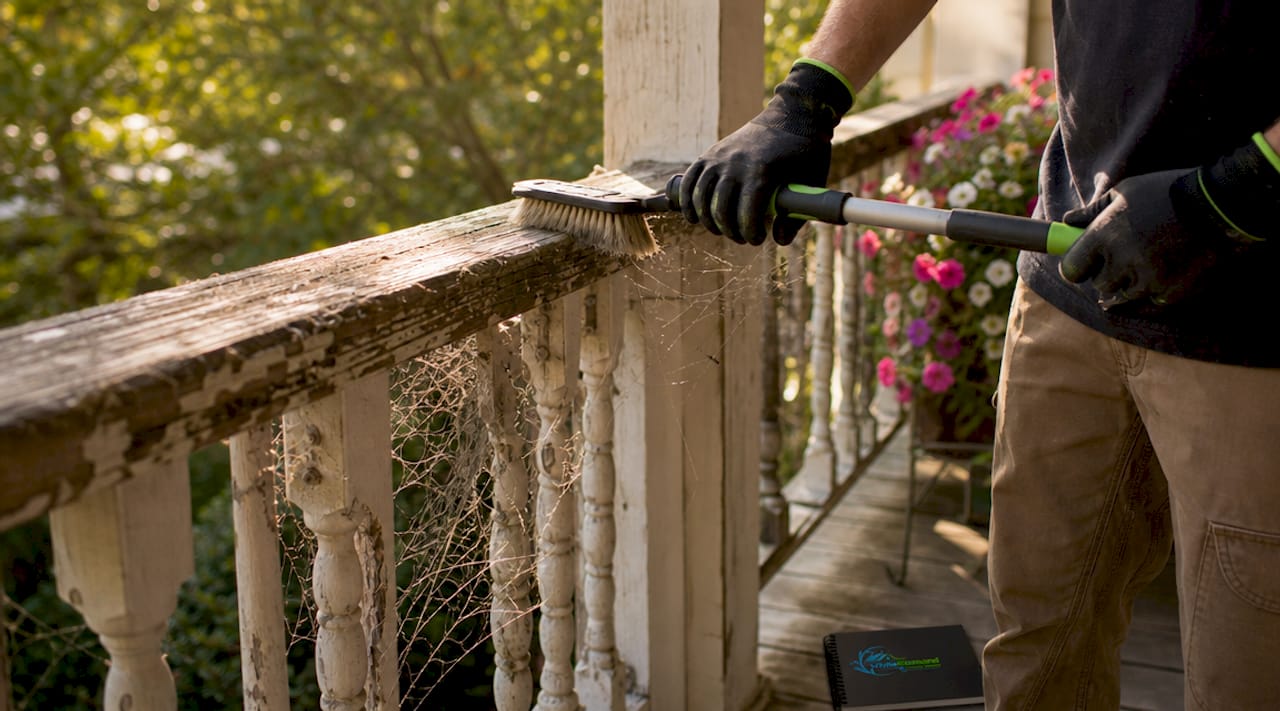
Pro Tip: Always remove webs dry first before applying any water. Knocking webs down and then rinsing lightly delivers far better results than wetting the surface first, which causes webs to smear and stick.
How spider behavior affects your cleaning strategy
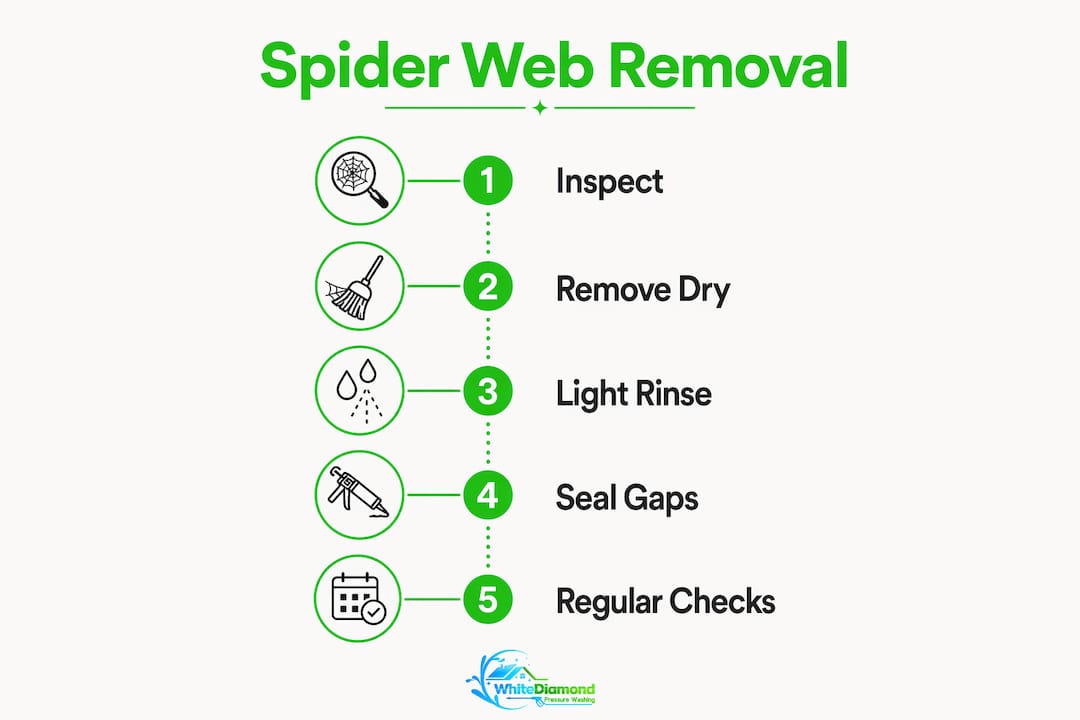
Understanding why spiders build where they do changes how you approach exterior spider web cleaning. Spiders choose sheltered, food-rich locations. Eaves trap insects. Porch lights attract moths and gnats. Foundation corners offer protection from wind and rain. These are the zones that need the most attention and the most frequent cleaning.
Web condition tells you a lot before you touch anything. A clean, taut web with a visible spider or fresh silk is active. A dusty, sagging web with no spider present is abandoned. Arachnologist Rod Crawford advises inspecting webs before removal to distinguish active webs from old ones, which helps you prioritize where to clean and how often. Active webs near entry points deserve immediate attention. Dusty webs in low-traffic corners can wait for your next scheduled pass.
The step most homeowners skip is egg sac removal. Spiders rebuild webs quickly if egg sacs are left behind, and those sacs hide under eaves, along window ledges, and in sheltered corners where they are easy to miss. Ignoring them guarantees a recurring infestation regardless of how thoroughly you clean the visible webs.
“Egg sacs are the reset button for spider populations. Remove the web and leave the sac, and you have solved nothing.” — Shiny Go Clean exterior cleaning guidance
Before each cleaning session, do a quick visual inspection of:
- Eaves and soffits along the roofline
- Window and door frame corners
- Outdoor light fixture bases
- Foundation gaps and utility entry points
- Fence posts and gate hardware
This inspection habit takes three minutes and saves you from cleaning the same spots every two weeks.
How to prevent spider webs from coming back after cleaning
Cleaning spider webs outdoors is only half the job. If the conditions that attract spiders stay in place, webs return within days. Long-term spider web control depends on environmental modifications that break the cycle at its source.
Follow these steps to reduce spider web recurrence after each cleaning:
-
Switch outdoor bulbs to yellow or warm LED lights. Standard white bulbs attract insects, which attract spiders. Yellow-tinted LEDs produce light at a wavelength that insects find less appealing, cutting the food supply that keeps spiders returning to the same spots.
-
Seal cracks and foundation gaps with silicone caulk. Small openings along the foundation, around utility pipes, and under siding give spiders protected entry points. Sealing these removes both nesting sites and access routes.
-
Trim shrubs and clear clutter near the building exterior. Overgrown vegetation and stored items like firewood, pots, and garden equipment create the sheltered, humid microenvironments spiders prefer. Moving clutter at least two feet from the foundation reduces harborage significantly.
-
Schedule regular exterior inspections every four to six weeks. Catching new webs early, before egg sacs develop, keeps the population manageable and the cleaning effort minimal.
-
Time your cleaning sessions to early morning. Cleaning early in the morning reduces spider encounters by roughly 80% because spiders are less active at that time, making the process safer and more thorough.
-
Reduce exterior moisture. Fix leaking hose bibs, clear clogged gutters, and direct downspouts away from the foundation. Moisture attracts the insects spiders feed on, so a drier perimeter means fewer spiders overall.
These steps work together. Switching bulbs without sealing cracks still leaves entry points open. Sealing cracks without trimming vegetation still leaves harborage in place. The combination is what produces lasting results. For a broader look at preventative exterior cleaning strategies that include lighting changes and crack sealing, Whitediamondpressurewashing covers these in detail.
When should you hire a professional for spider web removal?
DIY spider web removal handles most residential situations well. There are specific conditions, though, where professional exterior spider web removal services deliver results that a homeowner with an extendable duster simply cannot match.
| Situation | DIY Approach | Professional Approach |
|---|---|---|
| Single-story eaves and porch areas | Extendable duster, soft broom | Same tools, faster execution |
| Two to three story heights | Risky without proper equipment | Water-fed pole systems, no ladder needed |
| Sensitive surfaces (stucco, wood siding) | Risk of damage with wrong tools | Substrate-appropriate soft washing |
| Active infestations with egg sacs | Often missed during cleaning | Targeted treatment of harborage areas |
| Commercial properties with glazing or cladding | Not practical at scale | Purified water systems protect finishes |
Efficient Cleaning Services stresses substrate-sensitive cleaning as a core professional advantage. Purified water fed through soft-brush pole systems removes webs and debris without leaving mineral deposits or damaging sensitive glazing and cladding. That matters for retail storefronts, office buildings, and any property with specialty exterior finishes.
Valley Wide Pest Control notes that professional dewebbing services go beyond cosmetic cleaning. They target spider harborage areas and integrate into broader pest management plans, addressing root causes rather than just visible webs. For properties with recurring infestations or hard-to-reach areas, that integrated approach produces results that outlast any single cleaning session. The role of professional cleaners in safe exterior maintenance is worth understanding before you decide which route fits your property.
Key takeaways
Exterior spider web removal works best when dry mechanical removal, egg sac elimination, and environmental prevention are combined into a consistent routine.
| Point | Details |
|---|---|
| Use the Spider Web Sweep method | Extendable poles with soft brushes remove webs safely from two to three stories without a ladder. |
| Remove egg sacs every time | Skipping egg sacs guarantees rapid web recurrence regardless of how clean the surface looks. |
| Dry removal before wet rinsing | Knocking webs down before applying water prevents web smear on painted and textured surfaces. |
| Modify the environment | Switching to yellow LEDs and sealing foundation cracks breaks the spider re-infestation cycle at its source. |
| Know when to call a professional | Hard-to-reach heights, sensitive surfaces, and active infestations are clear indicators for professional service. |
What I’ve learned from years of watching homeowners fight spider webs
Most homeowners treat spider web removal as a once-a-season chore, and then wonder why their eaves look the same three weeks later. The webs come back because the conditions that produced them never changed. The light is still white, the crack by the dryer vent is still open, and the egg sacs from the last cleaning are still tucked under the soffit.
The mistake I see most often is using the wrong tool with good intentions. A stiff deck brush feels thorough, but it smears webs into textured stucco and leaves a residue that actually traps more dust and debris over time. A microfiber duster on a telescoping pole takes half the effort and leaves the surface genuinely clean.
The other overlooked factor is timing. Early morning cleaning, before the heat of the day activates insects and spiders, makes the job faster and less unpleasant. Spiders are slower, webs are more intact and easier to lift whole, and you avoid the afternoon insect activity that makes the area feel hostile.
My honest recommendation: combine a monthly exterior sweep with two or three targeted prevention steps, and you will spend less time cleaning over the course of a year than someone who cleans hard twice a year and ignores the root causes. Simple tools, consistent habits, and attention to egg sacs will take you further than any specialty spray or one-time deep clean.
— Bobby
Let Whitediamondpressurewashing handle the hard-to-reach spots

Whitediamondpressurewashing specializes in safe, surface-appropriate exterior cleaning for homeowners and property managers across Citrus County. The team uses low-pressure soft washing techniques that remove spider webs, egg sacs, and debris without damaging siding, stucco, trim, or painted surfaces. Whether you need a one-time seasonal clean or a recurring maintenance plan, Whitediamondpressurewashing brings the right tools and the right approach to every job. Get a free estimate and see what a professionally cleaned exterior looks like at Whitediamondpressurewashing.com.
FAQ
What is exterior spider web removal?
Exterior spider web removal is the process of clearing spider webs, egg sacs, and related debris from outdoor surfaces using tools like extendable dusters, soft-bristle brooms, and telescoping poles. The goal is to improve curb appeal, reduce spider populations, and protect exterior surfaces from buildup.
How often should you remove spider webs from outside?
Monthly cleaning is the standard recommendation for most residential properties, with additional passes after heavy rain or during peak spider seasons in late summer and fall. Early morning is the best time to clean, as spider activity is lowest and webs are easiest to remove intact.
Does pressure washing remove spider webs effectively?
High-pressure washing is not recommended for spider web removal because it can smear webs into textured surfaces and force water into electrical fixtures. Dry mechanical removal with a soft brush followed by a gentle rinse produces better results without surface damage.
Why do spider webs keep coming back after cleaning?
Spider webs return quickly when egg sacs are left behind or when the conditions attracting spiders remain unchanged. Switching outdoor lights to yellow LEDs, sealing foundation cracks, and trimming vegetation near the building are the most effective steps for preventing rapid recurrence.
When should a homeowner hire a professional for dewebbing?
Professional service makes sense for properties with two or more stories, sensitive exterior finishes like stucco or specialty cladding, or active infestations where egg sacs are present in hard-to-reach areas. Professionals use water-fed pole systems and substrate-appropriate methods that protect surfaces while delivering thorough results.
Recommended
- Effective Roof Cleaning Techniques for Homeowners – white-diamond-pressure
- Ensure safe exterior cleaning: a guide to materials compatibility – white-diamond-pressure
- Role of professional cleaners for safe home exteriors – white-diamond-pressure
- Preventative Exterior Cleaning: Protect Your Home – white-diamond-pressure