

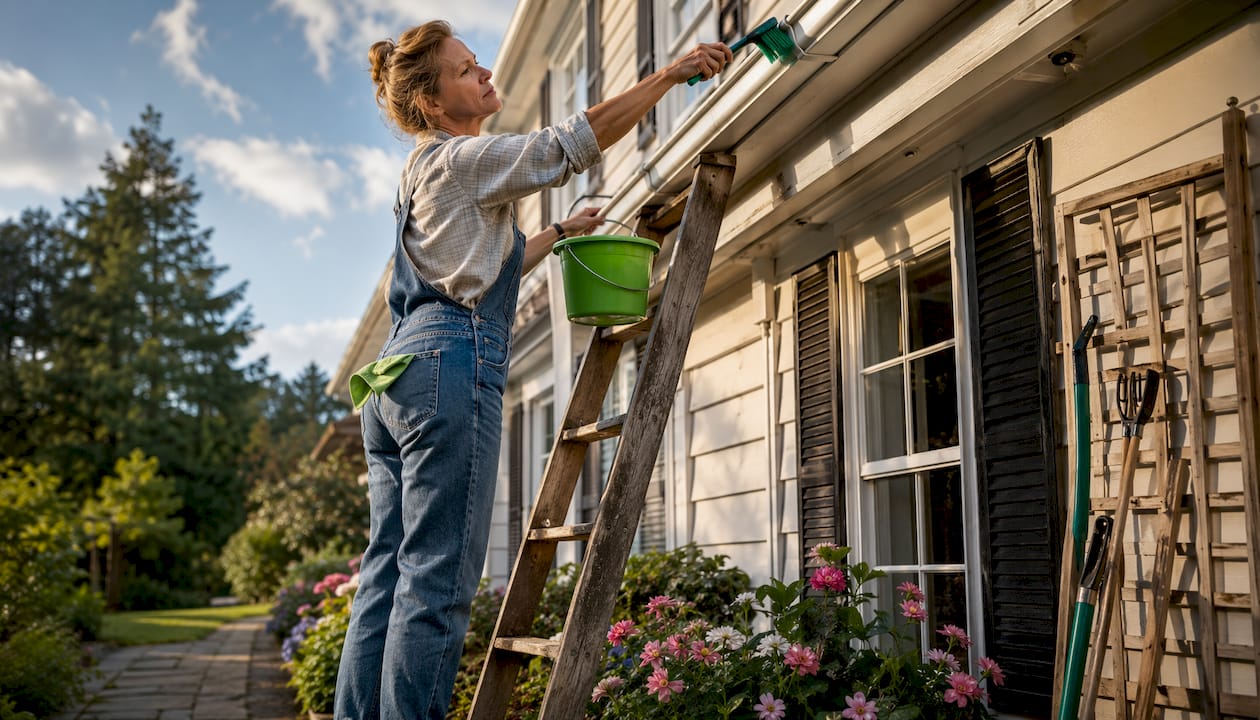
Gutter whitening — also called gutter brightening — is a specialized exterior restoration process that removes bonded black streaks, oxidation, and asphalt residue from the outside face of your gutters using matched chemical cleaners and soft agitation. It is not the same as interior gutter cleaning, and it is not painting. If your gutters are structurally sound but look grimy no matter how many times you’ve hosed them down, brightening is what you actually need.
Most homeowners need it when those dark vertical streaks — commonly called “tiger stripes” — appear on the outer face of their gutters. Standard pressure washing and bleach won’t touch them; the staining is chemically bonded, not surface dirt. Pricing varies by home size, linear footage of gutter, and severity of staining, but brightening is generally less costly than gutter replacement.
- What it fixes: Exterior oxidation, tiger stripes, asphalt runoff staining, and chalking
- What it doesn’t fix: Interior debris, clogs, structural damage, or fully degraded paint
- Who performs it: Exterior cleaning professionals using alkaline or oxalic-based oxidation removers
- When you need it: When streaks persist after standard cleaning or when curb appeal has noticeably declined
Table of Contents
- What gutter whitening actually is — and what it leaves out
- Why gutters develop those black streaks in the first place
- How professional gutter brightening actually works
- Benefits of gutter whitening for homeowners
- DIY vs. professional brightening — risks and when each makes sense
- What to expect when you hire a professional
- How often to brighten and what slows re-staining
- The science behind why professionals use specific chemistry
- Key Takeaways
- What the field actually looks like
- Whitediamondpressurewashing restores gutters the right way
- Useful sources for homeowners
What gutter whitening actually is — and what it leaves out
Gutter brightening is a cosmetic and restorative service that targets the exterior face of your gutters. The chemistry dissolves oxidation and breaks the electrostatic bond holding petroleum-based shingle residue to the aluminum finish. What comes off is the staining. What stays is the original factory finish, restored as close to new as the paint’s condition allows.
Here’s what brightening does not include:
- Removing leaves, debris, or blockages from inside the gutter channel
- Repainting or recoating gutters
- Repairing seams, hangers, or structural damage
- Reversing fully degraded or peeling paint (there is a restoration ceiling on very old finishes)
Think of it the way you’d think about cleaning the outside of a coffee pot that’s gone brown and dull. Scrubbing the inside doesn’t help. You need a different product for the outside surface. Gutter cleaning and gutter brightening solve two different problems, and a lot of homeowners don’t realize that until they’ve paid for one and still have the other.
Pro Tip: Schedule brightening at the same time as your house wash or interior gutter cleaning. You’ll save on trip charges, and the visual result is far more consistent when the whole exterior is treated together.
Why gutters develop those black streaks in the first place
Tiger striping is not mold, algae, or ordinary dirt. It is the result of a specific chemical process: as rainwater flows over your roof shingles, it picks up asphalt particles, oxidized tannins, and microscopic pollution. That loaded water then runs over the outer lip of the gutter during overflow events, depositing a thin film of compounds on the aluminum face below.
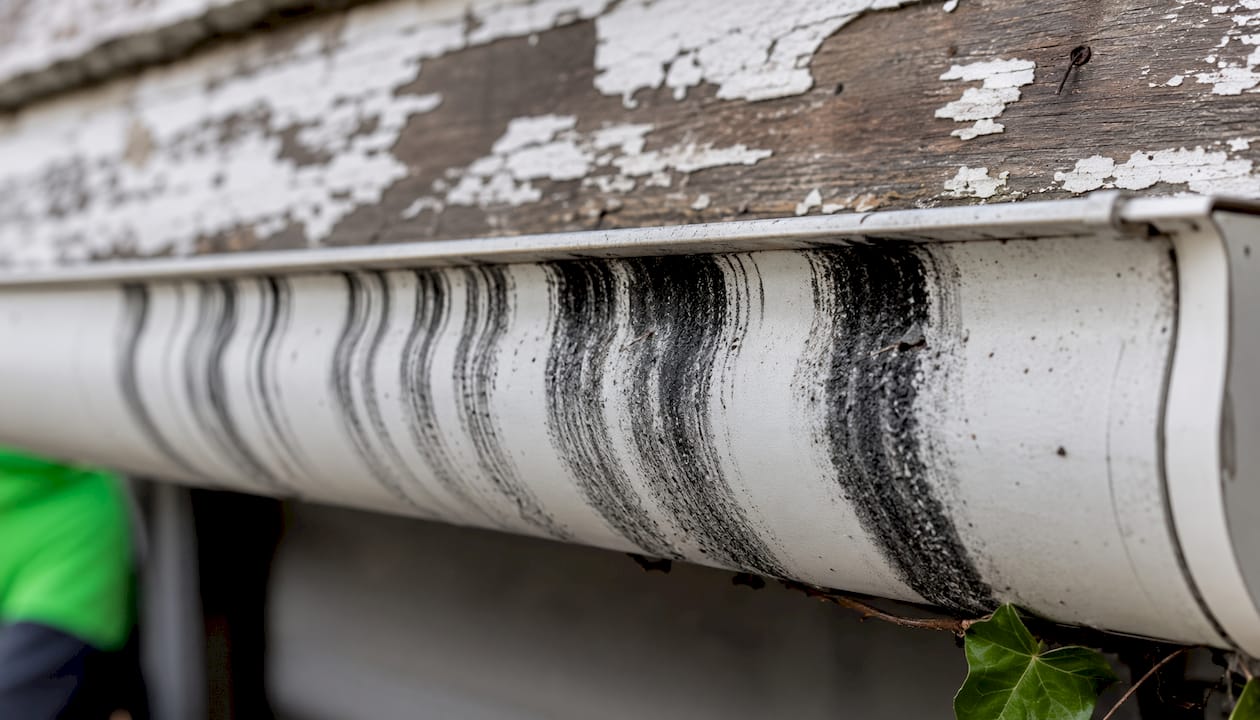
Over repeated rain cycles, those deposits build into the distinct dark vertical lines you see. The electrostatic bond that forms between the compound and the aluminum surface is exceptionally strong. It is not sitting on top of the metal. It is fused into the outer layer.
Contributing factors that accelerate staining:
- Aging shingles: Older roofs shed more granules and asphalt particles into runoff
- West- and south-facing gutters: More sun exposure accelerates oxidation of the aluminum finish
- Overflowing gutters: Gutters that aren’t cleaned regularly overflow more, depositing more staining compounds on the face
- Pollution and tree canopy: Airborne particles and tannins from overhanging trees add to the mix
Organic stains like mildew or algae look different — they tend to be green or black-green and respond to bleach. Tiger stripes are gray-to-black, vertical, and completely unresponsive to bleach or soap. That distinction matters because it determines the entire cleaning approach.
How professional gutter brightening actually works
The professional process is built around chemistry, not force. Pros use matched chemical solutions that dissolve the electrostatic bond holding asphalt residues to the oxidized aluminum finish, followed by soft agitation and a low-pressure rinse. High-pressure blasting can dent aluminum gutters and strip factory paint — it is not a substitute for the right chemistry.
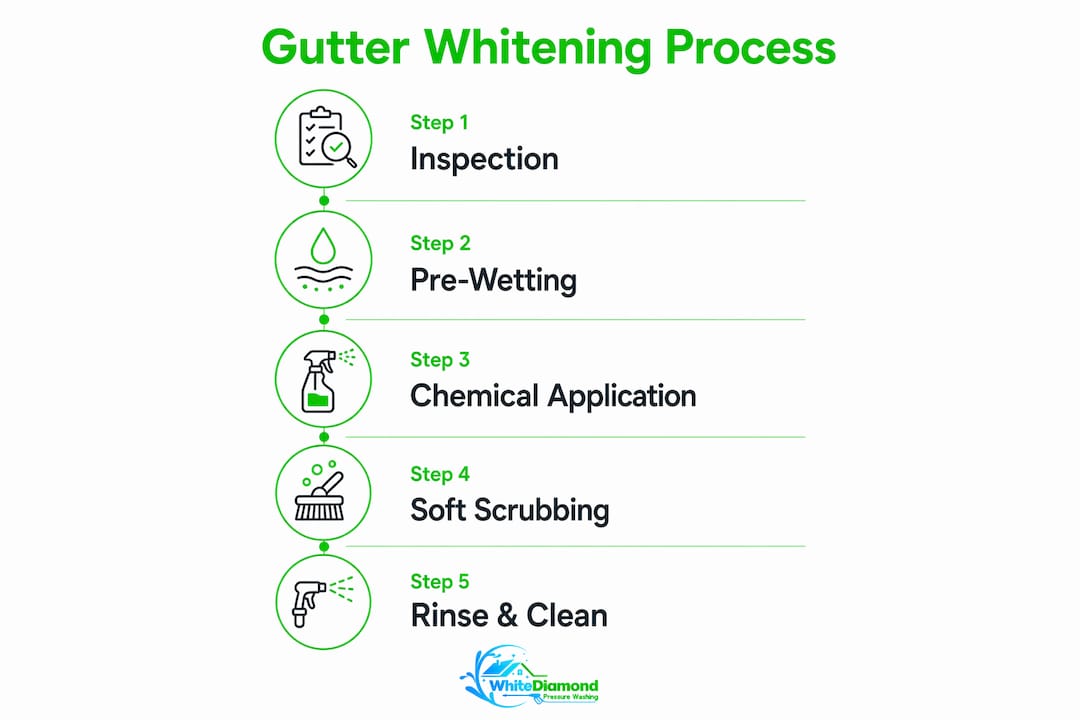
Here’s the typical sequence:
- Pre-wet and protect: Surrounding plants, siding, and trim are wetted down or covered before any chemical is applied
- Chemical application: An alkaline oxidation remover or oxalic-based solution is applied directly to the stained gutter face
- Controlled dwell time: The solution sits for several minutes to break down the oxidized layer and loosen bonded compounds
- Soft-bristle agitation: Technicians use soft brushes or extension tools to gently lift the loosened staining
- Low-pressure rinse: A controlled rinse removes the dissolved residue without damaging the finish
- Inspection: The technician checks for remaining spots and re-treats if needed
- Optional protective step: Some pros apply an automotive-grade wax or hydrophobic coating to slow re-staining
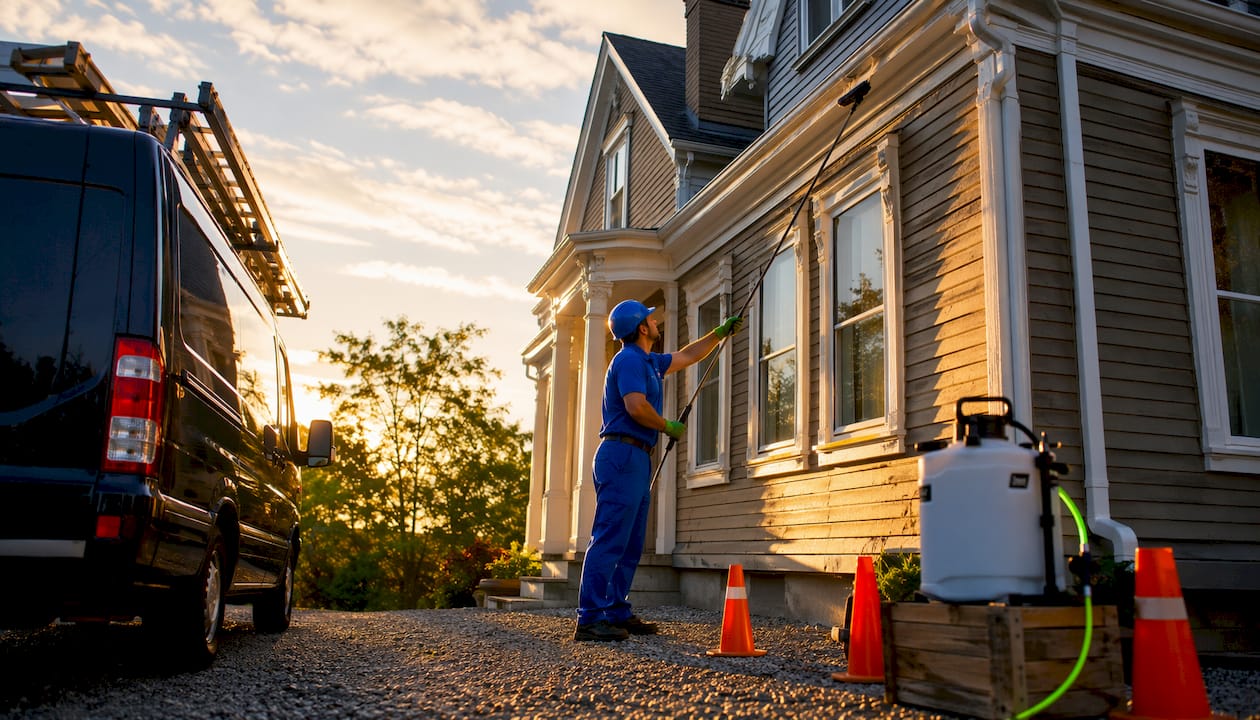
Equipment typically includes soft-bristle brushes, extension poles for reach, chemical-resistant sprayers, and full PPE including gloves, eye protection, and chemical-resistant clothing.
Pro Tip: When getting quotes, ask specifically: What chemical are you using? What’s your dwell time? How do you protect my landscaping? A contractor who can’t answer those three questions clearly is winging it.
Benefits of gutter whitening for homeowners
The most obvious payoff is curb appeal. Gutters run the full perimeter of your roofline, so when they’re streaked and dull, the whole house looks neglected — even if everything else is clean. Brightening restores that original white or off-white finish, and the contrast before and after is often striking, especially on white gutters.
Beyond appearance, there are practical reasons to brighten rather than replace:
- Avoids premature replacement: Gutters that look terrible but function fine don’t need to be replaced. Brightening extends the visual life of the existing system at a fraction of replacement cost.
- Protects perceived home value: Exterior appearance directly affects how buyers and appraisers perceive a property. Streaked gutters signal deferred maintenance.
- Bundling efficiency: When combined with a house wash, brightening costs less per visit and the overall exterior looks cohesive rather than patchwork.
- Faster results than repainting: A professional brightening job on a standard home typically takes 2–4 hours — far less disruption than painting or replacement.
DIY vs. professional brightening — risks and when each makes sense
Some homeowners reach for bleach first. That’s understandable, but bleach doesn’t dissolve petroleum-derived residues and can actually accelerate finish degradation on aluminum at higher concentrations. Standard degreasers and all-purpose cleaners from the hardware store have the same limitation — they clean surface grime but leave tiger stripes completely intact.
Other common DIY attempts include Magic Erasers (abrasive, can dull the finish) and pressure washing (removes loose dirt, leaves the bonded staining, risks denting aluminum).
When DIY is reasonable:
- Single-story home with easily accessible gutters
- Light staining that hasn’t built up over multiple seasons
- You can source a retail-grade oxidation remover (products like Krud Kutter Gutter Cleaner are formulated for this) and follow the dwell-time instructions carefully
When to hire a professional:
- Two-story or higher homes where ladder work creates real fall risk
- Severe tiger striping that’s built up over years
- Gutters close to sensitive landscaping (improper dilution can damage plants)
- You want a guaranteed result with before-and-after documentation
The Washington Post’s guidance on cleaning aluminum gutters reinforces the same principle: limit scope, follow manufacturer dilution recommendations, and don’t rush the dwell time.
Pro Tip: If you attempt a spot treatment yourself, work in 2–3 foot sections, wear chemical-resistant gloves and eye protection, and rinse surrounding plants before and after application. Never let the solution dry on the gutter surface.
What to expect when you hire a professional
A standard single-family home typically takes 2–4 hours from setup to final inspection. That includes prep, chemical application, dwell, agitation, rinse, and a walkthrough.
Prep you should do before the crew arrives:
- Close windows and doors on the side being treated
- Move patio furniture away from the work area
- Point out any sensitive plants or garden beds near the gutters
Questions worth asking every contractor:
- What chemical solution do you use, and is it safe for aluminum finishes?
- What’s your dilution ratio and dwell time policy?
- What pressure settings do you use for the rinse?
- Are you licensed and insured?
- Do you offer a satisfaction guarantee or warranty?
- Can you show before-and-after photos from similar jobs?
Trust signals that matter: Look for contractors who lead with their method rather than just their price. A clear explanation of the chemistry they use, photos of past work, proof of insurance, and local reviews are the markers of a professional operation. Soft-wash emphasis is a green flag — it signals the contractor understands that low-pressure techniques protect finishes rather than damage them. Vague answers about “power washing the outside” are a red flag.
How often to brighten and what slows re-staining
For most homes, professional brightening makes sense once a year, or whenever tiger stripes become prominent. Homes with older roofs, heavy tree canopy, or gutters that overflow frequently may need attention more often. Homes with newer roofs and well-maintained gutters can often go longer between treatments.
Practical steps that slow re-staining:
- Keep gutters clean: Overflowing gutters are the primary driver of tiger striping. Regular interior cleaning twice a year dramatically reduces overflow events.
- Repair aging shingles: Shingles that are shedding granules heavily accelerate staining. A roof inspection after brightening is worth the time.
- Apply a protective coating: Automotive-grade wax or a hydrophobic coating applied after brightening extends the interval before staining returns.
- Consider gutter guards: Guards that reduce debris accumulation also reduce overflow, which cuts down on how much staining compound contacts the gutter face.
Pro Tip: Bundle your brightening with your fall gutter cleaning. You get the interior cleared of leaves and debris at the same time the exterior gets restored — one visit, one cost, and the gutters go into winter looking and functioning their best.
The science behind why professionals use specific chemistry
The reason standard cleaning fails on tiger stripes comes down to the physics of electrostatic bonding. The asphalt-derived compounds in roof runoff carry an electrostatic charge that causes them to fuse with the oxidized aluminum surface. Soap, water, and pressure can remove loose surface dirt, but they cannot break that bond.
Professional-grade alkaline oxidation removers and controlled oxalic acid solutions work differently: they chemically dissolve the bond between the residue and the paint, suspending the particles so they rinse away without abrasion. Dwell time is not optional — it’s the mechanism. Rush it and the chemistry doesn’t fully penetrate; extend it too long and you risk paint damage.
Commercial concentrates used by contractors are formulated for controlled dilution and specific dwell windows. These are not the same products available at retail. Improper dilution in either direction — too weak or too strong — produces poor results or finish damage. That’s why trained application matters as much as the product itself.
Controlled low-pressure rinsing and soft-bristle agitation are industry best practice precisely because the chemistry does the heavy lifting. Brute force is not only unnecessary — it actively works against the goal by potentially denting aluminum and stripping the factory finish that brightening is trying to restore.
Pro Tip: Ask your contractor whether they pre-wet surrounding landscaping before applying any oxidation remover. Professionals who skip this step are cutting corners that can cost you plants.
Key Takeaways
Gutter whitening uses targeted chemistry to dissolve bonded tiger-stripe stains from the exterior face of gutters — a problem that bleach, pressure washing, and standard cleaners cannot solve.
| Point | Details |
|---|---|
| What it fixes | Exterior oxidation and tiger stripes bonded to aluminum; not interior debris or structural damage. |
| DIY vs. pro | DIY works for light staining on single-story homes; hire a pro for severe striping, tall homes, or sensitive landscaping. |
| Top contractor questions | Ask about the chemical used, dwell time policy, pressure settings, insurance, and before/after photos. |
| Maintenance frequency | Most homes benefit from brightening once a year; keep gutters clean to slow re-staining between treatments. |
| Whitediamondpressurewashing | Uses soft-wash, low-pressure techniques with matched chemistry to restore gutters safely in Citrus County and surrounding areas. |
What the field actually looks like
West-facing gutters streak faster than any other side of the house. That’s the side that takes the most afternoon sun, which accelerates oxidation of the aluminum finish and makes the electrostatic bond form more quickly. By the time a homeowner notices the streaking, it’s usually been building for two or three seasons.
The most common misconception is that a good pressure washing will handle it. Homeowners see the water hitting the gutter face and assume the force is doing something. It isn’t — not for tiger stripes. The staining doesn’t budge because the problem isn’t on the surface. It’s in the surface. Once you understand that, the whole approach changes.
At Whitediamondpressurewashing, the priority is always finish preservation first. That means matching the chemistry to the gutter material, respecting dwell time, and never reaching for more pressure when the chemistry isn’t working. More pressure is almost always the wrong answer. The right chemistry, given enough time to work, is almost always the right one.
Whitediamondpressurewashing restores gutters the right way
Streaked gutters that have resisted every DIY attempt aren’t a lost cause. They need the right chemistry and someone who knows how to apply it without damaging the finish underneath. That’s exactly what Whitediamondpressurewashing delivers for homeowners across Citrus County and surrounding areas.

Whitediamondpressurewashing uses soft-wash, low-pressure techniques with professionally matched oxidation removers — no high-pressure blasting, no bleach on aluminum, no shortcuts that trade your finish for a faster job. Every brightening service includes landscaping protection, before-and-after documentation, and a clear explanation of the chemistry being used. The team is licensed, insured, and focused on results that hold up, not just results that look good in the driveway on the day of service. Bundling gutter brightening with a full exterior cleaning saves on trip costs and gives your home a cohesive, freshly restored look from roofline to foundation. Request a free estimate at whitediamondpressurewashing.com and find out what your gutters actually look like under those stripes.
Useful sources for homeowners
These are the most relevant resources referenced throughout this article, organized by what they cover best:
- What Is Gutter Brightening and Why You Need It — Southern SW Services: Clear industry definition of gutter brightening as a distinct exterior restoration service; useful for understanding scope.
- Gutter Brightening & Oxidation Removal Guide — Rocklin Gutter Guard: Explains the professional chemistry and process sequence, including why bundling with other services saves money.
- What Causes Black Streaks on Gutters — New Home Glow: Covers the electrostatic bonding mechanism and why common DIY methods fail on tiger stripes.
- How to Remove Black Stripes on Gutters — J.Racenstein: Industry-facing guide on commercial oxidation-removal products, dilution, and application technique.
- How to Clean Black Streaks on Gutters — Clean Pro Gutter Cleaning: Covers professional timeline (2–4 hours for a standard home) and explains why bleach accelerates finish degradation.
- My Aluminum Gutters Have Unsightly Stains — Washington Post: Mainstream homeowner guidance on safer DIY scope limits and manufacturer recommendation compliance.
Recommended
- What Is Exterior Surface Etching? A Homeowner’s Guide – white-diamond-pressure
- Window Frame Cleaning: What Homeowners Need to Know – white-diamond-pressure
- Importance of Regular Driveway Cleaning for Homeowners – white-diamond-pressure
- What Is Gutter Cleaning? 72% Water Damage Prevention – white-diamond-pressure
One thought on “Gutter Whitening Explained: What It Is and When You Need It”