

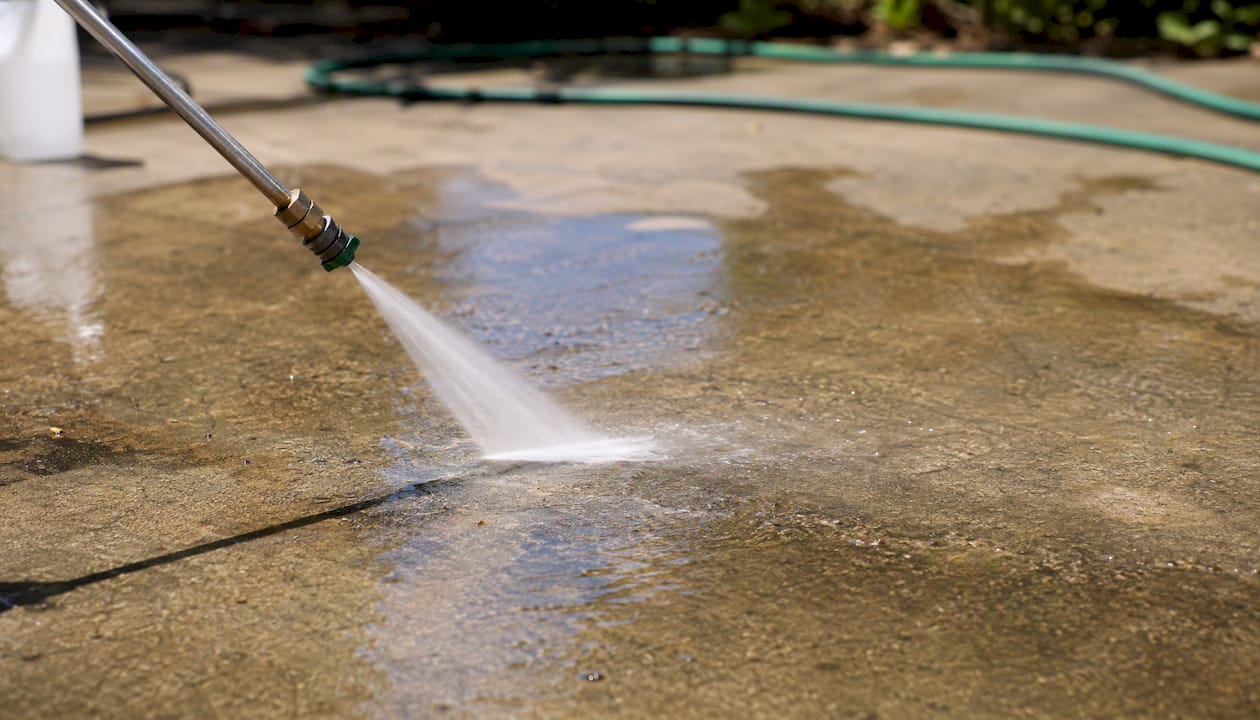
Use cold-pressure washing for routine dirt, dust, and heat-sensitive surfaces. Reach for hot water (power washing) if grease, oil, or baked-on grime is the real problem. The core trade-off is simple: cold units cost less and protect more surfaces; hot units clean faster on oily soils but cost more to buy, fuel, and maintain.
Quick decision checklist:
- Identify the contaminant first: mud and dirt versus grease and oil are different problems requiring different tools
- Check what you’re cleaning: wood, vinyl, painted surfaces, and roof shingles need cold pressure or soft washing; concrete, metal, and commercial pads can handle heat
- If grease or oil is the main issue, hot water or a professional service is the right call
- For organic growth (algae, mold, lichen), soft washing is safer and more effective than either hot or cold pressure alone
Key Takeaways
Cold water handles most residential cleaning jobs; hot water earns its cost only when grease, oil, or baked-on residue is the primary contaminant and the surface can tolerate the heat.
| Point | Details |
|---|---|
| Match method to contaminant | Cold water for mud and dirt; hot water for grease and oil; soft washing for biological growth on roofs and siding. |
| Heat cuts grease time sharply | Wfk institute testing found hot water at ~60°C reduced oil/grease cleaning time to roughly 25% of cold-water time. |
| Hot units cost more to own and run | Higher purchase price, fuel costs, and maintenance (burner, coils, filters) make hot units hard to justify for occasional homeowner use. |
| Soft washing beats pressure on organic growth | Chemical treatment kills organisms at the root; pressure alone leaves spores that regrow faster. |
| Whitediamondpressurewashing | Serves Citrus County with cold-pressure, soft washing, and commercial hot-water services matched to each surface and soil type. |
Table of Contents
- How does hot vs cold pressure washing actually differ?
- Why does heat help so much on grease and oil?
- Which surfaces call for hot, cold, or soft washing?
- What does hot vs cold pressure washing actually cost?
- How do hot-water pressure washers actually heat the water?
- Maintenance checklist for hot-water pressure washers
- When can heat or pressure damage surfaces or injure people?
- Is a steam cleaner the same as a hot-water pressure washer?
- How do pros decide between hot and cold on real jobs?
- How Whitediamondpressurewashing applies these principles in the field
- A note on how we approach every job
- Whitediamondpressurewashing handles the hard calls for you
- Sources
How does hot vs cold pressure washing actually differ?
The industry uses two terms that often get blurred: pressure washing (cold water, mechanical force) and power washing (adds heat to that mechanical force). Both rely on PSI (pounds per square inch) to shear dirt from surfaces and GPM (gallons per minute) to flush it away. The difference is what heat adds on top of that.
Consumer cold-water units typically run moderate pressure levels suitable for routine cleaning tasks. Professional cold units operate at higher pressures appropriate for demanding applications. Hot-water machines operate within similar pressure ranges but heat water to elevated temperatures before it leaves the nozzle. That temperature change isn’t cosmetic. Heat lowers grease viscosity, accelerates detergent reactions, and helps emulsify oils so they rinse cleanly rather than just getting pushed around.
The efficiency gap on oily surfaces is significant. Independent testing by the JFK Cleaning Technology Institute found that hot water at around 60°C reduced cleaning time on oil and grease on metal surfaces to roughly 25% of the time required by cold water under the same test conditions. That’s not a marginal improvement.
Core attribute comparison:
| Attribute | Cold-water pressure washing | Hot-water power washing |
|---|---|---|
| Best soil type | Mud, dust, loose dirt | Grease, oil, baked-on residue |
| Typical surface risk | Low on most surfaces | Higher on paint, wood, vinyl |
| Equipment cost | Lower (consumer to pro range) | Significantly higher |
| Operating cost | Water only | Water + fuel/electricity |
| Maintenance complexity | Low | High (burner, coils, filters) |
| Typical users | Homeowners, general maintenance | Commercial, food service, fleet |
As the Lowe’s pressure washer buying guide notes, cold-water units handle most everyday homeowner tasks well and carry lower purchase and operating costs than heated systems.
Why does heat help so much on grease and oil?
The chemistry is straightforward. Grease is a viscous substance, and heat makes it flow. At higher temperatures, oil molecules move faster and bond less tightly to surfaces, which means the mechanical force from the pressure washer can actually lift them rather than just smear them around.
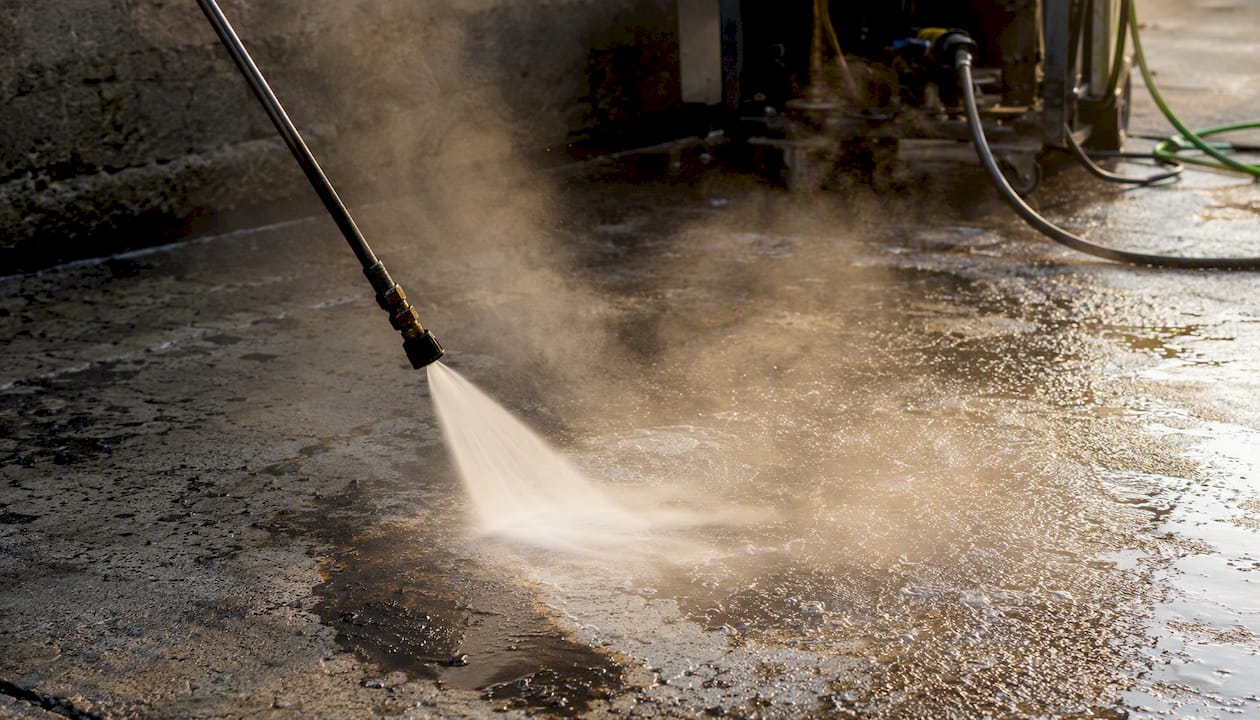
There’s also a reaction-rate effect. Detergent chemistry follows the Arrhenius principle: reaction speeds roughly double for every 10°C rise in temperature. Hot water doesn’t just melt grease; it makes your cleaning agents work dramatically faster. That’s why hot water often reduces the detergent needed while still producing a cleaner result than cold water with more soap.
Heat also affects biological contaminants. Sustained temperatures above 140°F can kill surface bacteria and some mold spores. But here’s where most people get the method wrong: pressure alone, hot or cold, doesn’t kill the organism at the root. It blasts the visible growth off the surface while leaving spores behind. Those spores regrow faster than the original colony because the surface is now clean and ready for them. Soft washing treats the organism chemically, at the root level, which is why results last longer on roofs and siding.
When heat helps and when it doesn’t:
- Grease and oil: heat is the right tool
- Baked-on food residue or carbon deposits: heat dramatically cuts time
- Algae, mold, and mildew on roofs or siding: soft washing outperforms both hot and cold pressure
- Loose dirt and mud: cold water does the job; heat adds cost with no meaningful benefit
Pro Tip: Before running hot water on any unfamiliar surface, test a small, hidden patch first. Watch for finish dulling, paint lift, or any warping within 30 seconds. If you see any of those, drop to cold pressure or switch to soft washing.
Which surfaces call for hot, cold, or soft washing?
The Lavor blog’s professional guidance puts it plainly: the type of soil drives the choice, not the surface alone. Cold water handles mud, soil, and general non-oily grime. Hot water earns its keep when grease, oil, or baked-on residue is the primary contaminant.
Concrete and asphalt driveways: Cold pressure washing handles routine dirt and staining well. If there are oil drips from a vehicle or cooking grease near a grill area, hot water cuts the job time significantly. Regular driveway cleaning with cold water is sufficient for most homeowners between deeper cleanings.
Restaurant exteriors and commercial grease pads: Hot water is the professional standard here. Grease buildup near dumpster areas, kitchen exhausts, and loading docks requires heat to emulsify properly. Cold water will move the surface layer but leave a greasy film that re-attracts dirt within days.
Vinyl siding, painted wood, and composite decking: Cold pressure washing at appropriate PSI (typically 1,200–1,500 PSI from a safe distance) is the right choice. Hot water increases the risk of warping, paint lift, and finish damage. For organic growth on these surfaces, soft washing is safer than either pressure method.
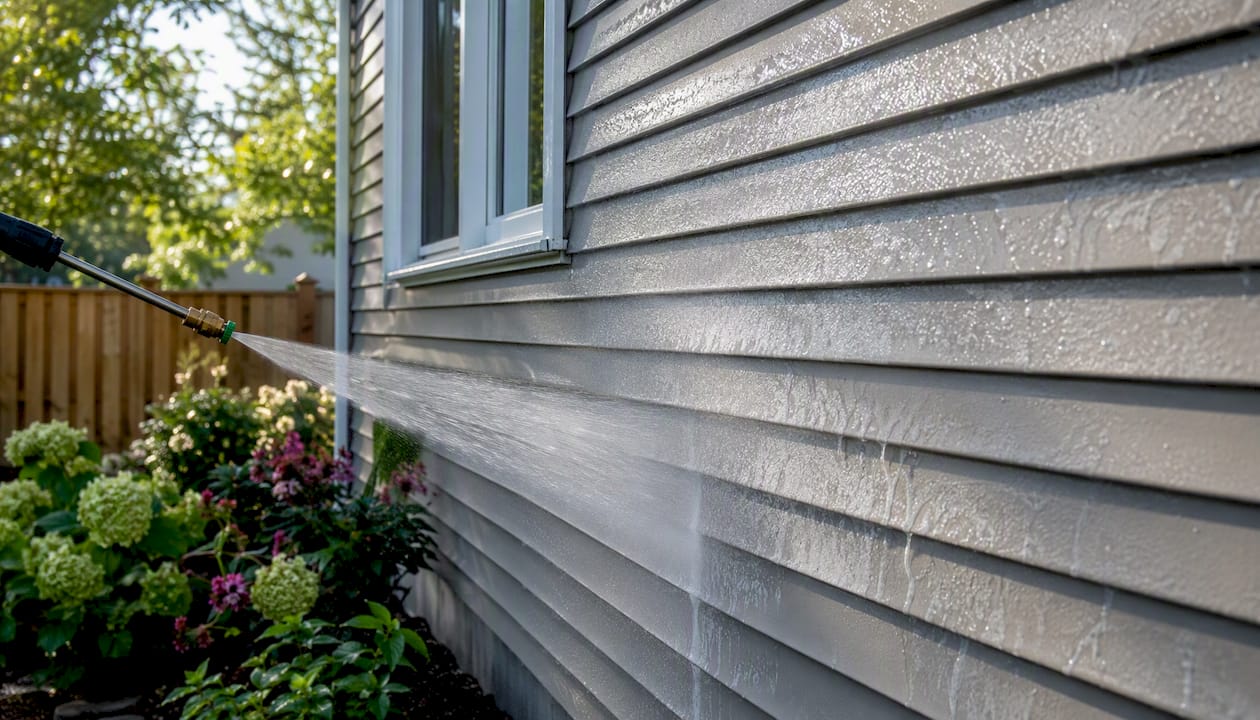
Roofs: High pressure of any temperature can dislodge granules from asphalt shingles and void manufacturer warranties. Soft washing is the correct method, full stop.
Vehicles and outdoor furniture: Cold pressure washing at low PSI handles these without risk of heat damage to seals, trim, or finishes.
When to hire a pro instead of renting:
- Large grease jobs on commercial surfaces (restaurant pads, fleet vehicles, garage bays)
- Multi-story homes where ladder work plus a pressure washer creates real fall risk
- Any roof cleaning (soft washing requires specific chemical knowledge and dilution ratios)
- Surfaces where material damage would be expensive to repair (stucco, older painted wood)
What does hot vs cold pressure washing actually cost?
Cold-water pressure washers for homeowners start around $100–$200 for entry-level electric units and climb to $500–$1,000 for capable gas-powered models. Professional cold-water units run higher. Hot-water pressure washers are almost always commercial-grade machines; entry-level heated units typically start well above $1,000, and professional diesel-fired rigs run several thousand dollars.
Rental is the practical middle ground for homeowners who need hot water occasionally. Equipment rental shops carry both cold and hot-water units by the day or half-day. Renting a hot-water unit for a one-time driveway degreasing job makes far more sense than buying one.
Operating cost differences:
- Cold units: water cost only; electric models add minimal electricity
- Hot units: diesel or propane fuel adds meaningful per-hour operating cost; electric-heated units are available but slower to heat
- Detergent use: hot water typically requires less detergent to achieve the same result, which partially offsets fuel cost
- Labor time: on greasy surfaces, hot water can cut cleaning time to a fraction of cold-water time, which matters when you’re paying by the hour
Maintenance cost differences:
- Cold units: pump oil changes, nozzle cleaning, winterizing; relatively low annual cost
- Hot units: burner servicing, coil flushing to prevent scale, oil and air filter changes, fuel system checks; meaningfully higher annual maintenance cost
The math favors hot water only when grease jobs are frequent enough that the time savings and detergent reduction offset the higher equipment, fuel, and maintenance costs. For a homeowner cleaning a driveway twice a year, cold water or a rented hot unit wins every time.
How do hot-water pressure washers actually heat the water?
Most hot-water pressure washers use a coil-and-burner system. Cold water enters the pump at normal pressure, then passes through a coiled heat exchanger wrapped around a combustion chamber. The burner fires, heats the coil, and water exits at the target temperature. The pump and heating system are separate components, which is why you can’t simply run hot tap water through a cold-water pressure washer.
Common fuel types:
- Diesel: the most common fuel for trailer-mounted and commercial units; high energy density, easy to store on-site
- Propane: popular for portable hot-water units; cleaner burning than diesel, slightly lower energy density
- Natural gas: used in fixed installations (car washes, commercial kitchens); not practical for portable equipment
- Electric heating elements: available on smaller units; slower heat-up, lower maximum temperature, but no combustion exhaust
Why cold-water units can’t handle hot water: The pump seals, O-rings, and internal materials in a cold-water machine are rated for ambient-temperature water. Running hot water through them degrades seals quickly, causes leaks, and can damage the pump head. Never run water above the manufacturer’s rated temperature through a cold-water unit.
What to check when reading rental or purchase specs:
- Maximum water temperature (°F) the unit is rated for
- PSI and GPM ratings (both matter; GPM drives rinsing power)
- Fuel type and tank capacity
- Burner efficiency rating if listed
- Whether the unit allows cold-only operation (many hot units can run cold when heat isn’t needed)
Maintenance checklist for hot-water pressure washers
Hot-water units have more failure points than cold units, and most failures are preventable with routine checks. Skipping maintenance on a burner system doesn’t just shorten equipment life; it can mean an on-site breakdown mid-job.
Regular maintenance items:
- Check and change engine/pump oil per manufacturer interval (typically every 50–100 hours of use)
- Inspect and replace air filters; a clogged filter starves the burner of combustion air
- Flush and drain heating coils after each use to prevent mineral scale buildup
- Inspect burner nozzle for carbon deposits; a fouled nozzle produces uneven heat and wastes fuel
- Check fuel lines and connections for leaks before each use
- Inspect high-pressure hoses for cracks, especially near fittings where heat stress concentrates
Common failure modes to watch for:
- Burner won’t ignite: usually a fouled nozzle, failed igniter, or fuel supply issue
- Temperature drops mid-job: scale buildup in the coil restricts flow and heat transfer
- Pump seal leaks: often caused by running water hotter than the pump’s rated temperature
- Pressure fluctuations: can indicate a partially blocked inlet filter or a failing unloader valve
Seasonal care: Before storing for winter, drain all water from the pump, coils, and hoses completely. Residual water in a coil that freezes will crack the coil. Use pump saver fluid in the pump head. Store fuel-powered units with either a full tank (to prevent condensation) or an empty tank, depending on storage duration.
Pro Tip: Run through a 60-second pre-job check every time: fuel level, exhaust clearance from walls or vegetation, pressure and temperature gauges reading correctly at startup, and a quick visual on all hose connections. Most on-site failures trace back to something that would have been obvious in that first minute.
When can heat or pressure damage surfaces or injure people?
Pressure washing injuries are more serious than most homeowners expect. A pressure washer operating at 2,000 PSI can cause injection injuries, where water penetrates skin and drives contaminants deep into tissue. These injuries look minor on the surface and are medical emergencies. Hot water at 160°F+ adds burn risk on top of that.
Heat- and pressure-sensitive materials:
- Asphalt shingles: high pressure strips granules; heat softens the asphalt binder
- Painted wood: hot water lifts paint and can raise wood grain; high pressure gouges soft wood
- Vinyl siding: heat can warp or distort panels, especially older vinyl
- Composite decking: most manufacturers specify maximum PSI limits; heat can delaminate the surface layer
- Window seals and caulking: hot water softens and degrades sealants, leading to water intrusion
- Older brick and mortar: high pressure erodes soft mortar joints; heat accelerates this
Personal safety checklist:
- Never point a pressure washer at another person or animal
- Wear closed-toe shoes and eye protection; pressure washing kicks up debris
- Keep both hands on the wand; the kickback from a high-PSI unit is real
- With hot-water units, let the system cool before disconnecting hoses or touching the coil housing
- Work from the ground when possible; a pressure washer wand on a ladder is a fall risk
When a surface is fragile, organic-stained, or both, low-pressure soft washing is the safer path. It uses biodegradable chemical solutions applied at low pressure, allowed to dwell, then rinsed gently. No heat, no mechanical risk to the surface, and longer-lasting results on biological growth.
Is a steam cleaner the same as a hot-water pressure washer?
No, and the distinction matters when you’re choosing equipment. A steam cleaner heats water to 212°F or above, producing steam at very low pressure (typically under 60 PSI). A hot-water pressure washer heats water to 140°F–200°F but delivers it at high pressure (1,500–4,000+ PSI). The mechanisms are different, and so are the best applications.
Steam cleaners are better for:
- Sanitizing tight spaces (grout lines, kitchen equipment, bathroom fixtures)
- Removing sticky residues where dwell time matters more than mechanical force
- Indoor surfaces where high-pressure water would cause damage or flooding
Hot-water pressure washers are better for:
- Large outdoor surfaces with grease or oil (driveways, commercial pads, fleet vehicles)
- Jobs where volume of water matters for rinsing (GPM drives the flush)
- Any task where you need both heat and mechanical shear simultaneously
Soft washing sits in a third category: low pressure (under 500 PSI), ambient-temperature water, and chemical solutions that do the actual cleaning work. It’s not a pressure method at all; it’s a chemical method with a gentle rinse. For roofs, delicate siding, and surfaces with biological growth, it’s the right method when neither steam nor pressure is appropriate.
How do pros decide between hot and cold on real jobs?
Professionals treat hot and cold water as different tools in the same truck, not competing options. The Seattle Pump equipment guide frames it well: power washing (hot) excels at heavy degreasing but is often overkill and more likely to damage sensitive residential materials. Cold pressure washing handles general exterior maintenance.
In practice, the professional decision tree looks like this:
- Restaurant exteriors and dumpster pads: Hot water with a surface cleaner attachment and a degreasing detergent. Cold water leaves a greasy film that recontaminates within days.
- Garage bays and fleet vehicles: Hot water for the undercarriage and wheel wells where road grease accumulates; cold water for painted body panels.
- Residential driveways with oil stains: Hot water or a professional hot-water rental; cold water with degreaser for light staining.
- House washing (siding, fascia, trim): Cold pressure washing or soft washing. Hot water adds risk with no meaningful benefit on dirt and oxidation.
- Roofs with algae or lichen: Soft washing only. Pros who use pressure on roofs are cutting corners at the homeowner’s expense.
Professionals also pair hot water with specific detergents formulated for high-temperature use. Some degreasers activate better at elevated temperatures; using a cold-formulated detergent in a hot-water machine wastes both the chemical and the heat.
How Whitediamondpressurewashing applies these principles in the field
Every job Whitediamondpressurewashing takes starts with the same question: what’s the contaminant, and what’s the surface? The answer to those two questions determines the method before a single drop of water hits the property.
The decision flow in practice:
- Identify the primary soil type (organic growth, grease/oil, or general dirt)
- Assess surface sensitivity (shingles, painted wood, and vinyl get soft washing or low-pressure cold; concrete and commercial surfaces can handle more)
- Run a small test area on unfamiliar surfaces before committing to a full pass
- Choose the method that removes the contaminant without stressing the material
For most residential properties in Citrus County, that means cold-pressure washing for driveways and walkways, soft washing for roofs and house exteriors, and escalating to professional hot-water equipment only when commercial-grade grease is present. Biodegradable detergents are standard on every job, both for environmental reasons and because they’re safer on landscaping and surrounding surfaces.
Equipment checks happen before every job: pressure and temperature gauges, hose integrity, nozzle condition, and fuel levels on heated units. An equipment failure mid-job on a customer’s property is avoidable, and Whitediamondpressurewashing treats it that way.
A note on how we approach every job
The decision between hot and cold isn’t about which method sounds more powerful. It’s about matching the tool to the problem. Grease calls for heat. Delicate surfaces call for restraint. Biological growth calls for chemistry, not force. Getting that match right is what protects the surface, produces lasting results, and keeps the job safe for everyone on-site.
Whitediamondpressurewashing handles the hard calls for you
Knowing the theory is useful. Having someone else show up with the right equipment, the right method, and the experience to protect your property is better. Whitediamondpressurewashing serves homeowners and commercial properties across Citrus County with house washing, driveway cleaning, soft washing for roofs and siding, and commercial grease cleanup, all using material-safe, insured, and professionally executed methods.

No guessing which PSI is safe for your siding. No renting equipment you’re not sure how to operate. No risk of stripping a roof or warping a deck panel. The crew arrives knowing which method fits your surface and your contaminant, and the job gets done right the first time. See the full list of services or get a free estimate today.
Sources
- Hot Water vs Cold Water Power Washing: Complete 2026 Guide
- CM – Turning up the heat on industrial pressure washers
- Hot vs Cold Water Pressure Washer (Seattle Pump)
- Soft wash vs pressure wash — when to use each and why most operators get it wrong (Powerline Industries)
- Hot Water or Cold Water Professional Pressure Washer: Which One to Choose? (Lavor blog)