

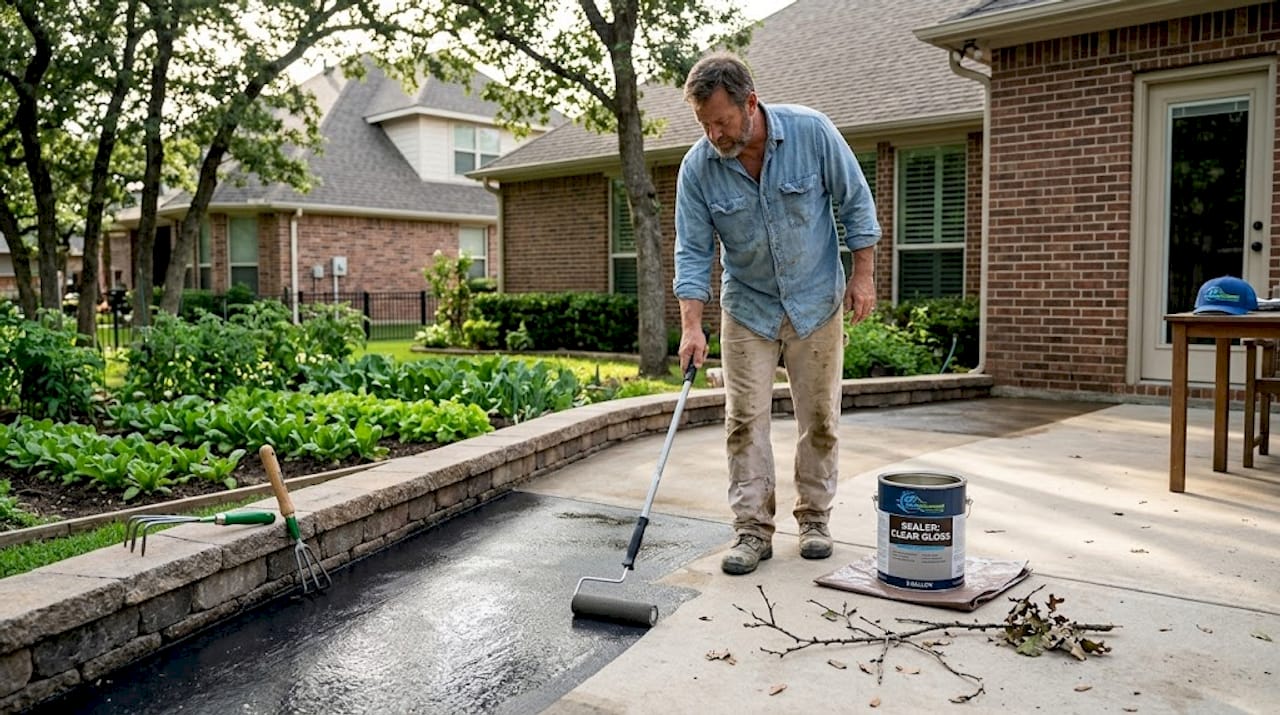
TL;DR:
- Concrete is porous by nature, making proper treatment essential to prevent moisture damage and deterioration. Applying the right sealers after proper surface preparation and curing significantly extends concrete’s lifespan, enhances appearance, and protects property value. Correct timing, moisture testing, and professional preparation are key to avoiding costly treatment failures and ensuring long-term surface performance.
Concrete looks tough. It holds up cars, supports foot traffic, and shrugs off rain for years without complaint. Most homeowners never think twice about it, which is exactly the problem. Understanding why treat concrete surfaces matters starts with one uncomfortable truth: concrete is porous, and that porosity makes it far more vulnerable than it looks. Without treatment, moisture works in, temperatures work it apart, and what seemed indestructible becomes cracked, stained, and expensive to fix. If you own a home, manage a property, or invest in real estate, what you do or don’t do to your concrete surfaces directly affects your wallet.
Table of Contents
- Key takeaways
- Why treat concrete surfaces at all
- The real benefits of treating concrete surfaces
- Risks when treatment goes wrong
- How and when to treat concrete surfaces
- Concrete treatment as a property investment
- My honest take on concrete treatment
- Get your concrete surfaces professionally ready
- FAQ
Key takeaways
| Point | Details |
|---|---|
| Concrete needs treatment | Untreated concrete absorbs moisture and deteriorates faster than most homeowners expect. |
| Timing determines success | Wait at least 28 days after pouring before sealing to avoid trapping curing moisture. |
| Surface prep is non-negotiable | Treatment quality depends on thorough cleaning and moisture testing before any product goes down. |
| Sealers are not all equal | Penetrating sealers last 3 to 5 years; film-forming types need reapplication every 1 to 3 years. |
| Treatment protects property value | Well-maintained concrete increases curb appeal and reduces costly repair cycles over time. |
Why treat concrete surfaces at all
Concrete feels like a permanent material. Pour it, let it cure, and it will last forever. That is the assumption. The reality is that concrete is porous by nature, and untreated slabs actively absorb water, oil, and chemical contaminants throughout their service life.
Concrete surface treatment is the practice of applying a product, process, or compound to a slab’s surface to change how it interacts with moisture, wear, and the environment. These treatments fall into a few broad categories, each with a distinct purpose:
- Penetrating sealers (silane, siloxane, silicate densifiers): These absorb into the concrete matrix and react chemically, reducing porosity without forming a surface film. Silane/siloxane sealers can last up to 10 years and allow the slab to breathe, which matters in humid or wet climates.
- Film-forming coatings (acrylics, epoxies, polyurethanes): These sit on top of the surface and create a physical barrier. They offer strong stain and abrasion resistance but trap vapor if applied incorrectly.
- Concrete densifiers: These react with calcium hydroxide in the slab to tighten the surface structure, reducing dusting and improving hardness.
- Curing compounds: Applied immediately after a pour, these retain moisture in the slab so cement hydration completes fully, which is the foundation for long-term strength.
Curing and sealing are not the same thing, and confusing them causes real problems. Curing is a concrete strength process that happens from within. Sealing is a surface protection process applied after curing is complete. Both are part of a complete concrete maintenance strategy, but they serve different roles at different stages of the slab’s life.
The real benefits of treating concrete surfaces
Treating concrete surfaces delivers measurable advantages that go well beyond appearance. The most critical benefit is moisture control. Sealing reduces water penetration, which directly cuts freeze-thaw damage. Water enters untreated concrete, freezes, expands, and physically cracks the slab from the inside. That cycle, repeated over years, is responsible for a significant portion of premature concrete failure in colder climates.
Beyond freeze-thaw protection, the treating concrete surfaces benefits include:
- Stain resistance: Oil, rust, chemicals, and organic material penetrate untreated concrete almost instantly. Sealers create a barrier that gives you time to clean spills before they become permanent.
- Reduced efflorescence: White mineral deposits on concrete surfaces come from moisture carrying salts to the surface. Proper sealing significantly reduces the moisture migration that causes this.
- Dust and abrasion control: Untreated concrete surfaces shed fine particles over time. Densifiers and penetrating sealers harden the matrix and virtually eliminate surface dusting.
- UV fade protection: Colored or decorative concrete loses its appearance faster when exposed to ultraviolet light. Topical sealers with UV inhibitors preserve color and surface finish.
- Extended service life: Treatments mitigate freeze-thaw cycles, salt damage, and corrosion, which directly extends the years a slab stays functional without major repair.
The cost comparison is straightforward. A quality sealer application costs a fraction of what slab repair or full replacement costs. Treating now is not an expense. It is protection against a much larger future expense.
Pro Tip: For driveways exposed to road salt and temperature swings, a penetrating silane-siloxane sealer outperforms acrylics because it lets moisture vapor escape while still blocking liquid water from entering.
Risks when treatment goes wrong
Understanding the advantages of treating concrete is only half the picture. Doing it wrong can cause damage that is worse than doing nothing at all. The number one mistake is timing.
Sealing too soon traps moisture that the cement needs to complete its hydration reaction. The result is whitening, bubbling, and a sealer that peels away within months. Most concrete needs at least 28 days of curing before any film-forming sealer should be applied. Some slabs, especially in humid regions, need longer.
Here is the sequence of events that leads most DIY concrete treatments to fail:
- Surface is sealed too early. Curing moisture has nowhere to go, so it pushes up against the coating from underneath.
- Vapor pressure builds. Moisture vapor from the slab creates physical pressure beneath low-permeability coatings, causing blistering and delamination.
- Coating fails visually. The homeowner sees peeling or cloudy patches and assumes the product was defective, when the real cause was slab moisture.
- Remediation costs money. Removing a failed coating requires mechanical grinding or chemical stripping, and the slab still needs to be resealed afterward.
- Maintenance cycle resets. Film-forming coatings require reapplication every 1 to 3 years, meaning poor timing on the first application creates an expensive correction cycle.
Surface preparation is the other place where treatments fail. Contaminated or poorly prepared concrete is the leading cause of sealer adhesion failure. Oil, dust, mold, and residue all prevent sealers from bonding correctly. No matter how good the product is, it will not perform on a dirty slab.
Pro Tip: Before applying any sealer, check that water beads on the surface. If water absorbs in under 5 minutes, the concrete is ready for a penetrating sealer. If it beads, the surface likely has old sealer or a contaminant layer that needs to be removed first.
How and when to treat concrete surfaces
Practical execution is where the real work happens. Knowing why to treat concrete is useful. Knowing how to treat concrete correctly is what saves money and prevents failure.
Choosing the right sealer type
| Sealer Type | Best Use | Reapplication Frequency | Vapor Permeable? |
|---|---|---|---|
| Penetrating silane/siloxane | Driveways, exterior walkways, patios | Every 3 to 5 years | Yes |
| Acrylic film-forming | Decorative concrete, indoor/outdoor | Every 1 to 3 years | No |
| Epoxy coating | Garage floors, commercial slabs | Every 3 to 5 years | No |
| Concrete densifier | High-traffic floors, industrial use | Once (permanent reaction) | Yes |
The location and use of the slab should drive your sealer choice. Exterior concrete exposed to rain, UV, and temperature changes does better with breathable penetrating products. Garage floors and interior slabs can support film-forming coatings with strong abrasion resistance.
Before applying anything, run a proper moisture check. ASTM F2170 and F1869 are the two widely adopted test methods for measuring moisture in slabs. Visual dryness is not enough. A slab can look completely dry while holding moisture vapor levels that will destroy a coating. Internal relative humidity testing catches what your eyes cannot.
The practical steps for treating concrete surfaces look like this:
- Wait at least 28 days after the pour for new concrete, longer in humid climates.
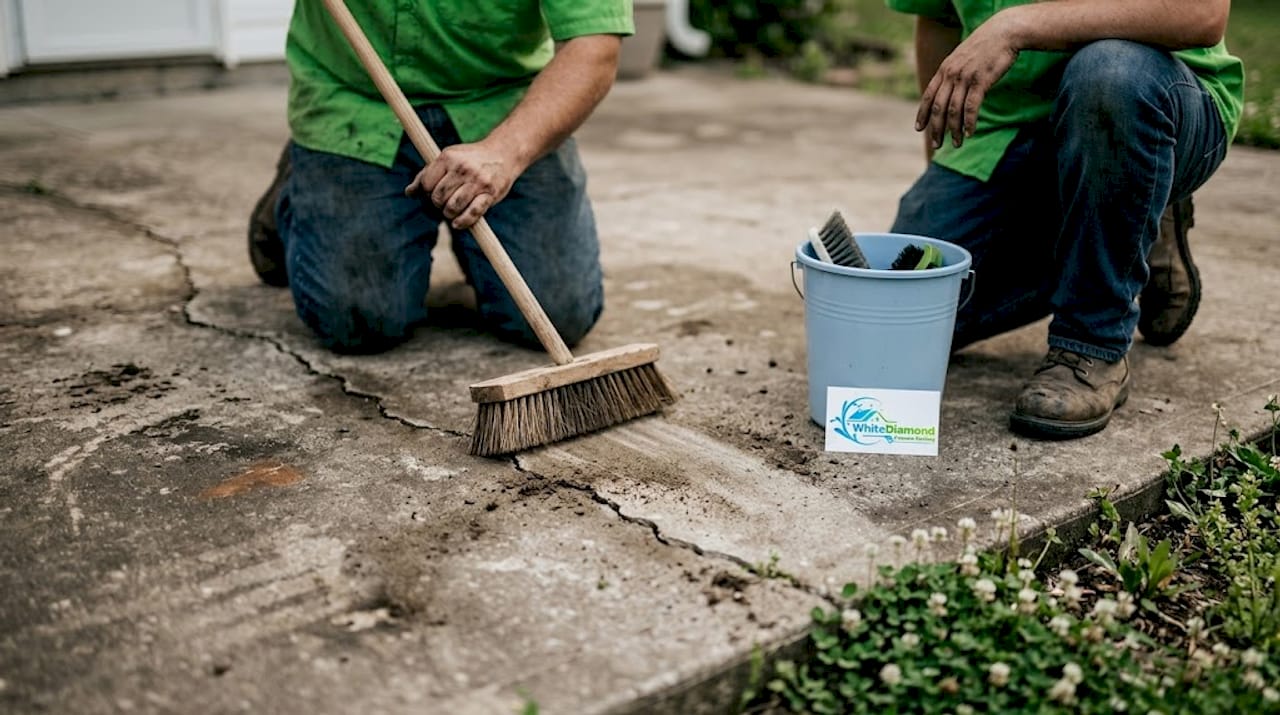
- Clean the surface thoroughly, removing oil, mold, dirt, and any existing sealer residue.
- Test for moisture using ASTM F2170 or F1869 methods before applying any low-permeability coating.
- Choose a sealer appropriate for the location, traffic load, and exposure conditions.
- Apply in optimal weather conditions, typically above 50°F and with no rain expected for 24 hours.
- Plan for reapplication on the sealer manufacturer’s recommended schedule.
For existing outdoor surfaces, professional pressure washing before sealing removes embedded grime and organic growth that would otherwise compromise adhesion.
Concrete treatment as a property investment
The importance of concrete preservation becomes very clear when you frame it as a financial decision. A cracked, stained driveway tells every visitor and potential buyer something negative about how a property is maintained. A clean, sealed surface communicates the opposite.

Properly treated concrete enhances curb appeal and reduces long-term repair costs, which directly supports property value. For real estate investors, this connection is especially meaningful. A surface that fails prematurely because it was never sealed is a slab that needs replacement years ahead of schedule, and full replacement typically costs several times more than a properly executed treatment program.
The most commonly treated surfaces in residential and investment properties include:
- Driveways: Heavy vehicle load and weather exposure make these the highest priority for sealing.
- Patios and pool decks: Constant moisture and UV exposure accelerate degradation on untreated surfaces.
- Walkways and sidewalks: Foot traffic, freeze-thaw cycles, and weed intrusion at joints all increase without treatment.
- Garage floors: Oil spills and tire marks cause permanent staining on untreated concrete within weeks of use.
Tenant satisfaction is another factor property managers often overlook. Well-maintained exterior surfaces reduce complaints, attract quality tenants, and support rental rate justification. The benefits of concrete treatment go beyond the surface. They reflect directly on how a property is perceived, managed, and valued.
My honest take on concrete treatment
What I’ve seen over years of working with exterior surfaces is that concrete treatment is one of the most consistently misunderstood parts of property maintenance. People treat wood decks, repaint siding, and reseal windows without question. But concrete? Most homeowners assume it just handles itself.
The invisible moisture problem is what concerns me most. I’ve watched coatings peel off slabs that looked bone dry to the eye, because no one ran a moisture test before sealing. Visual dryness is genuinely insufficient to judge slab readiness, and that mistake costs real money to fix.
My honest advice: penetrating sealers are far more forgiving for homeowners than film-forming products. They don’t require perfect surface conditions to perform reasonably well, and they won’t peel. If you’re managing multiple properties and can’t guarantee perfect timing and prep on every slab, a breathable penetrating sealer gives you better long-term results with less risk.
That said, I’ve also seen what proper professional prep and treatment does for a property. The difference between a freshly cleaned, correctly sealed driveway and an untreated one five years later is not subtle. It’s the kind of thing that shows up in sale prices and rental inquiries. Concrete treatment is not glamorous maintenance. It’s just the kind that actually works.
— Bobby
Get your concrete surfaces professionally ready
Before any sealer or coating can do its job, the surface underneath has to be clean, clear of contaminants, and structurally sound. That is where Whitediamondpressurewashing comes in. Serving homeowners and property managers across Citrus County and surrounding regions, Whitediamondpressurewashing provides professional pressure washing services that prepare driveways, walkways, patios, and other concrete surfaces for treatment and sealing. Thorough surface cleaning removes oil, mold, embedded grime, and old sealer residue that would otherwise cause treatment failure.
If you’re ready to protect your concrete investment and maximize the lifespan of your surfaces, book your estimate with Whitediamondpressurewashing today. You can also explore the full driveway sealing guide to understand exactly what your concrete needs before the first product goes down.
FAQ
Why treat concrete surfaces if they look fine?
Concrete can appear undamaged while actively absorbing moisture and contaminants that cause long-term deterioration. Treatment stops that process before visible damage appears, which is always less expensive than repairing cracks or replacing slabs.
How long should you wait before sealing new concrete?
Most concrete needs at least 28 days of curing before a film-forming sealer is applied. Sealing too early traps curing moisture and causes whitening, bubbling, and premature sealer failure.
What is the difference between penetrating and film-forming sealers?
Penetrating sealers absorb into the concrete matrix and allow vapor to escape, lasting 3 to 5 years. Film-forming sealers create a topical barrier with stronger stain resistance but require reapplication every 1 to 3 years and can fail if moisture vapor builds beneath them.
Is moisture testing really necessary before sealing?
Yes. Visual dryness alone does not confirm that a slab is ready for coating. Internal moisture vapor can persist for years and will destroy low-permeability coatings even on slabs that look completely dry.
Does treated concrete actually increase property value?
Well-maintained concrete surfaces improve curb appeal and reduce repair cycles, both of which support property value. For investors and property managers, reduced cyclical repair costs and improved visual appeal directly contribute to better returns over the long term.