

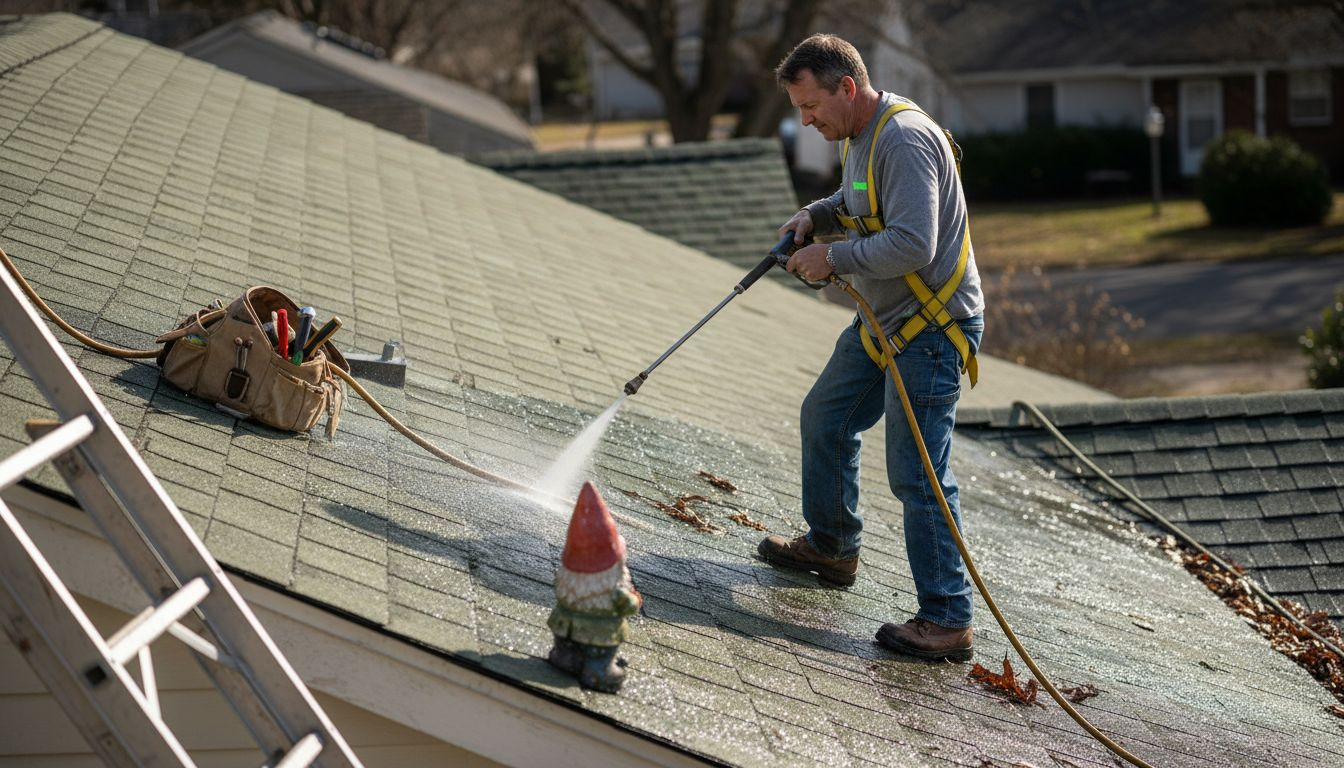
Starting a roof washing project at home comes with real risks. Slippery surfaces, hidden damage, and unsafe equipment can turn a simple cleaning job into a dangerous situation. If you want to protect yourself, your property, and your landscaping, you need the right plan before you begin.
This guide gives you clear steps backed by proven safety advice from sources like OSHA and the University of New Mexico. You’ll learn how to assess roof condition, pick proper safety gear, and avoid the most common mistakes that can lead to accidents. Get ready to discover practical solutions that will help you wash your roof safely and effectively.
Table of Contents
- Assess Roof Condition Before Starting
- Choose The Right Safety Gear
- Use Stable Ladders And Support
- Select Safe, Low-Pressure Cleaning Methods
- Protect Nearby Landscaping And Fixtures
- Be Aware Of Electricity And Power Lines
- Consider Professional Roof Washing Services
Quick Summary
| Takeaway | Explanation |
|---|---|
| 1. Inspect Roof Condition Thoroughly | Assess for damage or hazards before washing to ensure safety during maintenance. |
| 2. Always Use Proper Safety Gear | Invest in high-quality personal protective equipment to minimize injury risks while working on the roof. |
| 3. Ensure Ladder Stability | Select the right ladder, check for damage, and position it safely to prevent accidents during roof access. |
| 4. Choose Low-Pressure Cleaning Methods | Use soft washing techniques to clean without damaging roofs, preserving structural integrity and extending lifespan. |
| 5. Consider Hiring Professionals | Professional services provide expertise and equipment to ensure safe, effective roof cleaning while reducing personal risk. |
1. Assess Roof Condition Before Starting
Before you climb onto your roof or begin any washing process, thoroughly evaluating the surface condition is absolutely critical for your safety. Your roof is more than just a protective layer – it’s a complex structural system that requires careful inspection before any maintenance work.
The Occupational Safety and Health Administration emphasizes the importance of comprehensive roof condition assessment to prevent potential accidents and injuries. This preliminary evaluation helps you identify potential hazards that could compromise your safety during cleaning.
Key aspects to examine during your roof condition assessment include:
- Structural integrity of roofing materials
- Presence of loose or damaged shingles
- Signs of water damage or rot
- Stability of underlying roof decking
- Potential weak spots or areas of potential collapse
When inspecting, look for visual indicators that might suggest compromised roof conditions. These can include:
- Sagging or uneven surfaces
- Visible cracks or breaks in roofing materials
- Moss or algae growth indicating moisture retention
- Granule loss on asphalt shingles
- Warped or curling shingle edges
A thorough initial inspection can prevent dangerous situations and expensive repairs down the line.
If you notice any significant issues during your assessment, it’s crucial to consult a professional before proceeding with roof washing. Some damage might require repair or specialized treatment that goes beyond standard cleaning techniques.
Pro tip: Use binoculars for an initial ground-level assessment to identify potential problem areas without risking personal safety.
2. Choose the Right Safety Gear
Safety gear isn’t just an optional extra when washing your roof – it’s an absolute necessity that protects you from potential injuries and hazardous conditions. The right protective equipment can mean the difference between a successful cleaning project and a dangerous accident.
According to OSHA’s comprehensive safety guidelines, selecting appropriate personal protective equipment (PPE) is critical for minimizing exposure to potential roof washing hazards.
Essential safety gear for roof washing includes:
- Slip-resistant footwear with excellent traction
- High-quality safety harness and fall protection
- Protective eyewear with side shields
- Chemical-resistant waterproof gloves
- Non-conductive hard hat
- Respiratory protection mask
Key considerations when selecting safety gear:
- Ensure proper fit for maximum protection
- Check equipment for any signs of wear or damage
- Match gear to specific washing conditions
- Replace equipment that shows significant wear
- Understand how to use each piece of equipment correctly
Your safety gear is your first line of defense against potential roof washing risks.
When choosing safety equipment, prioritize quality and comprehensive protection over cost. Cheaper alternatives might save money initially but could compromise your personal safety during roof maintenance.
Pro tip: Invest in safety gear from reputable manufacturers and have a professional demonstrate proper usage before attempting roof washing.
3. Use Stable Ladders and Support
Ladder safety is a critical aspect of roof washing that can mean the difference between a successful cleaning project and a potentially life-threatening accident. Understanding how to properly select, position, and use ladders is essential for preventing falls and ensuring your personal safety.
OSHA’s stepladder safety guidelines provide comprehensive recommendations for safe ladder use during elevated tasks like roof washing.
Key considerations for ladder stability include:
- Selecting the right ladder for your specific task
- Checking load capacity and weight ratings
- Ensuring level and stable ground for placement
- Maintaining three points of contact while climbing
- Avoiding overreaching or leaning while on the ladder
Ladder positioning and setup steps:
- Choose a ladder rated for your weight plus equipment
- Inspect ladder for damage before use
- Place ladder on firm ground
- Angle extension ladders at 75-degree slope (4:1 ratio)
- Secure ladder base if possible
- Use ladder stabilizers for additional support
Proper ladder setup is your first defense against potential roof washing accidents.
Remember that different roof types and surfaces might require specialized ladder supports or additional safety equipment. Always assess your specific environment and adjust your approach accordingly.
Pro tip: Invest in ladder accessories like levelers and standoff stabilizers to improve safety and reduce risk during roof washing projects.
4. Select Safe, Low-Pressure Cleaning Methods
Roof washing isn’t about brute force – it’s about using smart techniques that clean effectively without causing damage to your roofing materials. Choosing low-pressure cleaning methods protects your roof’s integrity while ensuring thorough dirt and grime removal.
The soft washing process offers safer cleaning techniques that minimize potential surface damage and protect your home’s exterior.
Key advantages of low-pressure washing include:
- Prevents surface material degradation
- Minimizes potential water penetration
- Reduces risk of structural damage
- Protects roofing warranties
- Eliminates dirt without aggressive techniques
Important considerations when selecting cleaning methods:
- Assess your specific roofing material
- Choose cleaning solutions appropriate for surface type
- Use specialized low-pressure equipment
- Adjust water pressure based on surface sensitivity
- Work methodically to ensure complete coverage
Low-pressure techniques balance effective cleaning with material preservation.
Different roofing materials like asphalt shingles metal roofing and tile require unique approaches. Understanding your specific roof composition helps you select the most appropriate cleaning method that won’t compromise its structural integrity.
Pro tip: Always test cleaning solutions on a small inconspicuous area first to ensure compatibility with your specific roofing material.
5. Protect Nearby Landscaping and Fixtures
Roof washing isn’t just about cleaning your roof – it’s also about protecting everything around your home from potential damage. Your beautiful garden and delicate fixtures require careful consideration during the cleaning process.
Best practices for landscape protection involve strategic planning and careful execution to prevent unintended harm.
Critical steps to safeguard your landscaping include:
- Cover sensitive plants with protective tarps
- Wet ground before washing to reduce chemical absorption
- Create physical barriers around garden areas
- Redirect water runoff away from delicate vegetation
- Use biodegradable cleaning solutions
Precautions for protecting outdoor fixtures:
- Move potted plants and garden decorations
- Cover electrical outlets and exterior lighting
- Seal outdoor furniture with waterproof covers
- Close windows and seal potential entry points
- Protect wooden structures with temporary coverings
Careful preparation prevents costly landscape and fixture damage.
Chemical runoff can be particularly destructive to plants and soil. Understanding how cleaning solutions interact with your specific landscaping helps minimize potential environmental impact.
Pro tip: Create a detailed landscape protection map before starting your roof washing project to ensure no plant or fixture is accidentally damaged.
6. Be Aware of Electricity and Power Lines
Roof washing near electrical infrastructure requires extreme caution and heightened awareness. One wrong move could transform a routine cleaning project into a potentially fatal electrical incident.
OSHA electrical safety guidelines emphasize the critical importance of understanding and avoiding electrical hazards during exterior home maintenance.
Key electrical safety considerations include:
- Maintain safe distance from power lines
- Identify overhead electrical infrastructure
- Use non-conductive equipment
- Check ladder positioning near electrical sources
- Avoid metal tools near power lines
Step-by-step electrical safety precautions:
- Survey roof area for power line proximity
- Mark safe working zones
- Use fiberglass or wooden ladders
- Wear rubber-soled shoes
- Keep electrical equipment away from wet areas
Electrical awareness is your first defense against potentially life-threatening accidents.
Understanding electrical risks isn’t just about avoiding direct contact. Conductive materials like metal ladders and water can create unexpected electrical pathways that dramatically increase danger during roof washing.
Pro tip: If power lines are nearby call your local utility company to discuss safety protocols before starting any roof washing project.
7. Consider Professional Roof Washing Services
While DIY roof washing might seem cost-effective, professional services bring expertise and safety that most homeowners cannot replicate. Understanding when to call in professionals can save you from potential costly mistakes and personal injury risks.
Professional roof cleaning advantages extend far beyond simple surface cleaning.
Key benefits of professional roof washing services include:
- Specialized equipment and techniques
- Comprehensive safety protocol implementation
- Detailed roof condition assessment
- Proper chemical solution selection
- Warranty and damage protection
- Long-term roof maintenance insights
Reasons to prioritize professional services:
- Reduce personal safety risks
- Prevent potential roof damage
- Access professional-grade cleaning solutions
- Receive expert maintenance recommendations
- Save time and physical effort
Professional services transform roof washing from a risky task to a strategic maintenance investment.
Professional roof washers understand nuanced cleaning requirements for different roofing materials. Their expertise helps prevent unintentional damage while ensuring thorough cleaning and preservation of your roof’s structural integrity.
Pro tip: Request detailed service documentation and before-and-after photographs to understand the comprehensive value of professional roof washing services.
Below is a comprehensive table summarizing safety procedures and considerations for roof washing as discussed in the detailed article.
| Aspect | Details and Actions | Benefits |
|---|---|---|
| Assessing Roof Condition | Inspect the roof for structural integrity, damage, and weak spots before starting the washing process by observing visual signs and ensuring safety. | Reduces accident risks and identifies repair needs before maintenance. |
| Choosing Safety Gear | Use proper personal protective equipment such as slip-resistant shoes, harnesses, gloves, and masks, ensuring all safety gear is in good condition. | Enhances safety and mitigates hazards during roof maintenance. |
| Ladder Stability | Select a suitable ladder, inspect for damage, position it on stable ground, and secure it to avoid accidents. | Prevents falls and enhances operational safety. |
| Low-Pressure Cleaning | Opt for soft washing methods with appropriate solutions and equipment tailored to the roof material. | Ensures effective cleaning while protecting the roof’s structural integrity. |
| Landscape Protection | Safeguard nearby plants and fixtures using tarps, barriers, and biodegradable cleaning solutions to minimize environmental impact. | Preserves external elements surrounding the roof area. |
| Electrical Awareness | Maintain safe distances from power lines and use non-conductive tools while taking precautions against electrical risks. | Reduces the danger of electrical accidents during maintenance procedures. |
| Considering Professionals | Hire qualified professionals for roof washing if personal safety or effective cleaning cannot be assured. | Provides expert care, minimizes risks, and extends roof lifespan. |
Ensure Your Roof Washing Is Safe and Effective with White Diamond Pressure Washing
Washing your roof involves important safety steps like assessing roof conditions, choosing the right safety gear, and using low-pressure cleaning methods to protect your home. If you want to avoid risks such as roof damage, electrical hazards, or injury, trusting professionals who understand these critical challenges is the best choice. At White Diamond Pressure Washing, we specialize in expert roof washing that prioritizes safety, structural integrity, and environmentally friendly cleaning.

Protect your property and peace of mind by contacting White Diamond Pressure Washing today. Benefit from industry-approved soft washing techniques, experienced technicians, and thorough care for your landscaping and fixtures. Don’t wait until minor problems become costly repairs. Get a Free Estimate and schedule your safe roof cleaning now.
Frequently Asked Questions
How can I assess my roof’s condition before washing it?
To assess your roof’s condition, look for signs like sagging surfaces, cracked shingles, or moss growth. Conduct a thorough visual inspection from the ground using binoculars and document any potential issues before starting your washing project.
What safety gear do I need for roof washing?
You need essential safety gear such as slip-resistant footwear, a safety harness, protective eyewear, and chemical-resistant gloves. Make sure all equipment is in good condition and fits properly to maximize your protection during the roof washing process.
How should I safely set up my ladder for roof washing?
To safely set up your ladder, ensure it is on level ground, inspect it for any damage, and position it at a 75-degree angle. Maintain three points of contact while climbing, and avoid overreaching to keep your balance and prevent falls.
What are effective low-pressure cleaning methods for roof washing?
Effective low-pressure cleaning methods involve using soft washing techniques to avoid damaging your roofing materials. Adapt your water pressure based on the type of roof you have, applying cleaning solutions gently to ensure thorough dirt removal without compromising integrity.
How can I protect my landscaping during roof washing?
Protect your landscaping by covering sensitive plants with tarps and wetting the ground to lessen chemical absorption. Create barriers around garden areas to redirect runoff and prevent damage to your plants and soil.
When should I consider hiring a professional for roof washing?
Consider hiring a professional if your roof has significant damage or if you are uncertain about the safety measures needed. Professionals have specialized equipment and expertise, reducing risks and ensuring thorough maintenance results.
Recommended
- Prevent Damage: How Effective Is Roof Cleaning for Shingles? – white-diamond-pressure
- 7 Practical Examples of Soft Washing for Homeowners – white-diamond-pressure
- Benefits of Exterior Cleaning for Homeowners – white-diamond-pressure
- Industry Standards for Pressure Washing Safety – white-diamond-pressure
2 thoughts on “7 Essential Roof Washing Safety Tips for Homeowners”