

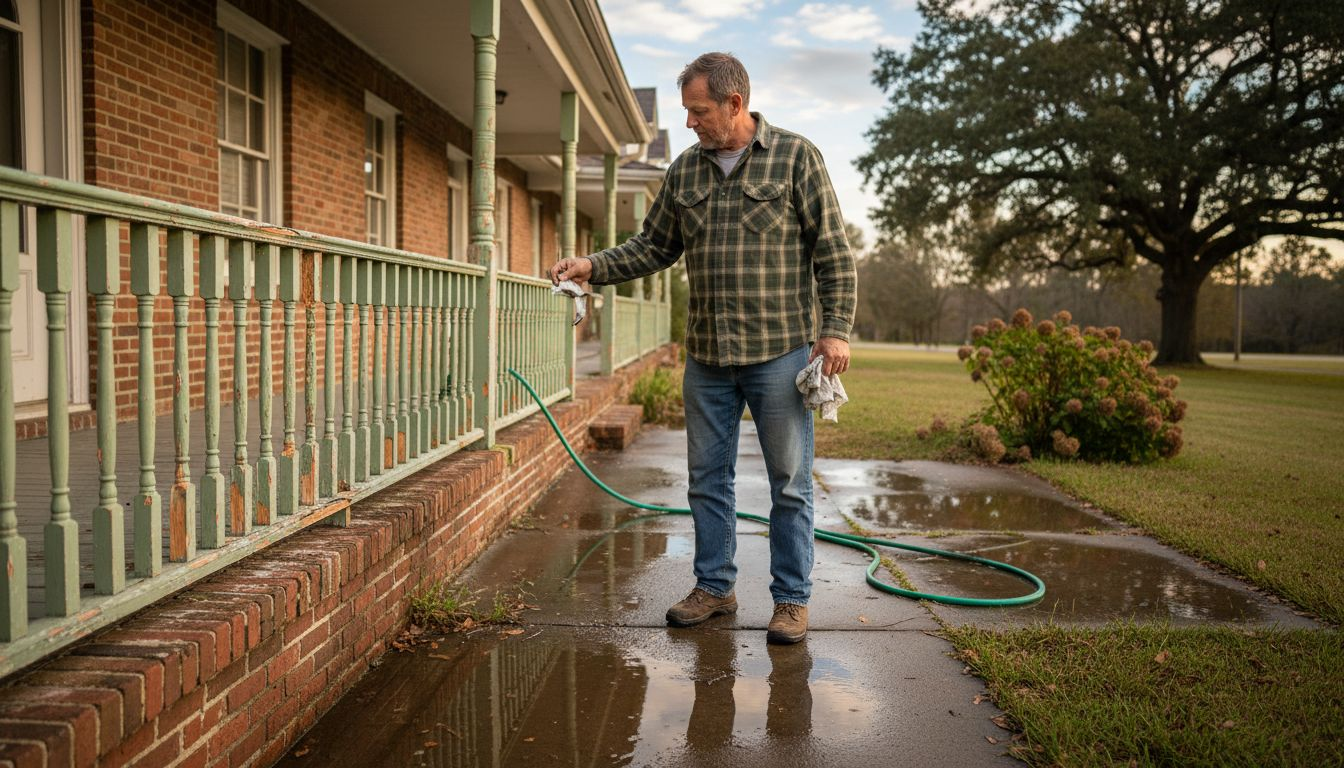
Pressure washing may seem like a quick fix for tough stains on your Citrus County home’s exterior, but using machines that reach up to 30,000 psi can swiftly turn cleaning into costly damage. Preserving your property’s value depends on understanding how these powerful methods affect materials like wood, paint, and concrete. This guide helps you identify the best approaches for safe exterior cleaning, highlighting proper pressure adjustment and safer alternatives to keep your home protected for years to come.
Table of Contents
- Understanding High-Pressure Washing Methods
- How High Pressure Damages Home Surfaces
- Hidden Safety Hazards For Homeowners
- Long-Term Effects On Property Value
- Safer Alternatives For Exterior Cleaning
Key Takeaways
| Point | Details |
|---|---|
| Understanding Pressure Levels | Different surfaces require specific pressure ranges for effective cleaning without causing damage. |
| Environmental Considerations | Be mindful of the environmental impact and avoid contaminating runoff during pressure washing. |
| Potential Damage Risks | High-pressure washing can lead to paint stripping, surface erosion, and structural weaknesses if not done correctly. |
| Safer Cleaning Alternatives | Consider soft washing and eco-friendly cleaners as gentler options to preserve surfaces and minimize risks. |
Understanding High-Pressure Washing Methods
Pressure washing involves using high-powered water streams to clean exterior surfaces, utilizing machines that generate substantial water pressure. Pressure washing techniques can range from 750 to 30,000 pounds per square inch (psi), making them potent cleaning tools for residential and commercial applications.
Different pressure washing methods target specific cleaning scenarios:
- Cold Water Washers: Ideal for standard residential cleaning tasks like siding and wooden decks
- Hot Water Washers: Best for removing greasy or oily surfaces
- Surface Cleaners: Specialized tools enabling uniform cleaning of flat areas
When considering pressure washing, understanding the environmental implications is crucial. Environmental management practices emphasize capturing contaminated runoff and preventing water pollution during cleaning processes.
Proper technique requires careful pressure adjustment based on surface material. Soft surfaces like wood require lower pressures, while concrete can withstand higher intensities. Incorrect pressure application can cause significant damage, stripping paint, etching surfaces, or creating structural weaknesses.
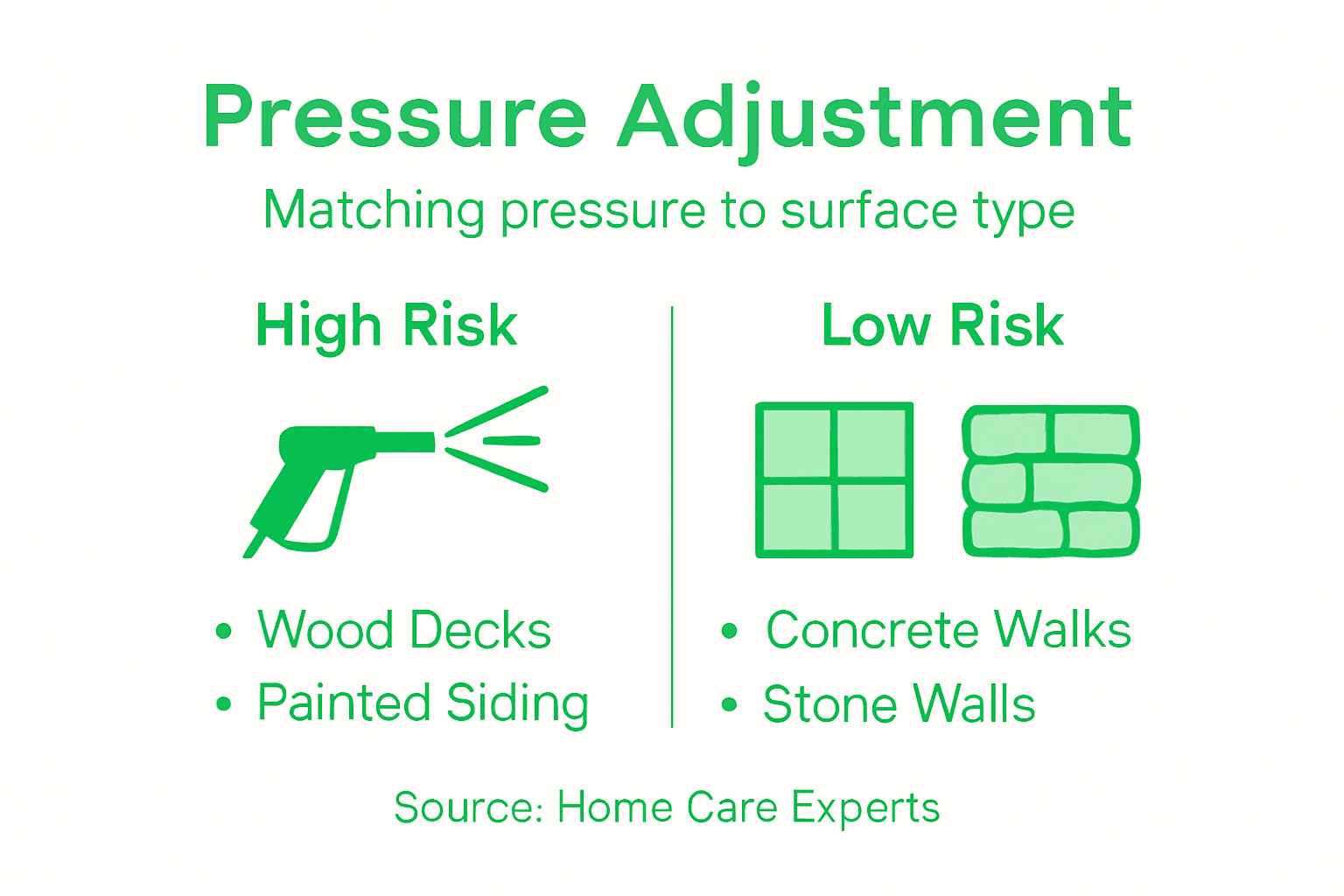
Here’s how common exterior surfaces differ in their tolerance to pressure washing:
| Surface Type | Ideal Pressure Range | Risk of Damage |
|---|---|---|
| Wooden Decks | 500–1,200 psi | High risk of splintering |
| Concrete Driveway | 2,500–3,000 psi | Low risk, may cause pitting |
| Vinyl Siding | 1,300–1,600 psi | Moderate, risk of warping |
| Painted Surfaces | 800–1,500 psi | Very high, paint stripping |
Pro Tip: Always test pressure washing techniques on a small, inconspicuous area first to determine the appropriate water pressure and technique for your specific surface.
How High Pressure Damages Home Surfaces
High-pressure washing might seem like an efficient cleaning method, but it can cause devastating damage to various home surfaces. High-pressure water jet injuries reveal the potential for significant underlying damage that extends far beyond superficial marks.
The potential risks of high-pressure washing include:
- Paint Stripping: Intense water streams can remove protective paint layers
- Wood Surface Erosion: Soft wood materials can be permanently scarred or splintered
- Concrete Pitting: Hard surfaces can develop microscopic craters and damage
- Siding Destruction: Vinyl and aluminum siding can experience irreversible wear
Underlying Tissue Damage occurs not just to human skin but also to home surfaces. The shear force of high-pressure water can penetrate multiple layers, causing structural weaknesses that aren’t immediately visible. Pressure washer safety concerns highlight how improper technique can lead to significant material degradation.
Different home surfaces have varying pressure tolerances. Delicate materials like wooden decks, painted surfaces, and older masonry require extremely careful approach. Excessive water pressure can strip protective coatings, create permanent etching, or cause structural micro-fractures that compromise long-term integrity.
Pro Tip: Always consult professional pressure washing experts who understand the specific pressure requirements for different surface materials to prevent unintended damage.
Hidden Safety Hazards for Homeowners
Homeowners often overlook potential risks lurking within their living spaces. Common home hazards represent significant threats that can compromise personal safety and property integrity.
Key hidden safety risks include:
- Electrical Dangers: Faulty wiring and overloaded circuits
- Fall Hazards: Unstable stairs, loose carpets, cluttered walkways
- Environmental Toxins: Mold, lead, and carbon monoxide exposure
- Pressure Washing Risks: Potential for surface damage and personal injury
Injury Prevention requires proactive identification and mitigation of these risks. Home safety recommendations emphasize the importance of regular home safety audits and implementing protective measures to minimize potential accidents.
Pressure washing introduces unique safety challenges beyond traditional home maintenance risks. Improper technique can lead to personal injuries, property damage, and unexpected structural vulnerabilities. Homeowners must understand the complex interplay between cleaning methods and potential safety consequences.
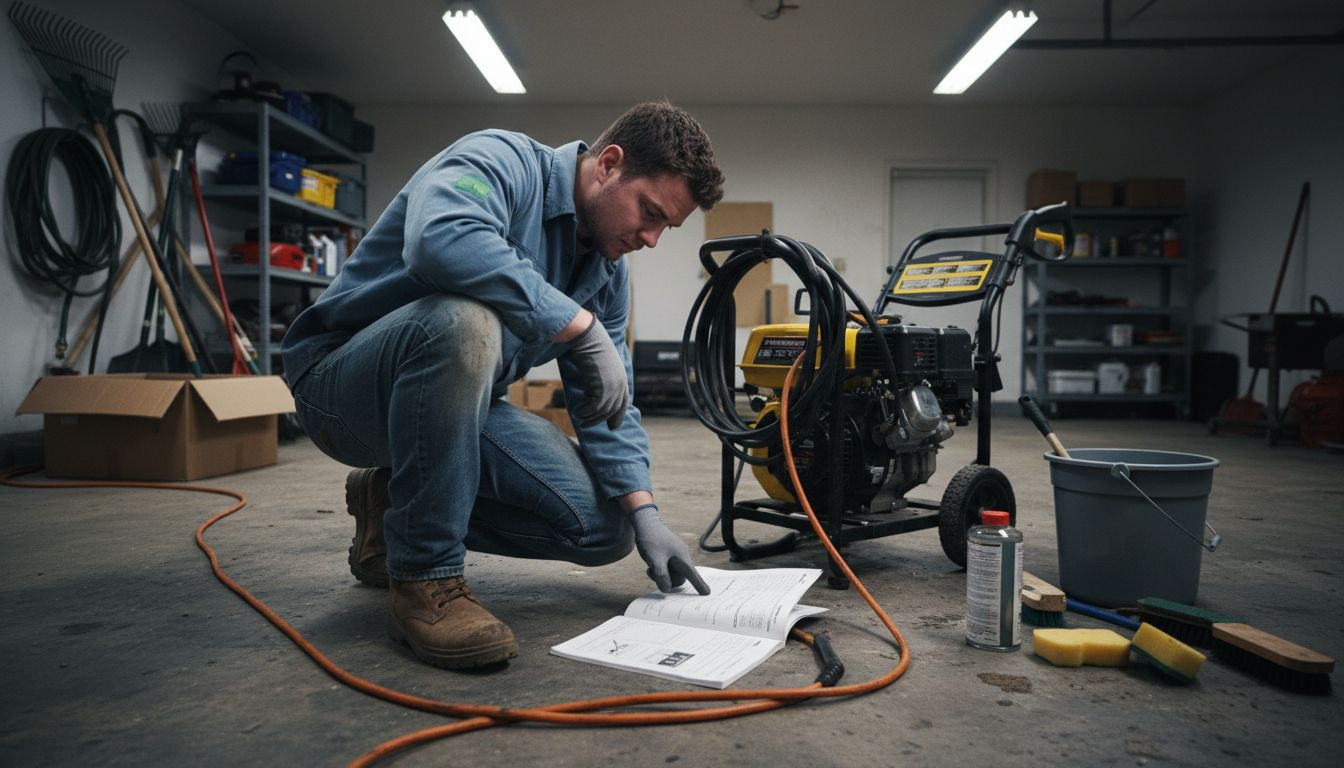
Pro Tip: Conduct a comprehensive home safety audit every six months, systematically checking electrical systems, structural integrity, and potential hazards to prevent unexpected accidents.
Long-Term Effects on Property Value
Homeowners rarely consider how maintenance choices can dramatically impact their property’s market value. Property damage mechanisms reveal how seemingly minor maintenance errors can significantly decrease home marketability.
Key factors affecting property value include:
- Surface Degradation: Permanent damage from incorrect cleaning techniques
- Structural Integrity: Weakening of building materials through improper maintenance
- Cosmetic Appearance: Visible wear and surface deterioration
- Buyer Perception: Reduced attractiveness to potential purchasers
Economic Impact extends beyond immediate repair costs. Environmental property devaluation demonstrates how cumulative damage can substantially reduce home investment potential. Irreversible damage from high-pressure washing can create long-lasting economic consequences that far exceed the initial cleaning expense.
Pressure washing damage compounds over time, creating a cascading effect of depreciation. Microscopic cracks, surface erosion, and material weakening gradually reduce a home’s structural and aesthetic value. Potential buyers become increasingly cautious when identifying signs of improper maintenance, directly translating to lower market valuations.
Pro Tip: Maintain detailed documentation of all home maintenance activities, including professional cleaning services, to demonstrate responsible property care and protect your home’s long-term value.
Safer Alternatives for Exterior Cleaning
Homeowners seeking effective cleaning methods have multiple gentle alternatives to high-pressure washing that protect surfaces and maintain property integrity. Routine cleaning techniques emphasize using soap, water, and careful scrubbing to remove dirt without causing damage.
Safer exterior cleaning methods include:
- Soft Washing: Low-pressure technique using specialized cleaning solutions
- Hand Scrubbing: Manual cleaning with appropriate brushes and mild detergents
- Eco-Friendly Cleaners: Environmentally safe products with minimal surface impact
- Professional Soft Wash Services: Expert cleaning using controlled techniques
Chemical Selection plays a crucial role in effective and safe cleaning. Safer cleaning practices recommend using EPA Safer Choice certified products that minimize environmental and surface damage. These alternatives include gentle solutions like ethanol, hydrogen peroxide, and mild acids that effectively clean without causing structural harm.
The key to successful exterior cleaning lies in understanding each surface’s unique characteristics and selecting appropriate cleaning methods. Soft washing techniques allow for thorough cleaning while preserving the integrity of siding, decks, roofs, and other exterior surfaces. Professional services can provide tailored solutions that protect your home’s appearance and structural value.
Compare safer cleaning alternatives to high-pressure washing:
| Method | Pressure Level | Environmental Impact | Surface Protection |
|---|---|---|---|
| Soft Washing | Low | Minimal runoff | Preserves coatings |
| Professional Soft Wash | Low to moderate | Expert chemical choices | Customized techniques |
| Hand Scrubbing | None | No water pollution | Manual control |
| Eco-Friendly Cleaners | None | Biodegradable formulas | Gentle on materials |
Pro Tip: Always test cleaning solutions on a small, inconspicuous area first to ensure compatibility and prevent potential surface damage.
Protect Your Home From High-Pressure Washing Damage with Expert Soft Washing Solutions
High-pressure washing can cause lasting harm to your home’s surfaces including paint stripping, wood erosion, and concrete pitting. If you want to avoid costly repairs and preserve your property’s value, it is crucial to choose cleaning methods designed to protect your investment. At White Diamond Pressure Washing, we specialize in soft washing and low-pressure techniques that safely remove dirt, grime, and contaminants without risking damage to delicate materials like wood, vinyl siding, or painted surfaces.
Our professional team uses industry-approved methods and top-tier cleaning products tailored to your home’s unique needs. Discover how our proven approach helps prevent the hidden structural damage and cosmetic deterioration that high-pressure washing can cause. Protect your home with trusted local experts dedicated to safety, reliability, and pristine results.

Ready to safeguard your property from high-pressure hazards and enjoy a beautifully cleaned exterior? Visit White Diamond Pressure Washing now to Book Now or Get Free Estimate. Experience expert care that maintains your home’s beauty and long-term value today.
Frequently Asked Questions
What risks are associated with high-pressure washing?
High-pressure washing can lead to paint stripping, wood erosion, concrete pitting, and siding damage. The intense water streams may also create underlying structural weaknesses not immediately visible.
How can high-pressure washing affect property value?
Improper high-pressure washing can cause surface degradation and structural damage, leading to visible wear that decreases market value. Potential buyers may perceive a poorly maintained home as less attractive, further lowering its marketability.
What are safer alternatives to high-pressure washing for exterior cleaning?
Safer alternatives include soft washing, hand scrubbing, and using eco-friendly cleaners. These methods avoid the risks associated with high pressure while effectively cleaning surfaces.
Why is it important to adjust pressure based on surface type when washing?
Different surfaces have varying tolerances to pressure. Using too much pressure can damage delicate materials such as wood and painted surfaces, while harder materials can withstand higher pressures. Proper adjustment helps prevent unintentional damage.
Recommended
- 7 Key Commercial Pressure Washing Benefits for Homeowners – white-diamond-pressure
- Industry Standards for Pressure Washing Safety – white-diamond-pressure
- Role of Pressure Washing in Preventive Maintenance – white-diamond-pressure
- 7 Essential Roof Washing Safety Tips for Homeowners – white-diamond-pressure
Checking out 9apisoph, nice interface, worth a look. Explore its new possibilities by going to 9apisoph!