

TL;DR:
- Professional pressure washers deliver higher PSI and GPM for deeper, faster cleaning.
- Using the wrong pressure or nozzle can damage surfaces and pose safety risks.
- Professionals ensure safety, eco-compliance, and long-lasting results, reducing costly repairs.
Renting a pressure washer for the weekend sounds like a money-saving plan. Many Citrus County homeowners assume any machine with enough power will blast away years of mold, algae, and grime. The reality is far messier. Consumer-grade equipment often leaves behind root-level contamination that returns within weeks, and the wrong pressure setting can gouge wood, crack grout, or force water behind siding. Add the physical danger of high-pressure jets, and what looked like a bargain quickly becomes an expensive lesson. This guide breaks down what professional equipment actually does differently, why it matters for Florida’s relentless humidity, and how it protects both your property and your wallet.
Table of Contents
- What makes professional equipment different?
- Precision for every surface: From vinyl siding to concrete
- Safety and risk mitigation: Why expertise matters
- Long-lasting results and eco-friendly compliance in Citrus County
- The overlooked cost of ‘DIY savings’
- Get superior results with Citrus County’s local pros
- Frequently asked questions
Key Takeaways
| Point | Details |
|---|---|
| Superior cleaning power | Professional equipment removes dirt, algae, and mold much faster and more thoroughly than consumer models. |
| Damage protection | Specialized tools and nozzles allow precise cleaning so surfaces like wood and siding aren’t ruined. |
| Safety first | Pros are trained, insured, and use proper safety gear to prevent injuries common with DIY pressure washing. |
| Lasting and eco-friendly results | Professional services use the right detergents and methods for durable, environmentally safe exterior cleaning. |
What makes professional equipment different?
With the risks of DIY in mind, let’s break down exactly how professional-grade equipment stands apart from what you’ll find at a hardware store or rental counter.
The numbers tell the story immediately. Professional pressure washing equipment uses higher PSI and GPM for greater cleaning power, running at 3,000 to 4,000+ PSI with flow rates of 2.5 to 4+ gallons per minute. Consumer and rental units typically top out at 1,300 to 2,800 PSI with just 1.2 to 2 GPM. That gap is bigger than it looks.
The real measure of cleaning power is cleaning units, calculated by multiplying PSI by GPM. Professional machines regularly exceed 8,500 cleaning units. Most consumer models stay under 3,000. That’s not a minor difference. It means pros can remove deeply embedded stains, kill algae colonies, and rinse surfaces completely in far fewer passes.
| Spec | Consumer/Rental | Professional |
|---|---|---|
| PSI range | 1,300 to 2,800 | 3,000 to 4,000+ |
| GPM range | 1.2 to 2.0 | 2.5 to 4.0+ |
| Cleaning units | Under 3,000 | 8,500+ |
| Nozzle options | Basic 4-tip set | Full specialized range |
| Hot water option | Rarely available | Yes, for grease/oil |
Pro equipment provides 2 to 10 times more cleaning units and can cut job time by up to 90%. For a large driveway or a two-story home exterior, that difference is the gap between a full Saturday and a two-hour job.
Here are three situations where professional equipment clearly outperforms anything you can rent:
- Large surface areas: Driveways, pool decks, and full home exteriors demand consistent pressure over long periods. Consumer machines lose pressure and overheat.
- Heavy mold and algae: Florida’s humidity creates thick biological growth. Only high-cleaning-unit machines with the right detergents remove it at the root level.
- Delicate materials needing precise control: Older wood, painted surfaces, and decorative stonework require dialed-in pressure that consumer machines simply can’t deliver reliably.
For a deeper look at how professional vs DIY cleaning compares in real Citrus County conditions, the difference in outcomes is striking.
Precision for every surface: From vinyl siding to concrete
Understanding the raw power is just the start. Precision and control truly set professional equipment apart from anything you’d operate on your own.
Every surface on your home has a safe pressure threshold. Go over it, and you’re looking at real damage. Adjustable pressure and specialized nozzles allow precise cleaning per surface type, which is something consumer machines handle poorly because their controls are coarse and their nozzle options are limited.
Here’s how the numbers break down for common exterior surfaces:
| Surface | Safe PSI range | Recommended nozzle |
|---|---|---|
| Wood decks | 500 to 600 | 40° white tip |
| Vinyl siding | 1,200 to 1,600 | 25° to 40° |
| Brick and pavers | 1,500 to 2,500 | 25° green tip |
| Concrete driveways | 2,500 to 4,000 | 25° green tip |
| Roof shingles | Under 500 (soft wash) | Low-pressure nozzle |
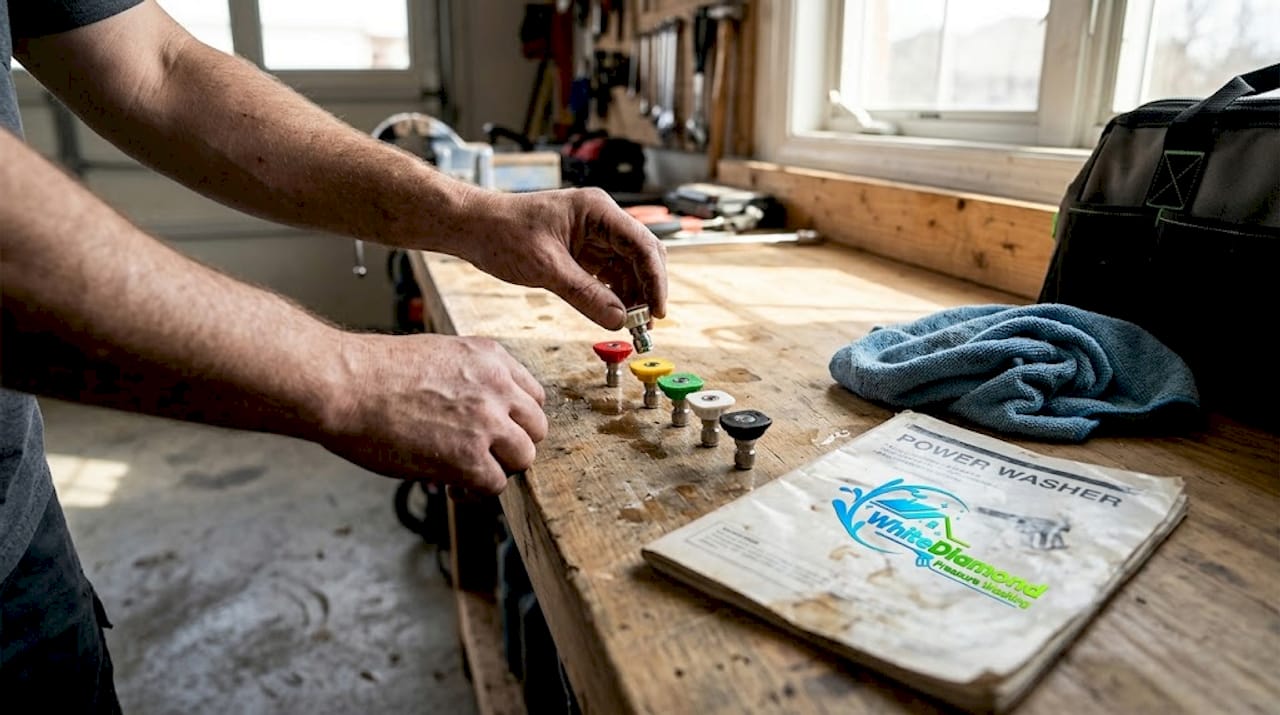
Professional crews use 25° to 40° nozzles for most surfaces and almost never reach for the 0° red tip. That red tip concentrates all pressure into a pinpoint stream. It can strip paint, cut into wood grain, and etch concrete in seconds. Most homeowners don’t realize they’ve caused damage until they step back and look.
The risks of high-pressure washing on the wrong surface go beyond cosmetics. Forcing water into wood at high pressure can accelerate rot. Hitting vinyl siding at the wrong angle drives moisture behind the panels, creating the exact mold problem you were trying to solve.
Pro Tip: Before any pressure washing job, test a small, hidden area at the lowest appropriate pressure. Most homeowners skip this step and discover the damage only after they’ve covered the whole surface.
Professional technicians also adjust pressure dynamically as they work, reading the surface response in real time. That kind of judgment comes from training and repetition, not from reading the rental machine’s instruction card.
Safety and risk mitigation: Why expertise matters
With surface preservation addressed, let’s turn to perhaps the most overlooked danger: personal safety.
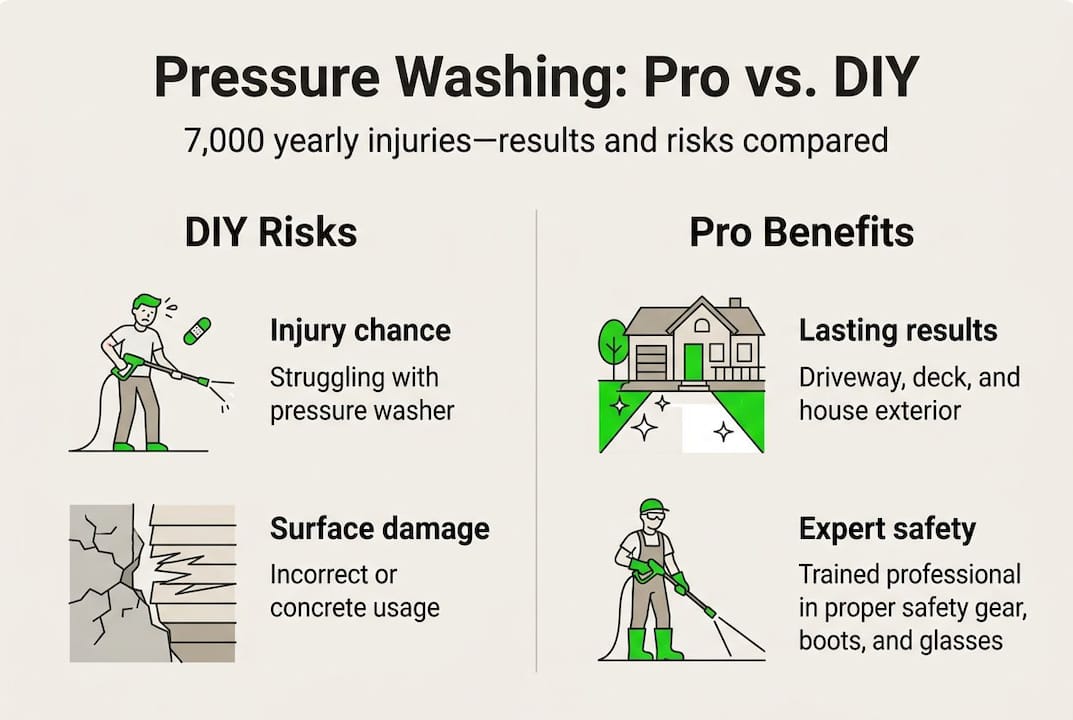
A pressure washer is not a garden hose. High-pressure jets can penetrate skin at settings that feel manageable, causing lacerations deep enough to require surgery and infections serious enough to threaten limbs. This isn’t a rare edge case.
About 7,000 emergency room visits occur every year in the US from DIY pressure washing injuries, including lacerations, eye injuries, and falls from ladders.
That number doesn’t include injuries treated at urgent care or at home. The real figure is higher. Most accidents happen when users get too close to a surface, lose their footing on a wet ladder, or accidentally redirect the stream toward themselves or bystanders.
Here is what professional crews do differently to keep every job safe:
- Full personal protective equipment: Eye protection, heavy gloves, and non-slip boots are standard on every job, not optional.
- Pre-job safety checks: Professionals inspect the area for trip hazards, fragile fixtures, open windows, and electrical outlets before the water ever turns on.
- Insured operations: Licensed pros carry liability insurance, so if something does go wrong, you’re not left paying for repairs or medical bills out of pocket.
- Proper ladder and extension protocols: Reaching second-story surfaces safely requires specific equipment and technique. Improvising on a wet ladder is one of the most common causes of serious injury.
- No 0° red tip use: Even trained professionals avoid this nozzle except in very specific industrial applications.
The DIY pressure washing hazards go beyond the machine itself. Reviewing pressure washing safety tips before any project is a smart starting point, but there’s no substitute for trained hands on the equipment.
Long-lasting results and eco-friendly compliance in Citrus County
With safety and property protection in focus, the long-term benefits and compliance advantages complete the picture.
Citrus County’s climate is relentless. High humidity, frequent rain, and warm temperatures create ideal conditions for algae, mold, and mildew to grow back fast after a surface cleaning. This is where the method matters as much as the machine.
Professional soft washing uses low pressure combined with EPA-approved detergents to kill biological growth at the root. Soft washing with low PSI is preferred for roofs and siding in Citrus County’s humidity because it prevents damage and kills the roots that cause regrowth. Blasting a surface at high pressure removes what’s visible but leaves spores and root systems behind. They come back within weeks.
Professionals use eco-friendly solutions and comply with local water use regulations, achieving faster results that last significantly longer than DIY attempts. That compliance matters. Some Florida municipalities have specific rules about runoff water, chemical discharge, and water volume use. Violations can result in fines that dwarf the cost of hiring a pro in the first place.
Here’s what you gain when you choose professional cleaning over a rental machine:
- Mold and algae prevention: Root-level treatment stops regrowth for months instead of weeks.
- Longer exterior lifespan: Surfaces cleaned correctly at the right pressure last longer before needing repainting or replacement.
- Faster job completion: Professional crews finish in hours what takes most homeowners a full weekend or more.
- Regulatory compliance: No risk of fines for improper chemical runoff or water use.
- Curb appeal that holds: Results stay visible and clean far longer after a professional job.
The benefits of low-pressure washing are especially relevant for roofs and older siding, where high pressure causes more harm than good. And when you factor in routine pressure washing benefits over time, the value of professional work compounds with every cleaning cycle.
The overlooked cost of ‘DIY savings’
After considering all the key practical differences, it’s worth challenging the most persistent myth: DIY automatically saves money.
Consumer machines seem economical until you add it all up. Rental fees, cleaning chemicals, your time, and the very real chance of a mistake that requires professional repair. A single pressure washing error on wood siding or a roof can cost thousands to fix. That “free” Saturday suddenly has a very high price tag.
Professional equipment prevents costly exterior repairs and extends the time between cleanings because the job is done right the first time. Many DIYers also underestimate how physically demanding the work is, especially on larger properties or two-story homes in summer heat.
The real bargain is a single, thorough, problem-free cleaning that lasts. When you factor in the avoided repairs, the longer time before the next cleaning, and the zero risk of injury or fines, professional service isn’t the expensive option. It’s the cost-effective one.
Get superior results with Citrus County’s local pros
Knowing what separates professional equipment from consumer alternatives makes the choice clearer. But knowing and acting are two different things.
At White Diamond Pressure Washing, we bring professional-grade equipment, trained technicians, and deep knowledge of Citrus County’s specific climate challenges to every job. Our professional cleaning services cover everything from driveways and walkways to roofs and full home exteriors, using soft washing and low-pressure washing advantages where they protect your investment best. We’re insured, eco-compliant, and committed to results that last. Contact White Diamond Pressure Washing today to request your free estimate and see the difference professional equipment makes on your property.
Frequently asked questions
What is the difference between consumer and professional pressure washing equipment?
Professional equipment offers much higher PSI, GPM, and cleaning units than consumer or rental models, along with adjustable controls and specialized nozzles that deliver safer, more thorough results on every surface type.
Can improper pressure washing cause damage to my home?
Yes. Incorrect nozzles and pressure can gouge wood, warp vinyl siding, or drive water behind walls, leading to rot, mold, and expensive structural repairs.
Are there health risks to DIY pressure washing?
High-pressure jets can penetrate skin and cause serious injuries, and about 7,000 ER visits each year are directly linked to pressure washer accidents in the US.
How do professionals ensure eco-friendly and safe cleaning?
Pros use EPA-approved solutions and follow local water use and runoff regulations, adjusting their methods to protect landscaping, avoid chemical discharge violations, and prevent water from entering your home’s structure.
Recommended
- 7 Key Commercial Pressure Washing Benefits for Homeowners – white-diamond-pressure
- Pressure Washing Safety – How It Protects Your Home – white-diamond-pressure
- Industry Standards for Pressure Washing Safety – white-diamond-pressure
- Professional Cleaning Teams: 62% Less Property Damage in 2026 – white-diamond-pressure
- Why Roofing Safety Matters for Texas Homeowners
One thought on “Professional pressure washing: 7,000 injuries prove it matters”