

TL;DR:
- Modern water reclamation technology allows pressure washing water to be captured, filtered, and reused onsite. This reduces environmental impact by preventing pollutants from entering local waterways and complies with regulations near storm drains. Proper maintenance and equipment choice are essential for effective water recycling and environmental protection.
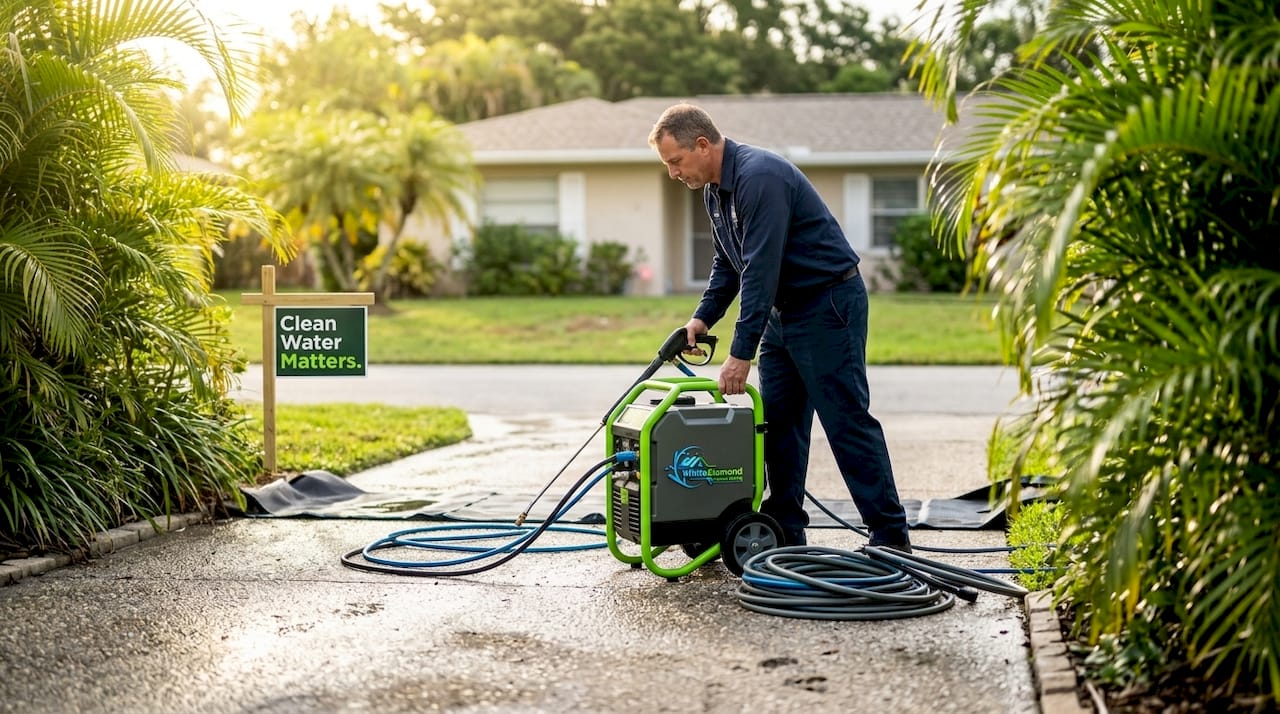
Pressure washing has a reputation for burning through hundreds of gallons of water per job, and many Citrus County homeowners assume there is no way around it. That assumption is wrong. Modern water reclamation technology has quietly transformed how exterior cleaning works, allowing professional crews and motivated property managers to capture, filter, and reuse the majority of water right on site. This guide walks you through exactly how reclamation works, what equipment you need, and how to put it into practice at your home or commercial property in Citrus County, whether you are cleaning a driveway, a storefront, or a multi-unit building.
Table of Contents
- Why water reclamation matters in Citrus County
- How water reclamation systems work
- Comparison: Water reclamation equipment and technologies
- Advanced and nature-based reclamation: When basic isn’t enough
- Practical tips for implementing water reclamation at home
- What most guides miss about water reclamation in pressure washing
- Eco-friendly cleaning done right: Get expert help
- Frequently asked questions
Key Takeaways
| Point | Details |
|---|---|
| Runoff control is crucial | Unmanaged pressure washing runoff can cause pollution and result in local fines or damage. |
| Most homes benefit from water reclamation | Water reclamation systems can save water and comply with local environmental best practices. |
| Routine system maintenance matters | Filter cleaning and inspection prevent breakdowns and maintain system efficiency. |
| Advanced technologies suit special cases | Reverse osmosis and UV setups are best for high-risk or highly regulated properties. |
| Professional help simplifies eco-cleaning | Experts tailor solutions and ensure true compliance for complex or large-scale jobs. |
Why water reclamation matters in Citrus County
Citrus County sits alongside the Crystal River and the Gulf of Mexico, making local waterways especially sensitive to pollutants. When you pressure wash a driveway or parking lot without capturing the runoff, that water carries everything it picks up: motor oil, mold spores, cleaning chemicals, heavy metals, and sediment. All of it flows toward the nearest storm drain, and storm drains in Florida typically empty directly into local creeks, rivers, and coastal waters without any treatment.
The environmental impact of pressure washing is real and measurable. Runoff loaded with detergents and hydrocarbons depletes oxygen in waterways, harms aquatic life, and can trigger algae blooms that affect fishing and recreation. These are not abstract concerns for Citrus County residents. They are visible problems that affect property values and quality of life.
From a regulatory standpoint, the rules are clear. Commercial jobs near storm drains, including gas stations and storefronts, are required to reclaim water to avoid fines. Residential properties are less strictly regulated, but washing near curb drains, sidewalks, or water features carries the same environmental risk. The EPA’s Clean Water Act provides the federal backbone for these rules, and Florida’s own environmental regulations add another layer of enforcement.
“Protecting local waterways is not just a legal obligation for businesses in Citrus County. It is a community responsibility that every property owner shares.”
Here is what untreated pressure washing runoff can introduce into local ecosystems:
- Petroleum products from driveways, parking lots, and engine areas
- Cleaning chemicals including bleach, degreasers, and surfactants
- Heavy metals from rust stains, roof coatings, and old paint
- Biological contaminants like algae, mold spores, and bird waste
- Fine sediment that smothers aquatic habitats and reduces water clarity
Avoiding common pressure washing mistakes starts with understanding that runoff management is part of the job, not an optional add-on. Following roof drainage best practices when planning your cleaning schedule can also reduce the volume of contaminated water generated in the first place.
With this context, let’s clarify how water reclamation works during exterior cleaning.
How water reclamation systems work
A water reclamation system does exactly what the name suggests: it collects the water used during pressure washing, runs it through a series of filters, and prepares it for reuse in the same job or a future one. The process happens on site, in real time, which means less water hauled in and less polluted water sent into the environment.
The core stages of a reclamation system are capture, filtration, and storage or reuse. Filtration stages remove sediment, oils, grease, and chemicals, allowing systems to enable reuse in pressure washers. Each stage is designed to handle a different type of contaminant, and skipping a stage means the water leaving your site is still carrying harmful material.
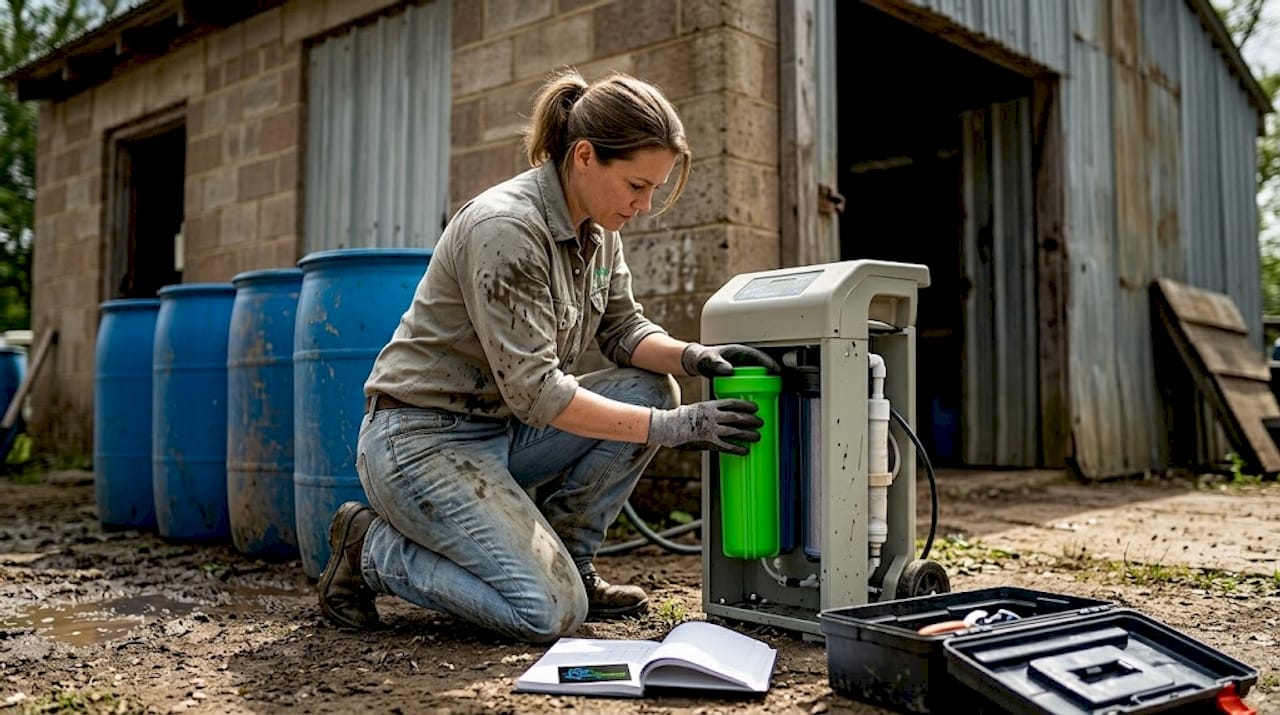
Here is a breakdown of the main equipment you will encounter:
| Equipment | Function | Best for |
|---|---|---|
| Containment mats and berms | Surround the work area to prevent runoff escape | Driveways, parking lots, storefronts |
| Wet/dry vacuum units | Collect surface water and direct it to the filtration tank | All surface types |
| Sediment pre-filters | Remove sand, grit, and large debris first | High-dirt environments |
| Oil/water separators | Pull petroleum products out of the water | Parking areas, garages, gas stations |
| Carbon or activated filters | Remove chemicals, detergents, and odors | All cleaning jobs using chemical solutions |
| Portable holding tanks | Store filtered water for reuse on site | Mobile operations |
The role of water pressure and cleaning matters here too, because lower pressure generally means lower water volume, which makes the reclamation system’s job easier. Soft washing techniques, which use low pressure and targeted cleaning solutions, produce less runoff and pair naturally with reclamation setups.
Pro Tip: Run a quick contamination test before choosing your filter setup. If you are cleaning a surface near an oil stain or a chemical storage area, you need an oil/water separator in your chain before the carbon filter. Skipping this step can saturate and ruin your carbon filter within one job.
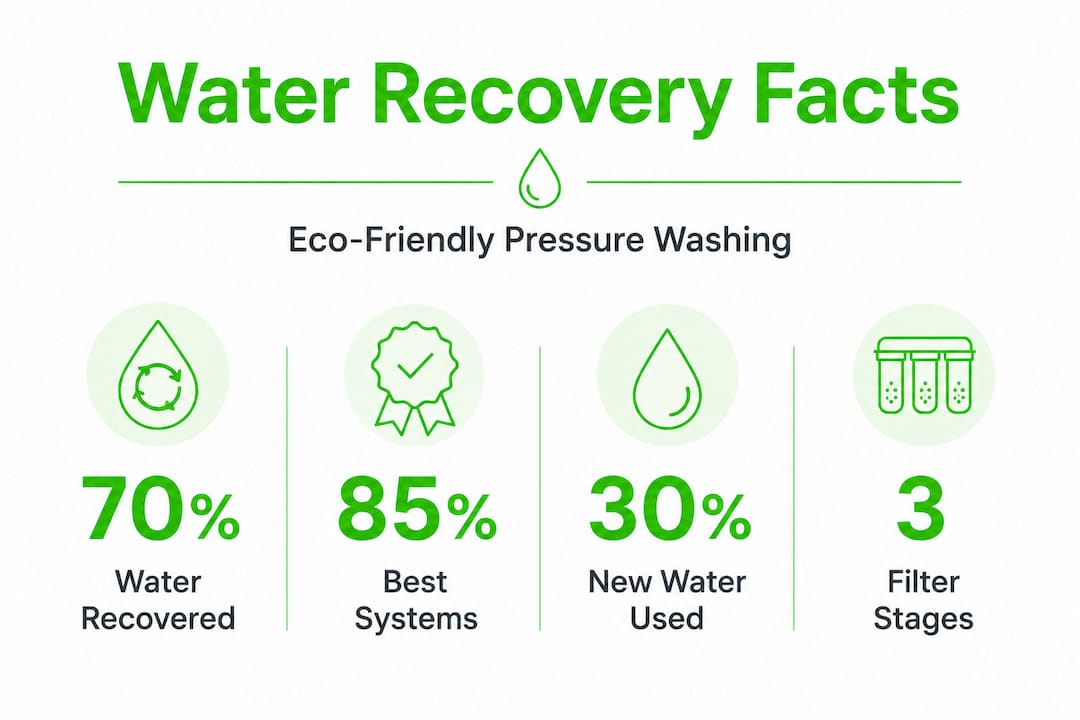
Properly maintained systems allow up to 70 to 85% water recovery, meaning you only need to supply roughly 15 to 30% of the water volume as fresh input. For a job that would normally use 300 gallons, you might only need 60 to 90 gallons of fresh water. That is a dramatic reduction, and it adds up fast across a season of cleaning.
Comparison: Water reclamation equipment and technologies
Not all reclamation setups are created equal. Choosing the right one depends on your property type, the volume of cleaning you do, and how much contamination you typically deal with. Here is a side-by-side comparison of the main options:
| System type | Best for | Pros | Cons |
|---|---|---|---|
| Portable reclaim kit | Single-family homes, mobile crews | Low cost, easy setup, no installation | Limited capacity, requires manual monitoring |
| Trailer-mounted system | Mid-size properties, frequent jobs | Higher capacity, mobile, pre-assembled | Higher upfront cost |
| Permanent wash bay | Commercial, multi-family, fleet washing | High volume, automated, consistent | Fixed location, expensive to install |
| Advanced RO/UV units | Sensitive sites, high-pollution areas | Highest water purity, legal compliance | Energy-intensive, complex maintenance |
Equipment includes wet/dry vacuums, containment mats and berms, surface cleaners, drain covers, and portable filtration, and some systems are designed for mobile operations while permanent wash bays suit fixed, high-volume sites. For most Citrus County homeowners, a portable reclaim kit is the practical starting point. For property managers overseeing a multi-family complex or retail center, a trailer-mounted system or permanent bay is worth the investment.
Follow this process for setting up a portable reclaim system on a typical job:
- Lay out containment berms or mats around the perimeter of the work area before you start washing.
- Position the wet/dry vacuum inlet at the lowest point of the contained area so water flows toward it naturally.
- Connect the vacuum outlet to your pre-filter canister to catch sand and grit.
- Route filtered water through the oil/water separator if petroleum products are present.
- Pass water through the carbon or activated filter stage to remove detergents and chemicals.
- Store the reclaimed water in a clean holding tank and mark it with the date and contamination level.
One critical detail that most guides gloss over: filters clog and require scheduled maintenance. High contamination from oils or chemicals means you will need advanced separation technology, and portable systems suit mobile operations while permanent wash bays are better for fixed, recurring work.
Pro Tip: Check your filter flow rate before every job. If water is moving sluggishly through the filtration chain, your filters are partially clogged and your output water quality has already dropped. Replace or clean filters on a fixed schedule, not just when performance obviously degrades.
For guidance on incorporating pressure washing maintenance into your property care routine, treating the reclamation system as part of your regular schedule makes a big difference. Learn more about water line setup considerations for properties in the region if you are considering a permanent installation.
Advanced and nature-based reclamation: When basic isn’t enough
Sometimes a standard portable kit is not enough. Properties near sensitive waterways, high-pollution commercial sites, or locations subject to strict environmental inspections may require something more powerful.
Advanced technologies like reverse osmosis (RO) and nanofiltration (NF) offer high-purity water recovery at 70 to 85% efficiency but are energy-intensive and better suited to large or permanent operations than typical residential use. RO systems force water through membranes so fine that virtually all dissolved contaminants are removed. The output water is essentially clean enough for direct reuse or even drinking-water applications. The tradeoff is energy consumption and a more complex maintenance cycle.
UV and plasma disinfection systems add another layer of pathogen removal, which is valuable for properties dealing with biological contamination like algae-heavy roofs or waste areas. However, plasma treatment becomes ineffective when water turbidity is high, meaning heavily soiled water must be pre-filtered before these advanced steps can do their job.
Nature-based systems, such as constructed wetland beds, offer a genuinely eco-friendly alternative for semi-permanent setups. These systems use layers of gravel, sand, and specific plant species to filter and biodegrade contaminants naturally. They are slower, require more space, and are not practical for a mobile crew, but for a property owner committed to long-term sustainability, a small constructed wetland can handle reclaimed wash water with minimal energy input. Understanding greywater system basics is a helpful starting point if you want to explore nature-based approaches for your property.
Key advanced options at a glance:
- Reverse osmosis (RO): Highest purity output, best for sites with chemical or heavy metal contamination, high energy use
- Nanofiltration (NF): Similar to RO but slightly less thorough, more energy-efficient
- UV disinfection: Kills bacteria and pathogens, requires pre-filtered, low-turbidity water to work
- Plasma treatment: Effective disinfection technology, limited by dirty or turbid water conditions
- Constructed wetlands: Slow but energy-free, ideal for permanent or semi-permanent sites with space available
Pro Tip: For most Citrus County homeowners washing driveways, patios, and house exteriors, you do not need RO or UV. A solid three-stage portable system handles the job effectively. Reserve advanced technology for properties with documented contamination issues or legal compliance requirements.
Practical tips for implementing water reclamation at home
Getting started with water reclamation does not require a massive investment or a week of setup. Most homeowners can integrate a basic system into their existing cleaning routine with a few targeted purchases and some planning.
Here is a practical step-by-step approach:
- Evaluate your job site before buying any equipment. Identify where water naturally drains, where storm drain inlets are located, and what types of contamination are likely based on the surfaces you are cleaning.
- Choose your system type. For single-family homes, a portable vacuum-based kit with containment berms is usually enough. For property managers handling multiple units or a commercial lot, consider a trailer-mounted system.
- Set a maintenance schedule. Commit to inspecting and cleaning filters after every use and replacing filter media on a fixed calendar cycle, not just when flow slows down.
- Minimize detergent volume. Every ounce of cleaning chemical you add is something your filters must remove. Use low-pressure washing benefits to your advantage by choosing targeted, biodegradable solutions in the smallest effective concentration.
- Keep a usage log. Record how many gallons you started with, how much you reclaimed, and how much fresh water you needed to add. Tracking this data over time reveals your actual savings and helps you spot filter degradation early.
- Stay current on pressure washing safety tips to protect yourself and your property during setup and operation.
Filters clog and require scheduled maintenance, and while water reclamation is not always legally required for residential properties, it is essential near waterways and contributes meaningfully to the health of Citrus County’s ecosystems. Treating it as routine rather than reactive is what separates genuinely eco-friendly cleaning from greenwashing.
What most guides miss about water reclamation in pressure washing
Here is the honest truth most articles skip: the biggest obstacle to effective water reclamation is not finding the right system. It is keeping the system running properly once you have it. Filter maintenance is tedious, and most homeowners and small property managers underestimate how often it needs to happen. A clogged filter does not just reduce water quality; it can create backpressure that damages pumps, slows down jobs, and ultimately costs more than the water savings are worth.
The guides that focus purely on equipment specs miss the human side of this. The best reclamation system for your property is the one you will actually maintain. A simpler three-stage portable kit that gets cleaned after every job outperforms a sophisticated RO unit that gets neglected for six months. We have seen this pattern repeatedly with Citrus County properties, and it is one of the clearest lessons experience teaches.
Another point worth making: legal compliance and environmental benefit are not the same thing. Meeting the minimum legal standard for a commercial parking lot wash does not mean you are maximizing your positive impact. The real environmental impact of pressure washing depends on your actual habits, your chemical choices, your filter maintenance, and your willingness to treat reclamation as a standard part of the job rather than a burden.
The smartest property owners we work with treat water reclamation the same way they treat oil changes: scheduled, documented, and non-negotiable. That mindset is what produces real results for local waterways, lower water bills, and genuine sustainability credibility.
Eco-friendly cleaning done right: Get expert help
Knowing how water reclamation works is half the battle. Putting it into practice correctly, especially near Citrus County’s sensitive waterways, requires the right equipment, the right technique, and experienced hands behind the pressure washer.

At White Diamond Pressure Washing, our professional teams arrive fully equipped for eco-friendly exterior cleaning, including setups designed to minimize runoff and protect local water quality. We cover the full range of services from driveway and house washing to commercial storefront cleaning, all with methods that prioritize your property and the environment. If you want to make sure your next cleaning job avoids costly mistakes and meets both your standards and local environmental expectations, reach out today for a free estimate. Our team can walk you through eco-friendly cleaning options specific to your property, your budget, and your goals.
Frequently asked questions
Is water reclamation legally required for home pressure washing in Citrus County?
It is not always required for purely residential properties, but it is essential near waterways, drainage areas, or sensitive ecosystems, and it is mandatory for commercial sites near storm drains.
What contaminants are removed during water reclamation?
Properly staged systems remove sediment, oils, grease, chemicals, and detergents before the water is stored or reused in the pressure washer.
How much water can be reused in a pressure washing job?
Well-maintained systems using advanced filtration technology recover 70 to 85% of the water used, dramatically cutting fresh water demand per job.
What is the main maintenance required for water reclamation systems?
Filters must be cleaned or replaced on a regular schedule to prevent clogging, maintain flow rate, and ensure output water quality stays safe for reuse.
Are advanced systems like reverse osmosis practical for homes?
RO systems deliver high-purity output but consume significant energy and are better suited to large commercial or legally sensitive sites than typical residential pressure washing jobs.
Recommended
- Environmental Impact of Pressure Washing in Citrus County – white-diamond-pressure
- Role of Water Pressure in Safe Exterior Cleaning – white-diamond-pressure
- Pressure Washing Trends 2025: Innovations Shaping Citrus County – white-diamond-pressure
- Pressure Washing vs. Traditional Cleaning: What to Consider – white-diamond-pressure