

TL;DR:
- Using eco-friendly cleaning methods helps protect Citrus County’s waterways and prolongs the lifespan of outdoor surfaces. Proper product selection and surface-specific techniques ensure effective cleaning without damaging materials or harming the environment. Professional help is recommended for high or persistent stains, while routine maintenance is manageable through DIY with appropriate care.
Keeping your outdoor spaces clean in Citrus County feels straightforward until you realize that the powerful chemicals in many store-bought cleaners can leach into storm drains, harm local waterways, and quietly eat away at the surfaces you’re trying to protect. Concrete, wood, stone, and fabric all respond differently to cleaning agents, and choosing the wrong product means you might fix the dirt problem while creating a bigger one. This guide walks you through the best green cleaning methods for every major outdoor surface, helps you match the right approach to each material, and shows you when a professional’s help is worth every penny.
Table of Contents
- How to choose eco-friendly outdoor cleaning solutions
- 6 eco-friendly cleaning methods for different outdoor surfaces
- Eco-friendly cleaners vs. traditional methods: Effectiveness and safety
- When to DIY and when to call the pros
- The overlooked impact of regular eco-cleaning on Citrus County homes
- Take the next step with Citrus County’s eco-safe cleaning experts
- Frequently asked questions
Key Takeaways
| Point | Details |
|---|---|
| Pick the right cleaner | Choose eco-friendly methods that fit your material and local runoff rules. |
| DIY for light jobs | Handle small outdoor cleaning tasks yourself, but call pros for delicate or challenging surfaces. |
| Routine matters | Regular eco-friendly cleaning preserves your outdoor spaces and curbs environmental harm. |
| Compare before buying | Understand the trade-offs between eco products and traditional chemicals for best safety and results. |
| Hire experts wisely | Professional services ensure safe, thorough cleaning for major jobs—especially in Citrus County. |
How to choose eco-friendly outdoor cleaning solutions
Not every green cleaner is right for every surface, and that mismatch is where most homeowners run into trouble. The first step is identifying exactly what you’re cleaning. Concrete driveways are dense and porous in a different way than natural stone pavers, which are delicate and acid-sensitive. Teak or cedar decks can absorb certain cleaners deeply, while outdoor fabric cushions need an entirely gentle touch. Knowing your material before you reach for a product saves you a lot of headaches.
Once you know the surface, look for these qualities in any cleaner you consider:
- Biodegradable ingredients that break down safely in the soil and water
- Non-toxic formulas with no phosphates, chlorine bleach, or petroleum-based solvents
- pH-balanced or pH-neutral options for sensitive surfaces like natural stone and hardwood
- Concentrated formulas that reduce plastic packaging waste
- No strong synthetic fragrances that can irritate plants and pollinators near your yard
Citrus County’s geography matters here. The county sits close to the Withlacoochee River and multiple spring systems, so runoff from your driveway or patio can reach sensitive aquatic ecosystems faster than you might expect. Checking whether a cleaner is safe for storm drain systems is not just conscientious, it’s genuinely important for local water quality. You can also read more about the environmental impact of pressure washing to understand how even water volume and pressure affect the surrounding environment.
When it comes to matching method to material, material-specific approaches make the biggest difference: vacuum or brush furniture cushions with mild soap, sweep and rinse concrete driveways, use oxygen bleach for mildew on decks since it’s far gentler than chlorine, and consider no-rinse citrus-based cleaners for decks and patios. Each of those recommendations comes from understanding how the material reacts, not just what looks dirty.
Pro Tip: Before committing to any cleaner on a large surface, test it on a hidden corner or a two-square-foot patch. Let it sit for the recommended contact time, rinse, and then evaluate the result after 24 hours when the surface has fully dried. This one habit prevents a lot of irreversible mistakes.
6 eco-friendly cleaning methods for different outdoor surfaces
With a clear decision framework in place, here are the top green cleaning approaches for each outdoor area you’re likely dealing with in Citrus County.
1. Decks and patios
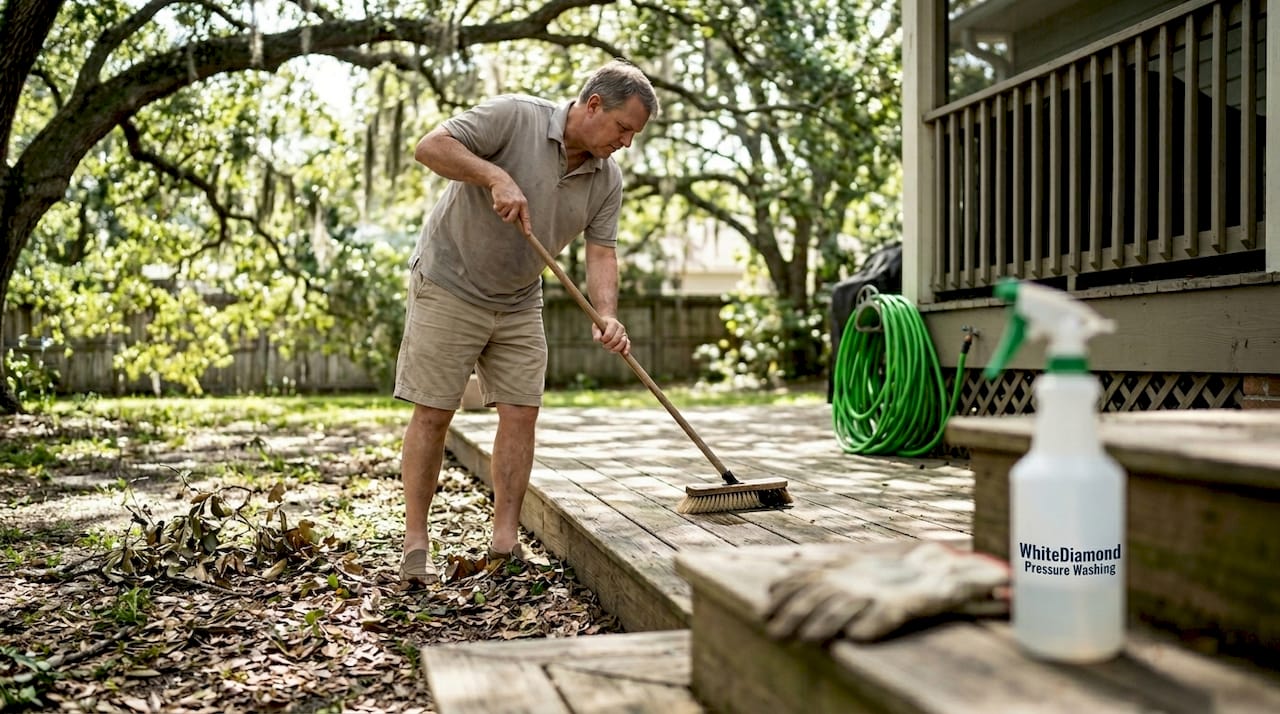
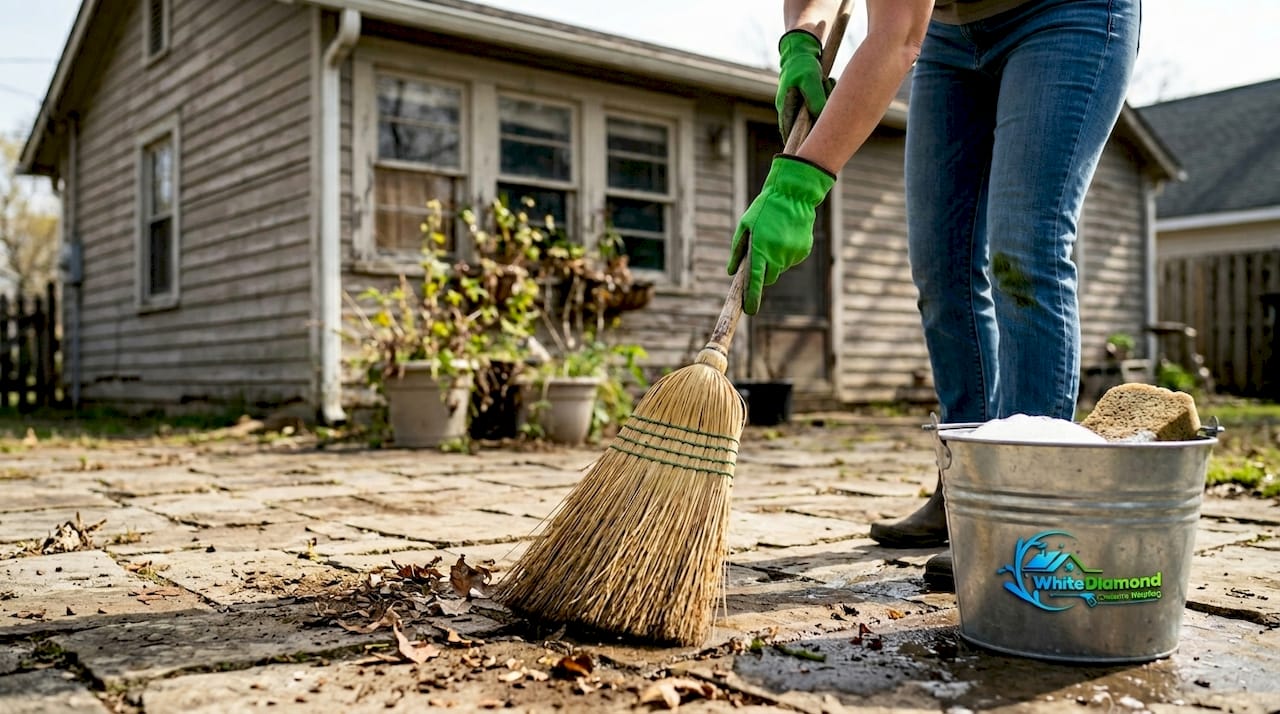
Start by sweeping away loose debris with a stiff broom. For general grime, mix oxygen bleach (sodium percarbonate) with warm water and apply with a scrub brush, working in sections. Oxygen bleach activates in water, lifts stains, and kills mildew without releasing harmful chlorine gas or leaving toxic residue. No-rinse citrus-based cleaners are another strong option for regular maintenance, especially when you want something fast and plant-safe. Rinse thoroughly with a garden hose after scrubbing.
2. Outdoor furniture
Metal, resin, and painted wood furniture respond well to a bucket of warm water with a few drops of dish soap and a soft-bristle brush. Use microfiber cloths whenever possible since they pick up dirt and bacteria with less product and they reduce paper towel waste significantly. Always air dry furniture rather than leaving it sitting in pooled water, which prevents fading and rust formation over time.
3. Concrete driveways
Sweeping regularly prevents dirt from bonding into the surface through rain cycles. For oil spots, eco-friendly degreasers made from plant-based surfactants (cleaning agents) work well when applied directly, allowed to absorb for 10 to 15 minutes, and then scrubbed with a stiff brush. Rinse with a standard hose. Avoid vinegar on concrete for large-scale cleaning since repeated acid exposure can gradually etch the surface over many applications.
4. Mildew and mold on any surface
Florida’s humidity means mildew is a year-round reality. Oxygen bleach is the clear leader here. It kills the mold at the root without producing toxic fumes, and it’s safe around plants when diluted properly. Apply the solution, let it dwell for the time listed on the product, and then scrub gently. The scrubbing part is critical because oxygen bleach loosens mildew but the mechanical action lifts it. Rinse thoroughly.
5. Stone surfaces (pavers, slate, natural stone)
This is where many DIY cleaners cause real damage. Vinegar, while cheap and non-toxic, is acidic enough to etch limestone, travertine, and marble pavers, which are common in Citrus County landscaping. Always use a pH-neutral cleaner formulated specifically for natural stone. Gentle scrubbing and thorough rinsing are the method here. Avoid high-pressure washing on ungrouted or older stone installations since it can displace grout and cause cracking.
6. Fabric cushions and umbrellas
Start by vacuuming or shaking out loose dirt. Mix a small amount of gentle, non-toxic soap with cool water. Spot clean with a soft sponge or cloth, working in circular motions. Rinse the cleaned area with a damp cloth rather than hosing down the whole cushion, which can push dirty water deeper into the foam core. Air dry flat in a shaded area to prevent UV fading on the fabric fibers.
Eco impact note: Switching to biodegradable cleaning products across all your outdoor surfaces meaningfully reduces the volume of synthetic chemicals flowing into Citrus County’s storm drains and spring-fed waterways. The cumulative effect across an entire neighborhood is significant.
Staying consistent with these methods pays off over time. Following recognized pressure washing industry standards also helps you understand what level of water pressure and chemical concentration is safe for each surface type, which matters whether you’re doing it yourself or evaluating a contractor’s approach. And if you’re curious about what’s available through trained local providers, you can explore professional cleaning services to see what surfaces benefit most from expert attention.
Pro Tip: For routine maintenance between deep cleanings, a simple sweep followed by a rinse with a garden hose does more than most people realize. Preventing buildup is far easier than removing it, and it keeps your cleaning intervals longer.
Eco-friendly cleaners vs. traditional methods: Effectiveness and safety
But how do eco-friendly methods actually stack up against traditional cleaning products? Take a look at this direct comparison.
| Factor | Eco-friendly cleaners | Traditional chemical cleaners |
|---|---|---|
| Routine dirt and grime | Highly effective | Highly effective |
| Heavy grease or deep stains | Requires scrubbing; may need repeat | Often faster on first pass |
| Mildew and mold | Effective with oxygen bleach | Effective but leaves chemical residue |
| Stone surfaces | Safe with pH-neutral products | Risk of etching with acid-based types |
| Wood and decks | Safe with proper product selection | Can bleach or discolor over time |
| Runoff safety | Safe for plants and waterways | Can harm local ecosystems |
| Indoor air quality after use | Much lower VOC exposure | Higher VOC risk with solvent-based types |
| Cost over time | Competitive, especially in concentrate | Varies; some very cheap short-term |
The key takeaway from this comparison is that eco-cleaners perform very well for routine maintenance but may underperform on heavy grease or deep-set porous stains compared to harsh chemical alternatives. The solution is almost always mechanical scrubbing, which dramatically improves eco-product performance without introducing any additional chemical risk.
“Green products excel at routine cleaning, but for deep stains, scrubbing makes the real difference.”
Oxygen bleach consistently outperforms both chlorine bleach and vinegar for mildew removal when you factor in material safety and environmental impact together. Chlorine is more aggressive but leaves residue that’s harmful to soil microbes. Vinegar is gentle but damages stone and loses effectiveness quickly. Oxygen bleach threads that needle well. It also handles avoiding pressure washing mistakes by removing the temptation to crank up water pressure to compensate for a weak cleaner, which is one of the most common ways homeowners accidentally damage their own surfaces.
When to DIY and when to call the pros
Wondering when you can handle it yourself and when you should trust a professional? Here’s how to decide.
DIY cleaning is absolutely reasonable for:
- Small patios and ground-level concrete areas
- Outdoor furniture and fabric cushions
- Spot cleaning mildew on accessible deck railings
- Regular sweeping and rinsing as maintenance
Where you should seriously consider calling in a professional exterior cleaning team:
- Roofs of any kind, where the wrong method or pressure strips granules and voids warranties
- Multi-level or high decks where working safely at height is a real concern
- Heavy mildew or black algae that’s had months or years to establish itself
- Stains of unknown origin, since using the wrong product on an unknown stain can permanently set it
| Situation | DIY safe? | Reason |
|---|---|---|
| Wiping patio furniture | Yes | Low risk, small area |
| Spot cleaning cushions | Yes | Gentle methods, manageable |
| Small concrete patio rinse | Yes | Low complexity |
| Roof cleaning | No | Fall risk, material damage risk |
| Whole-house exterior | Rarely | Requires correct pressure and equipment |
| Multi-story deck deep clean | No | Access and safety concerns |
| Persistent black mold on decks | Probably not | Needs stronger professional methods |
The role of water pressure is often underestimated by homeowners. Too much pressure strips wood fibers, forces water under siding, and creates surface damage that’s more expensive to repair than the original cleaning job would have cost. Professionals understand how to match pressure to surface, which is especially important with the mix of older wood, composite decking, and natural stone that’s common across Citrus County properties.
As Today’s Homeowner notes, while DIY methods using household items work well for lighter cleaning tasks, professionals are recommended for roofs and decks where incorrect technique can cause lasting damage. That’s not a knock on capable homeowners. It’s an honest assessment of where the risk-to-reward ratio shifts.
The overlooked impact of regular eco-cleaning on Citrus County homes
Here’s something most articles about green cleaning get wrong: they frame eco-friendly cleaning entirely as an environmental choice. They treat it like a trade-off where you sacrifice some effectiveness to do the right thing for the planet. That framing misses the bigger picture entirely.
Consistent, gentle eco-cleaning is actually the smartest long-term investment you can make in your outdoor surfaces. Here’s why. When you clean a deck every season with oxygen bleach and a good scrub, you prevent the kind of deep mildew and grime buildup that eventually requires sanding, power scrubbing, or even board replacement. When you clean your concrete driveway regularly with a plant-based degreaser, you stop oil from bonding permanently into the surface. Surfaces maintained this way genuinely last longer, and that longevity means you spend less money replacing materials and less energy manufacturing new ones.
Curb appeal is another undervalued angle. In Citrus County’s real estate market, a well-maintained exterior signals to buyers and neighbors alike that the property is cared for thoughtfully. Clean, residue-free surfaces also don’t attract as much algae and mold regrowth, which means your cleaning intervals get longer over time rather than shorter.
The advantages of low-pressure washing tell a similar story. Low-pressure techniques with the right chemistry clean surfaces without stressing the material. Over years of maintenance, that gentleness adds up to surfaces that look and perform as they should, without needing aggressive restoration every few years.
So the real argument for eco-friendly cleaning isn’t just about protecting waterways, though that absolutely matters in Citrus County. It’s about protecting your own investment in the property. The two goals align completely.
Take the next step with Citrus County’s eco-safe cleaning experts
If you’re ready to enjoy a beautiful, worry-free outdoor space, here’s how to get started.
Eco-friendly outdoor cleaning delivers real results when it’s done right, and getting the approach tailored to your specific surfaces makes a meaningful difference. At White Diamond Pressure Washing, we use region-appropriate, biodegradable products and low-pressure techniques that protect your decks, driveways, stone, and siding while keeping Citrus County’s waterways safe.

Our team brings professional-grade equipment and the knowledge of which method works best for every surface type in the county’s climate. Whether you need routine maintenance or a deeper restoration clean, you can explore our eco-friendly exterior cleaning services and learn more about the lasting benefits of exterior cleaning before you book. Get in touch today for a free estimate and we’ll put together a cleaning plan that fits your home, your surfaces, and your values.
Frequently asked questions
What’s the safest eco-friendly cleaner for mildew on decks?
Oxygen bleach is the top recommendation because it effectively kills mildew, produces no toxic fumes, and is far safer for surrounding plants and soil than chlorine-based alternatives, making it ideal for deck mildew.
Is vinegar a good choice for cleaning outdoor stone?
No. Vinegar is acidic and can etch natural stone surfaces like limestone or travertine over time; a pH-neutral stone cleaner is always the safer choice for pavers and natural stone.
How can I reduce water waste when cleaning outdoors?
Sweep surfaces before you wet them, use targeted spot cleaning rather than broad rinsing, and choose no-rinse or concentrated eco-products. Microfiber cloths also cut water and paper waste significantly compared to traditional cleaning tools.
When is it best to hire a professional for eco-friendly outdoor cleaning?
Hire a professional for roofs, large or elevated decks, and stubborn stains where DIY cleaning risks include surface damage, incorrect chemical selection, and potential safety hazards that outweigh any cost savings.
Recommended
- Energy-saving cleaning tips for Citrus County homes – white-diamond-pressure
- Citrus County home prep checklist: 1 cleaning session/year – white-diamond-pressure
- Why use eco-friendly cleaners? Healthier homes, safer Citrus County – white-diamond-pressure
- Why Invest in Exterior Cleaning for Citrus County Homes – white-diamond-pressure
2 thoughts on “Eco-friendly outdoor cleaning guide for Citrus County homes”