

TL;DR:
- Specialty cleaning products target specific soils and pathogens that general cleaners cannot effectively eliminate. They offer targeted chemical action, often at a higher initial cost, which saves time and reduces damage over time. Proper selection, testing, and scheduled use of these products ensure optimal results and long-term property maintenance.
Not all cleaning products are created equal, and treating them as interchangeable is one of the most common and costly mistakes property owners make. The role of specialty cleaning products goes far beyond surface-level tidiness. These formulations target specific soils, pathogens, and materials that general-purpose cleaners simply cannot handle effectively. Whether you manage a rental property, run a commercial facility, or maintain your own home, understanding which products to reach for and why can mean the difference between a genuinely clean environment and one that only looks clean.
Table of Contents
- Key takeaways
- What specialty cleaning products actually are
- Where specialty cleaning products make a real difference
- Specialty vs. general cleaners: what the comparison actually shows
- How to choose and use specialty cleaners correctly
- My perspective on specialty products after years in exterior cleaning
- How Whitediamondpressurewashing puts specialty products to work
- FAQ
Key takeaways
| Point | Details |
|---|---|
| Specialty products solve specific problems | General cleaners maintain surfaces; specialty products neutralize pathogens, break down biofilm, and treat stubborn deposits. |
| Formulation determines effectiveness | Chemical action, enzymatic activity, and pH targeting make specialty cleaners work where water and scrubbing cannot. |
| Cost reflects value, not just price | Higher upfront cost for specialty products typically translates to fewer repeat treatments and reduced surface damage. |
| Safety and health matter | Choosing EPA-registered disinfectants and products with transparent ingredient labels reduces indoor air quality risks. |
| Professional application multiplies results | Industry-grade specialty products applied by trained technicians outperform DIY methods on exterior and high-risk surfaces. |
What specialty cleaning products actually are
The word “specialty” gets used loosely, so it is worth being specific. Specialty cleaning products are formulations engineered to address a defined cleaning challenge. They are not meant to replace your all-purpose spray. They are meant to succeed where it fails.
Here are the main categories you will encounter:
- Enzymatic cleaners: Use biological enzymes to break down organic compounds like urine, blood, grease, and food residue. Enzymatic products effectively remove protein-based stains such as pet urine and blood by targeting molecular bonds that mechanical scrubbing cannot reach.
- Descalers and degreasers: Use acidic or alkaline chemistry to dissolve mineral deposits (limescale) or cut through heavy grease buildup in kitchens and HVAC systems.
- Disinfectants: Registered pathogen killers. EPA-registered disinfectants like hydrogen peroxide (3%) and ethanol (70%) provide reliable pathogen control without the health risks linked to harsher quaternary ammonium compounds.
- Biohazard and odor neutralizers: Use oxidation or encapsulation to neutralize odor-causing compounds rather than mask them.
- Exterior surface cleaners: Formulated to treat mold, mildew, algae, and oxidation on concrete, siding, and roofing without corroding the substrate.
The key distinction between specialty and general cleaners is chemical action versus mechanical action. General cleaners primarily loosen dirt so you can wipe it away. Specialty cleaners, by contrast, break down complex fats and proteins that are inaccessible to water or physical scrubbing alone. That distinction is what makes them indispensable in food service kitchens, medical offices, and high-traffic property exteriors.
Pro Tip: Check the pH of your cleaner before applying it to any surface. Acidic products (pH below 7) are ideal for mineral deposits and rust. Alkaline products (pH above 7) work best on grease and organic soils. Using the wrong pH on a sensitive surface like natural stone can cause irreversible etching.
Where specialty cleaning products make a real difference
The importance of specialized cleaners becomes most obvious when you look at the environments where general products routinely fail.
-
Residential pet owners: Standard carpet cleaners mask odor temporarily. Enzymatic formulas destroy the uric acid crystals embedded deep in carpet fibers. Without that molecular breakdown, pets will return to the same spot and re-soil it because they can still smell it even when you cannot.
-
Property managers with hard water: Limescale is not just unsightly. It restricts water flow, damages fixture finishes, and can void equipment warranties if left untreated. Descaling products dissolve calcium carbonate deposits that no scrub brush will touch.
-
Healthcare and high-touch facilities: Specialty chemicals are critical to ensuring microbiologically safe environments, preventing cross-contamination and biofilm development. Biofilm is a protective layer bacteria form on surfaces, and it resists standard cleaning agents almost entirely.
-
Food service and commercial kitchens: Grease builds up in exhaust hoods, filters, and duct systems in ways that all-purpose degreasers cannot penetrate. Commercial-grade alkaline degreasers are not optional in these environments. They are a regulatory requirement.
-
Exterior property maintenance: Algae and mildew on roofing and siding are not just cosmetic problems. Left untreated, they accelerate material degradation. Specialty exterior cleaners preserve roofing and siding materials by removing biological growth at the root level rather than just pressure-blasting the surface.
-
Post-pest remediation: After pest removal, sanitizing with specialty disinfectants prevents secondary contamination from waste and bacteria. This step is frequently skipped, but sanitizing after pest removal is a critical part of restoring a safe, clean environment.
The advantages of niche cleaning products in these scenarios come down to one thing: they are built for the problem. Using an all-purpose cleaner on biofilm is like using a butter knife to cut rope. You might eventually get somewhere, but you will waste significant time and cause unnecessary wear.
Specialty vs. general cleaners: what the comparison actually shows
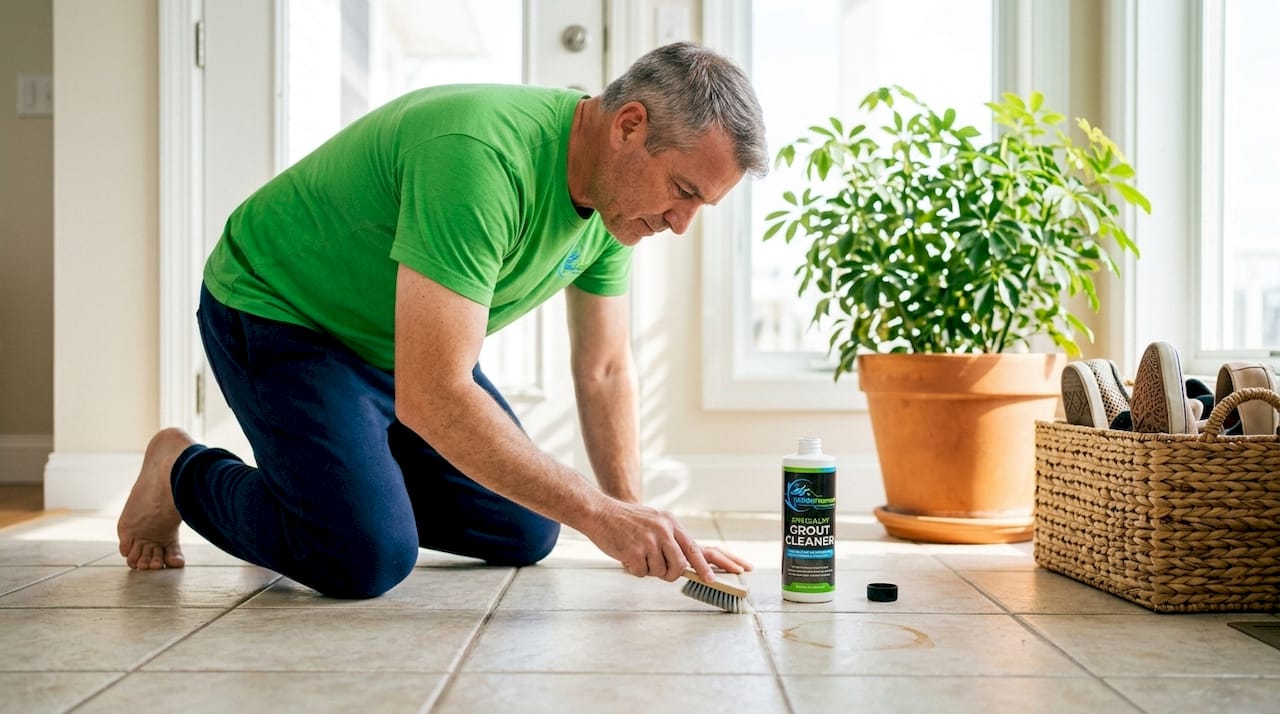
This is where a lot of property owners get tripped up. They assume specialty products are just a marketing premium. The data says otherwise.
| Factor | General-purpose cleaner | Specialty cleaner |
|---|---|---|
| Pathogen elimination | Reduces surface bacteria partially | EPA-registered options kill 99.9%+ of targeted pathogens |
| Stain removal | Lifts light soil; leaves protein stains | Enzymatic action eliminates stains at molecular level |
| Surface protection | Neutral to mildly beneficial | Many include protective coatings that prevent rapid re-soiling |
| Environmental impact | Often contains surfactants with poor biodegradability | Eco-certified specialty brands use biodegradable formulas |
| Long-term cost | Lower per-unit cost, more frequent reapplication | Higher upfront, fewer treatments needed overall |
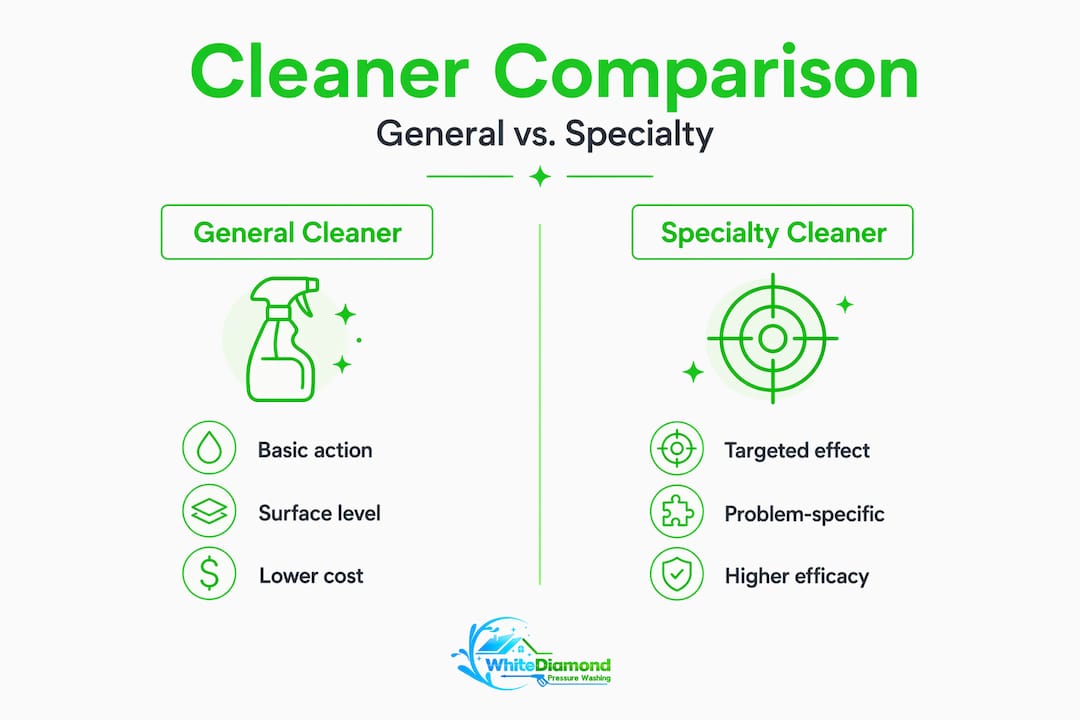
The cost conversation matters. Premium specialty cleaning brands represent 25 to 30% of market sales despite lower sales volume, which tells you that buyers who have tried both will pay for effectiveness. For commercial and property management settings, specialty cleaning solutions also function as preventive maintenance. Chemical cleaning extends equipment lifespan by dissolving deposits before they restrict flow or cause mechanical failure. That is not a cleaning benefit. That is an asset protection benefit.
On the health side, cleaning product effectiveness should not come at the cost of indoor air quality. Using too many varied products does not improve results. A streamlined kit of high-quality specialty products actually reduces your total chemical exposure while improving outcomes. Choose products with transparent ingredient labels and look for eco-certifications on the packaging.
Pro Tip: Pair your specialty cleaners with high-quality microfiber tools. Microfiber combined with targeted specialty formulas outperforms using multiple surface-specific products while reducing total chemical use and waste. Less product, better results.
How to choose and use specialty cleaners correctly
Knowing the benefits of cleaning products means nothing if you apply the wrong one to the wrong surface at the wrong concentration. Here is how to get it right:
- Match the product to the soil type, not the surface. Identify what you are cleaning first (grease, mineral scale, biological growth, pathogens) and then confirm the product is compatible with your specific surface material.
- Read dilution ratios carefully. Many specialty products are concentrated. Overdosing does not improve performance. It leaves residue, can damage surfaces, and increases your chemical exposure unnecessarily.
- Test on a hidden area first. This is non-negotiable for any specialty product on porous or delicate surfaces like natural stone, painted wood, or aged brick.
- Store products separately and properly. Certain specialty chemicals react with each other. An acidic descaler stored next to a bleach-based disinfectant in a warm utility closet is a real safety hazard.
- Build a minimal but complete kit. The goal is not to own every specialty cleaner available. You want an enzymatic cleaner, a disinfectant, a degreaser, and a surface-appropriate exterior treatment. A well-built kit with high-quality microfiber tools and a small number of versatile specialty products maximizes compatibility and minimizes misuse risk.
- Schedule specialty treatments proactively. Do not wait for visible buildup or odor. Biofilm, mineral scale, and algae growth are far easier to address at early stages. Quarterly treatments on exterior surfaces and monthly enzymatic treatments in high-traffic areas prevent the conditions that require expensive remediation.
The applications of specialty cleaning in a well-maintained property are not random. They follow a logic: know your surfaces, know your soils, choose the targeted product, and apply it on a schedule before problems escalate.
My perspective on specialty products after years in exterior cleaning
I have seen the same pattern repeat itself more times than I can count. A homeowner or property manager tries to cut costs by sticking with a generic cleaner for everything. A few months later, they call because the algae on their roof came back in weeks, or the driveway never really came clean after the first treatment.
The truth is that the applications of specialty cleaning are not about buying more products. They are about buying the right ones. I have watched properties get cleaned twice in a single season because the wrong product was used the first time. That is not a savings. That is double the labor, double the chemical exposure, and still a subpar result.
What I have learned is that fewer products of higher quality, chosen specifically for the surface and soil type, consistently outperform a cabinet full of generic options. The market is already moving this direction. Concentrated formats with dosing guidance and eco-certifications are growing precisely because professionals and informed consumers recognize that quality beats quantity.
I also think people underestimate how much the exterior of a property contributes to its long-term condition. Mold, algae, and mineral deposits are not cosmetic. They compromise structural materials over time. The role of professional cleaners in this context is to use the right specialty products and techniques together, because product choice and application method are equally important.
If there is one thing I would want every property owner to take away, it is this: specialty cleaning is preventive maintenance, not a reactive luxury.
— Bobby
How Whitediamondpressurewashing puts specialty products to work
The difference between a surface that looks clean and one that genuinely is clean often comes down to what was used and who applied it. At Whitediamondpressurewashing, every exterior cleaning job in Citrus County relies on industry-approved specialty formulas matched to the specific surface and soil type. No guesswork, no universal spray-and-rinse approach.

Whether it is soft washing a roof to remove algae at the root level, treating a driveway with the right degreaser before pressure washing, or applying an eco-friendly exterior treatment that protects against rapid re-soiling, the product selection is deliberate. Explore the full range of exterior cleaning services available, or visit Whitediamondpressurewashing to get a free estimate and see what professionally applied specialty cleaning can do for your property.
FAQ
What is the role of specialty cleaning products?
Specialty cleaning products are formulated to address specific soil types, pathogens, or surface conditions that general-purpose cleaners cannot effectively treat. Their role is to provide targeted chemical action where mechanical cleaning or standard detergents fall short.
Are specialty cleaners worth the higher cost?
Yes, for most challenging cleaning scenarios. Premium specialty brands represent 25 to 30% of market sales because buyers who have compared them to general cleaners will pay for results. Fewer applications and reduced re-soiling typically offset the higher price per unit.
How do enzymatic cleaners work on pet stains?
Enzymatic cleaners use biological enzymes to break down uric acid crystals and other organic compounds at the molecular level, permanently removing the odor source rather than masking it. Standard cleaners leave residual odor that causes pets to re-soil the same area.
Can specialty cleaning products damage surfaces?
Yes, if mismatched to the surface. Acidic descalers can etch natural stone, and alkaline degreasers can strip certain finishes. Always check compatibility, test on a hidden area, and follow dilution ratios precisely to avoid damage.
How often should specialty cleaners be used in property maintenance?
For most residential and commercial properties, quarterly exterior treatments and monthly enzymatic treatments in high-traffic areas are a sound baseline. Early-stage application prevents the buildup that requires intensive remediation later.