


TL;DR:
- Tracking seasonal property cleaning reduces emergency repair costs by up to 45% through proactive scheduling and documentation. Implementing structured systems like OxMaint or DwellFile helps property managers and homeowners assign tasks, log completion, and extend asset lifespan. Consistent maintenance improves tenant satisfaction, health, and property value by preventing costly failures and ensuring reliability.
Tracking seasonal property cleaning is the systematic process of scheduling, recording, and managing cleaning tasks aligned with seasonal maintenance cycles to protect property value and prevent costly failures. Property managers and homeowners who adopt structured tracking, using tools like OxMaint, DwellFile, or US Tech Automations, can reduce emergency repair costs by 30 to 45% within the first year. Without a documented property upkeep schedule, critical tasks like HVAC servicing, gutter clearing, and exterior washing get deferred until they become expensive emergencies. The difference between reactive and proactive maintenance is not just financial. It affects tenant retention, property lifespan, and the daily health of everyone living or working inside.
Why track seasonal property cleaning before problems appear
Seasonal emergencies are not random events. HVAC failures and plumbing freeze issues follow calendar patterns that tracking systems can anticipate and prevent. A property manager who logs that a sump pump failed in March two years running now has the data to schedule a pre-spring inspection every February. That shift from reacting to predicting is the core value of tracking.
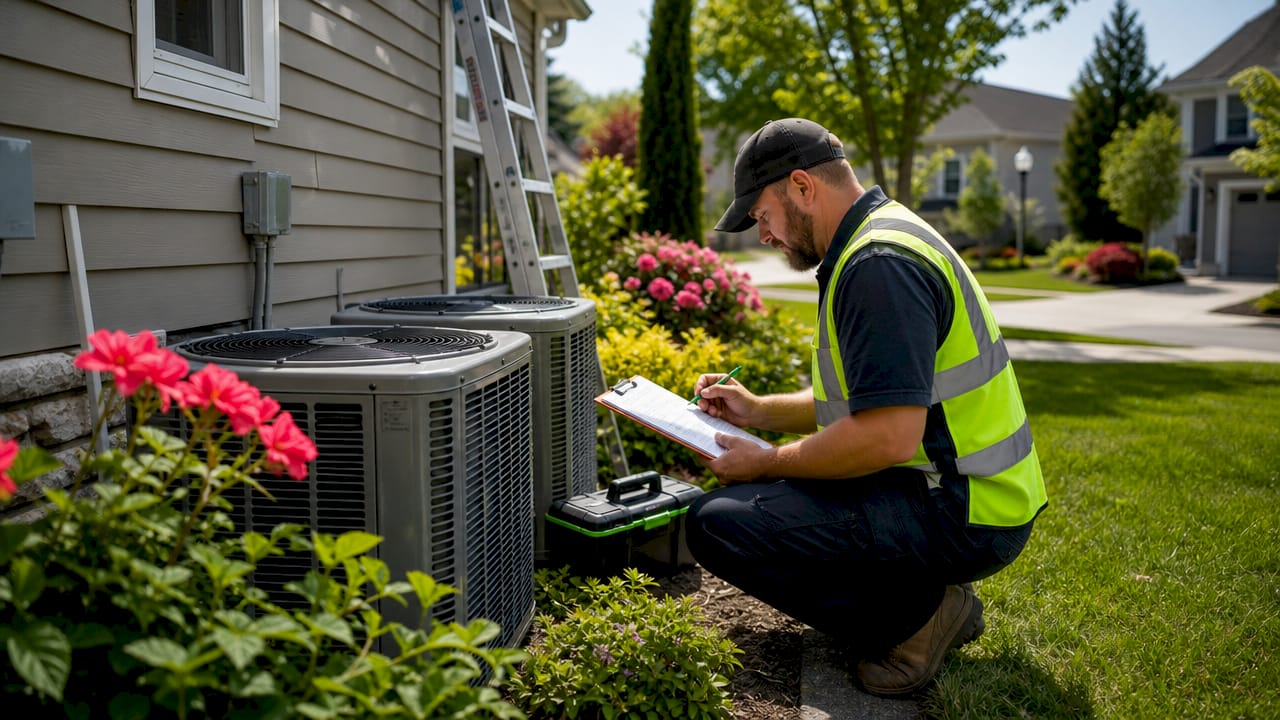
The financial case is direct. Preventive maintenance costs 10 to 20 times less than reactive emergency repairs, and it extends the lifespan of major building systems by two to five years. A furnace that gets a tracked annual service call before winter costs roughly $150. The same furnace replaced after an undetected failure costs $3,000 to $7,000. Multiply that logic across roofing, plumbing, and exterior surfaces, and the savings compound fast.
Tracking also creates a paper trail that most homeowners never think about until they need it. Insurance claims, warranty disputes, and property sales all benefit from documented maintenance history. A buyer reviewing a home with three years of logged seasonal cleaning records has measurable confidence in the asset they are purchasing. That documentation alone can justify a higher asking price.
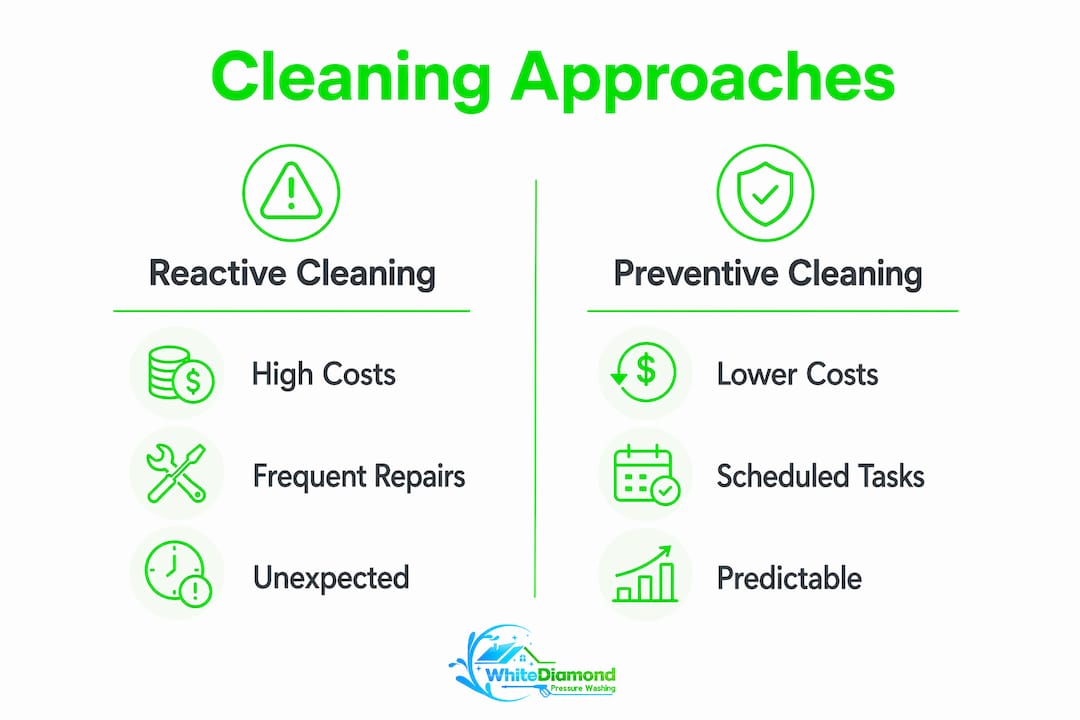
Reactive vs. preventive cleaning: what the numbers show
| Category | Reactive approach | Preventive tracked approach |
|---|---|---|
| Emergency repair frequency | High, unpredictable | Reduced by up to 80% |
| Annual maintenance cost | 10 to 20x higher per incident | Predictable, budgeted |
| Asset lifespan | Shortened by deferred care | Extended 2 to 5 years |
| Insurance and warranty standing | Gaps in documentation | Full compliance record |
Pro Tip: Set a calendar trigger 30 days before each season change. That buffer gives you time to book vendors before their schedules fill up, which is especially critical for HVAC technicians in fall and spring.
What tools and systems actually work for tracking seasonal cleaning
The most practical tracking systems combine a digital calendar, a task assignment layer, and a completion log. OxMaint offers a seasonal property maintenance planner that assigns tasks to specific dates and individuals, removing the single biggest failure point in property maintenance: relying on memory. DwellFile provides homeowners with a structured seasonal cleaning checklist that doubles as a documentation archive. US Tech Automations builds automated reminder workflows that trigger based on calendar dates and local weather data.
Choosing the right tool depends on your property type and portfolio size. A single-family homeowner in Citrus County needs something simple, a shared calendar with recurring tasks and photo upload capability. A property manager overseeing 20 units needs vendor coordination, escalation rules, and reporting dashboards. The table below compares the core features of leading options.
Comparison of seasonal cleaning tracking tools
| Tool | Best for | Key features | Documentation support |
|---|---|---|---|
| OxMaint | Property managers | Task assignment, vendor tracking, reporting | Yes, full audit trail |
| DwellFile | Homeowners | Seasonal checklists, maintenance history | Yes, warranty and insurance logs |
| US Tech Automations | Multi-unit managers | Automated reminders, weather triggers | Yes, compliance reporting |
| Google Calendar + Sheets | Budget-conscious users | Manual scheduling, custom checklists | Partial, manual entry |
Beyond the tool itself, the system only works if it includes these four components:
- Seasonal task lists broken down by property zone (roof, exterior walls, HVAC, drainage, landscaping)
- Assigned responsibility for each task, whether that is a vendor, a property manager, or the homeowner
- Completion logging with dates, photos, and vendor names for every finished task
- Escalation rules that flag overdue tasks before they become deferred maintenance
Structured digital systems that assign due dates and responsibilities prevent the kind of quiet failures that only surface when a tenant calls at midnight about a burst pipe.
Pro Tip: When logging vendor performance, record the completion date, the invoice amount, and a simple 1 to 5 quality rating. After two seasons, that data tells you objectively which vendors to keep and which to replace, without relying on gut feeling.
How consistent tracking improves health and tenant satisfaction
The benefits of a seasonal cleaning checklist extend well beyond the mechanical. Indoor pollutant levels run 2 to 5 times higher than outdoor levels, and seasonal deep cleaning is the primary intervention that resets that balance. For the 26.8 million Americans currently living with asthma, a tracked HVAC filter change and duct cleaning schedule is not a convenience. It is a health requirement.
The psychological dimension is equally real. Living in a cluttered or neglected environment raises cortisol levels, the primary stress hormone. Seasonal cleaning creates a physical and mental reset that improves focus and reduces the low-grade guilt that builds up around neglected spaces. Tenants who live in well-maintained properties report higher satisfaction scores, and that satisfaction translates directly into lease renewals.
Tenant turnover is one of the most underestimated costs in property management. Replacing a single tenant costs between $1,500 and $3,000 when you account for vacancy, cleaning, advertising, and onboarding. Tracked seasonal servicing of HVAC systems, pest control, and weatherization consistently ranks among the top factors in tenant renewal surveys. A property that gets a documented pre-winter HVAC service and a spring exterior wash signals to tenants that management is paying attention.
Specific seasonal tasks with the highest impact on tenant experience include:
- Spring: Exterior pressure washing, window cleaning, HVAC filter replacement, pest control inspection
- Summer: Roof inspection, gutter clearing, irrigation system check, deck or patio cleaning
- Fall: Weatherization, furnace servicing, exterior caulking, drainage inspection
- Winter: Pipe insulation check, sump pump testing, common area deep cleaning, parking lot maintenance
“Seasonal preparation quality, including HVAC servicing, pest control, and weatherization, is among the top factors in tenant renewal surveys and directly prevents costly turnover.” — US Tech Automations, 2026
Best practices for building a seasonal cleaning tracking system
Starting a tracking system does not require expensive software. It requires a clear process applied consistently. Follow these steps to build one that actually holds up across seasons.
-
Map your property by zone and system. List every cleanable or serviceable area: roof, gutters, exterior walls, driveways, HVAC, plumbing, windows, and landscaping. This becomes the master task inventory.
-
Assign each task to a season. Match tasks to the season when they deliver the most value. Gutter cleaning belongs in late fall after leaves drop. Exterior pressure washing belongs in spring after pollen season peaks. Use a seasonal exterior cleaning checklist tailored to your local climate as a starting reference.
-
Set calendar triggers with lead time. Schedule each task 30 to 45 days before it needs to be completed. That window allows vendor booking, material procurement, and weather flexibility.
-
Assign ownership for every task. Every item on the list needs a name attached to it. Unassigned tasks are deferred tasks. Whether the owner is a vendor, a property manager, or the homeowner, accountability requires a named individual.
-
Log completion with evidence. Record the date, the vendor or person who completed the task, the cost, and a photo where applicable. This log becomes your maintenance history for insurance, warranty, and resale purposes.
-
Review and adjust quarterly. At the end of each season, review what was completed on time, what was deferred, and what cost more than expected. Vendor performance data and cost history improve your forecasting and vendor selection over time.
Automation saves the most time at step three. Tools like US Tech Automations can trigger reminders automatically based on calendar dates, removing the need to manually remember when each task is due. For Citrus County properties specifically, local climate factors like high humidity, hurricane season prep, and heavy pollen loads make scheduling seasonal cleaning earlier than national averages a practical necessity.
Pro Tip: Build your tracking system in the tool you already use daily. A Google Calendar with recurring events and a linked Google Sheet for completion logging beats a sophisticated app you abandon after two weeks.
Key takeaways
Tracking seasonal property cleaning is the single most cost-effective maintenance strategy available to homeowners and property managers, reducing emergencies, extending asset life, and protecting tenant satisfaction simultaneously.
| Point | Details |
|---|---|
| Emergency cost reduction | Structured tracking cuts emergency repair costs by 30 to 45% and reduces seasonal emergencies by up to 80%. |
| Preventive vs. reactive cost | Preventive maintenance costs 10 to 20 times less per incident than reactive emergency repairs. |
| Health and air quality | Indoor pollutants run 2 to 5 times higher than outdoor levels; tracked seasonal cleaning directly reduces exposure. |
| Tenant retention value | Consistent seasonal servicing prevents turnover costs of $1,500 to $3,000 per tenant. |
| Documentation matters | Logged maintenance history supports insurance claims, warranty compliance, and higher resale value. |
What I’ve learned from watching tracked vs. untracked properties over time
After years of working with properties across Citrus County, the pattern is impossible to ignore. The properties that look the worst and cost the most to maintain are almost never the ones with the oldest systems or the toughest climates. They are the ones where nobody wrote anything down.
The homeowner who calls in a panic about black streaking across their roof shingles in July almost always admits they have not had the exterior cleaned since they moved in. The property manager dealing with a tenant complaint about musty air in October usually cannot tell you when the HVAC filter was last changed. These are not bad people or careless owners. They are people operating without a system, which means they are operating on memory and luck.
What tracking does is replace luck with data. Once you have two or three seasons of logged maintenance, you stop guessing and start knowing. You know which vendor shows up on time and which one needs three follow-up calls. You know that your gutters clog by mid-November every year, not mid-December. You know your exterior needs a wash every spring because the pollen load in Citrus County is genuinely aggressive.
The psychological relief of a well-maintained property is real too. There is a measurable difference in how you feel walking into a home that you know has been cared for systematically versus one where you are always half-aware of the things you have not gotten to yet. That mental clarity is worth something, even if it does not show up on a balance sheet.
My honest recommendation: start with a single season. Pick fall or spring, map out every task for your property, assign dates, and log what gets done. By the time you complete one full cycle, the value of the system will be obvious enough that you will not need convincing to continue.
— Bobby
Keep your exterior on schedule with Whitediamondpressurewashing
Tracking your seasonal cleaning plan only works when the actual cleaning gets done to a professional standard. Whitediamondpressurewashing serves homeowners and property managers across Citrus County with exterior cleaning services built around your seasonal schedule, including soft washing for roofs, pressure washing for driveways and walkways, and house washing that removes mold, mildew, and pollen before they cause lasting damage.

Professional exterior cleaning prevents the surface deterioration that tracking alone cannot fix. When your seasonal checklist calls for an exterior wash, Whitediamondpressurewashing delivers the best practices for property cleaning that protect your investment and keep your property looking maintained year-round. Book a free estimate at whitediamondpressurewashing.com and get your exterior cleaning scheduled before the next season arrives.
FAQ
Why does tracking seasonal property cleaning reduce costs?
Tracking converts unpredictable emergency repairs into scheduled preventive tasks, which cost 10 to 20 times less per incident. Properties with structured seasonal maintenance programs reduce emergency repair costs by 30 to 45% within the first year.
What is the best tool for tracking seasonal cleaning tasks?
OxMaint and DwellFile are purpose-built for property maintenance tracking, offering task assignment, completion logging, and vendor performance records. Homeowners managing a single property can start with Google Calendar and a linked spreadsheet at no cost.
How does seasonal cleaning affect tenant retention?
Consistent seasonal servicing of HVAC systems, pest control, and weatherization ranks among the top factors in tenant renewal decisions. Replacing a single tenant costs between $1,500 and $3,000, making proactive maintenance one of the highest-return investments in property management.
How often should exterior surfaces be cleaned seasonally?
Most residential exteriors in high-humidity climates like Citrus County benefit from at least one professional exterior wash per year, typically in spring after pollen season. Properties with heavy tree cover or shaded roof sections may need twice-yearly attention to prevent mold and algae buildup.
What happens if seasonal cleaning tasks are not tracked?
Tasks that exist only in memory get deferred. Deferred maintenance leads to predictable failures like HVAC breakdowns, clogged drainage, and surface deterioration that cost significantly more to fix than to prevent. Structured tracking with assigned ownership and logged completion is the only reliable way to prevent this pattern.
Recommended
- Why Invest in Regular Cleaning? Boost Value and Health – white-diamond-pressure
- Commercial Cleaning Advantages That Protect Your Bottom Line – white-diamond-pressure
- Why schedule seasonal cleaning for your home in 2026 – white-diamond-pressure
- Seasonal exterior cleaning checklist for Citrus County homes – white-diamond-pressure
One thought on “Why Track Seasonal Property Cleaning: Save Money and Time”