

TL;DR:
- Lichen on roofs damages underlying materials by penetrating shingles, trapping moisture, and accelerating decline. Preventative soft washing with low-pressure biocide treatments is safe, cost-effective, and extends roof lifespan significantly. Regular maintenance, including inspections and gutter cleaning, reduces conditions favoring lichen growth, protecting your investment and resale value.
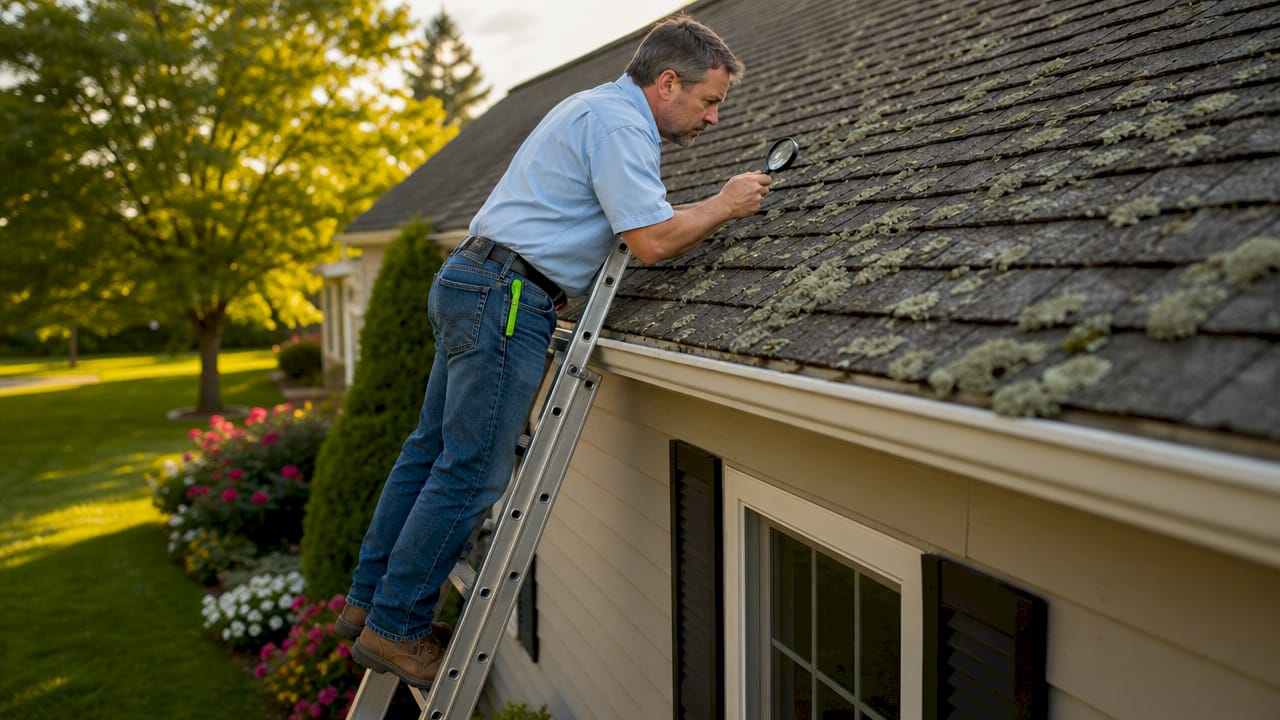
Lichen on a roof is defined as a composite organism of fungi and algae that physically penetrates roofing materials, trapping moisture and accelerating structural decay. Preventing lichen growth is one of the most cost-effective decisions a homeowner or property manager can make, because the damage it causes goes far deeper than surface discoloration. Neglecting biological growth like lichen shortens roof lifespan by 5 to 15 years, a reduction that translates directly into five-figure replacement costs. Understanding why prevent lichen on roofs matters means recognizing it as a structural threat, not a cosmetic one.
Why lichen is harmful to your roof
Lichen does not simply sit on top of your shingles. Its root-like structures, called hyphae, physically penetrate asphalt shingles and tile surfaces, breaking down the materials from within. This biological mechanism is what makes lichen fundamentally different from surface dirt or algae staining.
The most immediate consequence is moisture retention. Biological growth traps moisture against roof surfaces, leading to rot, warped tiles, rust on metal components, and accelerated surface erosion. In climates with freeze-thaw cycles, that trapped water expands inside shingle layers, lifting and cracking them from below. The result is a roof that ages years faster than it should.
Here is what lichen damage looks like in practice:
- Granule loss: Hyphae dislodge the protective UV granules embedded in asphalt shingles, leaving the underlying mat exposed to sun and rain.
- Shingle lifting: Moisture retained beneath lichen colonies causes shingles to curl and separate, creating entry points for water.
- Leak pathways: Once shingles lift or crack, water intrudes into the decking and attic, creating rot and mold.
- Pest habitation: Damp, decaying organic material under lichen colonies attracts insects and rodents seeking nesting sites.
- Coating erosion: On metal and tile roofs, lichen acids dissolve protective coatings, exposing base materials to oxidation.
The financial consequence is significant. Homeowners who allow lichen to go untreated see a 20 to 40% reduction in roof longevity. On a roof with a 25-year expected lifespan, that means replacement arrives 5 to 10 years early, at a cost most homeowners were not budgeting for.
What are safe and effective methods for removing lichen from roofs?
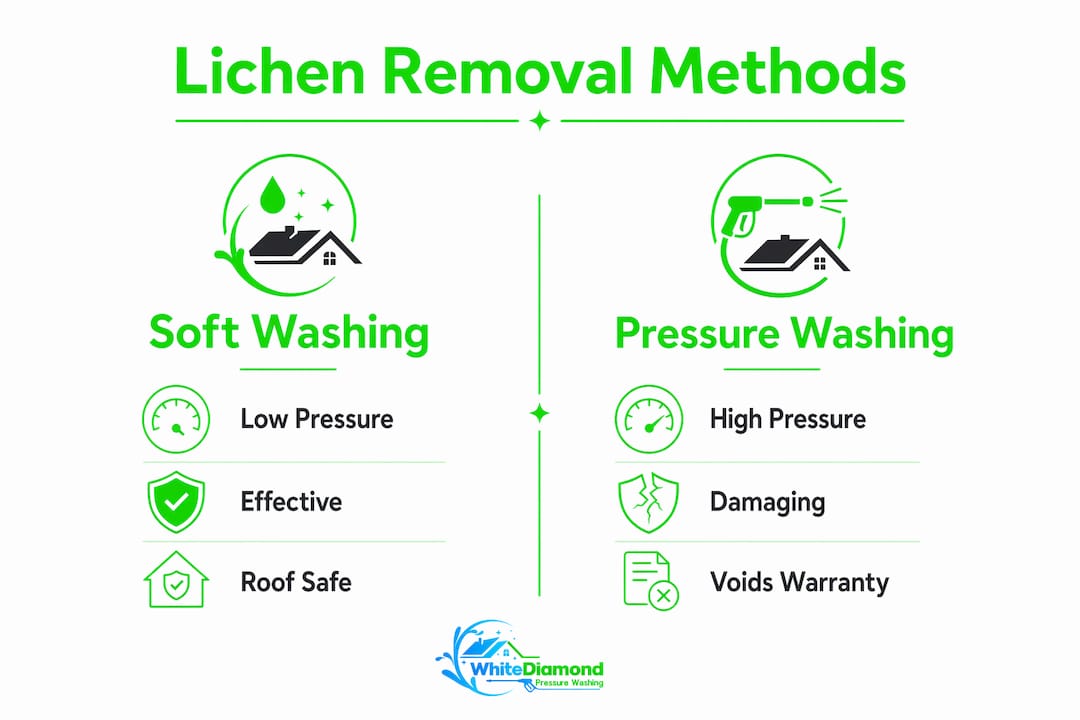
Soft washing is the industry-standard method for lichen removal, and it works fundamentally differently from pressure washing. Soft washing uses sodium hypochlorite and surfactants applied at low pressure, killing the lichen organism at the cellular level rather than blasting it off mechanically. Rainwater then naturally rinses the dead material away, meaning no aggressive scrubbing is required.
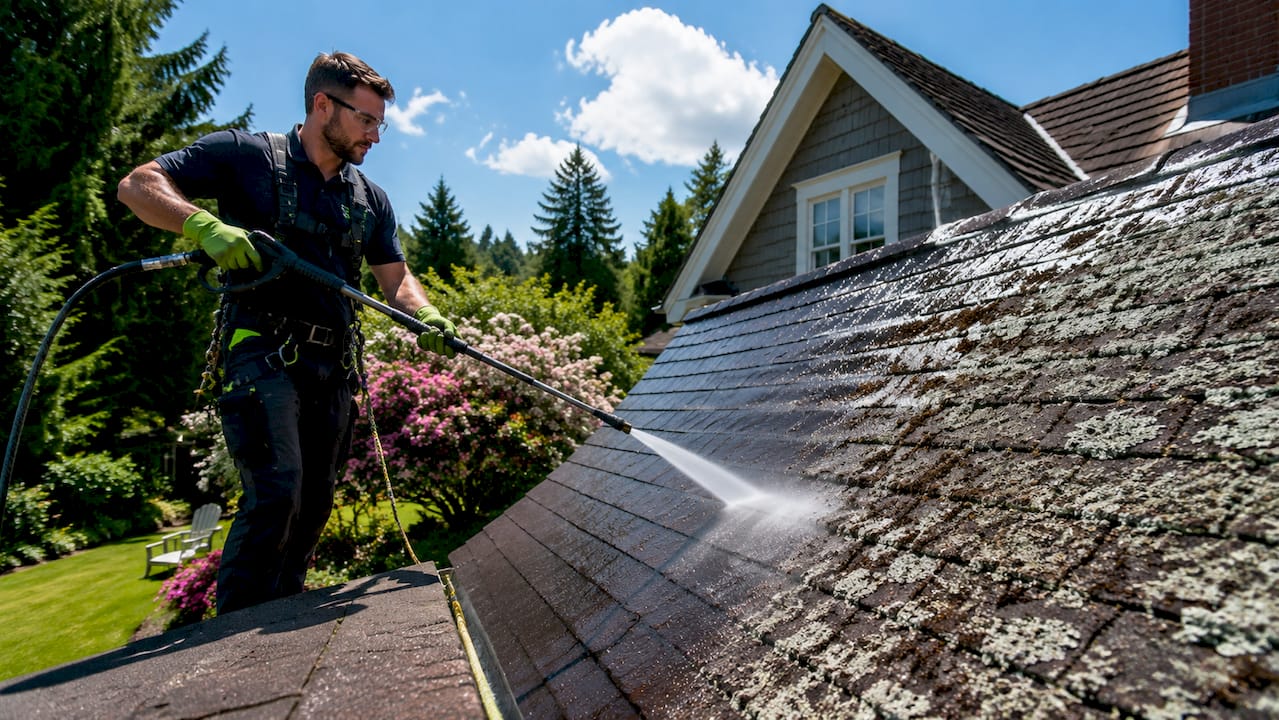
The contrast with high-pressure washing is stark and worth understanding before you hire anyone or attempt a DIY approach.
| Method | Pressure | Effectiveness | Risk to Roof |
|---|---|---|---|
| Soft washing | Low (under 100 PSI) | Kills organism at root | Minimal, warranty-safe |
| High-pressure washing | High (1,500+ PSI) | Removes surface growth only | Strips granules, voids warranty |
| DIY scrubbing | Manual | Surface only | Dislodges granules, spreads spores |
| Professional biocide treatment | Low | Kills spores, prevents regrowth | None when applied correctly |
High-pressure washing strips the protective granules from asphalt shingles, voids manufacturer warranties, and accelerates the very decay you are trying to prevent. Many homeowners discover this only after the damage is done.
The other critical factor is recurrence. Lichen hyphae penetrate deep into shingles, making superficial cleaning ineffective without professional biocides that target spores. Without proper chemical treatment, regrowth occurs within 6 to 12 months. Professional biocide application addresses the root cause rather than the visible symptom.
Pro Tip: Ask any roof cleaning contractor specifically whether they use sodium hypochlorite-based soft washing. If they default to a pressure washer for roof work, that is a clear sign to look elsewhere. Protecting your shingles starts with the right method.
Soft washing costs between $300 and $850 for a professional treatment. That figure needs to be weighed against full roof replacement, which runs $10,000 to $25,000. The math is not complicated.
How can routine maintenance prevent lichen growth?
Preventing lichen from establishing itself in the first place is more effective than removing it after the fact. Regular roof maintenance including inspections, gutter cleaning, and trimming overhanging branches reduces the conditions lichen needs to thrive. Lichen favors shade, moisture, and organic debris. Remove those conditions and you remove the invitation.
Here are the core maintenance practices that protect roofs from lichen:
- Annual professional inspections: A trained eye catches early lichen colonies before they establish deep hyphae. Schedule inspections every spring, particularly after winter moisture exposure. A spring roof maintenance checklist is a practical starting point for building this habit.
- Trim overhanging branches: Tree canopy over a roof creates shade and drops organic debris, both of which accelerate lichen growth. Cutting back branches improves sunlight exposure and reduces debris accumulation.
- Clean gutters regularly: Blocked gutters cause water to back up under roofing materials. That standing moisture is exactly the environment lichen colonizes fastest.
- Install zinc or copper strips: Metal ions from zinc or copper strips installed near the roof ridge wash down with rain, creating a surface environment hostile to lichen and moss growth.
- Improve attic ventilation: Up to 40% of premature roof failures are caused by poor attic ventilation, which increases moisture and temperature stress on roofing materials. Proper ventilation keeps the underside of your roof deck dry, reducing the surface moisture that lichen needs.
Pro Tip: Keep a written log of every inspection, cleaning, and treatment your roof receives. This documentation is not just good practice. Insurance companies may deny claims if deferred maintenance is evident, and a maintenance log is your proof that you managed the property responsibly.
The benefits of roof maintenance extend well beyond lichen prevention. A consistently maintained roof performs better in storms, retains its warranty coverage, and requires fewer emergency interventions over its lifetime.
What are the financial benefits of preventing lichen growth?
Preventing lichen growth is one of the highest-return maintenance investments a property owner can make. For every $1 invested in preventative roof maintenance, homeowners save approximately $5 in emergency repairs. That 5:1 return is not theoretical. It reflects the real cost difference between a $500 annual cleaning and a $15,000 emergency re-roof.
The lifespan data reinforces this further. Proactively maintained roofs last an average of 21 or more years, compared to 13 years for neglected roofs. That is nearly a decade of additional service life from a maintenance program that costs a fraction of replacement.
“Consistent roof care transforms emergency spending into planned capital improvement, extending roof life by 5 to 15 years and boosting resale value.” — Roof Maintenance: 7 Expert Tips
The financial picture looks like this across key cost categories:
| Cost Category | Preventative Approach | Reactive Approach |
|---|---|---|
| Annual soft wash cleaning | $300 to $850 | Not applicable |
| Emergency leak repair | Avoided | $500 to $3,000+ |
| Full roof replacement | Deferred 8+ years | $10,000 to $25,000 |
| Insurance claim position | Strengthened by documentation | Weakened by deferred maintenance |
| Resale value impact | Positive, documented history | Negative, visible wear |
The insurance angle is one most homeowners overlook entirely. Documented maintenance history strengthens your position when filing claims after storm damage. An adjuster reviewing a roof with visible lichen damage and no maintenance records has grounds to classify the damage as a maintenance failure rather than a covered event. That distinction can cost you tens of thousands of dollars.
Avoiding common roofing mistakes like skipping annual inspections or delaying lichen treatment is the simplest way to protect both your roof and your insurance coverage simultaneously.
Key takeaways
Preventing lichen on roofs is the single most cost-effective structural maintenance decision a homeowner can make, because the damage compounds silently until replacement is the only option.
| Point | Details |
|---|---|
| Lichen causes structural damage | Hyphae penetrate shingles, trap moisture, and accelerate rot, reducing roof life by 5 to 15 years. |
| Soft washing is the safe removal method | Sodium hypochlorite at low pressure kills lichen at the cellular level without stripping granules or voiding warranties. |
| Prevention beats removal | Trimming branches, cleaning gutters, and installing zinc strips removes the conditions lichen needs to grow. |
| Prevention delivers a 5:1 financial return | Every $1 in maintenance saves $5 in emergency repairs, and maintained roofs last 21+ years versus 13 years neglected. |
| Documentation protects your insurance position | Maintenance logs prevent insurers from classifying storm damage as a deferred maintenance failure. |
The roof problem most homeowners discover too late
I have seen the same pattern repeat itself more times than I can count. A homeowner notices some gray-green patches on their roof, assumes it is just cosmetic, and puts off dealing with it for another season. Two or three years later, they are looking at a repair bill that dwarfs what a single professional cleaning would have cost.
The misconception driving this is that roof cleaning is about appearance. It is not. Roof cleaning is a structural maintenance task. The moment you reframe it that way, the cost of prevention stops feeling like an expense and starts feeling like what it actually is: an investment with a documented return.
What I find most telling is the ventilation data. Poor attic ventilation accounts for up to 40% of premature roof failures, and most homeowners have no idea their attic is contributing to the problem. Lichen on the surface and moisture stress from below are often working together, and neither gets addressed until the damage is visible and expensive.
The homeowners and property managers who come out ahead are the ones who treat their roof like any other major mechanical system in their property. They schedule it, document it, and hire professionals who use the right methods. The soft wash approach is not a luxury service. It is the correct tool for the job, and using anything else is a false economy.
— Bobby
Protect your roof with professional soft washing
Whitediamondpressurewashing specializes in soft washing services for residential and commercial roofs across Citrus County, using sodium hypochlorite-based treatments that kill lichen at the root without damaging shingles or voiding warranties. A professional cleaning from Whitediamondpressurewashing costs a fraction of what a single emergency repair runs, and it extends your roof’s service life by years. Whether you are managing one property or several, the team at Whitediamondpressurewashing offers flexible scheduling, documented service records, and industry-approved methods that protect your investment from the ground up. Get your free estimate today and stop lichen before it stops your roof.
FAQ
What does lichen actually do to roof shingles?
Lichen’s root-like hyphae penetrate asphalt shingles, dislodging protective UV granules and trapping moisture that causes rot, shingle lifting, and eventual leaks. Without professional biocide treatment, regrowth occurs within 6 to 12 months of surface cleaning.
Is pressure washing safe for removing lichen from a roof?
Pressure washing is not safe for roof lichen removal. High pressure strips the granules from asphalt shingles, accelerates decay, and voids most manufacturer warranties. Soft washing with sodium hypochlorite at low pressure is the industry-recommended method.
How often should a roof be professionally cleaned to prevent lichen?
Most roofing professionals recommend a professional inspection and soft wash treatment every one to two years, depending on your local climate and tree coverage. Properties with heavy shade or high humidity may need annual treatment to prevent lichen from re-establishing.
Can I prevent lichen without professional cleaning?
Installing zinc or copper strips near the roof ridge, trimming overhanging branches, and keeping gutters clear all reduce lichen-friendly conditions. These steps slow growth but do not replace professional biocide treatment once lichen has established root-like hyphae in the shingles.
Does lichen on a roof affect home resale value?
Visible lichen growth signals deferred maintenance to buyers and inspectors, which can reduce offers and complicate sales. A documented history of professional roof cleaning and maintenance strengthens resale value and supports a cleaner inspection report.
Recommended
- Why Remove Algae from Roofs – Protecting Home Value – white-diamond-pressure
- Effective Roof Cleaning Techniques for Homeowners – white-diamond-pressure
- Don’t Skip Roof Maintenance: Key Risks You Need to Know – white-diamond-pressure
- Understanding Roof Black Streaks: What Homeowners Must Know – white-diamond-pressure
One thought on “Why Prevent Lichen on Roofs: Protect Your Home”