

TL;DR:
- Proper surface preparation is essential for coatings to resist environmental damage, with inadequate cleaning being a primary cause of failure.
- Timing, environmental conditions, and verified cleanliness significantly influence coating adhesion and longevity, especially in humid climates like Florida.
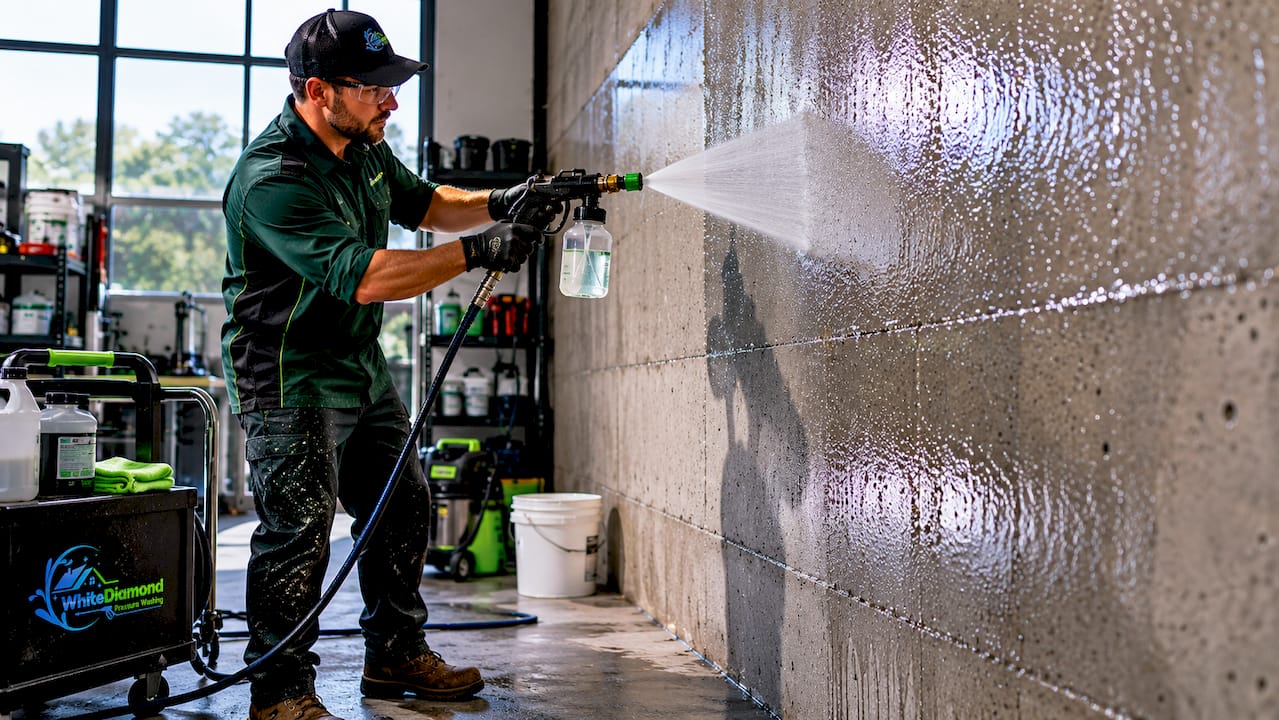
Surface coatings are defined as protective layers applied to cleaned surfaces to prevent environmental damage, corrosion, and premature material degradation. The role of surface coatings after cleaning is not decorative. It is a critical, controlled step in property maintenance that determines how long a surface lasts and how well it resists moisture, UV exposure, and biological growth. For property owners and managers in Citrus County and beyond, understanding this relationship between cleaning and coating is the difference between a surface that holds up for years and one that fails within months. Standards like SSPC-SP1 and guidance from the U.S. General Services Administration (GSA) make clear that coating performance depends almost entirely on what happens before the first drop of coating is applied.
Why is the role of surface coatings after cleaning tied to preparation quality?
Inadequate surface preparation causes up to 80% of premature coating failures. That single figure reframes how property managers should think about cleaning. It is not a preliminary step. It is the most important step in the entire coating process.
The reason is chemistry. Coatings bond to surfaces through molecular adhesion. When oils, greases, salts, or biological residue remain on a surface, even in microscopic amounts, the coating bonds to the contaminant rather than the substrate. That bond is weak. It fails under thermal cycling, moisture, or mechanical stress, often within months of application.
SSPC-SP1 solvent cleaning is the industry standard that addresses this directly. It mandates the removal of oils, grease, dirt, and salts before any mechanical cleaning or coating application begins. The standard treats solvent cleaning not as optional prep work but as a documented hold point, meaning no work proceeds until cleanliness is verified and recorded.
Here is what that means practically for a property manager overseeing exterior surfaces:
- A surface that looks clean after pressure washing may still carry invisible salt deposits from coastal air or organic residue from algae removal.
- Skipping solvent cleaning before coating a driveway, metal railing, or stucco wall creates a contamination layer the coating cannot penetrate.
- Verification hold points must be built into the workflow, not added as an afterthought.
- Coating failures that appear as blistering or delamination months later almost always trace back to a contamination problem at the preparation stage.
“Surface preparation is the most influential factor determining coating service life. Property managers should treat coating application as a controlled workflow step, not a cosmetic finish.” — PCI Magazine
The practical takeaway: cleaning and coating are not two separate jobs. They are one integrated process, and the cleaning phase sets the ceiling for everything the coating can achieve.
How do timing and environmental conditions affect post-cleaning coat application?
Getting the surface clean is only half the equation. When and where you apply the coating matters just as much as how well you cleaned the surface.
Coatings applied within 4 hours after cleaning on dry surfaces, in conditions below 60% relative humidity, achieve measurably better adhesion and long-term durability. The GSA’s historic preservation protocols for bronze architectural elements set this standard, and it applies directly to residential and commercial exterior surfaces.
The reason timing matters is contamination reintroduction. The window immediately after cleaning is when a surface is most vulnerable to airborne particles, moisture, and biological redeposition. Every hour of delay increases the risk that the clean surface picks up new contaminants before the coating seals it.
Environmental conditions compound this risk in four specific ways:
- High humidity causes moisture to condense on the surface, creating a barrier between the substrate and the coating that prevents proper adhesion.
- Direct sun exposure on hot surfaces accelerates solvent evaporation in the coating, reducing the time the coating has to wet out and bond to the surface.
- Wind carries dust and debris that settle on the wet coating, creating surface defects and weak spots.
- Cold temperatures slow curing, leaving the coating soft and vulnerable to damage before it reaches full hardness.
Pro Tip: Schedule coating application for early morning on overcast days. Temperatures are moderate, humidity is typically lower than afternoon levels, and wind is usually calmer. This single scheduling decision reduces the most common environmental failure causes.
For Florida property owners specifically, the combination of high humidity and afternoon thunderstorms makes morning application windows critical. Coating applied at 2 p.m. in July in Citrus County faces conditions that almost guarantee adhesion problems. Coating applied at 8 a.m. on the same day, after a morning surface inspection, performs significantly better.
What methods can verify surface cleanliness before coating?
Visual inspection is an unreliable method for assessing surface cleanliness before coating. A surface can look spotless and still carry contamination levels that will cause the coating to fail.
Contact-angle measurements provide a quantitative, non-visual method to determine whether a surface is ready for coating. The technique works by placing a small droplet of water on the surface and measuring the angle at which the droplet contacts the material. A low contact angle indicates the surface is clean and wettable. A high contact angle signals contamination that will impair adhesion.
| Measurement | Contact angle range | Coating readiness |
|---|---|---|
| Clean, wettable surface | Below 30 degrees | Ready for coating |
| Marginal cleanliness | 30 to 60 degrees | Requires additional cleaning |
| Contaminated surface | Above 60 degrees | Not ready. Coating will fail. |
Dynamic contact angle testing goes further by measuring both advancing and receding angles. The difference between these two values, called contact angle hysteresis, reveals surface uniformity and the presence of patchy contamination that a single measurement might miss. This matters for large exterior surfaces like driveways, retaining walls, and painted facades where contamination is rarely uniform.
Pro Tip: Property managers overseeing large coating projects can request contact-angle verification from their contractor as a documented quality check. If a contractor cannot provide or explain this type of verification, that is a signal to ask more questions about their preparation process.
Dynamic contact angle testing transforms a subjective visual judgment into a measurable standard. That shift from guesswork to data is what separates coating projects that last a decade from those that need remediation within two years.
How do cleaning processes interact with coatings to enhance surface protection?
The chemistry between a cleaning pretreatment system and a coating is not passive. It is an active interaction that determines the final performance of the protected surface.
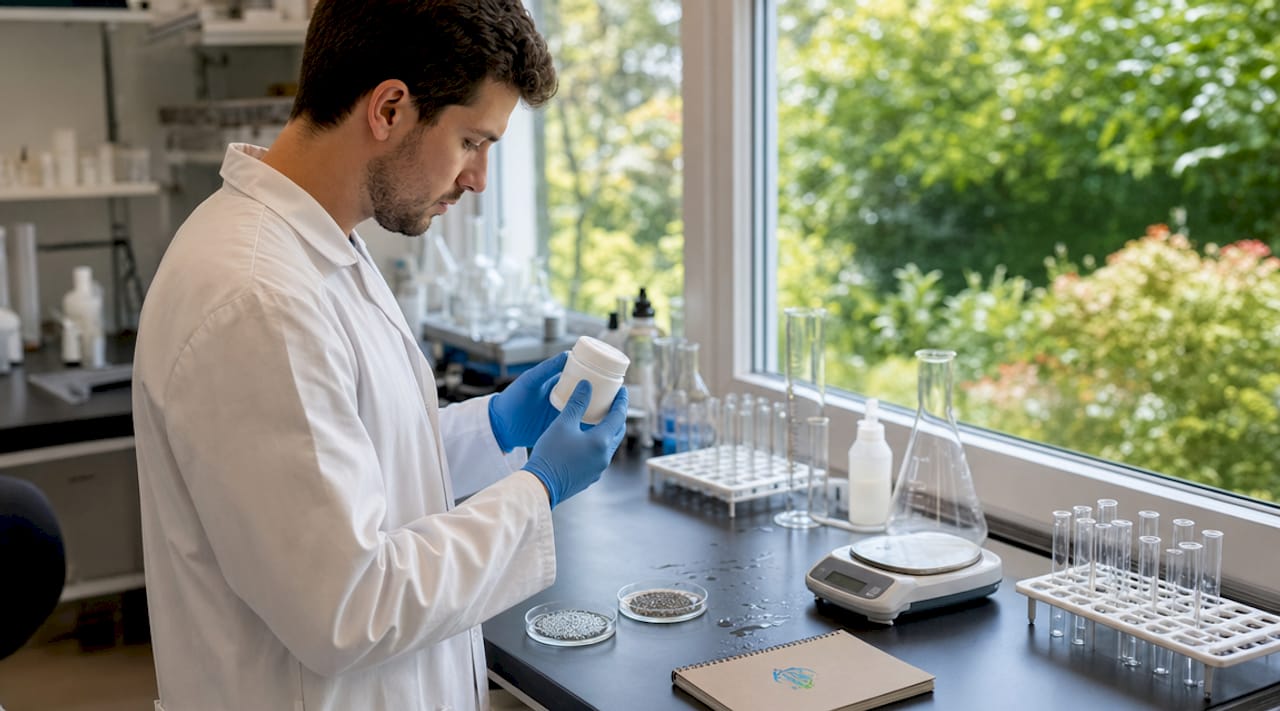
Pretreatment chemistry combines four functions in sequence: cleaning, surface modification, adhesion promotion, and corrosion resistance. Each function depends on the one before it. If the cleaning step leaves residue, the surface modification chemistry cannot work correctly. If surface modification fails, the adhesion promoter has nothing to bond to. The coating then sits on a compromised foundation.
Water quality, temperature, and dwell time are the variables that most property managers overlook. Hard water with high mineral content leaves deposits that interfere with surface chemistry. Water that is too cold slows the chemical reactions that clean and modify the surface. Dwell time that is too short means the chemistry never fully activates. Improper management of these variables causes subtle imbalances that produce adhesion and corrosion problems months after the coating appears to have cured successfully.
The practical implications for property owners are direct:
- Soft washing techniques that control dwell time and solution concentration produce more coating-ready surfaces than high-pressure methods that blast away chemistry before it can work.
- Water temperature during rinsing affects how completely cleaning agents are removed. Residual cleaning chemistry left on the surface can interfere with coating adhesion just as much as the original contaminants.
- A holistic system approach to cleaning variables yields predictable, repeatable coating performance. Treating each variable in isolation produces inconsistent results.
The cleaning and coating synergy that property managers want does not happen by accident. It happens when every variable in the cleaning process is managed with the coating outcome in mind. Professionals who understand exterior surface preparation treat the cleaning phase as the first chapter of the coating story, not a separate task.
Key takeaways
Surface coatings after cleaning succeed only when preparation, timing, environmental conditions, and chemistry are managed as a single controlled process.
| Point | Details |
|---|---|
| Preparation drives coating life | Up to 80% of premature coating failures trace back to inadequate surface cleaning before application. |
| Apply coatings within 4 hours | Coating applied within 4 hours of cleaning on a dry surface achieves significantly better adhesion and durability. |
| Humidity above 60% causes failure | High humidity prevents proper bonding. Schedule coating for low-humidity windows, especially in Florida climates. |
| Visual inspection is not enough | Contact-angle measurements provide the only reliable, quantitative verification of surface cleanliness before coating. |
| Treat cleaning as a system | Water quality, temperature, and dwell time must be managed together. Isolated checks produce inconsistent coating outcomes. |
What I’ve learned from watching coatings fail and succeed
I have seen property owners invest in premium coatings and watch them peel within a season. I have also seen budget coatings outlast expectations by years. The difference is almost never the coating itself. It is everything that happened before the coating was applied.
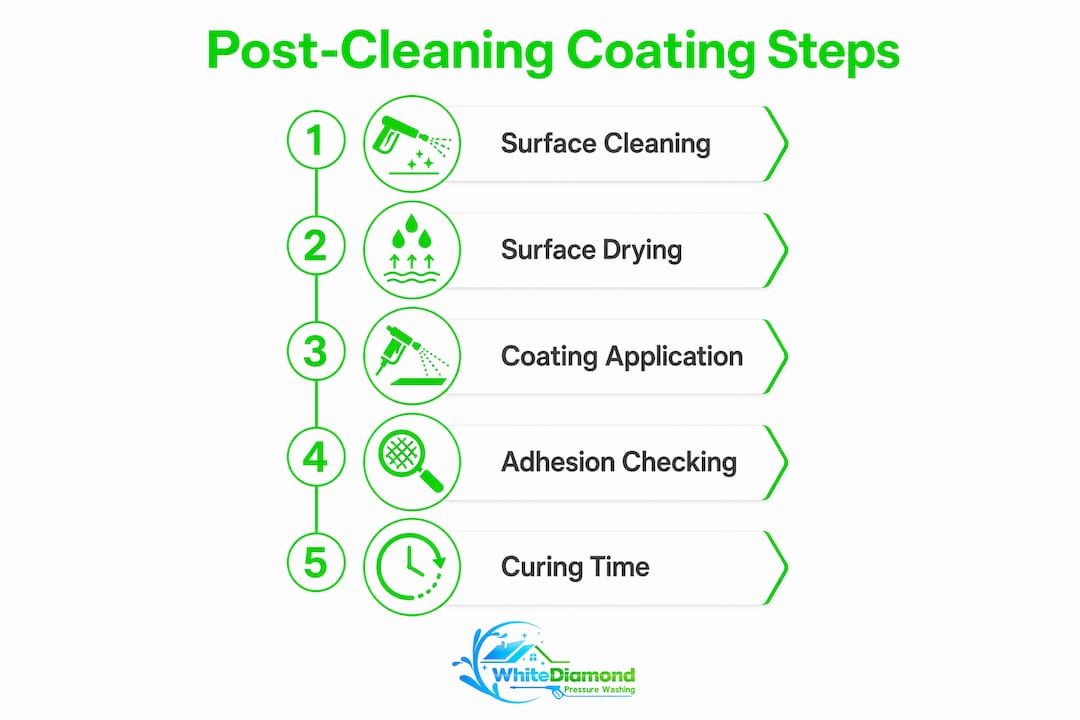
The most common mistake I observe is treating the cleaning step as a task to complete rather than a standard to meet. A crew pressure washes a driveway, it looks clean, and the coating goes on the same afternoon. No verification. No humidity check. No hold point. Six months later, the coating is lifting at the edges and the property manager is calling for a redo.
What actually works is building verification into the workflow as a non-negotiable step. That means checking surface conditions before coating, not assuming the cleaning crew left the surface ready. It means knowing your local weather patterns and scheduling coating windows accordingly. In Citrus County, that often means early morning work in the dry season, not afternoon jobs in summer.
The other insight I would offer is this: the benefits of exterior cleaning compound when cleaning is done with coating in mind from the start. A cleaning job performed with the right chemistry, the right dwell time, and a verification step at the end costs no more than a cleaning job done without those controls. But the coating that follows lasts dramatically longer. That is the real return on investment for property owners who want surfaces that protect themselves.
— Bobby
Protect your surfaces with professional cleaning and coating preparation

Whitediamondpressurewashing delivers exterior cleaning services in Citrus County that are built around one goal: leaving your surfaces genuinely ready for protection. That means soft washing techniques that control chemistry and dwell time, thorough rinsing that removes residue, and the kind of surface finish that coatings actually bond to. When you book professional cleaning with Whitediamondpressurewashing, you are not just getting a clean surface. You are getting a surface that is prepared to hold a coating for years. Explore the soft washing process Whitediamondpressurewashing uses to understand why preparation quality makes every coating investment go further.
FAQ
What is the role of surface coatings after cleaning?
Surface coatings protect cleaned surfaces from moisture, UV damage, corrosion, and biological growth by forming a bonded barrier over the substrate. Their effectiveness depends entirely on how thoroughly and correctly the surface was cleaned before application.
Why does inadequate cleaning cause coating failure?
Coatings bond to whatever is on the surface, including invisible contaminants like oils, salts, and biological residue. According to PCI Magazine and the Federal Highway Administration, poor surface preparation causes up to 80% of premature coating failures.
How soon after cleaning should a coating be applied?
GSA historic preservation protocols specify that coatings should be applied within 4 hours of cleaning on a dry surface. Delays allow contamination reintroduction and increase the risk of adhesion failure.
Can I rely on visual inspection to confirm a surface is ready for coating?
No. Visual inspection is unreliable for coating readiness. Contact-angle measurements provide a quantitative assessment of surface cleanliness, with angles below 30 degrees indicating a surface that is genuinely ready for coating.
How does humidity affect coating application after cleaning?
Humidity above 60% causes moisture to condense on the surface, preventing the coating from bonding correctly to the substrate. Scheduling coating application during low-humidity windows, particularly in the morning, significantly improves adhesion and long-term durability.
One thought on “The Role of Surface Coatings After Cleaning Explained”