

TL;DR:
- Effective parking structure cleaning involves scheduled sweeping, hot-water pressure washing, and runoff management to minimize liability and maintain safety. Proper sequencing, equipment use, and zone-by-zone scheduling reduce costs, protect surfaces, and ensure regulatory compliance. Regular preventative maintenance enhances appearance, extends structural integrity, and diminishes legal risks from accidents.
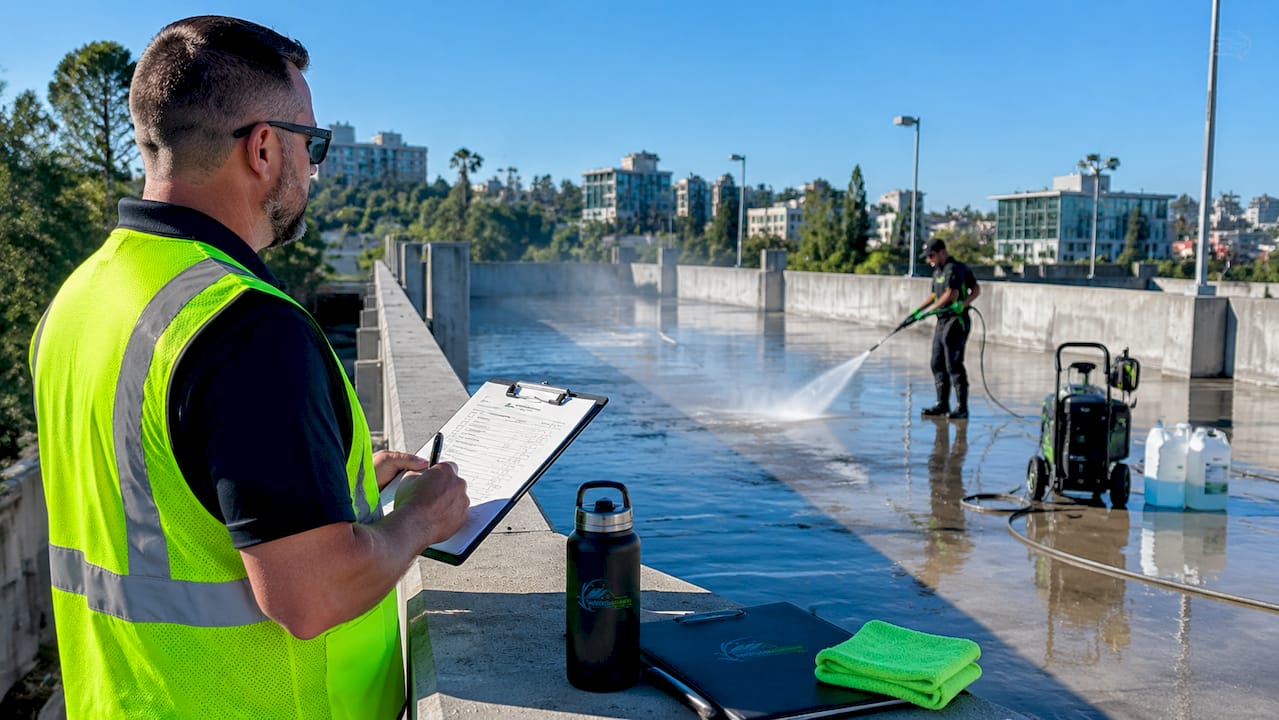
Parking structure cleaning is a staged process that combines mechanical debris removal, hot-water pressure washing, and targeted chemical treatments to maintain safety, appearance, and structural integrity in commercial parking facilities. The industry term for this work is facility maintenance washing, though property managers searching for a parking structure cleaning guide will find the two terms used interchangeably across contractor bids and maintenance contracts. Done correctly, this process protects concrete from petroleum degradation, reduces slip hazards, and signals professional management to tenants and visitors. Tools like ride-on vacuum sweepers, Kärcher hot-water pressure systems, and industrial auto-scrubbers form the backbone of any credible cleaning program.
What are the best practices for parking structure cleaning schedules?
A standardized maintenance schedule breaks parking structure upkeep into three tiers: weekly or fortnightly light checks, monthly or quarterly sweeping and spot work, and a comprehensive deep clean every 6–12 months. That tiered structure prevents small problems from compounding into expensive repairs. Here is how each tier works in practice:
- Weekly or fortnightly: Walk the facility to collect litter, check drain covers for blockage, and flag any new staining or spills. This takes under an hour for most mid-size garages and keeps the space presentable between major cleans.
- Monthly or quarterly: Deploy a ride-on sweeper across all drive lanes and pedestrian zones. Spot-treat oil drips and tire marks with a degreaser before they bond permanently to the concrete surface.
- Every 6–12 months: Run a full deep clean that includes mechanical sweeping, hot-water pressure washing, drain flushing, and a final inspection of expansion joints and painted line markings.
Cleaning frequency is not uniform across all facilities. Humid climates and high-traffic garages require semi-annual deep cleans, while drier regions with lighter use may manage with a single annual cycle. A parking garage serving a hospital or shopping center needs more frequent cycles than one attached to a low-traffic office building.
Pro Tip: Build your cleaning schedule into your annual maintenance budget at the start of the fiscal year. Reactive cleaning after a complaint always costs more than scheduled prevention.
Which equipment delivers the best results in large parking facilities?
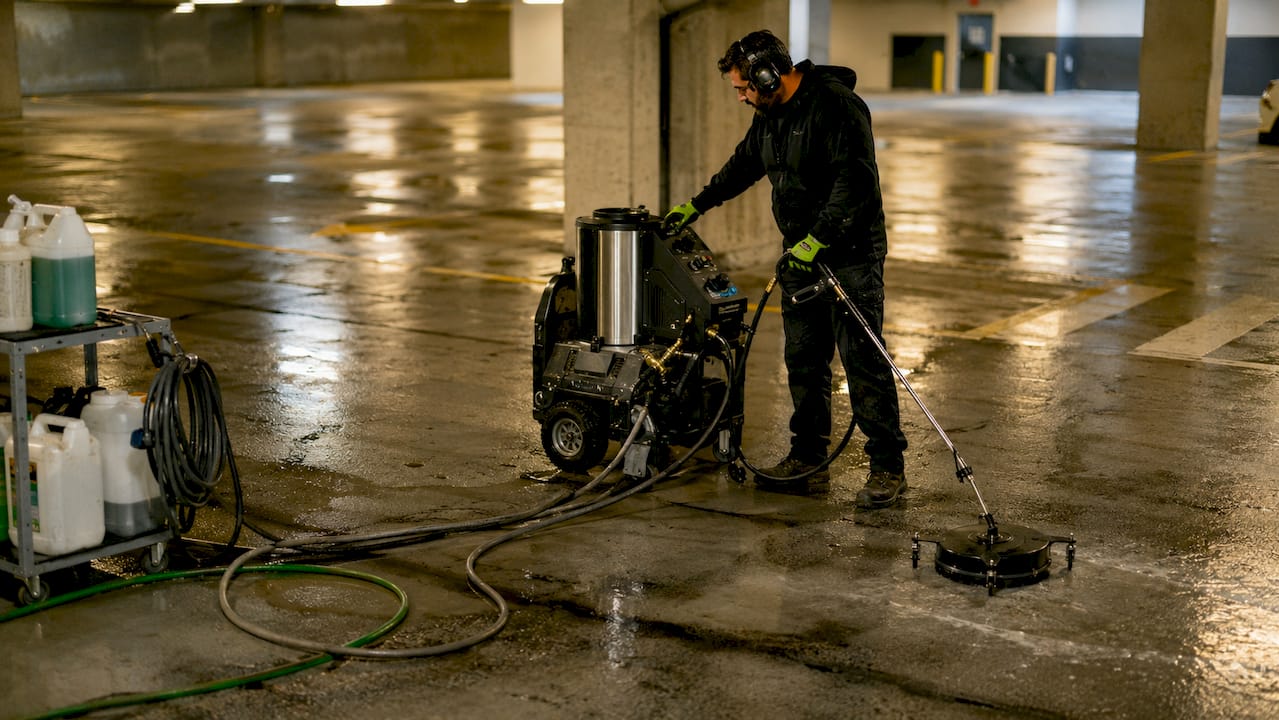
Industrial-grade equipment is the difference between a surface-level clean and one that actually removes petroleum residue and biological buildup. Ride-on vacuum sweepers reach speeds up to 8.7 mph, covering large floor areas quickly without pushing debris into drains. Hot-water pressure systems operating at 180–200°F break down oil and grease at the molecular level, which cold water simply cannot do.
The right equipment sequence matters as much as the equipment itself:
- Ride-on vacuum sweepers: Cover drive lanes and ramps first. These machines pick up loose debris, sand, and grit before any water touches the surface. Brands like Tennant and Nilfisk manufacture units built specifically for multi-level garage environments.
- Hot-water pressure washers: Follow sweeping with a Kärcher HD or HDS series unit set to 180–200°F. The heat activates degreasers and lifts petroleum residue that cold-water systems leave behind.
- Mechanical scrubbers with solution recovery: Use auto-scrubbers on flat deck areas to agitate stubborn staining. Units with onboard recovery tanks capture dirty water before it reaches storm drains, which is a regulatory requirement in most municipalities.
- Detail pressure wands: Use handheld wands for corners, stairwells, and elevator lobbies where ride-on equipment cannot reach. These areas accumulate the most biological growth and are the most visible to pedestrians.
Balancing chemical use, water temperature, and pressure is a specialized skill. Too much pressure on aged concrete damages expansion joints and surface coatings. Too little heat leaves petroleum residues intact. Experienced operators adjust both variables based on surface condition and stain type.
Pro Tip: Always test pressure and temperature settings on an inconspicuous section of the deck before running a full pass. Concrete age and coating type vary significantly across a single structure.
How can property managers minimize disruption during cleaning?
Zone-by-zone cleaning with off-peak scheduling is the standard approach for keeping a parking facility operational during maintenance. Closing an entire structure for cleaning is rarely necessary and creates tenant friction that damages management relationships. The following strategies keep operations running smoothly:
- Divide the structure into zones: Clean one level or section at a time. Redirect vehicles to open zones while work proceeds. Most mid-size garages can maintain 60–70% capacity during a phased clean.
- Schedule during off-peak hours: Nights, early mornings, and weekends minimize the number of users affected. Coordinate with building management to identify the lowest-traffic windows specific to your tenant mix.
- Use clear signage and physical barriers: Place cones, wet floor signs, and directional arrows at zone entry points. Pedestrian safety during pressure washing is a liability issue, not just a courtesy.
- Communicate in advance: Send tenants and employees a 48-hour notice before each cleaning cycle. A brief email or posted notice reduces complaints and demonstrates professional management.
Runoff management is a non-negotiable part of the operational plan. The table below summarizes the key compliance considerations:
| Compliance Area | Requirement | Recommended Solution |
|---|---|---|
| Storm drain protection | Prevent pollutants from entering municipal drains | Use auto-scrubbers with solution recovery |
| Chemical disposal | Dispose of cleaning solutions per local regulations | Work with licensed waste disposal contractors |
| Pedestrian safety | Maintain dry pedestrian paths during washing | Zone barriers and wet floor signage |
| Noise ordinances | Limit equipment noise during restricted hours | Schedule pressure washing outside quiet hours |
Water recovery systems prevent pollutants from migrating to storm drains and protect property managers from environmental fines. This is not optional in most jurisdictions. Confirm local requirements before any cleaning contract is signed.
What are the most common mistakes in parking garage cleaning?
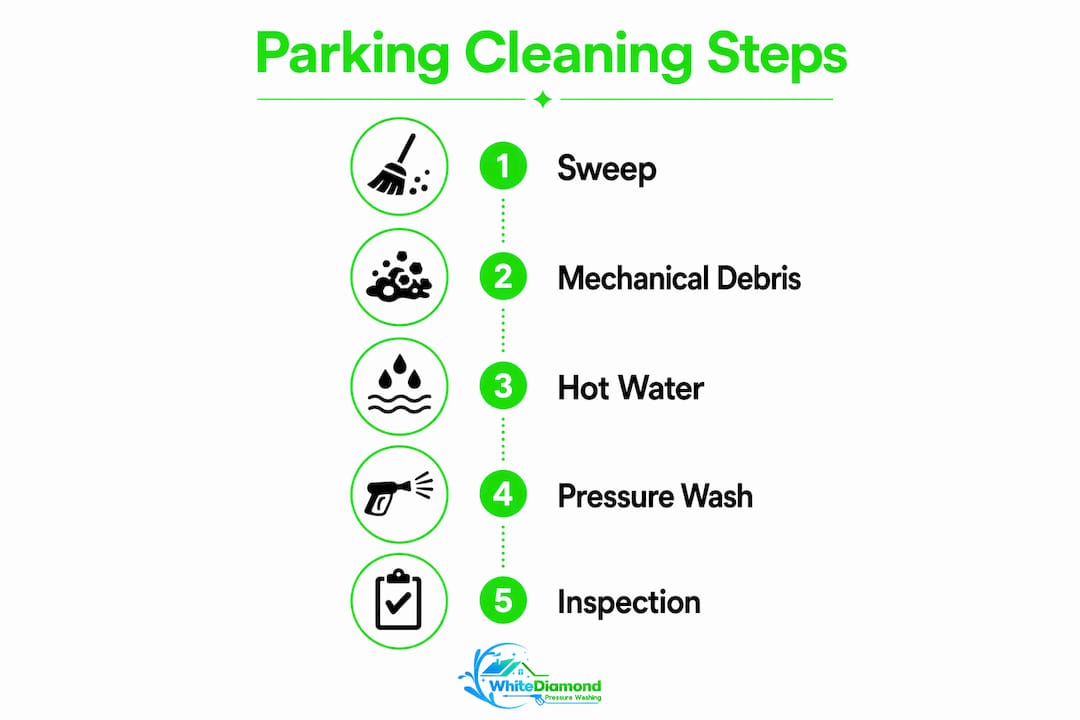
Most cleaning failures trace back to incorrect sequence. Pressure washing before sweeping pushes debris directly into drainage inlets, causing blockages and uneven cleaning results. That single mistake can turn a routine maintenance visit into a costly drain repair call.
The other common pitfalls follow a predictable pattern:
- Skipping the pre-sweep: Debris clogging drainage inlets is the most expensive consequence of skipping this step. Always sweep before any water is applied.
- Using cold water on oil stains: Cold water fails to break down petroleum residues and leaves a greasy film that attracts more dirt. Hot water at 180–200°F is the minimum standard for oil-contaminated surfaces.
- Ignoring expansion joints: High-pressure water forced into expansion joints accelerates joint failure. Use lower pressure settings or handheld wands near these areas.
- No runoff containment: Washing without recovery equipment sends oil, heavy metals, and cleaning chemicals into storm drains. This violates Clean Water Act provisions in most U.S. states and carries significant fines.
- Patchy finishes from inconsistent passes: Operators who rush overlap patterns leave visible tide marks on concrete. Consistent, overlapping passes at uniform speed produce an even finish.
A poorly cleaned parking garage increases slip hazards, hides structural issues, and signals poor management to tenants and visitors. The liability exposure from a slip-and-fall on an oil-contaminated surface far exceeds the cost of a proper cleaning cycle.
Pro Tip: Photograph the facility before and after each cleaning cycle. That documentation protects you in liability disputes and gives you a visual baseline for tracking surface deterioration over time.
Key takeaways
Effective parking structure maintenance requires a sequenced approach that combines scheduled sweeping, hot-water pressure washing, and runoff management to protect both the facility and the property manager’s liability exposure.
| Point | Details |
|---|---|
| Follow a tiered schedule | Run weekly checks, quarterly sweeping, and a full deep clean every 6–12 months. |
| Sweep before washing | Always remove loose debris before applying water to prevent drain blockages and patchy results. |
| Use hot water for oil stains | Pressure systems at 180–200°F are required to break down petroleum residue on concrete. |
| Phase cleaning by zone | Zone-by-zone scheduling keeps the facility operational and reduces tenant disruption. |
| Manage runoff actively | Use auto-scrubbers with solution recovery to meet environmental regulations and avoid fines. |
What i’ve learned after years of cleaning commercial parking surfaces
Most property managers I talk to treat parking structure cleaning as a reactive task. Something looks bad, they call a contractor. That approach costs more and delivers worse results than a scheduled program. The facilities that look best year-round are the ones where cleaning is on the calendar before the fiscal year starts, not after a tenant complaint lands in the inbox.
The detail that surprises most people is how much the sequence matters. I have seen contractors with good equipment produce mediocre results because they skipped the pre-sweep or used cold water on oil stains. The right cleaning order is not a technicality. It is the difference between a clean surface and a surface that looks clean until the next rain reveals every streak and tide mark.
Liability is the other conversation that does not happen often enough. A single slip-and-fall on an oil-contaminated ramp can cost more in legal fees than five years of professional cleaning contracts. Regular maintenance is not just an aesthetic investment. It is risk management. Tenants notice clean facilities, and they notice neglected ones. That perception directly affects lease renewals and the reputation of the property management team.
If you are outsourcing this work, ask contractors specifically about their runoff management process and whether they use solution recovery equipment. That question separates professional operators from those who are just running a pressure washer and hoping for the best.
— Bobby
Professional parking structure cleaning services from Whitediamondpressurewashing
Whitediamondpressurewashing delivers commercial parking facility cleaning for property managers across Citrus County and surrounding regions. The team uses industrial hot-water pressure systems, ride-on sweeping equipment, and solution recovery technology to meet both cleaning and environmental compliance standards.

Scheduling is built around your facility’s traffic patterns, with night and weekend availability to minimize tenant disruption. Every service includes pre-sweep, pressure washing, and post-clean inspection. For property managers who need a reliable, scheduled program rather than reactive spot fixes, Whitediamondpressurewashing offers commercial cleaning services tailored to parking structures of all sizes. Get a free estimate at whitediamondpressurewashing.com and put your maintenance schedule on the calendar before the next complaint arrives.
FAQ
How often should a parking structure be deep cleaned?
A full deep clean is recommended every 6–12 months, with frequency adjusted for climate and traffic. Humid regions and high-traffic facilities need semi-annual cycles.
What temperature should pressure washers use on parking garage floors?
Hot-water pressure systems should operate at 180–200°F to effectively break down oil and grease. Cold water leaves petroleum residue intact on concrete surfaces.
Why does sweeping have to come before pressure washing?
Pressure washing before sweeping pushes loose debris into drainage inlets, causing blockages and uneven cleaning results. Always sweep first to clear the surface before water is applied.
How do property managers handle runoff during parking garage cleaning?
Auto-scrubbers with solution recovery capture dirty water before it reaches storm drains, preventing environmental violations and potential fines under Clean Water Act provisions.
Can parking structure cleaning be done without closing the facility?
Zone-by-zone cleaning with off-peak scheduling allows most facilities to maintain 60–70% capacity during maintenance. Clear signage, barriers, and advance tenant communication make phased cleaning practical without a full closure.
Recommended
- Walkway Cleaning Guide for Homeowners in 2026 – white-diamond-pressure
- Commercial Driveway Cleaning: Impact on Property Value – white-diamond-pressure
- Ensure safe exterior cleaning: a guide to materials compatibility – white-diamond-pressure
- Commercial Property Exterior Maintenance: Impact on Value – white-diamond-pressure
One thought on “Parking Structure Cleaning Guide for Property Managers”