

TL;DR:
- Drying time after cleaning is essential for preventing mold growth and protecting materials. Using moisture meters and professional equipment can ensure surfaces are dry and safe for use, prolonging the cleaning results and material life. Neglecting proper drying causes damage, re-soiling, and costly repairs, emphasizing the importance of planned drying processes.
Drying time after cleaning is defined as the necessary period for a surface or material to reach a stable, adequately dry state before use or exposure. The role of drying time after cleaning goes far beyond simply waiting for water to evaporate. It directly determines whether mold takes hold, whether wood warps, whether paint peels, and whether your cleaning results actually last. Tools like moisture meters and equipment like air movers are the professional standard for managing this process correctly. Methods such as hot water extraction and very low moisture (VLM) cleaning each carry very different drying demands, and understanding those differences protects your property and your investment.
How does drying time affect cleanliness and mold prevention?
Insufficient drying after cleaning creates the exact conditions mold and mildew need to grow. Surfaces that stay damp for too long become biological hazards, not clean spaces. The cleaning work you paid for gets undone within days if moisture lingers.
Carpet is one of the most common problem areas. Standard carpet drying times after hot water extraction range from 6 to 24 hours, while very low moisture cleaning dries carpets in 30 to 90 minutes. That difference matters enormously in humid climates like Citrus County, where ambient moisture already works against you.
Air movers are the most effective tool for accelerating safe drying. Air movers reduce drying time by 50–65%, and adding a dehumidifier improves efficiency by another 20%. That combination cuts biological risk and gets surfaces back into use faster without compromising the clean.
Conditions that promote mold growth after cleaning include:
- Relative humidity above 60% in the room during drying
- Inadequate airflow across the cleaned surface
- Thick or layered materials that trap moisture underneath
- Temperatures below 65°F, which slow evaporation significantly
- Foot traffic or furniture replacement before the surface is fully dry
Pro Tip: Open windows and run ceiling fans during drying whenever outdoor humidity is lower than indoor humidity. If outdoor air is more humid, keep windows closed and run a dehumidifier instead.
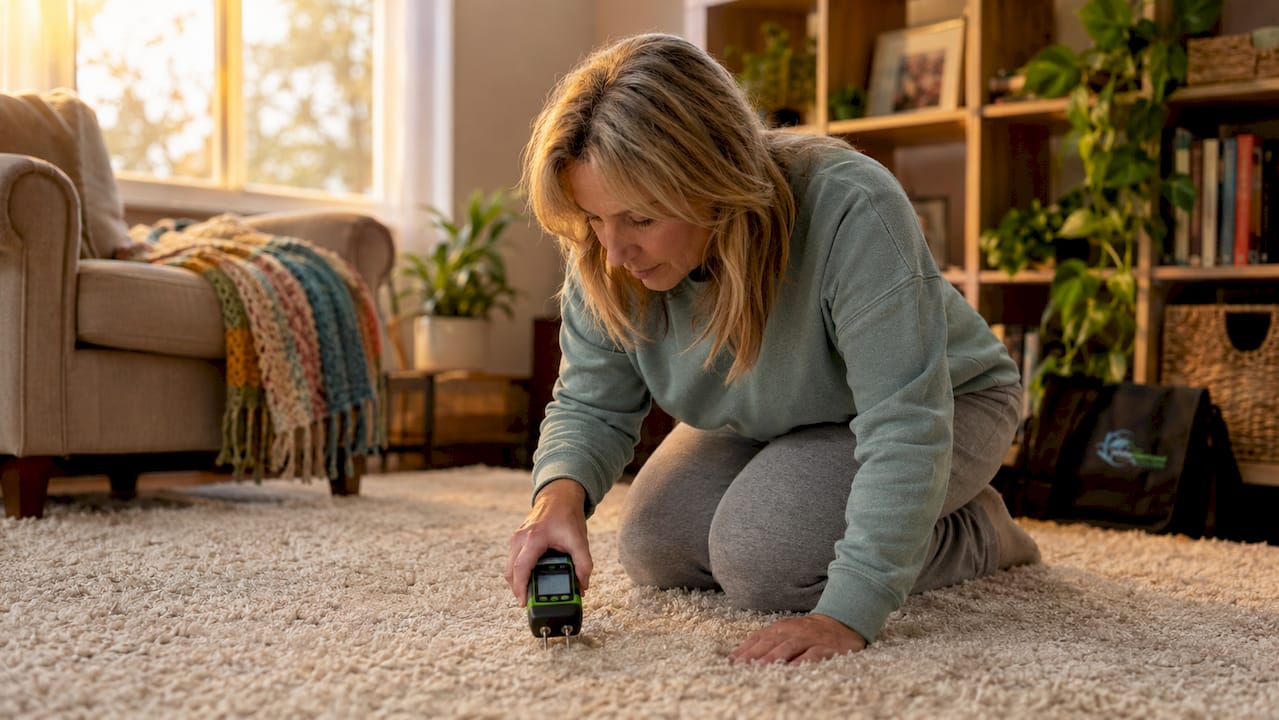
Moisture meters give you objective proof of dryness rather than a guess based on touch or appearance. A reading below 15% moisture content in carpet backing confirms it is safe to use. Relying on how a surface feels is not reliable and leads to callbacks, mold claims, and damaged materials.
What impact does drying time have on material longevity?
Drying time is not just about cleanliness. It determines whether your materials survive the cleaning process structurally intact. Wood, painted surfaces, and upholstery all respond to moisture in ways that become permanent if drying is mismanaged.
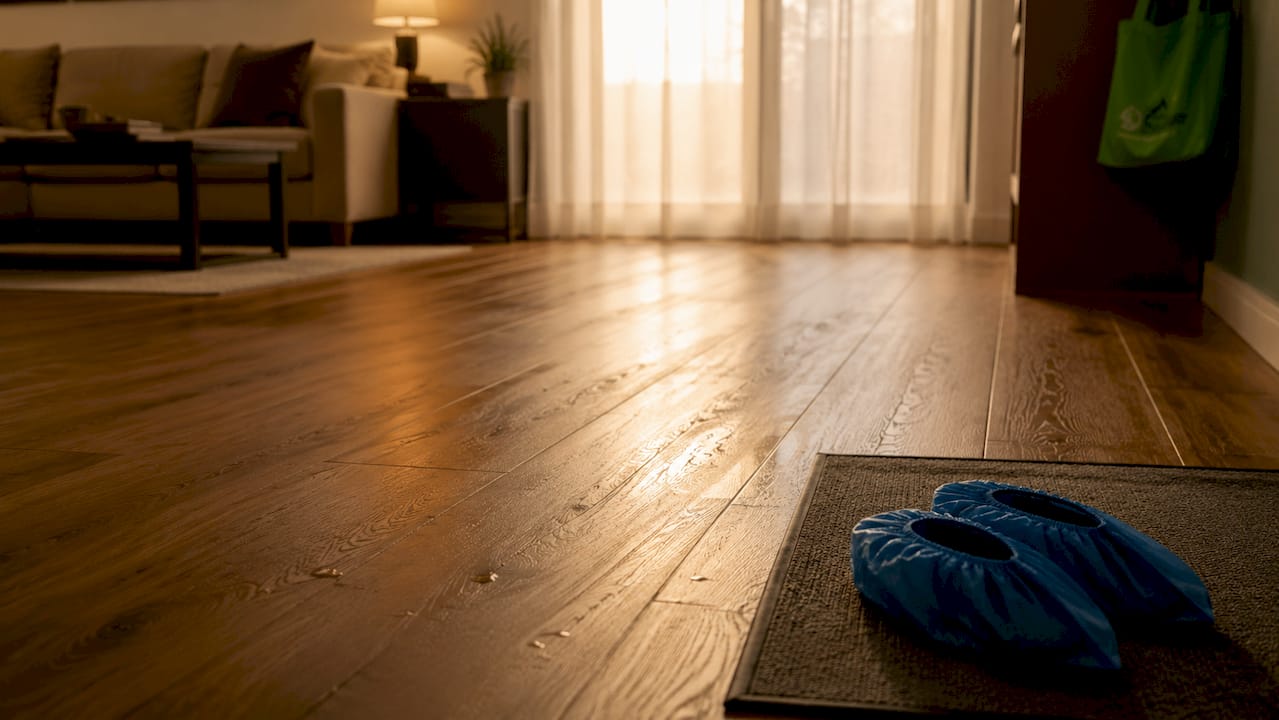
Wood is the most sensitive material in most homes. Improper drying of wood causes 8–12% radial shrinkage, which leads to joinery failure. Indoor wood furniture requires a moisture content of 6–8% to match a 40–60% relative humidity environment. Hitting that target prevents the seasonal gaps and warping that homeowners often blame on the wood itself rather than the cleaning process.
The opposite problem is real too. Over-drying causes brittleness and surface defects just as under-drying causes mold and structural failure. The goal is a stable moisture state, not the driest possible state.
| Material | Target moisture content | Typical drying time | Key risk from poor drying |
|---|---|---|---|
| Indoor wood furniture | 6–8% MC | 24–72 hours | Warping, joinery failure |
| Carpet (hot water extraction) | Below 15% MC | 6–24 hours | Mold, re-soiling |
| Carpet (VLM cleaning) | Below 15% MC | 30–90 minutes | Minimal if ventilated |
| Painted exterior surfaces | Surface dry before curing | 1–4 hours (dry), 7–30 days (cure) | Peeling, blistering |
| Upholstery | Below 12% MC | 4–12 hours | Mildew, fabric distortion |
One distinction that homeowners frequently miss is the difference between drying time and curing time. Paint drying and curing are separate stages. A surface can feel dry to the touch within hours while the coating underneath is still chemically bonding. Applying pressure, cleaning, or placing objects on a cured surface before it fully cures causes peeling and defects that require full reapplication.
Pro Tip: Always ask your cleaning or painting contractor for the curing time, not just the drying time. These are two different numbers, and confusing them is one of the most common causes of coating failure in residential properties.
How do cleaning methods and environmental factors influence drying time?
The cleaning method you choose sets the baseline drying duration. Environmental conditions then either shorten or extend that baseline significantly. Knowing both gives you control over the outcome.
The four factors that most influence drying speed are:
- Cleaning method and water volume. Hot water extraction saturates carpet fibers deeply, requiring 6–24 hours to dry. VLM cleaning uses minimal moisture and dries in 30–90 minutes. Exterior pressure washing leaves surface water that typically evaporates within 1–4 hours depending on conditions.
- Material thickness. Doubling material thickness nearly doubles drying time. A thick area rug takes far longer than a thin doormat cleaned with the same method.
- Temperature. Higher temperatures accelerate drying dramatically. Higher temperatures can reduce drying time by up to 74%. Cleaning in cold conditions without supplemental heat extends drying significantly and raises biological risk.
- Airflow and humidity. Still air in a humid room is the worst drying environment. Moving air at lower relative humidity pulls moisture from surfaces efficiently. Weather plays a direct role in surface cleaning results, especially for exterior surfaces.
| Cleaning method | Typical drying time | Best accelerator |
|---|---|---|
| Hot water extraction (carpet) | 6–24 hours | Air movers plus dehumidifier |
| VLM cleaning (carpet) | 30–90 minutes | Ventilation |
| Exterior pressure washing | 1–4 hours | Sun, wind, warm temperatures |
| Soft washing (roof, siding) | 2–6 hours | Airflow, low humidity |
Professional equipment makes a measurable difference. Air movers and dehumidifiers working together cut drying time by more than half and add reliability that no amount of open windows can match. For property managers overseeing multiple units, that efficiency directly affects scheduling and turnover time.
What drying time strategies optimize cleaning effectiveness?
Managing drying time well is a skill, not an afterthought. The homeowners and property managers who get the best long-term results treat drying as a planned phase of the cleaning process, not something that just happens on its own.
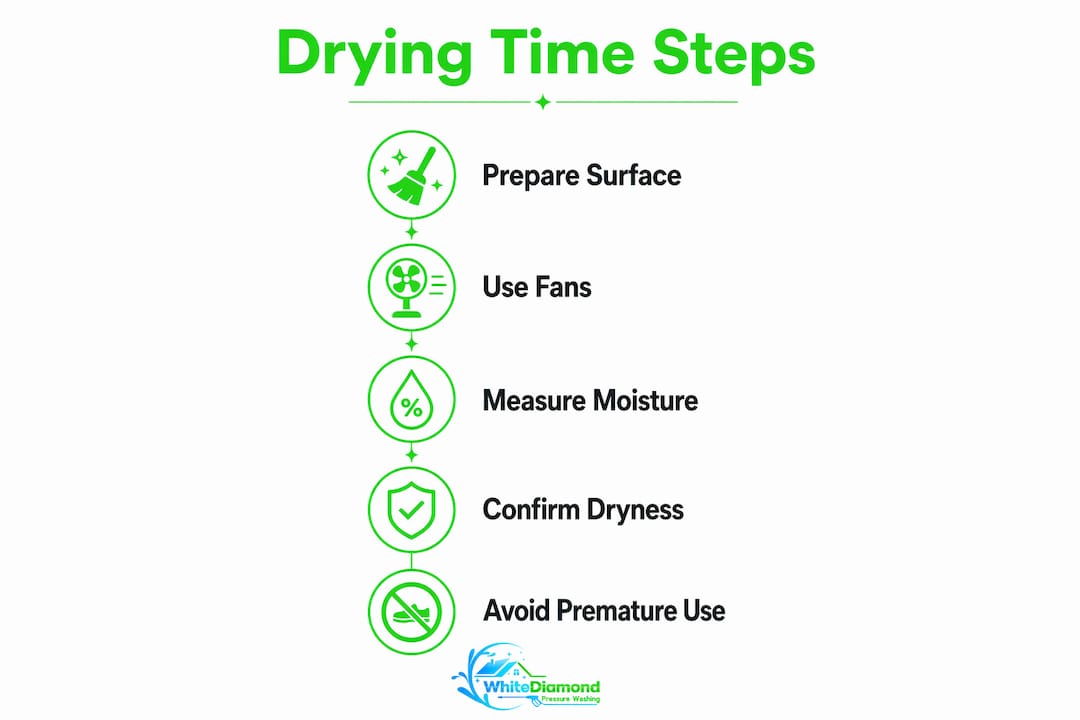
The single most reliable strategy is using a moisture meter to confirm dryness rather than relying on touch or appearance. Moisture meters provide objective proof that reduces callbacks and builds client trust. A surface that looks dry can still hold enough moisture to support mold growth within 24–48 hours.
Staged drying works well for large or complex spaces. Start airflow at the far end of the room and work toward the exit. Place air movers at 45-degree angles to the surface rather than blowing directly down. Rotate equipment positions every few hours to address moisture that migrates as the surface dries unevenly.
Common pitfalls homeowners and property managers should avoid:
- Replacing furniture or rugs before confirming dryness with a meter
- Closing windows and turning off fans too early because the surface feels dry
- Scheduling cleaning the day before a high-traffic event
- Ignoring subfloor moisture after carpet cleaning, which can cause floor damage even when the carpet surface reads dry
- Skipping drying verification on thick materials like wool rugs or upholstered furniture
Pro Tip: For exterior surfaces, schedule cleaning at least 24 hours before rain is forecast. Rain on a partially dried surface can reintroduce contaminants and extend the full drying period by days.
Communicating drying expectations clearly to tenants or family members prevents premature use. A simple note on the door with the expected ready time eliminates most accidental damage from foot traffic. This is especially relevant for mildew prevention in humid climates where even brief re-wetting can restart biological growth.
What happens when you neglect drying time after cleaning?
Skipping or shortening the drying period does not save time. It creates repair costs that far exceed the original cleaning job.
Premature foot traffic on wet carpet causes re-soiling immediately. Dirt from shoes bonds to damp fibers and becomes embedded, making the carpet look dirty again within days. Partial drying creates a danger zone where residues coagulate and become harder to remove than before cleaning. The cleaning effort is partially or fully wasted.
Structural damage follows a predictable pattern. Wood floors cleaned with excess moisture and inadequate drying time warp, cup, or buckle. Paint applied to a surface that has not fully cured peels within weeks. These are not warranty issues. They are drying failures.
“Drying time is not just water removal. It is the process of achieving a stable state that prevents premature material failure and biological growth.” — CSS Spray Dryer
The confusion between drying time and curing time causes some of the most expensive mistakes in residential maintenance. A freshly painted deck that feels dry after two hours may need 30 days to fully cure. Placing furniture or a grill on it before curing is complete leaves permanent impressions and breaks the coating seal. Understanding this distinction is one of the most practical things a property manager can learn.
Key Takeaways
Proper drying time after cleaning is the single most important factor in preventing mold, protecting materials, and ensuring that cleaning results actually last.
| Point | Details |
|---|---|
| Drying time prevents mold | Surfaces left damp after cleaning create conditions for mold and mildew within 24–48 hours. |
| Moisture meters confirm dryness | Touch and visual inspection are unreliable; use a moisture meter to verify safe dryness levels. |
| Method determines duration | VLM cleaning dries in 30–90 minutes; hot water extraction requires 6–24 hours. |
| Drying and curing are different | Paint and coatings feel dry long before they cure; premature use causes peeling and failure. |
| Equipment cuts drying time | Air movers reduce drying time by 50–65%; adding a dehumidifier adds another 20% efficiency. |
What I’ve learned from watching drying time get ignored
Bobby here. After years of working in exterior cleaning across Citrus County, the mistake I see most often is not a bad cleaning job. It is a good cleaning job followed by zero attention to drying.
Homeowners assume that once the cleaning crew leaves, the work is done. Property managers schedule the next tenant walkthrough for the following morning without checking whether the surfaces are actually ready. Both groups are setting themselves up for damage that costs far more to fix than it would have cost to wait.
The technology exists to get this right every time. Moisture meters are inexpensive and give you a number instead of a guess. Air movers are standard professional equipment that cut drying time in half. There is no reason to rely on instinct when objective tools are available.
The other thing I have noticed is that the drying versus curing distinction trips people up constantly. A deck that feels dry is not a deck that is ready for furniture. A freshly cleaned and sealed driveway needs time to cure before cars drive over it. These are not obscure technical details. They are the difference between a result that lasts and one that fails within a season.
If you take one thing from this article, make it this: drying time is a planned phase of maintenance, not a passive waiting period. Treat it that way and your cleaning results will last significantly longer.
— Bobby
Professional exterior cleaning that accounts for every drying variable
Whitediamondpressurewashing serves homeowners and property managers across Citrus County with pressure washing and soft washing services built around material preservation, not just surface appearance.

Every job Whitediamondpressurewashing completes accounts for drying time from the start. The team selects cleaning methods matched to the surface, uses professional-grade equipment to control moisture levels, and applies low-pressure techniques that reduce drying duration without sacrificing results. For homeowners who want cleaning that protects their property long after the crew leaves, visit Whitediamondpressurewashing to request a free estimate and see the full range of exterior cleaning services available.
FAQ
How long should surfaces dry after cleaning?
Drying time varies by method and material. Carpets cleaned with hot water extraction need 6–24 hours, while very low moisture cleaning dries in 30–90 minutes. Exterior surfaces typically dry within 1–4 hours under normal conditions.
How do I know when a surface is fully dry?
Use a moisture meter rather than relying on touch. Carpet backing should read below 15% moisture content, and wood surfaces should reach 6–8% moisture content before being considered safe for use or furniture replacement.
What is the difference between drying time and curing time?
Drying time refers to when surface moisture evaporates and the material feels dry to the touch. Curing time is the longer period required for coatings like paint or sealant to fully bond chemically. Premature use during curing causes peeling and coating failure.
Does temperature affect how fast surfaces dry after cleaning?
Yes, significantly. Higher temperatures can reduce drying time by up to 74%. Cold conditions slow evaporation and extend drying periods, increasing the risk of mold growth and material damage.
Can improper drying damage my floors or carpets permanently?
Yes. Wood floors exposed to excess moisture without adequate drying time can warp, cup, or buckle permanently. Carpets that stay damp too long develop mold and embedded residues that standard cleaning cannot fully remove.