

TL;DR:
- Professional cleaning extends the lifespan of exterior surfaces by removing harmful biological growths that cause biodeterioration. Soft washing with low pressure and chemical dwell time kills organisms completely and preserves materials, unlike high-pressure methods that risk damage. Regular cleaning every 6 to 12 months prevents biological buildup and protects properties from premature degradation and costly repairs.
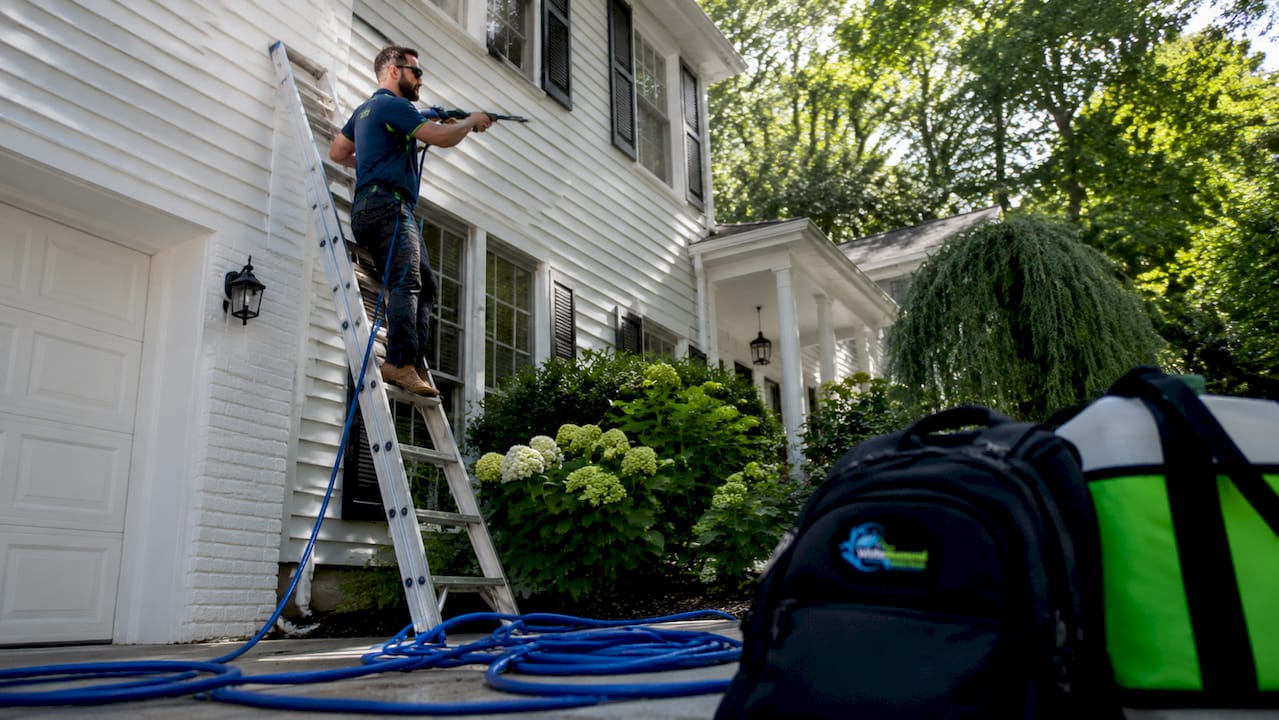
Professional cleaning extends lifespan by removing biological growths and contaminants that physically degrade exterior materials over time. This is not a cosmetic benefit. Algae, mold, and biofilms actively consume and weaken surfaces like asphalt shingles, concrete, and painted siding. The industry term for this process is biodeterioration, and it is the primary reason routine professional maintenance matters far beyond appearances. Whitediamondpressurewashing specializes in soft washing and low-pressure techniques that kill these organisms at the source, protecting your property’s structural integrity for years longer than DIY methods can deliver.
Why professional cleaning extends lifespan: the biology behind surface damage
Dirty exterior surfaces are not just unsightly. They are biologically active environments where microorganisms feed on your building materials.
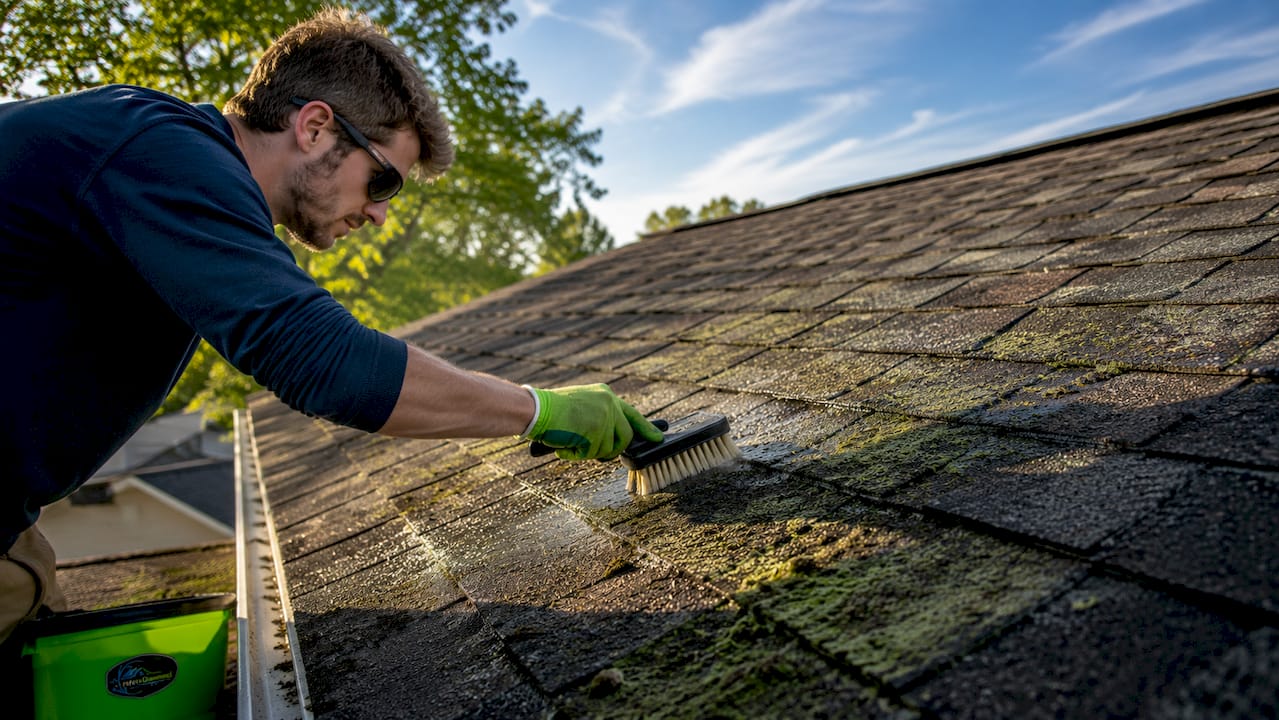
Peer-reviewed building conservation research confirms that microalgal biofilms cause both aesthetic and physical damage, including rock fragmentation. That means the green or black film on your driveway or roof is not sitting on top of the material. It is breaking it apart from within.
Biofilms form when microorganisms attach to a surface and secrete a protective matrix. This matrix anchors them against rain and wind, making them nearly impossible to remove with water alone. They penetrate micro-porous surfaces like concrete, brick, and roof shingles, where they continue feeding on mineral components.
“Slowing microbial colonization is the key longevity strategy rather than only cosmetic cleaning.” — Building conservation research, 2026
The damage compounds over time. A thin layer of algae today becomes a deeply embedded colony within months. Professional cleaning interrupts this cycle by killing organisms completely, not just washing away what is visible on the surface.
How Gloeocapsa magma destroys asphalt shingles
Gloeocapsa magma is the algae responsible for the dark black streaks on roofs across Florida and the broader Southeast. It does not just stain. Algae feeds on limestone filler inside asphalt shingles, loosening the protective granules that shield the shingle from UV radiation. Once granules are gone, heat absorption increases and the shingle ages far faster. The result is a roof lifespan shortened by 5–10 years compared to a properly maintained roof.
This is why the importance of regular cleaning goes well beyond curb appeal. A single neglected roof can cost a homeowner a full replacement a decade earlier than necessary.
Which cleaning methods actually preserve materials?
Not every cleaning method protects surfaces. The wrong technique causes the same kind of damage it is supposed to prevent.
| Method | Pressure Level | Biological Kill | Material Risk |
|---|---|---|---|
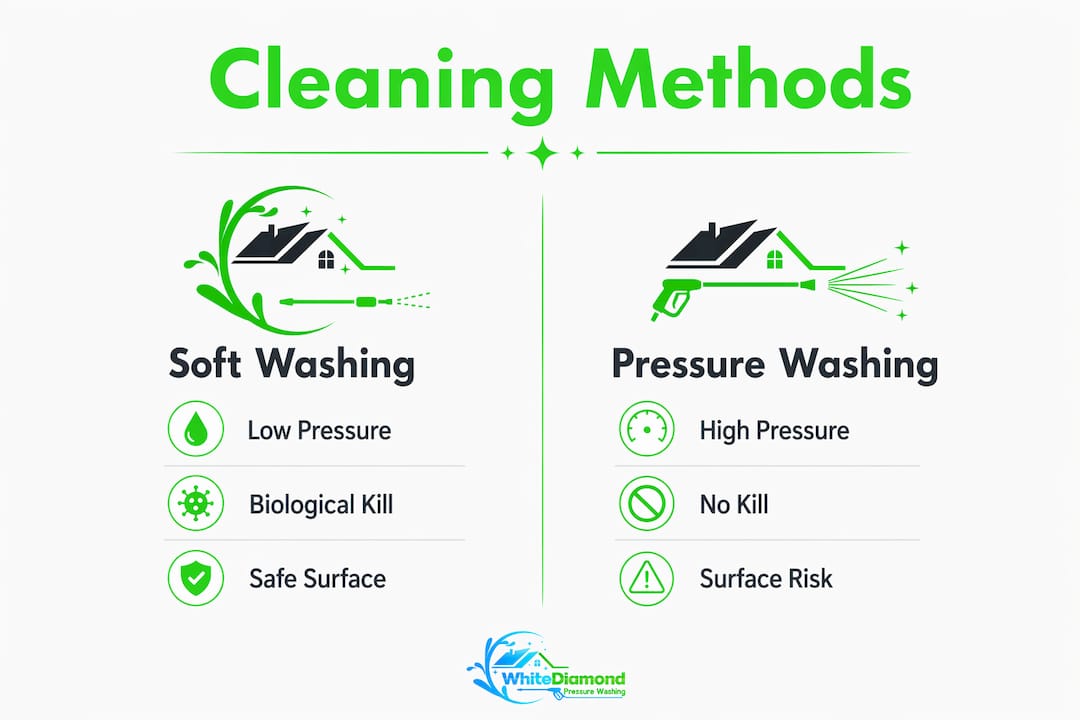
| Soft washing | Low (under 500 PSI) | Yes, via chemical dwell | Minimal |
| High-pressure washing | High (2,000+ PSI) | No, removes visible dirt only | Paint stripping, mortar erosion, moisture intrusion |
| DIY garden hose | Very low | None | None from pressure, but no biological removal |
Soft washing uses a low-pressure application of cleaning solutions, followed by a controlled dwell time of 10–30 minutes to kill organisms safely. The chemistry does the work, not the force. This matters because biofilms reside inside micro-porous surfaces where water pressure cannot reach them.
The Asphalt Roofing Manufacturers Association (ARMA) identifies pressure washing as a warranty-voiding practice for asphalt shingle roofs. ARMA-recommended soft washing techniques use chemical low-pressure cleaning specifically because high PSI strips granules and forces water under shingles, accelerating the exact damage homeowners are trying to prevent.
Surfactant adhesion is a critical part of the soft wash process. Surfactants help the cleaning solution cling to vertical and angled surfaces long enough for the chemistry to penetrate and kill organisms completely. Without adequate dwell time, you get partial removal. Partial removal means faster regrowth and no real extension of material life.
Pro Tip: Ask any exterior cleaning company what dwell time they use and what surfactants are in their solution. A professional who cannot answer that question is likely using pressure alone, which does not deliver the long-term cleaning advantages you are paying for.
The role of water pressure in safe exterior cleaning is about balance. Reducing pressure while increasing chemical contact time protects fragile materials and delivers a deeper, longer-lasting clean.
How often should you schedule professional exterior cleaning?
Cleaning frequency is not arbitrary. It is driven by how quickly biological organisms recolonize treated surfaces.
Mold colonies can re-establish in as little as 6–9 months on untreated exterior surfaces. That timeline directly shapes how often homeowners and property managers should schedule professional cleaning.
- Annual cleaning works well for most residential properties in moderate climates with good sun exposure and airflow. It keeps biological growth from reaching the stage where it causes material damage.
- Biannual cleaning is the right call for properties in humid, shaded, or heavily wooded environments like much of Citrus County. Shade and moisture accelerate algae and mold growth significantly.
- Post-storm cleaning should follow any major weather event. Wind-driven debris and standing moisture create ideal conditions for rapid biofilm formation on roofs, driveways, and siding.
- Pre-sale or pre-rental cleaning protects property value and prevents a buyer’s inspection from flagging biological damage as a structural concern.
After a professional soft wash, weather cycles determine final visual equalization over 12–36 months. Rain and sun gradually flush residual staining. Scheduling a re-clean too early wastes money and adds unnecessary wear. A professional cleaning company will advise you on the right interval based on your specific property conditions.
Property managers overseeing multiple units benefit from a proactive maintenance schedule that aligns cleaning cycles with lease renewals and seasonal conditions. Reactive cleaning after visible damage appears always costs more than preventive maintenance.
What mistakes accelerate surface damage during cleaning?
Many exterior damage issues come from improper cleaning techniques, not from cleaning itself. Knowing what to avoid is as important as knowing what to do.
- Excessive pressure on siding. High-pressure washing risks include paint stripping, mortar erosion, and moisture intrusion behind panels. Vinyl siding, wood siding, and stucco are all vulnerable to PSI levels above what the material can handle.
- Incomplete biological removal. Washing away visible stains without killing the underlying organism guarantees rapid regrowth. Algae and mold return faster to surfaces that have been disturbed but not fully treated.
- Wrong nozzle angle on roofs. Directing pressure upward under shingles forces water into the roof deck, creating moisture damage that leads to rot and mold inside the attic.
- Using bleach without surfactants. Bleach alone evaporates quickly on hot surfaces. Without a surfactant to hold the solution in place, dwell time is insufficient for complete biological kill.
- Skipping a rinse on plants and landscaping. Cleaning solutions that pool around plant roots cause chemical burn. A professional pre-wets and post-rinses all surrounding vegetation.
Pro Tip: If you see a cleaning crew arrive with only a pressure washer and no chemical application equipment, the job will not deliver the long-term surface protection you need. Effective exterior cleaning requires both chemistry and controlled pressure.
The risks of high-pressure washing are well documented. Homeowners who attempt DIY pressure washing frequently void their roofing warranties and create new moisture pathways into their walls without realizing it.
Key Takeaways
Professional cleaning extends surface lifespan by eliminating biological organisms that physically degrade materials, and soft washing with proper chemical dwell time is the only method that achieves complete biological kill without causing material damage.
| Point | Details |
|---|---|
| Biodeterioration is the core threat | Algae, mold, and biofilms physically break down roofing, concrete, and siding materials over time. |
| Soft washing outperforms pressure washing | Low-pressure chemical application kills organisms completely; high pressure only removes visible dirt and risks material damage. |
| Clean every 6–12 months | Mold and algae recolonize in as little as 6–9 months, making annual or biannual cleaning the minimum for effective protection. |
| ARMA recommends soft washing | Pressure washing voids asphalt shingle warranties; ARMA-approved chemical cleaning preserves both the roof and its coverage. |
| Wrong technique causes damage | Excessive PSI, missing dwell time, and skipping surfactants all accelerate the deterioration they are meant to prevent. |
What I have learned after years of cleaning Florida exteriors
Florida’s humidity and heat create some of the most aggressive biological growth conditions in the country. I have seen roofs that looked fine from the street but had lost years of life because Gloeocapsa magma had been quietly consuming granules for two or three seasons. The homeowners thought they were saving money by skipping annual cleaning. They ended up replacing a roof years ahead of schedule.
The insight that most homeowners miss is this: the cost of professional cleaning is not a maintenance expense. It is a replacement deferral. Every year you keep algae, mold, and biofilm off your surfaces is a year you push back a $10,000 roof replacement or a $5,000 siding repair. That math is not complicated.
What I also see regularly is damage caused by the wrong cleaning method. A neighbor recommends a guy with a pressure washer. The job looks great for a week. Then the paint starts peeling, or water shows up in the attic. The soft washing vs. power washing decision is not a preference. It is a material science question, and getting it wrong is expensive.
My honest advice: treat exterior cleaning like you treat oil changes. You do not wait until the engine seizes. You follow a schedule, use the right product, and let a professional handle it. The properties I see maintained on a consistent annual or biannual soft wash schedule look dramatically better and hold their value far longer than those cleaned reactively.
— Bobby
Whitediamondpressurewashing protects your property from the outside in
Whitediamondpressurewashing serves homeowners and property managers across Citrus County with soft washing and low-pressure exterior cleaning that removes biological growth without damaging your materials.

Every service uses ARMA-approved methods, proper chemical dwell times, and experienced technicians who know how to treat roofs, driveways, siding, and walkways safely. Whether you need a first-time clean or want to set up a recurring maintenance schedule, Whitediamondpressurewashing makes it straightforward. Visit Whitediamondpressurewashing to get a free estimate and see the full range of exterior cleaning services available for your property.
FAQ
What does professional cleaning actually do to extend surface lifespan?
Professional cleaning removes biological organisms like algae, mold, and biofilms that physically degrade materials through a process called biodeterioration. Killing these organisms with soft washing prevents the granule loss, mortar erosion, and surface fragmentation that shorten material lifespan.
How does soft washing differ from pressure washing for longevity?
Soft washing uses low pressure combined with chemical solutions and a controlled dwell time to kill organisms completely. Pressure washing removes visible dirt but leaves organisms alive and risks mechanical damage like paint stripping and moisture intrusion.
How often should a homeowner professionally clean their exterior?
Annual cleaning suits most properties, but humid or shaded properties in climates like Citrus County benefit from biannual service. Mold and algae can recolonize in as little as 6–9 months, so waiting longer than a year allows biological damage to resume.
Does pressure washing void a roof warranty?
Yes. ARMA technical bulletins identify pressure washing as a warranty-voiding practice for asphalt shingle roofs. ARMA recommends low-pressure chemical cleaning, which is the method used by certified soft wash professionals.
Can I damage my home by cleaning it incorrectly?
Improper cleaning is a leading cause of exterior damage. Excessive pressure strips paint, erodes mortar, and forces water behind siding and under shingles. Using the right PSI level, the right chemistry, and proper dwell time is what separates professional results from costly DIY mistakes.
Recommended
- Why Professional Exterior Cleaning Matters Most – white-diamond-pressure
- Commercial Cleaning Advantages That Protect Your Bottom Line – white-diamond-pressure
- Professional Cleaning Teams: 62% Less Property Damage in 2026 – white-diamond-pressure
- Why Clean Home Exteriors Matter for Value – white-diamond-pressure