

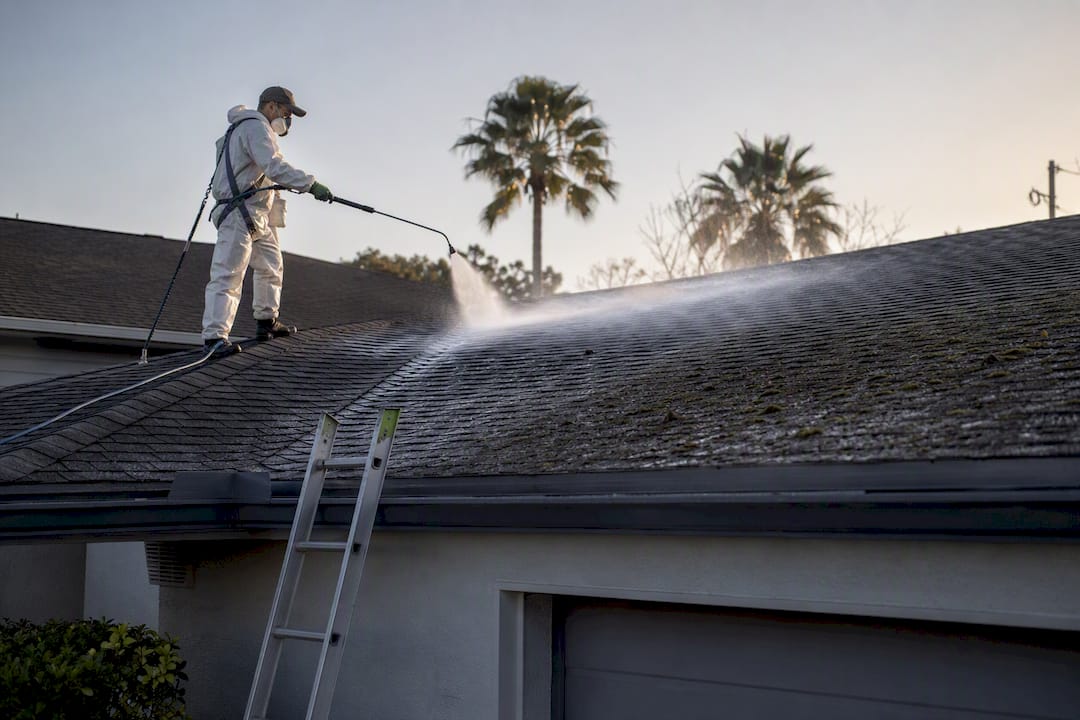
Yes, roof cleaning can void your warranty, but usually only when the method matters more than the fact you cleaned at all. The first move: pull out your written warranty and call the manufacturer or your original installer before anyone touches the roof. Trade guidance from ARMA and warranty language from GAF and Owens Corning both point to the same culprit in denied claims: pressure washing, not cleaning itself. A company like Whitediamondpressurewashing that documents every job in writing gives you a paper trail if a claim ever gets questioned.
- Check your warranty’s cleaning/maintenance and exclusions sections first
- Call the manufacturer or installer for written approval if anything is unclear
- Choose soft-wash over pressure washing unless your warranty says otherwise
Pro Tip: Take dated photos of your roof before you schedule any cleaning. If a warranty dispute ever comes up, “before” photos are worth more than any verbal assurance from a contractor.
Key Takeaways
Roof cleaning voids warranty coverage almost exclusively through method, meaning pressure washing and undocumented chemical work, not the act of cleaning itself.
| Point | Details |
|---|---|
| Check your warranty first | Read the cleaning/maintenance and exclusions sections before scheduling any work. |
| Pressure washing is the main risk | GAF and Owens Corning both exclude damage caused by power washing from coverage. |
| Soft-wash is the safer standard | Low pressure, approved chemicals, and proper dwell time follow ARMA-aligned industry guidance. |
| Documentation protects your claim | Keep photos, MSDS sheets, contractor credentials, and written scopes with your warranty paperwork. |
| Choose contractors who document everything | Whitediamondpressurewashing provides written cleaning plans, insured technicians, and pre/post photos for every roof job. |
Table of Contents
- How Manufacturer Warranties Treat Cleaning and Maintenance
- Which Cleaning Methods Put Your Warranty at Risk?
- A Warranty-Safe Roof Cleaning Checklist You Can Actually Use
- What GAF, Owens Corning, CertainTeed, IKO, and Malarkey Actually Say
- What to Do if a Warranty Claim Gets Denied
- Get a Warranty-Safe Roof Cleaning Estimate
- Frequently Asked Questions
- Sources
How Manufacturer Warranties Treat Cleaning and Maintenance
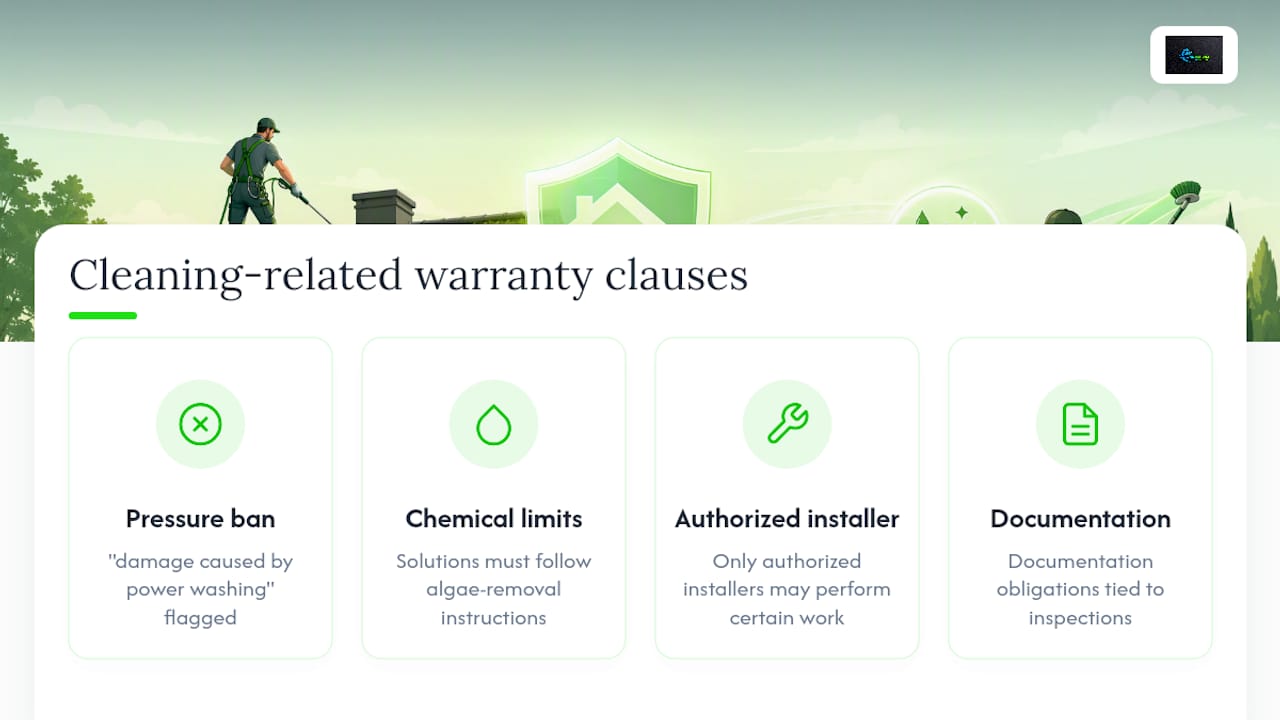
Warranty documents rarely ban cleaning outright. They exclude specific cleaning methods, and the wording is where homeowners get tripped up. Owens Corning’s standard product warranty excludes damage from power washing and from cleaning solutions applied outside its algae-removal instructions. That single clause has ended more than a few claims.
Watch for four clause types in your paperwork: explicit pressure-washing exclusions, chemical concentration limits, requirements that only authorized installers perform certain work, and documentation obligations tied to inspections. Phrases like “damage caused by power washing” or “cleaning solutions not in accordance with instructions” are the exact language claims adjusters flag.
Find your warranty in the owner’s packet from installation, through your title company’s closing documents, or on the manufacturer’s website using your product code. Read the cleaning/maintenance section first, then exclusions, then transferability if you’re a property manager managing a portfolio. Our ARMA-based cleaning guidelines walk through how these clauses typically map to real-world cleaning jobs.
Pro Tip: Search your warranty PDF for the words “pressure” and “power washing” using Ctrl+F. It takes thirty seconds and tells you exactly where you stand.
Which Cleaning Methods Put Your Warranty at Risk?
Not every cleaning method carries the same risk, and ranking them makes the decision easier.
- High-pressure power washing and mechanical scraping. This is the top cause of denied claims. High PSI strips protective granules, lifts shingle tabs, and leaves visible mat damage that inspectors photograph and cite by name.
- DIY chemical mixes and unauthorized roof walking. Guessing at bleach concentrations, skipping proper rinsing, or letting runoff pool on the roof produces the same granule loss and staining manufacturers exclude, even without a pressure washer involved. Walking on shingles without authorization can also crack tabs that later show up as “installation” or “handling” damage.
- Professional soft-wash and manufacturer-approved processes. Low pressure combined with an approved chemical dilution and proper dwell time is the boundary ARMA guidance treats as the standard for safe algae removal. This is conditional, not automatic. Some manufacturers still specify exact product types.
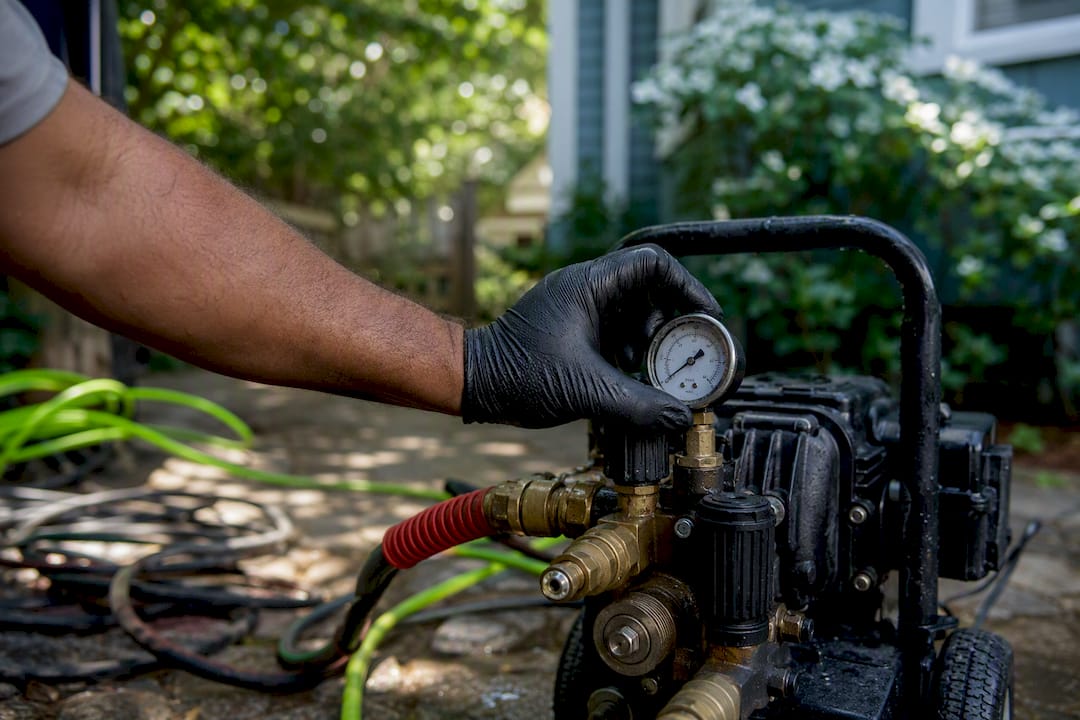
Industry guidance generally treats soft-wash systems running well under 500 PSI, paired with a controlled sodium hypochlorite solution and adequate dwell time before rinsing, as the dividing line from “pressure washing” in warranty terms. Our breakdown of low-pressure roof washing covers the equipment side of that distinction in more detail.
Pro Tip: If a contractor can’t tell you their PSI setting off the top of their head, that’s a red flag. Warranty-safe cleaners know their equipment specs cold.
A Warranty-Safe Roof Cleaning Checklist You Can Actually Use
Follow this before you sign anything with a contractor.
- Locate and read your warranty’s cleaning and exclusions sections.
- Photograph the entire roof, including vents, flashing, and any existing wear.
- Get written authorization from your manufacturer or installer if your warranty requires it.
- Choose soft-wash cleaning over pressure washing as the default method.
- Confirm the contractor’s maximum PSI, chemical type, and dilution ratio in writing.
- Require dwell time and a gentle, low-pressure rinse rather than a forceful blast.
What to collect from any contractor before work begins:
- Proof of liability insurance
- References from at least two prior roofing jobs
- Manufacturer certification, if the job applies to a warranty requiring one
- A signed scope of work listing methods, chemicals, concentrations, and equipment PSI
- Material safety data sheets or product labels for every chemical used
Ask for that information in a simple written request: contractor name and license number, insurance certificate, PSI setting, chemical name and concentration, and estimated dwell time. Keep it with your invoice.
After the job, hold onto your pre and post photos, schedule any inspection the warranty requires, and file every document with your original roof warranty paperwork. Our guide to effective roof cleaning techniques covers the technique side step by step, and TrueSealCoating’s roof sealing resources are worth a look if you’re planning a seal after the clean.
Pro Tip: Store your contractor documentation in the same folder as your roof warranty. When a claim comes up years later, you don’t want to be searching your email for a receipt from a cleaning company that no longer exists.
What GAF, Owens Corning, CertainTeed, IKO, and Malarkey Actually Say
Each major manufacturer takes a slightly different stance, but the pattern repeats.
- GAF: Warns against pressure washing in its warranty resources and points certified-contractor customers toward enhanced coverage programs.
- Owens Corning: Explicitly excludes power washing and non-approved cleaning solutions from its standard limited warranty.
- CertainTeed: Maintains cleaning and maintenance guidance homeowners should confirm directly through their product warranty documentation before scheduling work.
- IKO: Publishes shingle-specific cleaning recommendations that homeowners should verify by product line before hiring anyone.
- Malarkey: Recommends annual professional inspections and specifically advises homeowners against attempting cleaning themselves, citing granule loss as a documented warning sign.
When in doubt, call the number on the manufacturer’s warranty page and get any approval in writing. The commonality across all five: pressure washing is excluded, documentation matters, and qualified contractors are the safer bet.
Pro Tip: Save the confirmation email or letter from the manufacturer in the same file as your cleaning contract. A verbal “yes” from a customer service line means nothing without it in writing.
What to Do if a Warranty Claim Gets Denied
A denial isn’t the end of the road, but you need to move fast and stay organized.
- Request the denial reason in writing and preserve every document you already have.
- Photograph the damaged areas immediately, then gather your pre/post photos, contractor agreement, MSDS sheets, and any authorization emails.
- Ask for a re-inspection, and consider bringing in an independent NRCA-recognized roofing inspector for a second opinion.
- If the manufacturer still won’t budge, escalate to their warranty department directly, and loop in your insurer or a small-claims filing if the damage is significant. Talk to an attorney if the dollar amount justifies it.
Documentation from an inspection or resilience program, similar to what IBHS’s Fortified guidance recommends, strengthens your position at every one of these steps.
Pro Tip: Send your documentation request by email, not phone. A written record of exactly what the manufacturer said protects you if the conversation gets disputed later.
A Practitioner’s View on Warranty-Safe Cleaning
Most warranty disputes I’ve seen trace back to one decision: someone chose speed over the right pressure setting. Insured technicians who document every chemical and PSI reading aren’t being overly cautious, they’re protecting the homeowner’s coverage as much as their own liability. That’s the whole job, done right.
Get a Warranty-Safe Roof Cleaning Estimate
Whitediamondpressurewashing built its roof cleaning process around one goal: giving you paperwork a warranty claim can actually survive. That means a written cleaning plan with your PSI setting and chemical dilution spelled out before work starts, product labels and safety data sheets on file, and dated before and after photos you can hand to a manufacturer if a question ever comes up.

Every technician carries insurance, and every job follows the same soft-wash process detailed on our soft washing process guide. Before you book anyone, ask for the written scope of work and confirm whether your specific manufacturer requires additional approval. If you’re ready to get that process started, request a free roof cleaning estimate and get the documentation your warranty actually calls for.
Frequently Asked Questions
Does pressure washing void a roof warranty?
In most cases, yes. GAF and Owens Corning both name power washing specifically as an exclusion in their warranty documents, since high PSI strips granules and can lift shingle tabs.
Does roof cleaning void warranty coverage even with soft-wash methods?
Rarely, as long as the contractor uses low pressure, an approved chemical concentration, and proper dwell time. Confirm your specific manufacturer’s requirements first, since some warranties still specify approved products.
What’s the difference between pressure washing and soft washing for warranty purposes?
Pressure washing uses high PSI to mechanically blast away buildup, which damages shingle granules and mats. Soft washing uses low pressure combined with a chemical solution that dissolves algae and grime without abrasive force.
How do I verify my specific shingle manufacturer’s cleaning policy?
Call the warranty phone number listed on your manufacturer’s website, reference your product code, and request written confirmation of what cleaning methods are approved for your warranty.
How often should I clean my roof to avoid warranty issues?
Most manufacturer guidance points to inspections at least once a year and after major storms, with cleaning scheduled only when staining or algae growth actually appears rather than on a fixed calendar.
Does hiring a professional instead of DIY cleaning affect my warranty?
Generally, yes, in your favor. Manufacturers like Malarkey specifically advise against homeowners attempting their own roof cleaning and recommend professional inspection and service instead.
Sources
- Malarkey Roofing Products Maintenance and Repair Guidelines for Standard Shingle and Accessory Warranties
- GAF — Resources: Warranties
- STANDARD PRODUCT LIMITED WARRANTY on Owens Corning Roofing Shingles and Components (PDF)