

TL;DR:
- Conventional cleaners contain harmful VOCs and synthetic chemicals that linger in homes and waterways.
- Certified biodegradable cleaners break down safely, reducing environmental impact and improving indoor air quality.
- Switching to eco-friendly cleaning methods benefits health and preserves Citrus County’s vital waterways.
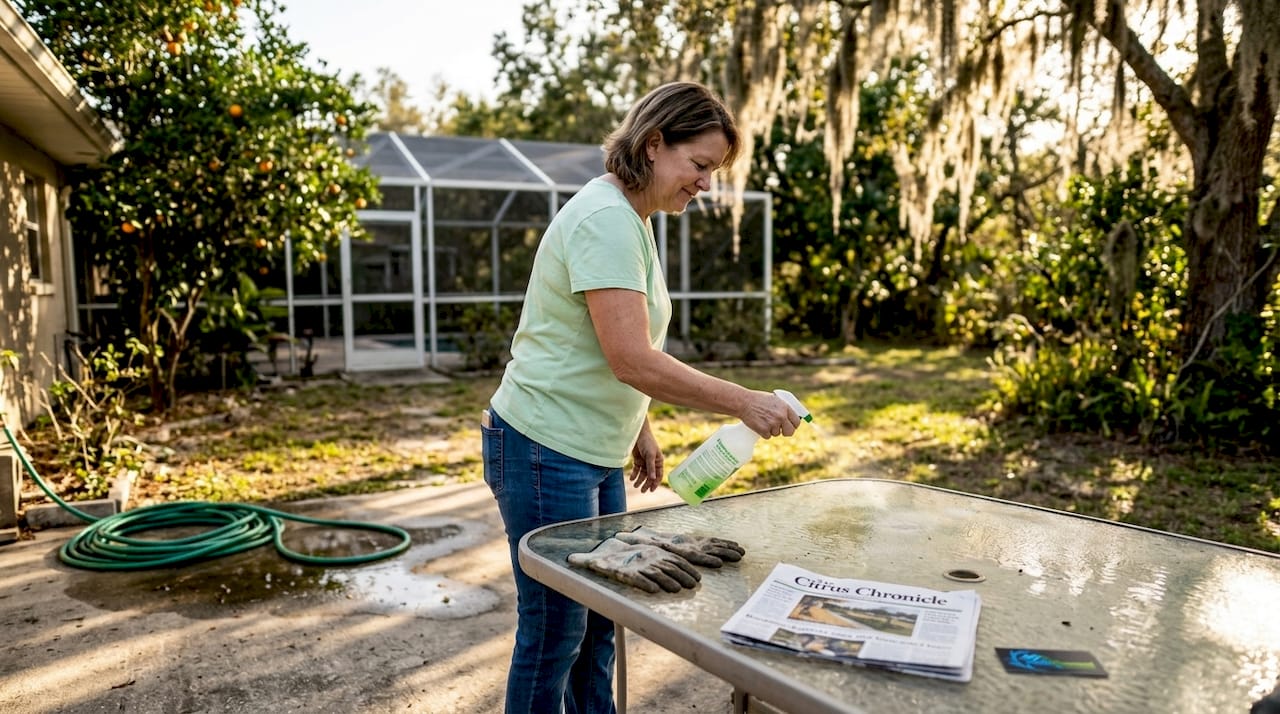
Most homeowners in Citrus County assume their cleaning products are safe simply because they’re sold on store shelves. The reality is more surprising. Conventional cleaners often contain volatile organic compounds, synthetic surfactants, and preservatives that linger in your home’s air long after you’ve put the bottle away. They also wash into local waterways when used outdoors, threatening the ecosystems Citrus County residents care deeply about. Biodegradable cleaners have moved well past the “gentle but weak” reputation they once had. Today, certified formulas match or outperform traditional products while protecting your family, your property, and the environment around you.
Table of Contents
- What makes a cleaner biodegradable?
- Environmental impact: Biodegradable vs. conventional cleaners
- Health benefits for your family and pets
- Do biodegradable cleaners really work?
- Making the switch: How Citrus County homeowners can start
- A cleaner future: What most homeowners overlook
- Connect with eco-friendly cleaning services
- Frequently asked questions
Key Takeaways
| Point | Details |
|---|---|
| Cleaner air and health | Biodegradable cleaners reduce indoor pollutants and lower risk of allergies and asthma for your family and pets. |
| Smaller environmental footprint | Using biodegradable products cuts chemical emissions, carbon footprint, and waterway toxicity in Citrus County. |
| Proven cleaning power | Lab-tested biodegradable cleaners work just as well as traditional products for most household cleaning tasks. |
| Simple to switch | Homeowners can easily find certified biodegradable cleaners and get started with a few simple steps. |
What makes a cleaner biodegradable?
The word “biodegradable” gets printed on a lot of labels, but it means something very specific when it comes to cleaning products. A truly biodegradable cleaner breaks down naturally in the environment, leaving no toxic residue behind. The active cleaning agents, called surfactants, must decompose within a defined timeframe under real-world conditions. That process is what separates a genuinely green product from one that’s just marketed that way.
Certification is the clearest signal of legitimacy. EPA Safer Choice certified biodegradable cleaners must pass strict testing to clean as effectively as conventional products while being safer for health and the environment, including ready biodegradability of surfactants and low aquatic toxicity. This means the government has already done the vetting for you.
Greenwashing is a real problem in this category. Companies slap words like “natural” or “plant-based” on products without any third-party verification. Here’s what to look for when reading a label:
- The EPA Safer Choice logo or similar certified third-party seal
- The phrase “readily biodegradable” on the ingredient breakdown
- A full ingredient list, not just vague “surfactant blend” language
- No phosphates, optical brighteners, or synthetic fragrances
When working with an exterior cleaning company, it’s worth asking whether they use industry-approved cleaners that meet these standards. The same scrutiny applies to your interior cleaning cabinet.
Pro Tip: Look for the specific phrase “readily biodegradable” on a product’s surfactant information. This confirms the ingredient breaks down quickly under standard test conditions, not just eventually under ideal lab settings.
Adopting safe cleaning methods starts with understanding what’s actually in your bottle. Once you read labels with this framework, it becomes much easier to separate the real options from the marketing noise.
Environmental impact: Biodegradable vs. conventional cleaners
With a sense of what defines a biodegradable cleaner, it’s time to ask how these compare to conventional products in terms of environmental footprint.
Life-cycle assessments show biodegradable cleaners reduce global warming potential by 49 to 53% and chemical emissions by 83% compared to traditional methods. That’s not a marginal improvement. That’s a fundamental shift in what your cleaning routine leaves behind.
| Impact Category | Biodegradable Cleaners | Conventional Cleaners |
|---|---|---|
| Global warming potential | 49 to 53% lower | Baseline |
| Chemical emissions | 83% lower | Baseline |
| Aquatic toxicity | Significantly lower | High in many formulas |
| Biodegradation speed | Fast, defined timeline | Slow or incomplete |
| Runoff risk to waterways | Minimal | High |
For Citrus County homeowners, the waterway risk is especially relevant. The county sits within a region rich in springs, rivers, and coastal ecosystems. When you pressure wash a driveway or rinse an exterior wall with a conventional cleaner, that chemical runoff flows directly into the local water table. Phosphates and synthetic surfactants don’t just disappear. They accumulate, feed algae blooms, and reduce oxygen in the water.
Natural soap components are less toxic to aquatic life and human skin cells, more biodegradable, and clinically effective. That’s a win on every axis.
Understanding the Citrus County environmental impact of exterior cleaning choices puts this into local perspective. Choosing biodegradable products outdoors isn’t just a personal health decision. It’s a direct contribution to the health of the waterways, wildlife, and community around you.
Health benefits for your family and pets
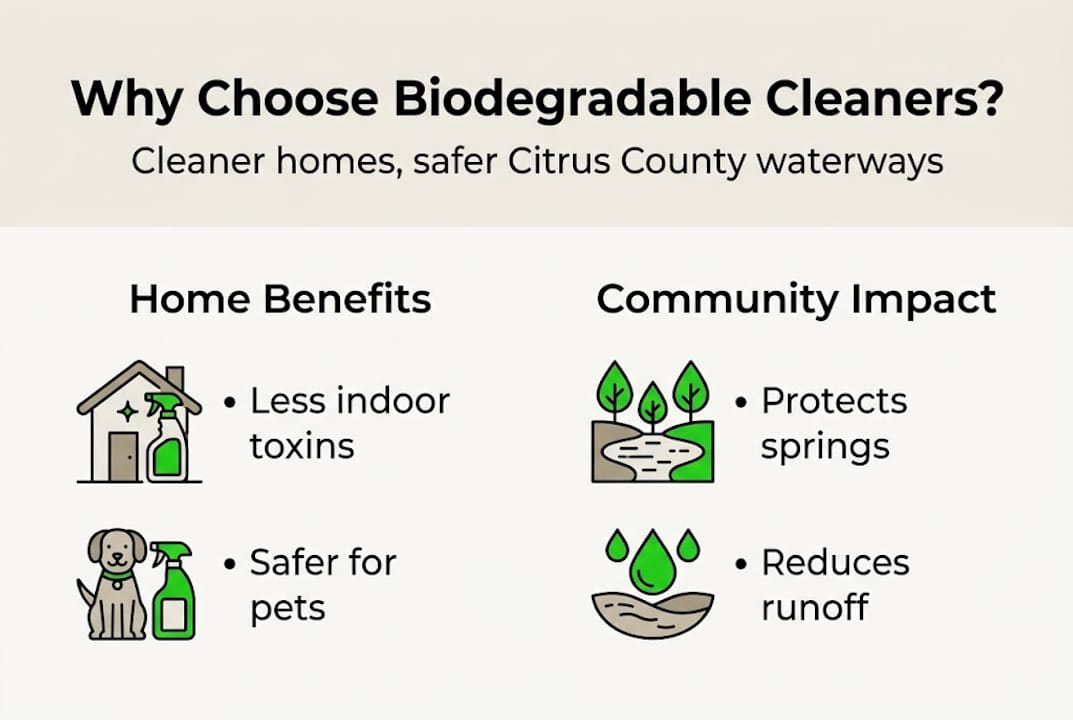
Beyond environmental benefits, switching to biodegradable cleaners has profound effects on your family’s health.
Conventional cleaning products are one of the most overlooked sources of indoor air pollution. Sprays, scrubs, and rinses release volatile organic compounds (VOCs) into the air. These compounds don’t ventilate quickly. They settle into fabrics, carpets, and surfaces where children crawl and pets sleep. The exposure is low-level but constant, and that’s exactly the kind of exposure that accumulates over time.
“Green and biodegradable cleaners reduce airborne irritants like VOCs, improving indoor air quality and reducing skin and respiratory irritation. They are safer for kids and pets, with studies showing lower asthma risk compared to conventional cleaning routines.”
Frequent use of multiple conventional cleaners is linked to 3.24 times higher asthma odds and reduced lung function. That number is striking. Most people assume cleaning their home makes it healthier. In some cases, it does the opposite.
Here’s a practical approach to improving your home’s air quality with biodegradable products:
- Replace your all-purpose spray with an EPA Safer Choice certified formula first, since it’s used most frequently.
- Switch your floor cleaner next, as residues stay on surfaces where pets and toddlers have direct contact.
- Move to biodegradable laundry detergent to reduce skin contact exposure from clothing and bedding.
- Choose fragrance-free formulas when possible, since synthetic fragrances are a primary VOC source.
- Store all cleaners sealed in a ventilated cabinet, even the green ones, to minimize any residual off-gassing.
Exploring eco-friendly cleaner benefits specific to Citrus County homes gives you an even clearer picture of how these swaps add up over months and years.
Do biodegradable cleaners really work?
Effectiveness is crucial, so let’s see how biodegradable options really perform in Citrus County homes.
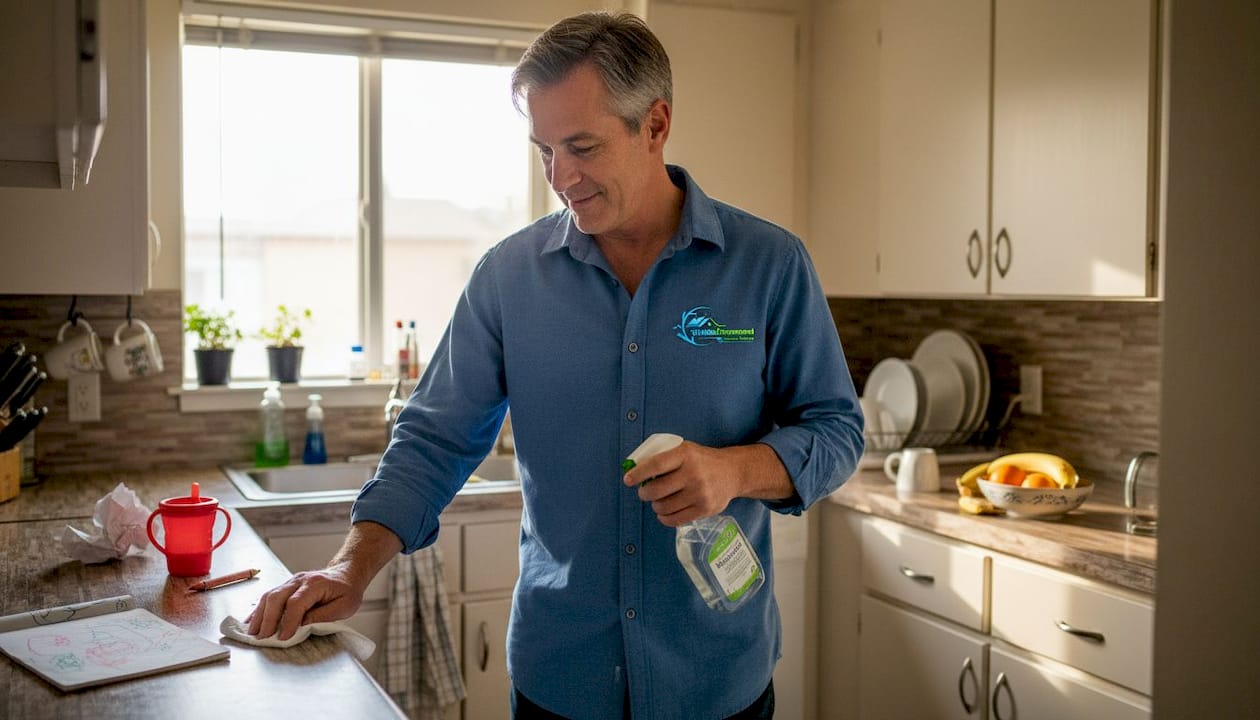
The skepticism is understandable. For years, “green” cleaners had a reputation for leaving streaks, struggling with grease, and falling short on mold. That era is largely over. Modern formulations use enzyme-based and plant-derived surfactants that target the same bonds in dirt and grime that petroleum-based chemicals do.
| Cleaning Task | Biodegradable Performance | Conventional Performance |
|---|---|---|
| General surface cleaning | Equal or better | Baseline |
| Grease and oil removal | Equal on most surfaces | Slightly faster on heavy grease |
| Mold and mildew treatment | Effective with dwell time | Faster initial kill |
| Exterior soft washing | Excellent with proper dilution | Standard |
EPA Safer Choice certified biodegradable cleaners must pass strict lab testing to ensure they clean as effectively as conventional products while remaining safer for health and environment. Certification isn’t given to underperformers.
Natural ingredients like vinegar and tea tree oil show real efficacy against common household pathogens, including E. coli and Staphylococcus. They’re not novelties. They’re clinically supported options for everyday surfaces.
Biodegradable cleaners paired with low-pressure washing advantages are especially effective for exterior surfaces. Soft washing uses lower water pressure combined with the right cleaner to lift biological growth from roofs, siding, and walkways without damaging the material underneath.
Pro Tip: Give biodegradable cleaners adequate dwell time, especially on mold or algae. Most certified formulas need 5 to 10 minutes of contact before rinsing for best results. Rushing this step is the most common reason people think green cleaners don’t work.
For stubborn contamination like heavy oil stains or industrial residue, you may still need a specialty product. That’s a narrow exception, not a rule. For everything else, certified cleaner effectiveness holds up in practice.
Making the switch: How Citrus County homeowners can start
Now that we’ve seen the evidence for health, environmental, and cleaning effectiveness, here’s how to make the switch at home.
Starting doesn’t require a complete overhaul of your cleaning cabinet in one weekend. A phased approach is smarter and more sustainable. Begin with the products you use most often and work outward from there.
- Audit your current cleaners. Check every label for phosphates, synthetic fragrances, and chlorine bleach. These are the highest-priority items to replace.
- Replace your top three most-used products first with EPA Safer Choice certified alternatives.
- For outdoor surfaces, ask your exterior cleaning provider whether they use biodegradable formulas. The low-pressure washing tips on our site explain how technique and product choice work together.
- Buy from retailers that carry verified products. Major home improvement stores now stock certified lines. Cross-reference the EPA’s Safer Choice product search online before purchasing.
- Read the industry cleaner guide to understand which formulas are used by professionals for exterior cleaning in your area.
- Share what you learn with neighbors. Citrus County’s waterways benefit when the whole community shifts toward biodegradable options, not just individual households.
- Review your routine every six months. New certified products enter the market regularly, and better formulas become available as the industry grows.
For exterior surfaces like roofs, driveways, and siding, following safe cleaning practices ensures you’re choosing the right product for each surface type without causing damage or unnecessary runoff.
A cleaner future: What most homeowners overlook
Most conversations about biodegradable cleaners focus on a single product swap or a single cleaning session. That framing undersells what’s actually happening.
Every time a homeowner in Citrus County rinses a driveway with a conventional cleaner, that chemical signature moves through the local drainage system. Multiply that by thousands of homes, and you get cumulative contamination that no one household caused alone but that every household contributes to.
The harder truth is that individual choices do matter at scale, even when they feel invisible. Switching to biodegradable products isn’t about being perfect. It’s about recognizing that your cleaning routine is not a private act. It touches the soil, the water, and the air your family and neighbors share.
We’ve seen this firsthand working with homeowners across Citrus County. The homes that invest in eco-friendly cleaning insights consistently maintain better curb appeal over time, report fewer surface material issues, and feel better about what they’re putting into the local environment. Long-term property value and community health are connected. Cleaner choices reinforce both.
Connect with eco-friendly cleaning services
If you’re ready to upgrade to safer, more eco-friendly cleaning for your property, here’s where to start.
White Diamond Pressure Washing works with Citrus County homeowners who want exterior cleaning that delivers real results without the environmental cost. We use industry-approved, biodegradable-compatible methods that protect your surfaces and local waterways at the same time.

Explore our exterior cleaning services to see the full range of options available for your home. Learn how our low-pressure washing services combine the right technique with the right cleaner for lasting results. You can also read more about how detergents in cleaning are selected to meet both performance and safety standards. Book your free estimate today and take the first step toward a cleaner, greener home.
Frequently asked questions
How do I verify if a cleaner is truly biodegradable?
Look for the EPA Safer Choice certification logo and confirm the label states ready biodegradability of surfactants. Third-party seals are the most reliable indicator of a genuine claim.
Are biodegradable cleaners less effective on tough dirt or mold?
Certified biodegradable cleaners are lab-tested to match conventional products for cleaning performance. Unique or heavily contaminated soils may require a specialty solution, but this is the exception for most residential situations.
What are the health benefits of using biodegradable cleaners indoors?
They cut airborne chemicals and VOCs, reducing allergy and asthma risk, and are gentler on skin, pets, and children who have more direct contact with treated surfaces.
Do biodegradable cleaners really help the environment in Citrus County?
Yes. Life-cycle assessments show they cut global warming potential by 49 to 53% and chemical emissions by 83%, while avoiding harmful runoff into local springs and waterways that define this region.
Recommended
- Why use eco-friendly cleaners? Healthier homes, safer Citrus County – white-diamond-pressure
- Why safe cleaning methods matter for your Citrus County home – white-diamond-pressure
- How detergents transform home exterior cleaning results – white-diamond-pressure
- Why Invest in Exterior Cleaning for Citrus County Homes – white-diamond-pressure