

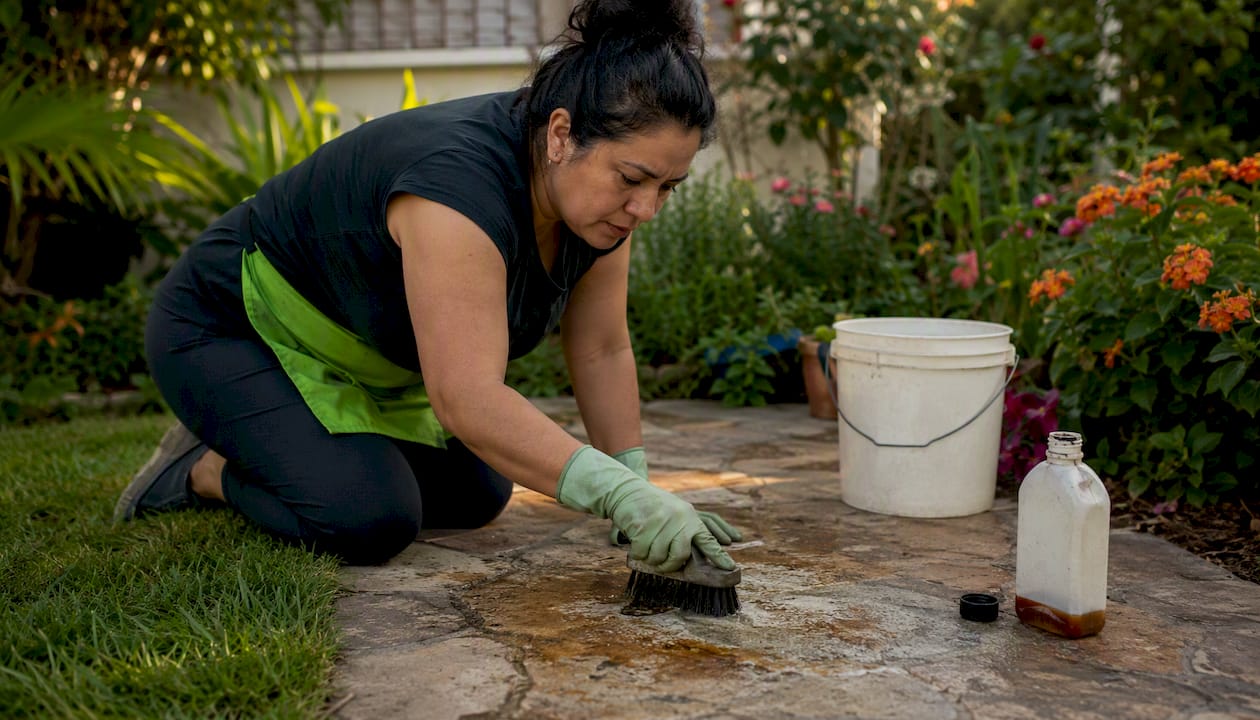
Rust stain removal is the chemical process of dissolving iron-oxide deposits that have bonded to porous exterior surfaces like concrete, brick, and stucco. Standard high-pressure washing almost never removes true rust stains. It cleans the dirt around them, and on softer surfaces it can actually drive iron particles deeper into the substrate, making the problem harder to fix later. The right approach uses targeted chemistry, specifically oxalic acid or iron-chelating formulations, applied in a controlled sequence. That is what Whitediamondpressurewashing does, and it is what this guide covers.
Table of Contents
- What rust stain removal actually means, and why dirt cleaners fail
- How professionals remove rust stains step by step
- Does the surface type change the treatment?
- How do you stop rust stains from coming back?
- When should you DIY, and when should you call a professional?
- What does rust stain removal cost and how long does it take?
- What should you ask before hiring a rust removal service?
- How Whitediamondpressurewashing handles rust stain removal
- Key Takeaways
- Why getting the chemistry right matters more than most people realize
- Get a professional rust stain inspection for your property
- Useful sources and further reading
What rust stain removal actually means, and why dirt cleaners fail
Rust forms when iron or steel contacts moisture and oxygen, producing iron oxide. That compound is not just sitting on your driveway. It migrates with water flow into the microscopic pores of concrete, brick, and stucco, then chemically bonds with the substrate. Alkaline surfaces like concrete actually accelerate that bonding.
Surface dirt, algae, and mildew are physical contaminants. A pressure washer lifts them because they have no chemical bond to the surface. Rust is different. Water pressure cannot break a chemical bond. Neither can bleach. In fact, chlorine bleach reacts with residual dissolved iron and intensifies the orange color, which is why many homeowners notice the stain looks worse after a bleach treatment.
Simple detergents fail for the same reason: they are formulated for organic soils, not iron oxide. Effective rust removal requires chemistry that specifically targets iron, either by chelating it (binding to the iron ion and converting it to a water-soluble compound) or by dissolving the oxide bond directly.
Pro Tip: Never blast a rust stain with high pressure before applying rust-specific chemistry. You risk etching the surface and pushing iron particles deeper, which means more passes and higher cost to fix. Learn more about safe water pressure use before attempting any treatment.
How professionals remove rust stains step by step
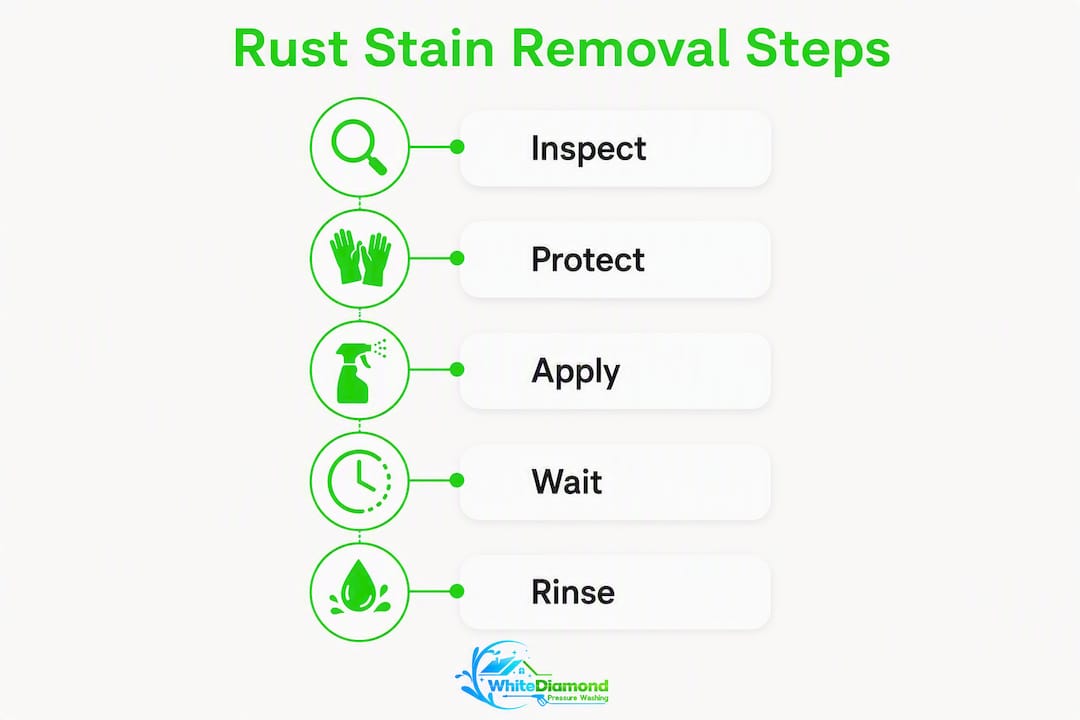
The professional rust removal process follows a structured sequence. Skipping any step is the most common reason treatments underperform.
- Inspection and source diagnosis. Before any chemical touches the surface, a technician identifies where the iron is coming from: irrigation water, a leaking metal fixture, corroding rebar, or fertilizer granules. Treating the stain without addressing the source means it returns within a season, per University of Georgia Extension guidance on iron stain recurrence.
- Pre-clean. Organic growth, dirt, and debris are removed first. Rust-removal chemistry applied to a dirty surface gets consumed by that debris and never reaches the iron deposit.
- Apply rust-specific chemistry. Oxalic acid converts iron oxide into iron oxalate, a water-soluble compound with no color and no adhesion to the surface. Iron-chelating formulas work similarly. Commercial professional-grade products outperform household cleaners because concentration and formulation are calibrated for exterior masonry.
- Dwell time. The product must sit long enough to complete the chemical reaction. For Florida irrigation staining, the treatment requires a dwell time calibrated to stain depth and age to be effective. Cutting dwell time short is the single most common DIY failure mode.
- Agitation if needed. Heavy or older stains often require light mechanical agitation to help the chemistry penetrate.
- Neutralization rinse. A controlled low-pressure rinse removes dissolved iron oxalate and any remaining chemistry. Neutralization protects the surface and surrounding landscaping.
- Verification. The technician inspects for remaining staining and determines whether a second application is warranted.
Pro Tip: Older, deep-set stains often require staged reapplications rather than one heavy treatment. A professional will tell you upfront what a realistic result looks like for your specific staining.
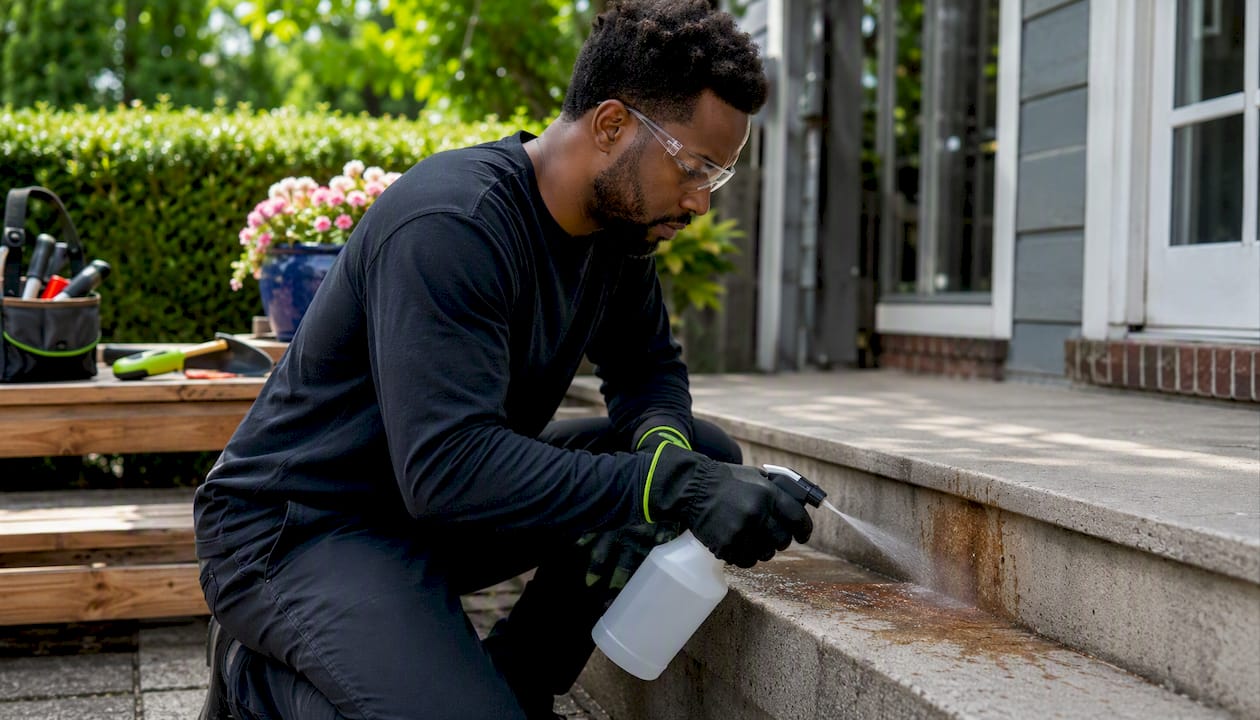
Safety matters throughout. Oxalic acid requires PPE (gloves, eye protection, appropriate footwear), and any professional service should have Safety Data Sheets (SDS) available for every chemical used on your property.
Does the surface type change the treatment?
Yes, significantly. The same chemistry that works perfectly on concrete can damage stucco or strip a painted finish if concentration or pressure is wrong.
- Concrete and pavers: Deep porosity means iron penetrates far. Oxalic acid or chelating formulas are the preferred chemistry. Pressure during rinsing must stay controlled to avoid etching. A concrete-specific approach always starts with testing a small, inconspicuous patch.
- Brick and mortar: Masonry can lighten or stain if acid concentration is too high or dwell time runs long. Test a small patch first. Mortar joints are especially vulnerable. Safe brick cleaning techniques emphasize low-concentration acids and thorough rinsing.
- Stucco and painted siding: These surfaces cannot tolerate strong acids or high pressure. Soft-wash chemistry and low-pressure rinsing are the only appropriate methods. High pressure on stucco causes finish damage that costs far more to repair than the original stain.
- Metal fixtures and rebar: Cleaning the stain off the surrounding surface is only half the job. The corroding metal source must be repaired, coated, or replaced. Otherwise the stain returns with the next rain. Coastal properties face accelerated corrosion on HVAC units and metal hardware; protecting metal fixtures from ongoing rust is part of a complete treatment plan.
Pro Tip: On painted siding, always confirm the paint type before applying any acid-based product. Some latex finishes are sensitive even to diluted oxalic solutions. When in doubt, use a soft-wash approach and let chemistry do the work at low pressure.
How do you stop rust stains from coming back?
Treating the stain without fixing the source is a short-term solution. Recurring stains almost always indicate an active iron source. Here is what to check:
- Irrigation water: Well water in Florida commonly carries dissolved iron. Every sprinkler cycle deposits iron on your driveway, siding, and walkways. Test your irrigation water’s iron concentration and consider a whole-system iron filter.
- Sprinkler nozzle direction: Heads aimed at hardscaping or siding are the most common culprit. Adjust or cap them.
- Metal furniture and fixtures: Outdoor furniture, planters, and railings with failing coatings leave rust rings on concrete. Coat, replace, or move them.
- Gutters and downspouts: Leaking or corroding gutters deposit iron-laden water in concentrated streaks down siding and onto walkways.
- Exposed rebar: Concrete with rebar too close to the surface will push rust through as the metal expands. This requires a masonry repair, not just cleaning.
- Fertilizer granules: Iron-containing fertilizers left on concrete or pavers dissolve with rain and stain on contact.
Pro Tip: A rust migration inspection traces stain patterns back to their source. The shape and location of the stain usually tells you exactly what is causing it before you even test the water.
When should you DIY, and when should you call a professional?
DIY rust removal is reasonable in one narrow scenario: a fresh, small stain on unsealed concrete where you can test first and accept some risk. Mild acid solutions (white vinegar, lemon juice) or store-bought oxalic-acid products can work on surface-level staining if applied correctly with adequate dwell time and a thorough rinse.
Call a professional when:
- The stain is older than a few weeks or covers a large area
- The surface is stucco, painted siding, brick, or any delicate material
- You can see an active corrosion source (rebar, corroding fixture)
- A previous DIY attempt made the stain darker or left the surface rough
Improper DIY attempts on large or deep staining frequently cause surface damage or incomplete removal that raises the total cost of the project. Etched concrete, stripped coatings, and lightened brick are expensive to remediate. For anything beyond a fresh spot on plain concrete, the risk-to-reward math favors a professional.
What does rust stain removal cost and how long does it take?
Timeline and cost depend on four variables: surface type, stain age and depth, total area, and whether source repair is needed.
- Spot treatment (single small stain): Often completed in a single visit, same day. Lowest cost tier.
- Driveway or walkway remediation: One to two visits depending on stain depth. Older, deep-set staining may require a second application after the first treatment cures and is inspected.
- Full exterior remediation (siding, driveway, pool cage, walkways): Multi-day project with staged treatments per surface type. Source repair, if needed, adds time and cost.
- Source repair: Rebar repair, fixture replacement, or irrigation system modification is quoted separately and affects total project timeline.
Get a written estimate that itemizes surface area, chemistry, and any source-repair work. A flat “rust removal” quote with no inspection is a red flag.
What should you ask before hiring a rust removal service?
The right questions separate a qualified technician from someone who will blast your driveway with a pressure washer and call it done.
- Do you inspect and diagnose the rust source before treatment?
- What chemistry do you use, and can you provide the SDS?
- Do you adjust concentration and dwell time by surface type?
- What is your process for delicate surfaces like stucco or painted siding?
- Do you offer a written estimate and a follow-up policy if staining returns?
Trust signals to look for: before/after photos from local jobs, written estimates, demonstrated soft-wash capability, and field experience with the specific surface types on your property. An exterior cleaning vendor evaluation checklist can help you compare providers objectively.
Red flags: any promise of guaranteed complete removal without an in-person inspection, insistence on high-pressure blasting as the primary method, or no mention of PPE or SDS.
How Whitediamondpressurewashing handles rust stain removal
Whitediamondpressurewashing serves Citrus County and surrounding regions with a process built around the sequence described in this guide: on-site inspection to identify the iron source, soft-wash pre-clean, application of rust-specific chemistry (oxalic acid or iron-chelating formulations) with calibrated dwell time, agitation for heavy staining, neutralization rinse, and post-treatment verification.
Every job includes SDS availability for chemicals used, before/after documentation, and a written estimate. The team’s field experience in Citrus County means familiarity with local well-water iron levels, Florida irrigation patterns, and the surface types common to the region’s residential and commercial properties.
Pro Tip: Request an inspection before committing to a full treatment. A qualified technician should be able to identify the rust source, assess stain depth, and give you a realistic outcome estimate before any chemistry is applied.
Key Takeaways
Professional rust stain removal requires targeted iron-dissolving chemistry, controlled dwell time, and source diagnosis to produce lasting results.
| Point | Details |
|---|---|
| Pressure washing alone fails | High pressure cannot break the chemical bond between iron oxide and porous surfaces, and can worsen staining. |
| Chemistry drives results | Oxalic acid and iron-chelating formulas dissolve iron oxide; household cleaners and bleach do not. |
| Source diagnosis prevents recurrence | Stains return within a season if the iron source (irrigation, fixtures, rebar) is not identified and fixed. |
| Surface type changes the method | Stucco and painted siding require soft-wash and low pressure; concrete and pavers tolerate stronger concentrations. |
| Whitediamondpressurewashing | Provides inspection, rust-specific chemistry, soft-wash technique, and written estimates for Citrus County properties. |
Why getting the chemistry right matters more than most people realize
Most homeowners assume rust stains are a cleaning problem. They are not. They are a chemistry problem that happens to look like a cleaning problem. That distinction changes everything about how you approach it.
The pressure-washing industry has spent years educating customers that high pressure solves exterior staining. For algae, mildew, and surface dirt, that is largely true. For rust, it is the wrong tool applied to the wrong problem. The iron is not sitting on the surface waiting to be blasted off. It has reacted with the substrate and become part of it, at least until the right chemistry reverses that reaction.
What I find underappreciated is the source-control piece. A technician who removes the stain without asking where the iron came from has done half a job. The stain will be back. The properties I see with the worst recurring rust problems are almost always ones where someone cleaned the surface repeatedly without ever adjusting the sprinkler heads or testing the well water. Fix the source first, treat the stain second, and the result actually holds.
Get a professional rust stain inspection for your property
Rust stains that have been building through irrigation cycles or corroding fixtures do not respond to store-bought products or pressure alone. The longer they sit, the deeper they bond, and the more passes it takes to lift them.

Whitediamondpressurewashing offers on-site inspections for homeowners and property managers in Citrus County and surrounding areas. The inspection identifies the iron source, assesses stain depth by surface type, and produces a written estimate before any chemistry is applied. No guesswork, no pressure-blast-and-hope. Request your free estimate and get a clear picture of what professional rust stain removal looks like for your specific property.
Useful sources and further reading
- Stain removal: iron/rust — University of Georgia Extension: Primary academic guidance on iron stain sources and recurrence; useful for understanding why source diagnosis matters.
- Removing rust: Effective household remedies and industrial solutions — AgTOS: Explains iron oxide chemistry and why water pressure cannot remove chemically bonded rust.
- How to remove rust stains from concrete — Concrete Network: Practical guidance on acid-based cleaners for concrete, including safety cautions and patch-testing advice.
- Remove rust with Rust Remover Plus — PowerWash.com: Industry perspective on why pressure washing fails on rust and what professional chemistry accomplishes.
- Iron stains treatment guide — WA Brick Cleaning: Detailed breakdown of iron-chelating and oxalic-acid chemistry for masonry surfaces.
- Professional Rust Stain Removal: A Complete Guide for Property Owners — Poseidon Power Washing LLC: Step-by-step professional process overview including soft-wash use on delicate surfaces.
- What’s causing those orange rust marks — StainEaters: Explains staged reapplication for older staining and why dwell time management matters.
- The hidden dangers of DIY rust repair — 66 Custom and Collision: Covers cost and surface-damage risks of improper DIY attempts on large or deep staining.
Recommended
- Rust Migration on Driveways: Causes and Prevention – white-diamond-pressure
- Stain Removal Guide: Restore Outdoor Surfaces in 2026 – white-diamond-pressure
- Rust Prevention for Exteriors: A Homeowner’s 2026 Guide – white-diamond-pressure
- Understanding Roof Black Streaks: What Homeowners Must Know – white-diamond-pressure