

TL;DR:
- Routine outdoor disinfection is generally unnecessary because natural elements inactivate germs quickly.
- Cleaning organic debris and regular washing are sufficient for most outdoor surfaces, reserving disinfection for specific cases.
- Overusing chemicals can harm plants, pets, and the environment; focus on consistent cleaning and prompt waste removal.
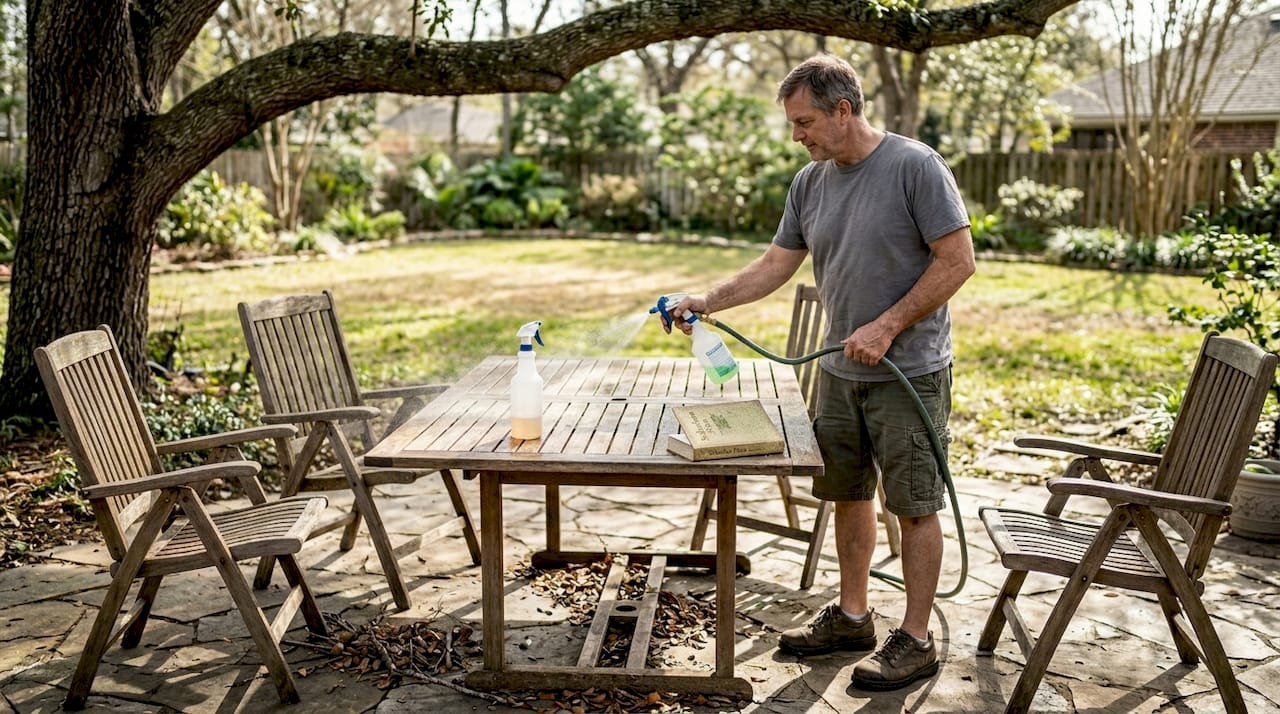
Most homeowners in Citrus County assume that regular outdoor disinfection is essential for a safe yard. The reality is more nuanced. Disinfecting outdoor spaces is generally unnecessary for routine pathogens because UV light, airflow, and natural dilution inactivate most germs before they pose a real threat. That changes the entire conversation about what you actually need to do outside your home. This article walks you through when disinfection genuinely matters, when cleaning alone is enough, and how to protect your family, pets, and landscaping without overdoing it.
Table of Contents
- Why regular outdoor disinfection isn’t usually necessary
- When and where outdoor disinfection actually matters
- Challenges and misconceptions: What most people get wrong
- Best practices for safe and effective outdoor cleaning
- Our take: What really keeps Citrus County outdoor spaces safe
- Need help keeping your outdoor spaces spotless?
- Frequently asked questions
Key Takeaways
| Point | Details |
|---|---|
| Routine disinfection not needed | Most outdoor spaces do not require regular disinfection, thanks to natural elements like sunlight and airflow. |
| Target high-risk situations | Only disinfect after events like illness, pet waste, or contamination—focus on hard surfaces. |
| Outdoor disinfectants have limits | Most chemical disinfectants are less effective outdoors due to organic debris and surface porosity. |
| Cleaning is often enough | Regular cleaning and maintenance, not chemical overuse, keep outdoor areas healthy and beautiful. |
Why regular outdoor disinfection isn’t usually necessary
Here’s something most cleaning product labels won’t tell you: the outdoors is already working against germs on your behalf. Sunlight produces UV radiation that breaks down the genetic material of viruses and bacteria within minutes to hours. Wind disperses airborne particles and dries out surfaces, stripping pathogens of the moisture they need to survive. Rain dilutes and washes away contaminants. These forces operate constantly, making your patio or driveway a far less hospitable environment for germs than, say, a countertop or doorknob inside your home.
The contrast between indoor and outdoor risk is significant. Indoors, surfaces stay shaded, humid, and undisturbed, giving pathogens a stable environment. Outdoors, conditions shift constantly. A virus deposited on a sun-drenched concrete walkway in Citrus County’s warm climate has a dramatically shorter lifespan than one on an indoor surface.
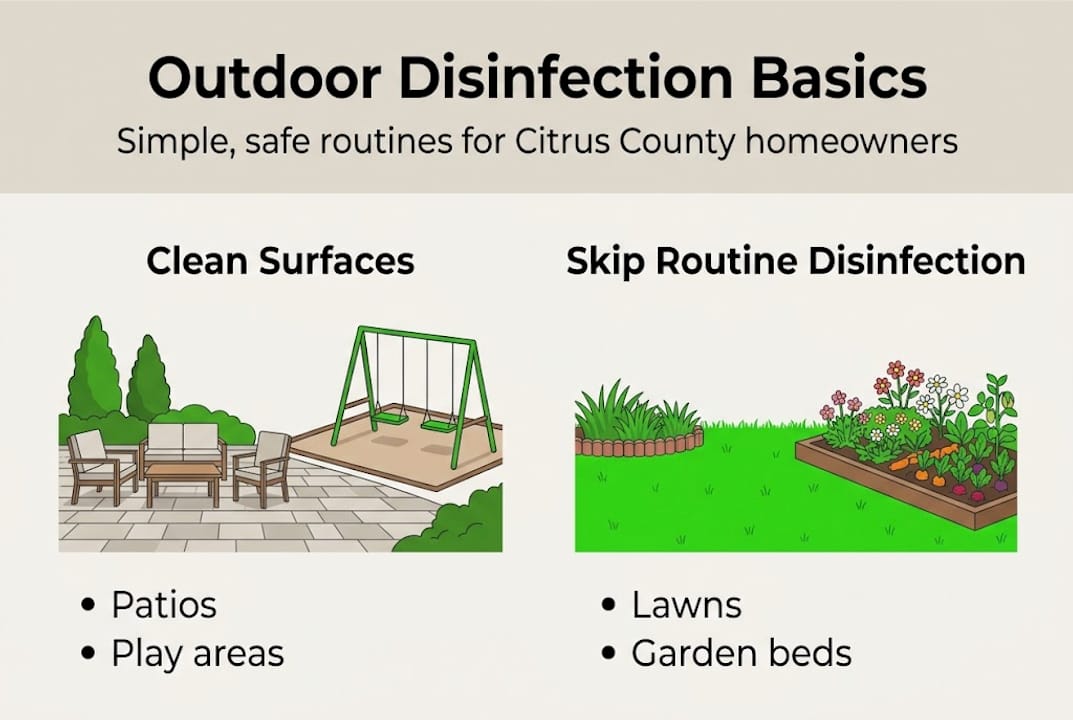
So what does routine outdoor maintenance actually require? In most cases, cleaning visible dirt, debris, and organic buildup is all you need. Soap, water, and mechanical action from a brush or pressure washer remove the material that could otherwise shelter germs. Understanding why clean home exteriors matter goes beyond aesthetics; it’s about removing the conditions where problems can develop.
The CDC is direct on this point:
“Disinfecting outdoor spaces is generally unnecessary; natural elements inactivate germs.”
CDC Cleaning and Disinfecting
Routine disinfection outdoors adds minimal health benefit for most households. The time, cost, and chemical exposure involved rarely justify the outcome when cleaning alone addresses the real issue.
Here’s what routine outdoor maintenance should actually focus on:
- Remove organic debris like leaves, mud, and animal waste promptly
- Wash hard surfaces with soap and water or a pressure washer on a regular schedule
- Inspect high-touch areas like gate latches and handrails for visible grime
- Allow sunlight access to surfaces where possible to support natural pathogen reduction
- Avoid pooling water that creates damp, shaded zones where mold and bacteria can thrive
Think of outdoor cleaning less like a hospital protocol and more like good housekeeping. You’re managing the environment, not fighting a lab-level contamination event.
When and where outdoor disinfection actually matters
Targeted disinfection does have a place outdoors. The key word is targeted. You’re not spraying down your entire yard on a schedule; you’re responding to specific, defined situations where the contamination risk is real and the surface type allows disinfection to actually work.
The CDC recommends disinfecting outdoor hard surfaces like patios and decks when they are visibly contaminated or after known illness exposure. That’s a meaningful distinction. Visible contamination means there’s something there to address. Illness exposure means someone sick has had contact with the surface recently.
Animal waste is another clear trigger. Pet feces can carry pathogens including Giardia, Salmonella, and E. coli. Giardia from pet feces requires prompt removal and may require a bleach solution on hard surfaces like patios, but you should never apply bleach directly to lawns or garden beds. The chemical harms plants and can leach into soil.
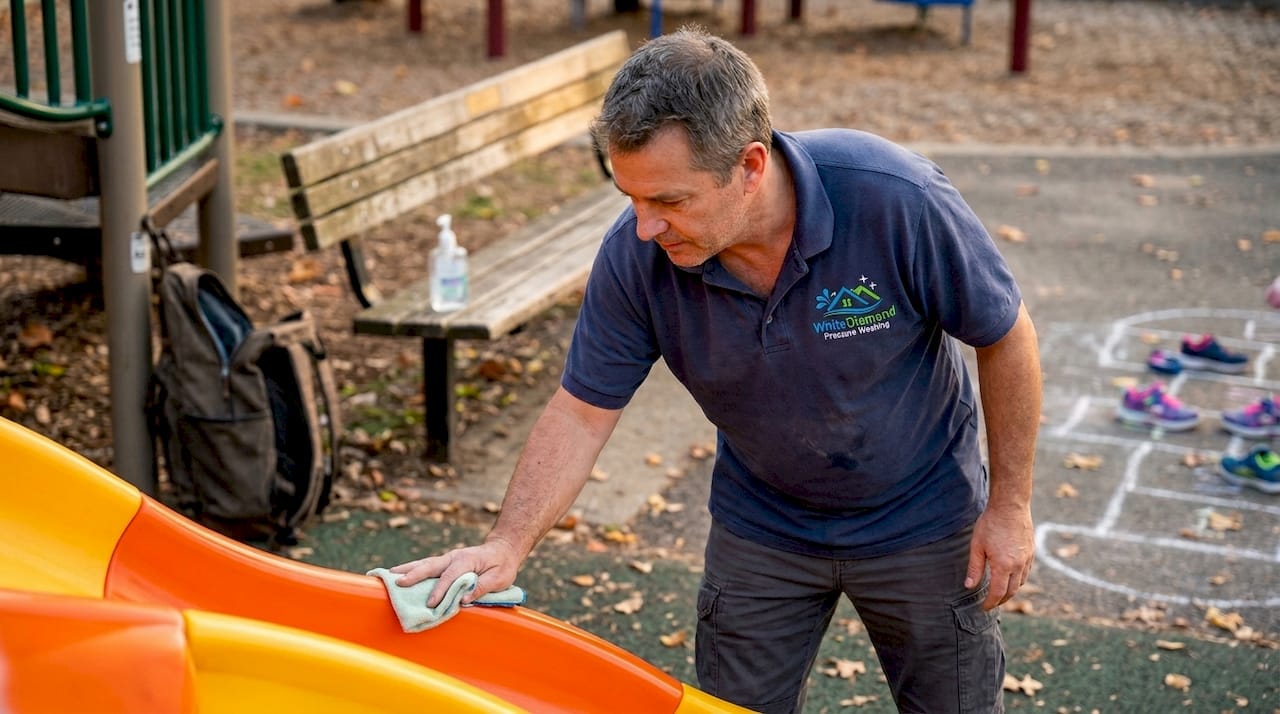
Child play areas deserve extra attention because kids touch surfaces and then touch their faces. Playground equipment and sandbox borders warrant more frequent cleaning and occasional disinfection when visibly dirty or after a sick child has used them.
Here’s a quick reference for common outdoor scenarios:
| Scenario | Action needed | Recommended method |
|---|---|---|
| Routine dirt and dust | Cleaning only | Soap, water, or pressure wash |
| Pet waste on patio | Clean then disinfect | Remove waste, then diluted bleach |
| Post-illness surface contact | Clean then disinfect | EPA-registered disinfectant |
| Wet leaves or mud buildup | Cleaning only | Pressure wash or scrub |
| Child play area, no illness | Cleaning only | Soap and water, rinse well |
| Child play area, post-illness | Clean then disinfect | EPA-registered product, rinse |
| Grass or garden beds | No disinfection | Prompt waste removal only |
Before you reach for a disinfectant, follow these steps:
- Remove all visible organic matter first. Disinfectants cannot work through dirt or debris.
- Wash the surface with soap and water.
- Apply an EPA-registered disinfectant only to hard, non-porous surfaces.
- Allow proper contact time as listed on the product label.
- Rinse surfaces that children or pets will contact after the contact time is complete.
Pro Tip: Always check the label of any disinfectant for outdoor use approval. Many household disinfectants are formulated for indoor surfaces and may degrade quickly or perform poorly when exposed to sunlight and temperature changes.
For a broader look at which exterior surfaces to clean around your property, understanding material types helps you match the right method to the right surface.
Challenges and misconceptions: What most people get wrong
Even well-meaning homeowners run into problems when they take a do-it-all approach to outdoor disinfection. The biggest misconception is that if a product works in a lab, it works the same way on your driveway. It doesn’t.
Disinfectants lose effectiveness outdoors due to organic matter, surface porosity, UV exposure, and temperature variation. A product that kills 99.9% of bacteria in a controlled test may perform far below that standard on a textured concrete surface covered in pollen, soil, and moisture.
Here’s how real-world conditions undermine disinfectant performance:
| Factor | Lab condition | Outdoor reality |
|---|---|---|
| Surface type | Smooth, non-porous | Rough, porous, or textured |
| Organic matter | None | Dirt, pollen, oils, debris |
| Temperature | Controlled | Variable, often extreme in Florida |
| UV exposure | None | Direct sunlight degrades chemicals |
| Contact time | Maintained | Product evaporates or runs off faster |
Another common mistake is skipping the cleaning step entirely and going straight to disinfection. Organic debris physically blocks disinfectants from reaching the surface. You’re essentially spraying chemical on top of dirt, which accomplishes very little.
Overuse of strong chemicals creates its own set of problems. Bleach and quaternary ammonium compounds can harm ornamental plants, irritate pets’ paws and respiratory systems, and contribute to chemical runoff into storm drains. Citrus County’s proximity to natural waterways makes this a genuine environmental concern.
“Playgrounds can harbor antibiotic-resistant bacteria, but empirical data is limited on how much routine disinfection actually reduces risk in real-world outdoor settings.”
This matters because it means throwing more chemicals at a playground doesn’t guarantee a safer one. Consistent cleaning, prompt waste removal, and thorough handwashing after play are more reliably protective.
The advantages of low-pressure washing are relevant here. Mechanical cleaning with appropriate water pressure removes the organic layer that undermines disinfectant performance, without the chemical risks. Understanding the role of water pressure in exterior cleaning helps you choose the right approach for each surface type.
The bottom line: hand hygiene and proper surface cleaning beat chemical overuse for most outdoor situations.
Best practices for safe and effective outdoor cleaning
Now that you understand when and why to act, here’s how to build a practical routine that keeps your outdoor spaces genuinely safe without creating new problems.
Start with the basics. Prioritize pressure washing or soap for regular maintenance, reserving disinfection for post-exposure situations on hard surfaces only. This approach protects your landscaping, reduces chemical costs, and is more environmentally responsible.
Follow these steps for any outdoor cleaning situation:
- Assess the surface. Is it porous (wood, pavers) or non-porous (sealed concrete, tile)? Disinfectants only work reliably on non-porous surfaces.
- Remove debris first. Sweep, rake, or rinse away loose material before applying anything.
- Clean with soap and water or use a pressure washer appropriate for the surface material.
- Evaluate whether disinfection is needed. Apply only if there’s illness exposure, animal waste contact, or visible biological contamination on a hard surface.
- Apply EPA-registered disinfectant following label instructions for contact time and dilution.
- Protect the environment. Block storm drains if using chemical disinfectants near drainage areas, and rinse thoroughly.
Pro Tip: For pet owners, pick up waste daily rather than letting it accumulate. Fresh waste is easier to remove completely, and daily removal prevents pathogen buildup that would eventually require chemical intervention.
Here’s what a smart weekly maintenance routine looks like:
- Sweep patios and walkways to remove leaves and debris
- Rinse high-traffic hard surfaces with water
- Collect and dispose of pet waste daily
- Wash hands after any yard work or pet contact
- Inspect for mold or algae growth on shaded surfaces
Avoid applying bleach or harsh disinfectants to grass, garden soil, or near tree roots. These chemicals disrupt soil biology and can cause lasting damage to your landscaping. Adopting preventative exterior cleaning strategies reduces the need for reactive chemical use. The benefits of exterior cleaning go well beyond appearance; they include reducing slip hazards, preventing material degradation, and limiting the conditions where pests and pathogens thrive. For homeowners unsure about products or methods, reviewing safe cleaning methods specific to Citrus County properties is a smart starting point.
Our take: What really keeps Citrus County outdoor spaces safe
After reviewing the evidence and working with properties across Citrus County, we’ll say it plainly: routine chemical disinfection outdoors is almost never the answer. It’s a habit borrowed from indoor cleaning logic and applied incorrectly to an environment that operates by completely different rules.
The homeowners and property managers who maintain the cleanest, safest outdoor spaces aren’t the ones spraying the most chemicals. They’re the ones who clean consistently, respond promptly to actual contamination, and understand that maintenance prevents problems better than reactive treatment.
Chemicals are a last resort, not a first response. Overusing them creates risks for your plants, your pets, and the local waterways that make Citrus County worth living in. A well-maintained exterior cleaned regularly with appropriate pressure and technique, as explored in pressure washing vs. traditional cleaning, outperforms sporadic chemical application every time. Focus on the routine. Reserve disinfection for when it’s genuinely earned.
Need help keeping your outdoor spaces spotless?
Knowing the right approach is one thing. Having the time and equipment to execute it consistently is another. That’s where professional help makes a real difference for busy homeowners and property managers in Citrus County.

White Diamond Pressure Washing brings the expertise to know exactly when cleaning is enough and when targeted disinfection is warranted. Our team uses industry-approved methods and appropriate pressure levels to protect your surfaces while delivering results you can see. Whether it’s a routine maintenance wash or a post-contamination cleanup, we build a plan around your property’s actual needs. Explore our professional outdoor cleaning options, learn more about the benefits of professional cleaning, or find out what pressure washing mistakes to avoid before tackling it yourself. Get your free estimate today.
Frequently asked questions
Should I regularly disinfect my patio or deck?
No. Routine disinfection isn’t necessary unless there’s recent illness, visible contamination, or pet waste. For most situations, regular cleaning is all your patio or deck needs to stay safe.
Is bleach safe to use on grass or plants for outdoor disinfection?
No. Bleach damages grass and landscaping and should only be used on hard, non-porous surfaces. According to decontamination guidance for Giardia, always prevent runoff from reaching soil or plant roots.
What’s the best way to make my yard safe after dog waste?
Pick up waste promptly every day and let sunlight do its work on the surrounding area. If waste has contacted a patio or hard surface, daily removal plus bleach on that hard surface is the recommended approach.
Are playgrounds safe from germs if cleaned regularly?
Regular cleaning significantly reduces germ load, but handwashing after play is the most reliable protection. Complete outdoor disinfection of playground equipment is difficult to achieve and maintain.
Can outdoor disinfectants work as well as indoors?
No. Outdoor disinfectant effectiveness drops due to organic debris, porous surfaces, UV degradation, and weather. Thorough cleaning is a more dependable baseline for outdoor maintenance.
Recommended
- Best practices for property cleaning in Citrus County 2026 – white-diamond-pressure
- Why safe cleaning methods matter for your Citrus County home – white-diamond-pressure
- Walkway Cleaning: Methods, Benefits & Pro Tips for Citrus County – white-diamond-pressure
- Safety Protocols in Pressure Washing: Protecting Citrus County Homes – white-diamond-pressure
- Chemical-free weed eradication: Step-by-step for homeowners