

TL;DR:
- Low-pressure rinsing uses 100–300 PSI to gently remove contaminants while preserving surface integrity. It relies on high flow volume rather than force, maximizing chemical effectiveness and reducing water usage by up to 40 percent. Proper rinsing ensures no residual residues attract dirt, cause surface damage, or promote rapid regrowth of organic growth.
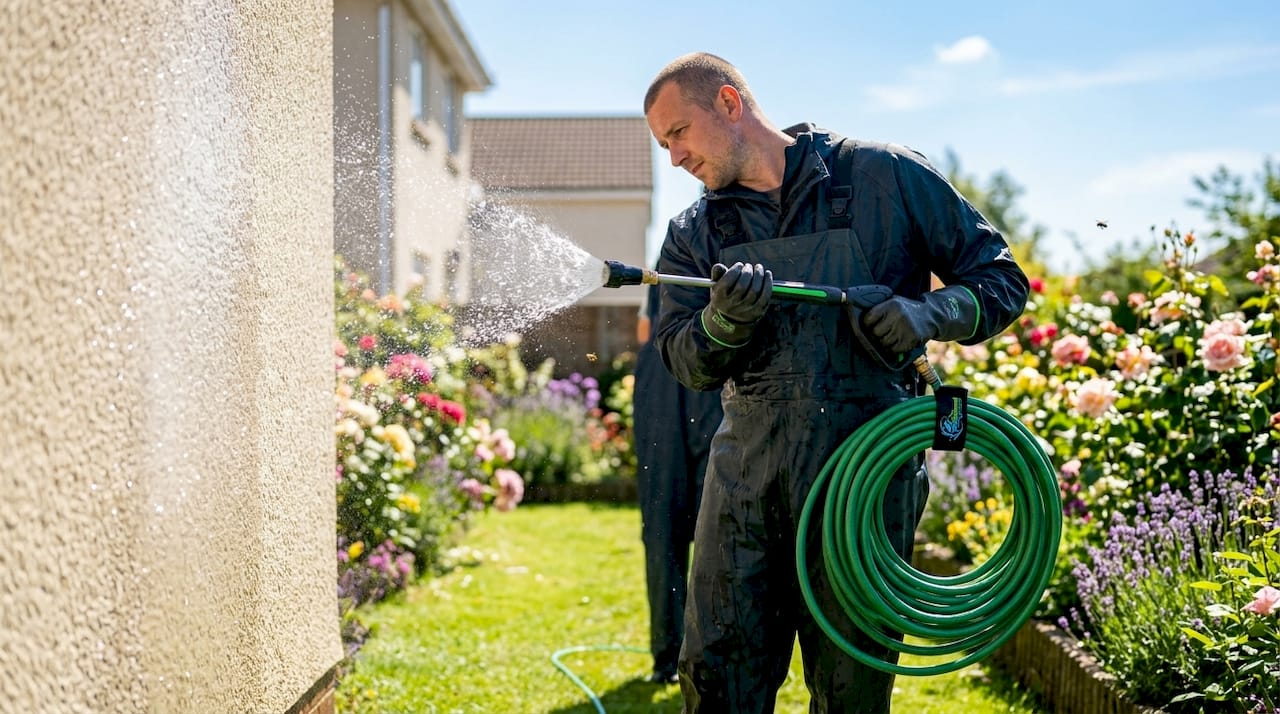
Low-pressure rinsing is defined as the process of flushing exterior surfaces with a gentle, high-volume water flow at 100–300 PSI to remove cleaning agents and contaminants while preserving surface integrity. The industry term for this approach is soft washing, and understanding the role of low-pressure rinsing explains why professionals choose it over brute-force pressure washing for roofs, vinyl siding, stucco, and wood. Most surface damage from exterior cleaning does not come from the cleaning chemical. It comes from the rinse.
How does low-pressure rinsing compare to high-pressure rinsing?
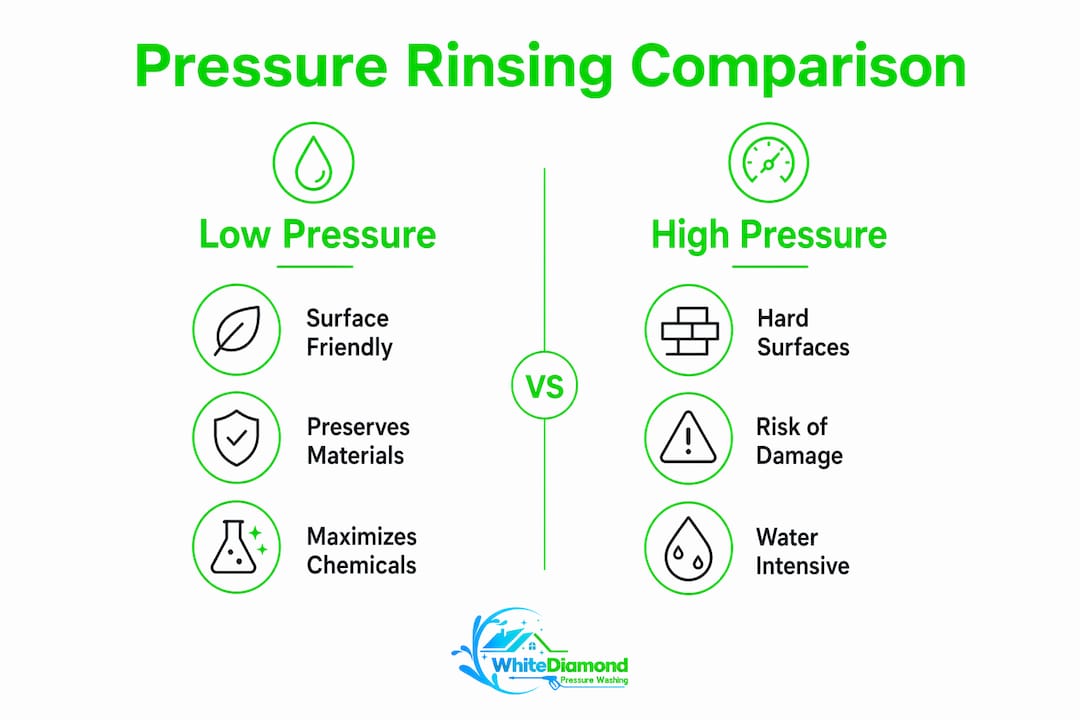
The core difference between these two methods is not just force. It is the relationship between PSI (pounds per square inch) and GPM (gallons per minute). Low-pressure rinsing operates below 500 PSI, often in the 100–300 PSI range, which is roughly equivalent to a strong garden hose. High-pressure washing typically runs at 1,500–3,000 PSI or more. That gap matters enormously for delicate materials.
High pressure is appropriate for concrete driveways, brick pavers, and other hard, resilient surfaces. High pressure risks damage on delicate surfaces like roofing shingles, vinyl siding, painted wood, and stucco. Cracking, warping, and water intrusion behind siding panels are all documented outcomes of using the wrong pressure setting on the wrong surface.
The table below shows where each method belongs.
| Surface Type | Recommended Method | Risk of High Pressure | Chemical Effectiveness |
|---|---|---|---|
| Asphalt shingles | Low pressure only | Granule loss, void warranty | High with proper dwell time |
| Vinyl siding | Low pressure only | Warping, water intrusion | High with surfactant-based solutions |
| Concrete driveway | High pressure acceptable | Low on dense concrete | Moderate without detergent |
| Wood decking | Low pressure preferred | Splintering, fiber damage | High with biodegradable agents |
| Stucco exterior | Low pressure only | Cracking, moisture damage | High with correct dwell time |
Pro Tip: Never select a pressure setting based on how dirty the surface looks. Select it based on the material. A heavily stained vinyl wall still needs low pressure. The cleaning chemical does the heavy lifting.
The biggest misconception in exterior cleaning is that higher pressure equals better results. Chemistry, not force, removes organic growth like algae, mold, and mildew at the root level. Pressure alone scrubs the surface. The right cleaning agent combined with low-pressure rinsing kills the organism and flushes it away completely.
Why does rinsing technique determine chemical cleaning results?
Rinsing is not the final step in cleaning. It is the step that determines whether the cleaning actually worked. Proper rinsing technique is critical to chemical performance. Insufficient rinsing leaves residues that cause premature surface degradation and dullness within weeks of the job.
Here is what happens when rinsing is done incorrectly:
- Residual surfactants attract dirt faster. Leftover cleaning agents act like a magnet for airborne particles and road grime, meaning the surface looks dirty again sooner than it should.
- Hazy streaks and UV reactions appear. Residual surfactants cause hazy streaks and UV-triggered surface degradation that is often mistaken for weathering or fading.
- Chemical neutralization fails. Cleaning agents need to be fully flushed to complete the neutralization process. Trapped chemicals continue reacting with the substrate, accelerating wear.
- Organic growth returns faster. When algae or mold spores are not fully flushed, regrowth happens in weeks rather than months.
“Rinsing is not just mechanical washing. It is a chemical process to neutralize and safely remove cleaning agents. Failure leads to accelerated surface wear and the attraction of future contaminants.” — Industry best practice guidance
Low-pressure rinsing optimizes chemical performance by respecting dwell times while thoroughly flushing soils and residues without damaging materials like stucco or wood siding. The key is that volume does the work, not force. A high-flow, low-pressure stream moves more water across the surface per minute, carrying contaminants away without driving them deeper into the substrate.
What environmental benefits does low-pressure rinsing offer?
Low-pressure rinsing is the more sustainable choice for exterior cleaning, and the reasons are concrete. Low-pressure rinsing reduces water usage by 30–40% compared to traditional high-pressure washing. That reduction adds up significantly across a full season of property maintenance.
The environmental advantages go beyond water savings:
- Reduced airborne contamination. Low-pressure rinsing produces less mist and fewer airborne droplets than high-pressure methods. This matters when cleaning near gardens, HVAC intakes, or neighboring properties.
- Lower chemical runoff risk. High-pressure water disperses cleaning agents into soil and storm drains at higher velocity. Low pressure keeps runoff localized and manageable.
- Compatibility with biodegradable agents. Soft washing relies on biodegradable, surfactant-based solutions that break down organic growth and dissolve cleanly with low-pressure rinsing. These agents are designed to work at low pressure, not high force.
- Protection for landscaping. Overspray from high-pressure systems can strip mulch, damage plants, and deposit concentrated cleaning chemicals directly into garden beds. Low-pressure application keeps that risk minimal.
Pro Tip: Before any exterior cleaning job, wet down surrounding plants and grass with plain water first. This dilutes any cleaning agent that reaches the landscaping and reduces absorption. It takes two minutes and protects your yard.
For property managers overseeing multiple units or large commercial properties, the water savings from soft washing practices across a full year represent a measurable reduction in utility costs. Sustainability and cost efficiency point in the same direction here.
What are the best practices for effective low-pressure rinsing?
Knowing the theory is one thing. Applying it correctly on your property is another. These practices separate a clean that lasts from one that fades in a month.
Choose the right PSI and GPM settings. High-volume low-pressure rinsing prioritizes flow volume to flush chemicals and debris without forcing water into substrates. Simply lowering pressure without maintaining flow volume fails to remove residues properly. Target 100–300 PSI with a GPM of 3–5 for most residential surfaces.
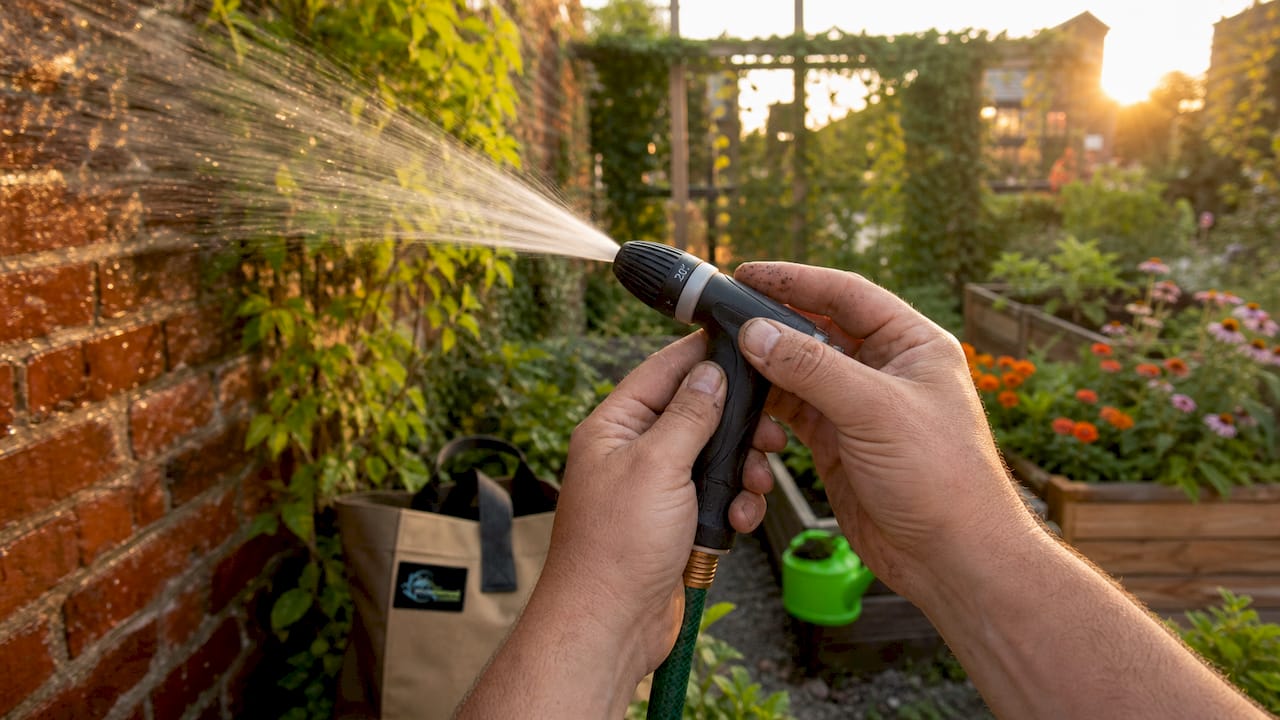
Use the correct nozzle. A wide-angle nozzle (40-degree or wider) spreads water across a larger surface area at lower impact force. Narrow nozzles concentrate force and defeat the purpose of low-pressure technique.
Respect dwell time before rinsing. Cleaning agents need time to work. Rinsing too early removes the chemical before it has neutralized organic growth. Most professional soft wash solutions require 5–15 minutes of dwell time depending on the surface and contamination level.
Rinse in sections, top to bottom. Start at the highest point and work downward. This prevents already-rinsed areas from being re-contaminated by runoff from above. On a two-story home, this means starting at the roofline and finishing at the foundation.
Verify complete chemical removal. Run your hand across a rinsed surface. If it feels slippery, surfactant residue remains. Rinse again. This simple test takes seconds and prevents the streak and resoiling problems described earlier.
Common mistakes to avoid include using a pressure washer wand at close range on vinyl, skipping the pre-wet of surrounding plants, and rinsing before the cleaning agent has finished its dwell time. For roofing specifically, the benefits of soft wash roof cleaning are well documented. High pressure on asphalt shingles strips the protective granule layer and can void manufacturer warranties.
For homeowners considering DIY cleaning, the low-pressure house washing advantages are clear. But the equipment and technique matter as much as the intention. A standard consumer pressure washer set to its lowest setting is not the same as a professional soft wash system calibrated for GPM and chemical compatibility.
Key takeaways
Low-pressure rinsing protects surfaces, maximizes chemical effectiveness, and reduces water use by 30–40% compared to high-pressure methods.
| Point | Details |
|---|---|
| Pressure range matters | Operate at 100–300 PSI to protect vinyl, roofing, stucco, and wood from damage. |
| Volume over force | Prioritize GPM flow to flush residues fully; low pressure without high volume fails. |
| Rinsing completes the chemistry | Insufficient rinsing leaves surfactants that attract dirt and degrade surfaces within weeks. |
| Environmental advantage | Low-pressure methods reduce water use by 30–40% and minimize chemical runoff into soil. |
| Surface-specific selection | Always match the rinsing method to the material, not the level of visible dirt. |
Why most people get the rinse wrong
Most homeowners I talk to think the cleaning chemical is the whole job. Apply it, wait, done. The rinse is an afterthought. That mindset is exactly why so many DIY cleaning jobs look great for three weeks and then look worse than before.
The rinse is where the cleaning process either succeeds or unravels. I have seen properties where the cleaning agent was applied correctly, the dwell time was respected, and the surface still looked streaky and dull six weeks later. Every time, the culprit was an incomplete rinse. Residual surfactant sitting on vinyl siding or a painted fascia board does not just attract dirt. It reacts with UV light and starts breaking down the surface coating.
The other thing I hear constantly is that people equate pressure with cleaning power. More pressure means cleaner, right? Not on a roof. Not on vinyl. Not on painted wood. On those surfaces, more pressure means more damage. The chemistry does the cleaning. The low-pressure rinse removes the chemistry. Those are two separate jobs, and confusing them costs homeowners real money in repairs and premature repainting.
If you are managing a property and you are scheduling exterior cleaning, ask your contractor specifically about their rinse technique and their GPM output. A contractor who cannot answer that question is not using a true soft wash system. That answer tells you more about the quality of the work than any before-and-after photo.
— Bobby
How Whitediamondpressurewashing handles every rinse

Whitediamondpressurewashing uses calibrated soft wash systems that maintain the correct PSI and GPM balance for every surface type across Citrus County. Every job includes a full low-pressure rinse protocol designed to remove cleaning agents completely, protect delicate materials, and prevent the resoiling that comes from residual surfactants. The team does not guess at pressure settings. Each surface gets the method it requires. If you want exterior cleaning done right the first time, visit Whitediamondpressurewashing to request a free estimate, or explore the full soft washing process guide to see exactly how the work gets done.
FAQ
What PSI is considered low-pressure rinsing?
Low-pressure rinsing operates at 100–300 PSI, comparable to a strong garden hose. This range protects delicate surfaces like vinyl siding, roofing shingles, and stucco from the damage that higher pressures cause.
Why does low-pressure rinsing remove chemicals better than high pressure?
Low-pressure rinsing prioritizes water flow volume (GPM) over force, which flushes cleaning agents away from the surface rather than driving them deeper into the substrate. High pressure can force residues into seams and pores, making full removal harder.
How does improper rinsing damage exterior surfaces?
Residual surfactants left by insufficient rinsing attract dirt faster and trigger UV reactions that cause hazy streaks and surface degradation. These effects typically appear within weeks of cleaning and are often mistaken for weathering.
Is low-pressure rinsing better for the environment?
Low-pressure rinsing reduces water consumption by 30–40% compared to high-pressure methods and produces significantly less airborne mist, lowering the risk of chemical dispersal into soil and surrounding plant life.
When should you use low pressure versus high pressure for exterior cleaning?
Use low pressure for roofing, vinyl siding, wood, stucco, and painted surfaces. Reserve high pressure for dense, hard surfaces like concrete driveways and brick pavers where surface damage is not a concern.
Recommended
- Role of Detergents in Exterior Cleaning Success – white-diamond-pressure
- 7 Key Advantages of Low-Pressure Washing for Homeowners – white-diamond-pressure
- Why Use Low-Pressure Detergents to Protect Your Home – white-diamond-pressure
- Role of Pressure Washing in Preventive Maintenance – white-diamond-pressure
2 thoughts on “The Role of Low-Pressure Rinsing in Exterior Cleaning”