

TL;DR:
- Proper runoff management is essential for legal compliance and environmental protection during exterior cleaning. It involves containing and disposing of wash water to prevent pollution of waterways and reduce contractor liability. Whitediamondpressurewashing consistently follows EPA guidelines, ensuring responsible and environmentally conscious service on every job.
Why runoff management is the backbone of responsible exterior cleaning
Runoff management in exterior cleaning means controlling where wash water goes once it leaves your driveway, roof, or siding. That water picks up oils, heavy metals, detergents, and sediment on its way across your property. Without containment, it flows straight into the nearest storm drain, and from there, untreated, into local creeks and rivers.
The stakes are higher than most homeowners realize:
- Storm drains in many U.S. municipalities connect directly to natural waterways with zero treatment in between
- Wash water containing soap, silt, or chemicals is classified as a pollutant under federal law, even when the soap is labeled biodegradable
- Both the property owner and the contractor can be held liable for illegal discharge
- Proper containment protects your surfaces too, since uncontrolled runoff can carry abrasive particles that accelerate wear on concrete and pavers
- Runoff management also directly affects cleaning quality, since a controlled wash allows technicians to adjust technique without rushing to chase spreading water
The industry term for this discipline is wash water management, though “runoff management” captures the same concept from the property owner’s perspective.
Table of Contents
- What U.S. law actually says about wash water discharge
- How professionals contain and dispose of runoff the right way
- Environmental and liability risks when runoff goes unmanaged
- How Whitediamondpressurewashing handles runoff on every job
- Whitediamondpressurewashing: professional exterior cleaning with full runoff accountability
- Key Takeaways
What U.S. law actually says about wash water discharge
Federal law is unambiguous. Clean Water Act Section 301 prohibits discharging wash water into Municipal Separate Storm Sewer Systems (MS4s) without a permit. MS4s include the street-level storm drains in virtually every residential neighborhood in the country.
State and local rules layer on top of that baseline. Wash water containing lead paint residue, heavy metals, or petroleum products is classified as hazardous or industrial wastewater, requiring strict containment and documented disposal. Violations can trigger cleanup cost orders and fines, not just warnings.
Key legal points every property owner should know:
- Shared liability: Under EPA guidance, both contractors and property owners share responsibility for illegal runoff discharge. Hiring a contractor does not transfer your liability entirely.
- Biodegradable is not exempt: Biodegradable detergents still qualify as pollutants if they reach storm drains. They break down in soil, not in aquatic environments.
- Sanitary sewer discharge requires permission: Directing collected wash water to a sanitary sewer is legal, but only with prior authorization from the local publicly owned treatment works (POTW).
- Hazardous materials raise the bar: Washing surfaces with old paint, especially pre-1978 structures, may trigger lead paint regulations requiring hazmat-level disposal procedures.
Regulatory callout: Inspection agencies frequently hold property owners accountable for illicit runoff, even when a contractor performed the work. Choosing a contractor without documented runoff procedures is a liability exposure, not just an environmental concern.
How professionals contain and dispose of runoff the right way
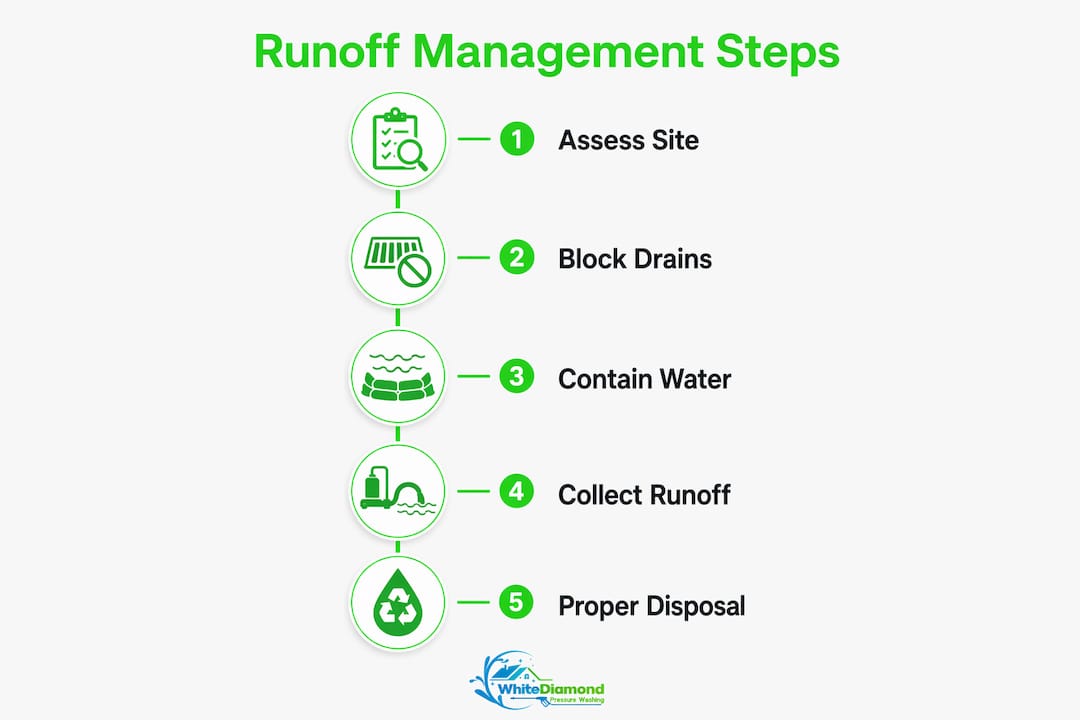
Industry-approved Best Management Practices (BMPs) follow a clear sequence: dry cleanup first, then containment, then controlled disposal. Skipping steps is where most violations happen.
The BMP sequence in practice:
- Dry cleanup before any water runs: Sweep, vacuum, or scrape loose debris from the surface. This step alone dramatically reduces the pollutant load in wash water and makes containment easier.
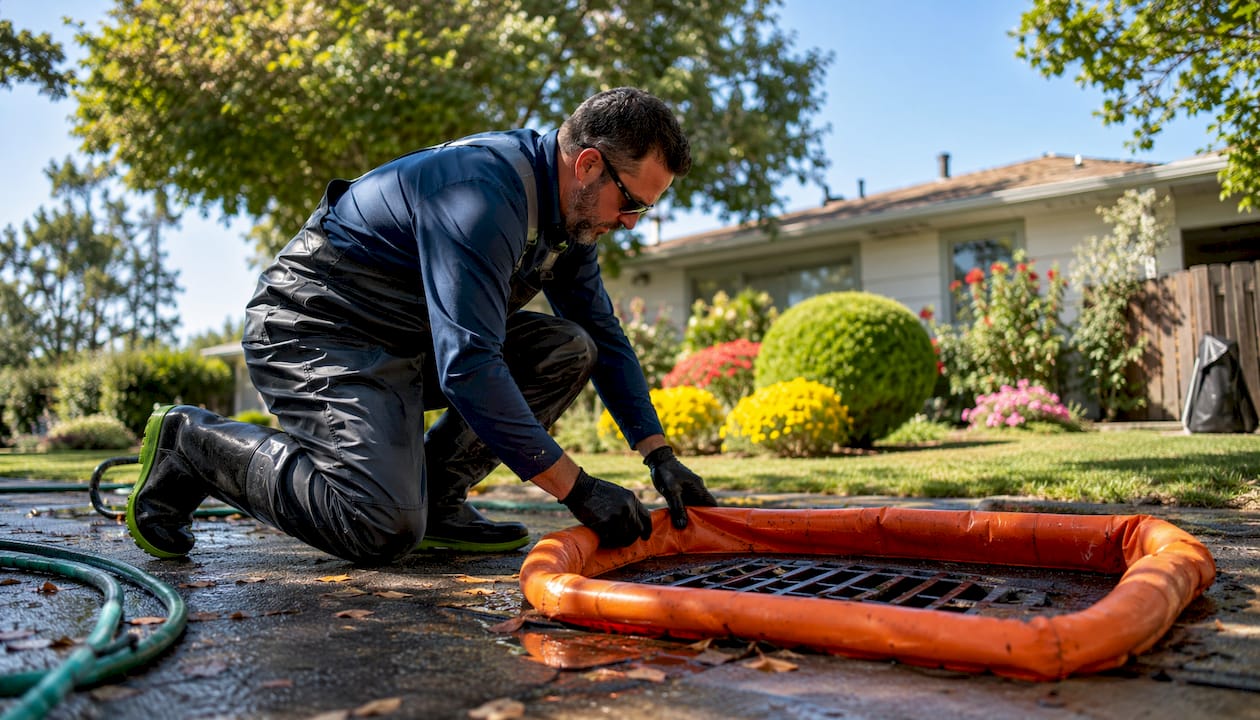
- Block storm drains: Cover nearby drains with filter fabric anchored by gravel bags, inflatable pipe plugs, or weighted drain mats before the first drop of water hits the surface.
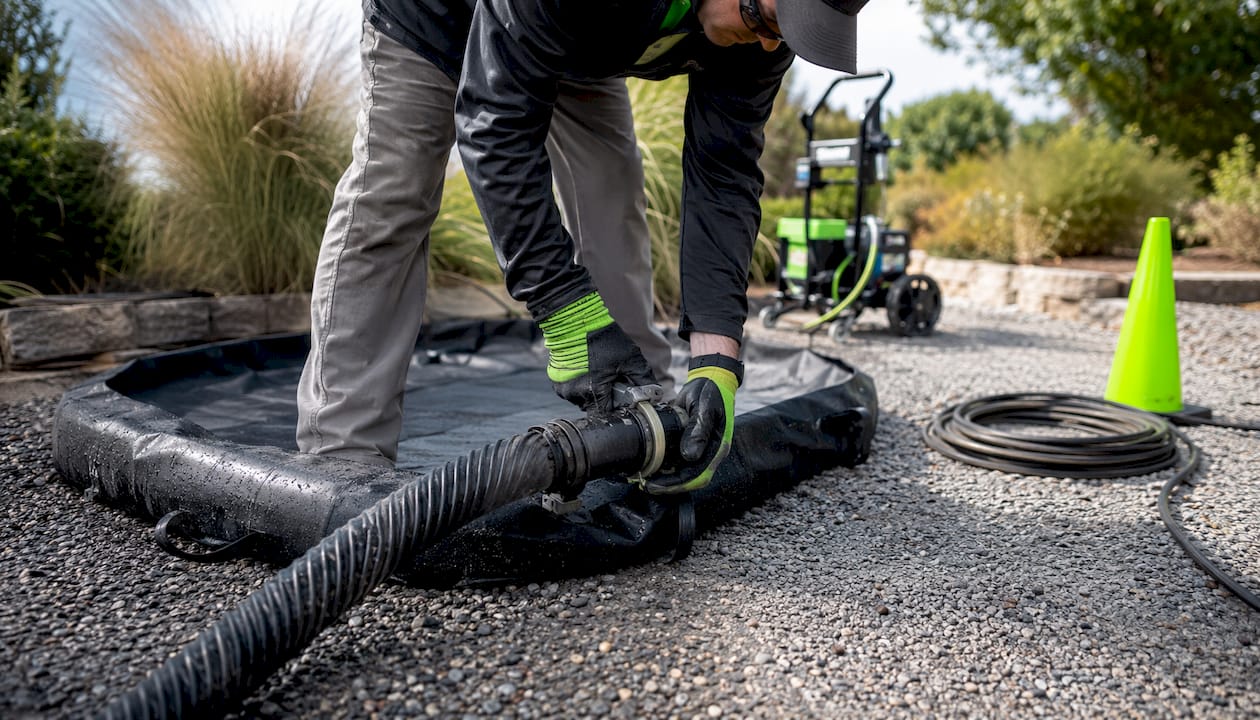
- Set up containment: Berms, sandbags, absorbent booms, and wet/dry vacuums redirect water to a collection point. For vehicles and equipment, a ground tarp surrounded by a temporary berm works well.
- Collect and dispose properly: Collected water can go to a landscaped area where it soaks into unsealed soil, or to a sanitary sewer drain with POTW permission. Letting it pool in a parking lot to evaporate is not compliant.
- Minimize water volume: Less water means less runoff to manage. High-pressure, low-volume equipment and soft washing techniques reduce the total wash water generated.
- Choose less-toxic products: Cleaning solutions with lower phosphate content and neutral pH reduce the treatment burden even when small amounts reach permeable soil.
- Post-wash cleanup: Remove all BMP equipment, sweep up debris caught by bio-bags or booms, and dispose of saturated absorbents properly. Petroleum-saturated booms require recycling, not regular trash.
Pro Tip: Before any job, walk the property and map every storm drain within 50 feet of the work area. Blocking a drain you missed is far harder once water is already moving.
Environmental and liability risks when runoff goes unmanaged
Improper runoff pollutes waterways with oils, heavy metals, and detergents that create low-oxygen, cloudy conditions harmful to fish and aquatic ecosystems. Storm drains carry that contamination directly to creeks and rivers without any filtration. The damage is cumulative and often invisible until a waterway shows measurable decline in water quality.
For homeowners and property managers, the risk is also financial. Environmental liability does not disappear because you hired someone else to do the work.
Key environmental and liability considerations:
- Unmanaged wash water from a single driveway cleaning can carry enough petroleum residue to affect downstream water quality
- Property owners who allow contractors to discharge illegally on their property can face cleanup cost orders from local municipalities
- Contractual pollution prevention clauses protect property owners by requiring contractors to document their BMP procedures before work begins
- Runoff from roof cleaning, which often involves algaecides and surfactants, carries particular risk if it reaches landscaping or drainage channels
- Choosing contractors who carry pollution liability insurance adds another layer of protection
Pro Tip: Ask any contractor you hire to show you their written runoff management plan before they start. If they cannot produce one, that is your answer about their compliance standards. Including a pollution control clause in your service agreement is a straightforward way to protect yourself from liability.
Responsible runoff handling also affects the quality of the cleaning itself. Technicians who are not managing water flow are not fully controlling their work. A contained, deliberate wash produces better results on concrete, stucco, and pavers than a rushed job where water is running everywhere.
For homeowners thinking about the broader picture of home maintenance and environmental impact, the same principle applies to other trades. A guide on cabinet refinishing environmental impact makes the same point: how a contractor handles waste is a direct signal of their overall professionalism.
How Whitediamondpressurewashing handles runoff on every job
Whitediamondpressurewashing operates under EPA and Clean Water Act compliance standards on every residential and commercial job in Citrus County and surrounding areas. Their technicians follow the full BMP sequence: dry cleanup before water is applied, storm drain protection in place before washing begins, and documented disposal procedures for all collected wash water.
Their approach to runoff control includes:
- Pre-job site assessment to identify all storm drains and drainage paths within the work area
- Use of berms, absorbent booms, and wet/dry vacuums sized to the job
- Low-pressure and soft washing methods that reduce total water volume and minimize runoff generation
- Biodegradable, pH-balanced cleaning solutions selected to reduce environmental impact even when trace amounts reach permeable soil
- Transparent client communication, including written runoff management commitments available before work begins
- Water reclamation practices on applicable jobs to reduce discharge volume further
Proper runoff management is not an add-on to professional exterior cleaning. It is the standard that separates a contractor who protects your property and your local waterways from one who simply gets the surface wet and leaves.
Whitediamondpressurewashing’s commitment to responsible pressure washing means homeowners are not left holding liability for a contractor’s shortcuts. Every job is documented, every drain is protected, and every drop of wash water is accounted for.
Whitediamondpressurewashing: professional exterior cleaning with full runoff accountability

Hiring a pressure washing company that treats runoff as an afterthought puts your property, your waterways, and your legal standing at risk. Whitediamondpressurewashing gives Citrus County homeowners and property managers a cleaner alternative: exterior cleaning that is fully compliant, environmentally responsible, and backed by written runoff management procedures on every job.
From roof cleaning and house washing to driveway and walkway cleaning, every service is performed with containment equipment in place and disposal handled correctly. No cutting corners, no liability surprises.
Get a free estimate at whitediamondpressurewashing.com and ask about their runoff management documentation before your first appointment.
Key Takeaways
Proper runoff management in exterior cleaning is a legal requirement under the Clean Water Act, an environmental obligation, and a direct indicator of contractor quality.
| Point | Details |
|---|---|
| Federal law prohibits illegal discharge | Clean Water Act Section 301 bans wash water discharge into storm drains without a permit. |
| Shared liability is real | Both property owners and contractors are legally responsible for illegal runoff under EPA guidelines. |
| BMPs follow a fixed sequence | Dry cleanup, drain blocking, containment, and proper disposal must happen in order on every job. |
| Biodegradable soap is still a pollutant | Detergents labeled biodegradable break down in soil, not water, and cannot legally enter storm drains. |
| Whitediamondpressurewashing | Provides written BMP documentation, full containment equipment, and EPA-compliant disposal on every Citrus County job. |